Table of Contents
TL;DR,
- New Abu Dhabi blockchain regulation mandates strict oversight, including a requirement for custodians to hold at least $250,000 in base capital, ensuring a secure environment for institutional investors.
- The partnership between ADGM and the Solana Foundation bridges the gap between decentralized technology and traditional law, offering DAOs legal personhood and a structured framework for “ownerless” governance.
- M2’s recent license illustrates the practical application of UAE compliance, allowing for AED-denominated trading and regulated custody services that treat virtual assets as commodities under strict FSRA surveillance.
Abu Dhabi intends to integrate crypto into its ecosystem, but it’s not just being another crypto-friendly jurisdiction. A structured infrastructure where DLT Foundation frameworks, institutional-grade virtual asset licenses, and strategic protocol partnerships work in tandem.
To build a future Abu Dhabi blockchain regulation framework, the Abu Dhabi Global Market (ADGM) has signed a memorandum of understanding (MoU) with Solana Foundation and M2’s August 2023 multilateral trading facility and custody license.
What the ADGM–Solana Foundation MoU Actually Covers
On February 7, 2024, ADGM and the Solana Foundation signed an MoU to “enhance DLT solutions and advance blockchain innovation,” explicitly tied to ADGM’s DLT Foundation Regulations that had come into effect three months earlier.
According to the official announcement, the partnership’s scope includes:
- Joint collaborations and partnerships to develop the blockchain company ecosystem in Abu Dhabi
- Industry engagement and regulatory feedback loops to align real-world deployment and regulatory frameworks.
- Utilizing Solana’s developer ecosystem alongside ADGM’s legal infrastructure for DAOs and token-based governance
Hamad Al Mazrouei, CEO of ADGM’s Registration Authority, called it a “key milestone” reflecting “the effectiveness of our DLT Foundations Framework.” Lily Liu, president of the Solana Foundation, described the UAE as “a global hub for innovation and adoption of blockchain technology.” The MoU served as a contract to advance network adoption across the Middle East.
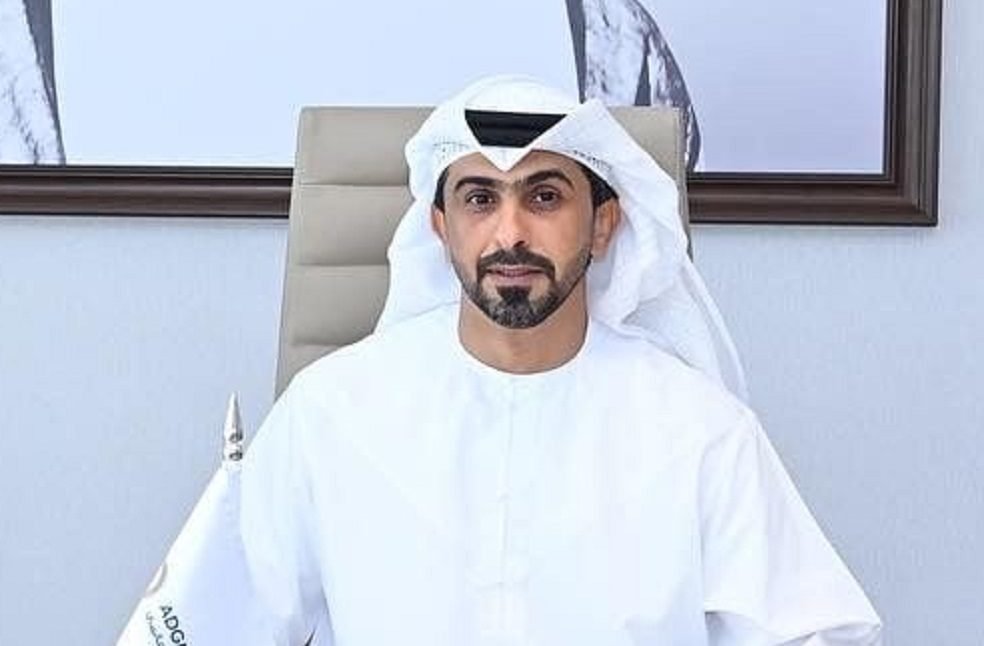
Hamad Al Mazrouei, CEO of ADGM’s Registration Authority.[Photo: ADGM]
M2’s FSP License: A Concrete Case of ADGM’s Virtual Asset Infrastructure
While the Solana partnership solves the infrastructure, developer training, and blockchain requirements, M2’s license shows Abu Dhabi blockchain regulation in practice.
On August 16, 2023, ADGM’s Financial Services Regulatory Authority (FSRA) granted M2 a Financial Services Permission (FSP) to operate a multilateral trading facility (MTF) and provide custody services to UAE residents.
This included both retail and institutional investors. This license was formalized under ADGM’s virtual asset regime, which treats virtual assets as commodities subject to regulated activities when linked to trading, custody, or intermediation.
What M2’s License Enables
According to ADGM and M2’s own announcements, the FSP allows:
- Custodial wallets and offline (cold) storage of virtual assets
- AED-denominated on/off-ramps and trading pairs for BTC and ETH
- Compliance with FSRA rules on market surveillance, settlement, transparency, transaction recording, consumer protection, and technology governance
- Access to both retail and institutional UAE clients under a single regulated structure
Stefan Kimmel, M2’s CEO, described the FSRA as “one of the most sophisticated and respected regulators in the world,” emphasizing “transparency around the custody of client assets.”
CHECK OUT: MiniPay Q2 2025: Stablecoin Wallet Growth, New Features & Mini App Boom
The Benefits of the ADGM FSRA License for Operators Like M2
- Regulatory credibility: An FSP from FSRA is publicly listed and specifies permitted regulated activities; this provides transparency to counterparties and institutional investors.
- Institutional access: ADGM’s virtual asset framework is based on rules from traditional capital markets for multilateral trading facilities, and it calls itself “institutionally comprehensive.” This is a selling point for businesses that want to onboard professional clients.
- Legal clarity on custody and client asset segregation: FSRA’s June 2025 changes say that VA custodians must have at least $250,000 in base capital or six months’ worth of audited operating expenses (whichever is higher) and follow stricter segregation standards that are in line with those of traditional financial institutions.
Although the ADGM FSRA license offers numerous benefits, some individuals perceive the compliance requirements as excessively stringent. FSRA’s rules require technology audits, AML/CFT programs with trained officers, ongoing reporting, and following the Accepted Virtual Assets (AVA) framework.
This means that you can only use tokens that have already been approved. FSRA also clearly bans privacy tokens and algorithmic stablecoins as of June 2025. The FSRA has also granted itself the authority to intervene in products deemed harmful and to limit or ban virtual asset (VA) products.
The DLT Foundation Framework: The Legal Wrapper Enabling Protocol Partnerships
The Solana Foundation MoU and M2 license both rest on ADGM’s broader regulatory architecture, particularly the Distributed Ledger Technology Foundations Regulations 2023, which came into effect November 1, 2023.
What is a DLT Foundation in ADGM?
The regulations define a DLT Foundation as “a separate legal person established to use, deploy, develop, facilitate, or support DLT or to issue tokens.” Its features include:
- Legal personhood for DAOs and Web3 entities, addressing challenges around liability, asset ownership, and contractual capacity
- “Ownerless” structure—no shareholders; governed by a council in line with the foundation’s charter and token-based governance rules
- At least $50,000 in cash is needed to start.
- Token issuance and governance flexibility: charters can specify voting rights for tokenholders, delegation via smart contracts, and reserved matters for councils versus tokenholders
Latham & Watkins, which advised ADGM on drafting the regulations, described them as “the world’s first purpose-built legislative framework” for blockchain foundations, enabling “maximum flexibility for the sector with respect to governance.”
DLT Foundations have been set up in ADGM by major protocols like IOTA (which has more than $100 million in IOTA tokens), TON, and Stacks Asia. The partnership with the Solana Foundation aims to motivate projects within the Solana ecosystem to adopt a similar structure.
CHECK OUT: ChainPal Review: The Invisible Wall Between Your Work and Your Wallet.
What This Means for Virtual Asset Operators and Protocol Foundations
ADGM’s FSP process is clear but challenging for local startups. One should expect strict AML/CFT requirements, technology audits, and capital adequacy reviews. For transfers over AED 3,500, this includes following the FATF Travel Rule.
This also includes self-assessed tokens against FSRA-defined AVA criteria (traceability, security, exchange connectivity, and market relevance) and pre-notifying FSRA. Unauthorized exposure to non-recognized tokens can trigger sanctions.
Once you clear that hurdle, you can access UAE residents, both retail and institutional, who possess greater financial leverage than those in most African countries.
A Structured Approach, Not a Blank Check
Shaping a comprehensive Abu Dhabi blockchain regulation requires more strategy than most anticipate. The ADGM–Solana Foundation partnership and M2’s multilateral trading facility license provide the technical and legal requirements, focusing on more than a “light-touch” regime. It demands capital, compliance, technology audits, and ongoing reporting.
If execution follows, this is how Abu Dhabi blockchain regulation can keep innovation moving without sidelining investor protection.