Table of Contents
TL;DR,
- Bitcoin mining in Ethiopia has attracted $250 million in investment through Project Mano, leveraging GERD’s 5,150 MW hydropower capacity despite 15 million homes lacking electricity.
- Ethiopia allows Bitcoin mining under “data mining” licenses while banning cryptocurrency trading, creating a regulatory paradox that attracts operators but raises transparency concerns.
- With 25 companies generating $55 million in revenue and power costs as low as $0.045/kWh, Ethiopia’s bet on crypto mining faces climate, geopolitical, and equity risks.
Ethiopian Investment Holdings (EIH) signed a preliminary agreement with Data Center Service PLC (West Data Group) for a $250 million infrastructure project described as supporting “data mining and AI training operations.” Project Mano is an ambitious initiative aimed at introducing Bitcoin mining as a foreign-currency generator and economic development tool in Ethiopia.
The strange thing about the agreement is how EIH later edited its public announcement to remove the deal value and company name. Here’s a breakdown of what the project entails, its findings, and how far Ethiopia has come along despite having a rather sour outlook on crypto trading.
Bitcoin mining in Ethiopia: Inside the $250M West Data–EIH project and the renewable‑power bet
The story, goals, and links behind Project Mano are comprehensive. The initiative is an umbrella term for Ethiopia’s strategy to monetize its hydropower surplus—primarily from the Grand Ethiopian Renaissance Dam (GERD). It involves various interested parties; however, the primary Kickstarter was BitCluster.
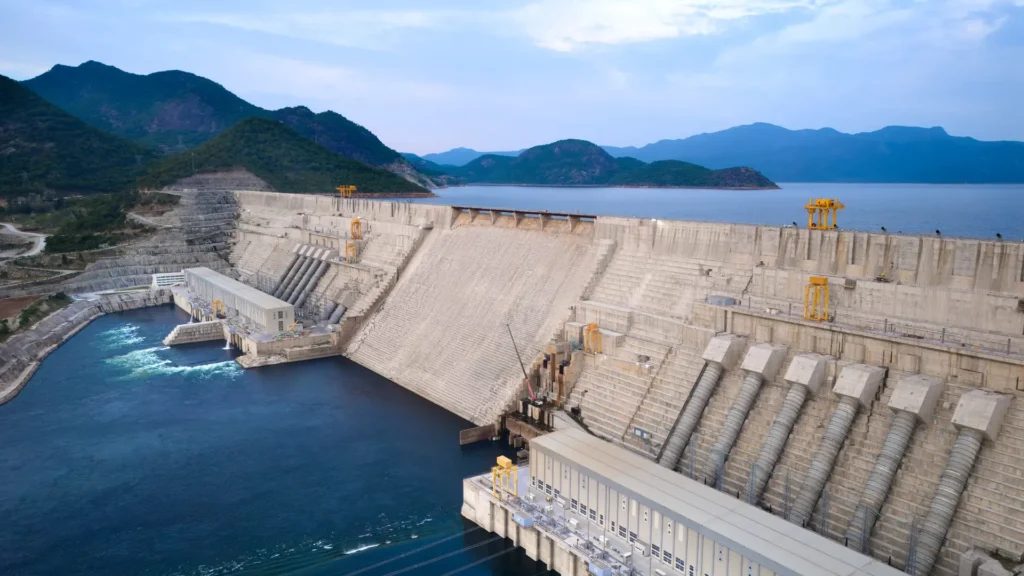
The GERD is stated to produce at least 5,150 MW of nameplate capacity—by hosting large-scale cryptocurrency mining and, secondarily, AI-ready data centers. This attracted several key operators, including
- Kilinto substation, Addis Ababa: BitCluster announced a 120 MW facility here in December 2023, claiming commissioning in January 2024 and offering hosted mining at approximately $0.045–0.049/kWh. By October 2025, the company had launched a corporate social responsibility program at a nearby IT classroom, confirming operational status.
- Bole Lemi Industrial Park, Addis Ababa: West Data Group operates a 30 MW facility (invested $20–30 million); Phoenix Group brought an additional 30 MW online in November 2025, claiming roughly 1.9 EH/s hash rate contribution at this 6,250 m² site.
- Wolaita Sodo, Southern Ethiopia: West Data Group broke ground on a 20 MW site in November 2024, planning to deploy around 6,000 mining rigs.
- Undisclosed location(s): BIT Mining acquired 51 MW of operational capacity in two phases (December 2024 and July 2025), transferring 17,869 miners and activating 35 MW by March 2025, which generated approximately $2 million in hosting revenue for Q1 2025.
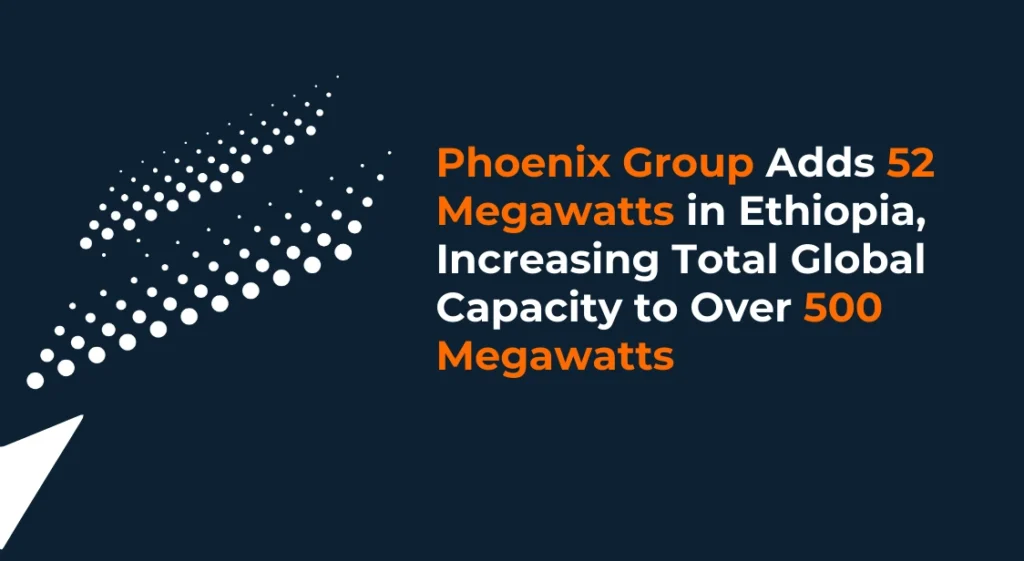
Phoenix Group has secured an 80 MW power purchase agreement with Ethiopian Electric Power (EEP) and announced plans to expand by an additional 52 MW, targeting a total of 132 MW in progressive deployment through 2025.
Kal Kassa, CEO for Ethiopia at Hashlabs Mining, described the West Data deal as “official” government involvement in Bitcoin mining and “aligned with the Ethiopian Government’s goal of boosting economic growth through the strategic use of technology and energy resources.”
Ethiopian Investment Holdings (the sovereign investment arm) brokered the headline $250M MoU. Ethiopian Electric Power (the national utility) acts as the electricity supplier and gatekeeper, setting tariffs and enforcing contracts.
The Information Network Security Administration (INSA) issued an urgent registration notice in August 2022 requiring all entities in “crypto operations (including mining and transfers)” to register within ten days, establishing a licensing framework under “data mining/cryptographic” designations.
Energy and infrastructure: how the project gets powered
Ethiopia’s grid is overwhelmingly renewable (hydro dominant), with EEP’s 2025 snapshot showing 7,452 MW of hydro capacity and the Grand Ethiopian Renaissance Dam (GERD) inaugurated in September 2025.
EEP has signed power agreements with 25 mining companies, and local reports claim roughly $55 million in revenue in under a year, with $123 million expected over 12 months from September 2024 (figures not yet reflected in audited EEP financials).
Industrial parks (Bole Lemi in Addis; Wolaita Sodo region) provide substation adjacency and streamlined permitting. Company‑quoted host rates in Ethiopia have ranged around $0.03–0.05/kWh; one operator (BitCluster) advertises ~$0.045–0.049/kWh, though those are company assertions, not utility tariffs.
GERD Dam project
However, some concerns are raised over the practicability. Currently, about 15 million homes don’t have grid access, and some say that putting BTC mining first could slow down wider efforts to get everyone connected. Ethiopia has the power capacity, so why isn’t their public data confirming what share of the 55–123 million flows to residential connections versus other uses?
The Regulatory Paradox: Mining Legal, Trading Illegal
The question on various minds might be, is crypto mining legal in Ethiopia? The nation’s regulatory framework is a bit contradictory.
In June 2022, the National Bank of Ethiopia (NBE) banned cryptocurrency transactions, declaring the birr the sole legal tender. Proclamation No. 1359/2024 codified this prohibition. Yet simultaneously, the government authorized Bitcoin mining under “high-performance computing” and “data mining” classifications under the Information Network Security Administration (INSA).
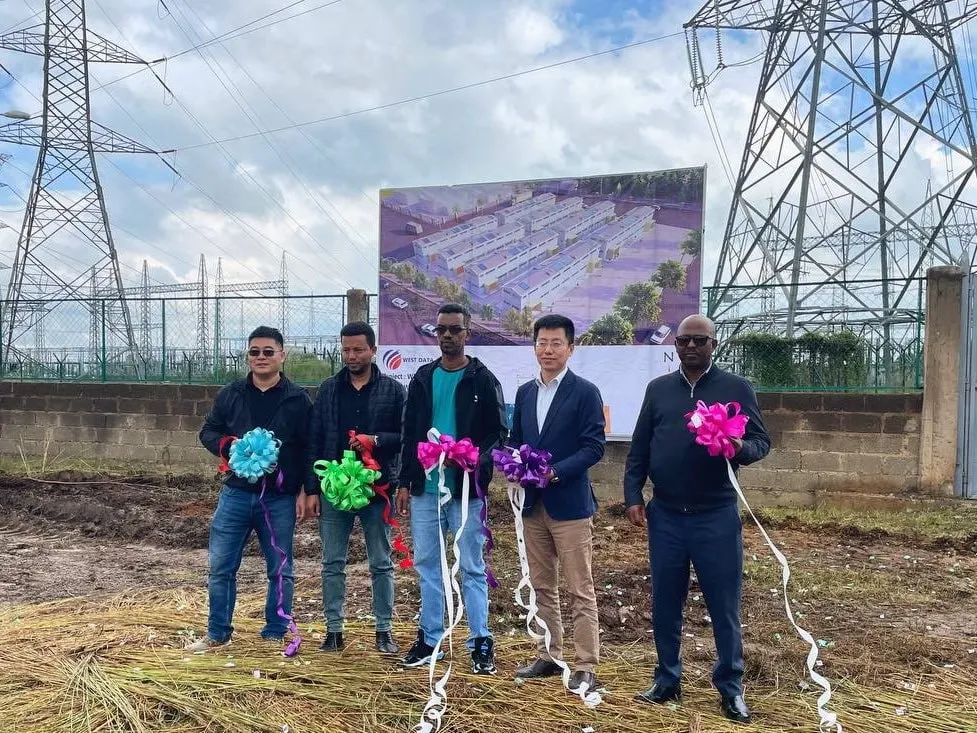
West Data Group signs officially into Ethiopia;s “Bitcoin Group”
This basically builds a regulatory gray area where transactions are forbidden, yet the underlying tech and its use case are acknowledged, allowing bitcoin mining in Ethiopia to thrive.
The US Department of Commerce noted in 2024–2025 trade guidance that “more than 20 firms have been granted operating licenses to date,” with INSA, EEP, and the Ethiopian Investment Commission as key counterparties.
Potential hash rate contribution and economics
Let’s break down the hash rate contribution. Currently there are 6,000 rigs for the Wolaita Sodo 20 MW phase. If S21‑class units (≈200 TH/s at 3.5 kW) are used, a 6,000‑rig fleet would be 1.2 EH/s and roughly 20–21 MW of draw. Against an October 2025 global network average near 1,082 EH/s, that’s 0.1%—illustrative only, since models/efficiencies weren’t disclosed.
Host power cost is the dominant driver. After the birr float, any mismatch between official and parallel FX rates can compress margins. Operators typically negotiate PPAs with EEP; clarity on peak/off‑peak structures and USD/ETB settlement is material to underwriting.
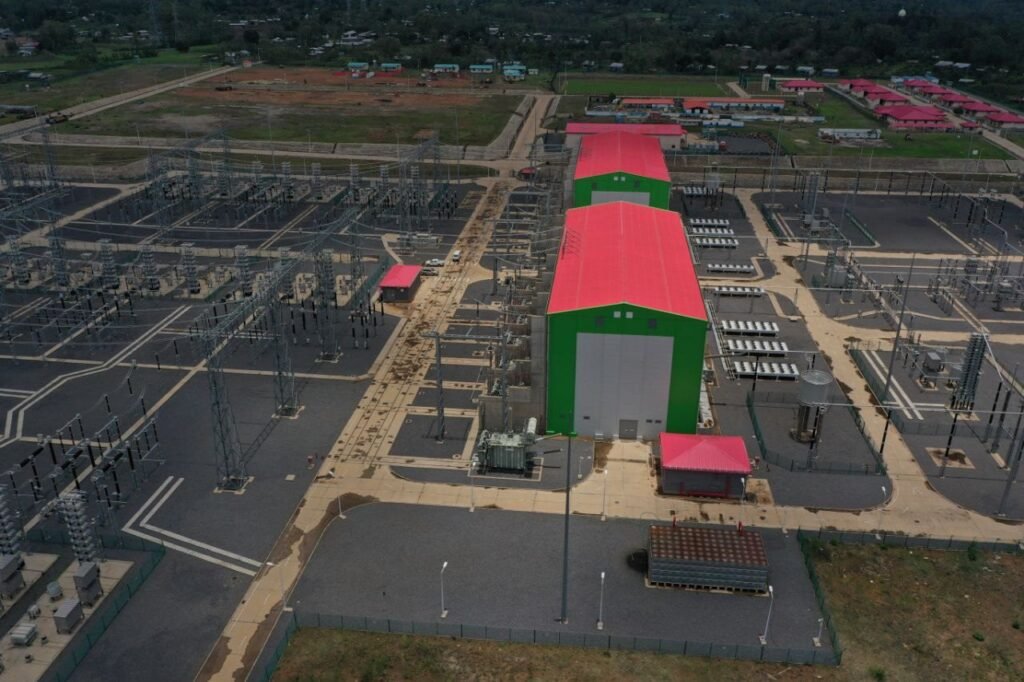
But why is Ethiopia investing in Bitcoin mining? Project Mano is basically an attempt to monetize surplus renewable capacity, generate foreign currency, and anchor a broader “clean compute” platform. The project has circulated ambitious GDP figures ($2–$4B), but these are not backed by published government or independent modeling and should be treated as unverified.
High Stakes, Uncertain Payoff
With over 40% of Ethiopians—some 15 million households—still lacking electricity, directing renewable power toward Bitcoin mining instead of homes and businesses is a politically charged choice with real human costs.
The contradictory policy exacerbates this tension. The government promotes mining while prohibiting trading, a paradox that generates confusion and uncertainty. If droughts reduce hydropower or public pressure grows, authorities may suddenly freeze permits or change tariffs, as Iran and Kazakhstan have already done.
Betting heavily on Bitcoin exports raises “resource curse” concerns—too much dependence on one volatile commodity. Though operators like BIT Mining are diversifying ($200-300M Solana investment), these remain speculative.
Transparency problems compound the risk. The EIH deleted deal details from public posts, power agreements aren’t published, the $2-4 billion GDP claim lacks independent verification, and regulators admit they struggle to oversee crypto. The FBI warned about billions lost to crypto fraud in 2024.
Geopolitically, Russia’s sovereign wealth fund reportedly backs BRICS mining ventures to enable Bitcoin-based trade. Ethiopia’s participation brings capital but ties the country to alliances that may strain relations with Western donors.
Practical risks include licensing, equipment imports, cooling infrastructure, e-waste disposal, and cybersecurity—all in an emerging regulatory environment. Most fundamentally, heavy reliance on hydropower exposes operations to climate and rainfall variability that operators haven’t publicly addressed.
This leaves a burning question: Can a developing country convert stranded renewable energy into sustainable economic growth, or will the lure of quick forex expose it to the volatility, opacity, and geopolitical complexity that have undone similar bets elsewhere?