Table of Contents
TL;DR,
- Ninja Game Guild is targeting Africa’s 349 million gamers with a “phygital” Web3 strategy. Their focus is on education and community building to onboard users into NFT gaming.
- Moving beyond volatile play-to-earn models, NGG uses partnerships, physical merchandise, and its AKIVERSE platform to build sustainable gaming communities in key African markets like Nigeria.
- The guild’s success hinges on local collaborations for onboarding and addressing practical barriers like crypto-to-cash conversion, aiming for long-term trust over short-term yields.
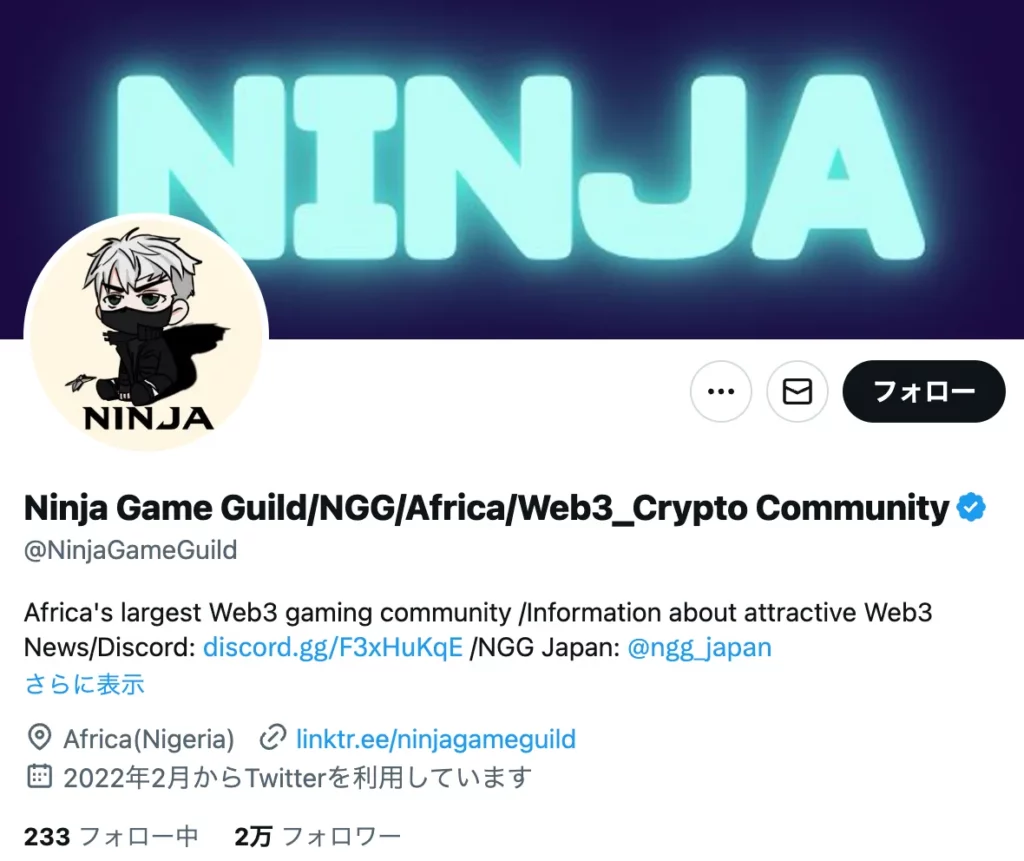
With its latest “phygital” (physical + digital) push, Japan-based Ninja Game Guild (NGG) is doubling down on its plan to grow NFT and Web3 gaming communities in Africa. The continent has a steady gaming community, making it a prime region for Web3 gaming partnerships and collaborations.
With its sights set on Africa, NGG has focused on on-the-ground partnerships, community programs, and a new merchandise track via SYNTHESIS and its SYNCFits subsidiary. This also complements its AKIVERSE platform for arcade-style blockchain gameplay.
Overview of Ninja Game Guild’s Africa-first push
Founded in Japan between 2019 and 2021 by Akira Komiya, Ninja Game Guild initially operated as a global play-to-earn games scholarship provider. Its main focus was lending NFTs to newcomers to lower entry costs for blockchain titles, which quickly gained traction.
By mid-2022, the guild had secured institutional credibility through a partnership with the Tottori eSports Association (TeSA) and REEV, connecting Japanese corporate/esports interests to global audiences.
However, its first Africa-centered push was in May 2023, when Ninja Game Guild held the “Future of Web3 between Nigeria and Japan” event at the University of Lagos (UNILAG). Within the same year the organizations partnered with Awujo, a Lagos-based guild backed by Adaverse and Emurgo. This was NGG’s first-ever deployment within the continent.
RELATED TOPIC: Al Ahly SC NFT Collection Debuts on FIFA Collect Platform, Pioneering Web3 Integration in African Football
Komiya’s onboarding approach remains hands-on:
“For those who have no experience in blockchain games, I teach them from creating a wallet until they play the game.”
While most Web3 gaming platforms focus mainly on play-to-earn games, NGG takes a different tangent into “play-to-learn.”
This tangent effectively took the organization from NFT gaming guilds in Africa acting as “yield extractors” during the 2021 boom to becoming community builders and player-education agencies after the 2022 market crash.
The SYNTHESIS Partnership: Tangible Products in a Volatile Market
Ninja Game Guild took gaming to the next step by collaborating with SYNTHESIS (an agency providing smart contract and dApp development) and its merchandise arm, SYNCFits, in 2024.
The main goals of the partnership were:
- Translating IP into physical products (apparel, accessories) tied to NGG’s community and game experiences.
- Support community-building and IRL events across target African cities.
- Diversify revenue beyond token cycles, a common de-risking tactic after the 2022 downturn.
Developing merchandise based on games has become a go‑to option for many Web3 gaming projects. Play-to-earn games often face considerable operational challenges, especially around token price volatility and regulatory screening.
Introducing tangible products can provide more diversified revenue, stronger brand visibility, and even local job creation. For example, manufacturing or distributing apparel in Nigeria or Ghana could involve local supply chains. NGG follows a playbook tested by projects like Pudgy Penguins, which successfully launched retail toy lines.
AKIVERSE and onboarding
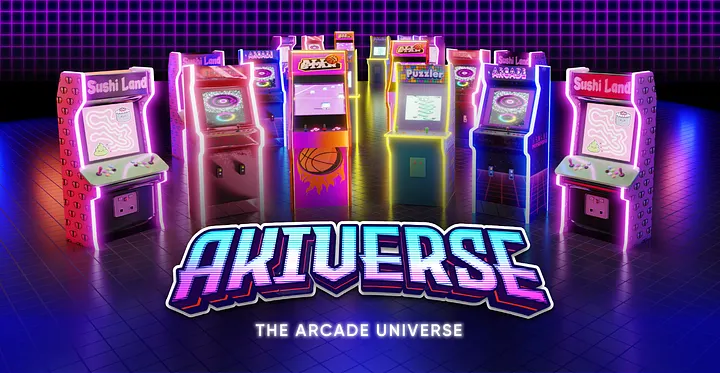
Among its numerous highlights, AKIVERSE still remains Ninja Game Guild’s most prominent success. The arcade-style ecosystem allows players to freely test their gaming skills while earning AKIR utility tokens. AKIR token holders can buy NFT arcade machines or game centers to share in player winnings.
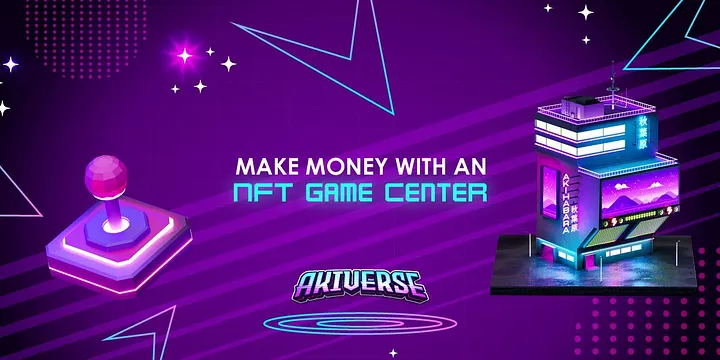
Its tokenomics, built on Ethereum with Polygon facilitating transactions, showcases the advancements of Web3 gaming, where AKV focuses on governance, AKIR provides utility, and Teras ties the ecosystem neatly as an in-world currency.
RELATED TOPIC: Game Developers Face Uncertain Future with AI Automation Threats
Africa-Themed Approach: Partnerships Driving NGG’s Expansion
For many, partnerships are often the best strategies for setting up shop on a foreign continent. Here are some of the ways NGG has stretched its reach within Africa.
Awujo (July 2023):
NGG and Awujo, a Lagos-based guild with support from Adaverse and Emurgo, form the most significant partnership. Awujo has a lot of experience managing communities at the grassroots level, hosting local tournaments and social events.
NGG provides capital and access to Japanese Web3 game titles. This partnership is a “capital plus community” merger. Awujo is responsible for hiring and training players on the ground, while NGG gives out NFT scholarships and builds the technical infrastructure.
KryptaPay:
This African fintech startup makes it easy for people to send money to each other across the continent without paying fees. It also offers crypto payment solutions.
For NGG, KryptaPay provides a practical on-ramp and off-ramp for players earning tokens, addressing a common barrier in NFT gaming guilds in Africa—how to convert in-game earnings into local currency or mobile money.
Blockchain Space:
Describing itself as the “Guild Hub of the Metaverse,” Blockchain Space supplies tools and infrastructure to optimize NGG’s gaming operations. The exact technical scope is not publicly detailed, but similar platforms typically offer guild management dashboards, NFT lending protocols, and player analytics.
Why this matters for Web3 gaming in Africa
The African gaming market generated $1.8 billion in revenue in 2024, with over 349 million gamers, with 304 million (87%) playing exclusively on mobile devices. Egypt led in revenue with $368 million, followed by Nigeria ($300 million) and South Africa ($278 million).
Kenya is projected to grow at a 13.3% CAGR, fueled by M-Pesa and cloud infrastructure. The 18–35 age group makes up 52.3% of gamers, and 66% of players engage in gaming daily.
The African gaming market is booming, with many players drawn by prizes and competitive formats. Ninja Game Guild aims to tap into this thriving community with a distinct niche that blends esports‑style competition, NFT ownership, and educational onboarding.
RELATED TOPIC: Battle Royale with Culture: The African Gaming Startup Making Waves
Rather than competing with established mobile game publishers, NGG focuses on becoming an onboarding and education layer—teaching players how to join African NFT gaming communities, then guiding them into play-to-earn games like AKIVERSE or partner titles.
While the industry does have ample market, there are still some trade-offs.
For instant token and model volatility, which govern how most play-to-earn games function, soften shift. It functions like the crypto industry; the prices often hinge on the demand.
The “phygital” campaign also has various drawbacks. Physical product launches require supply chain expertise NGG has not previously demonstrated. Delays, quality issues, or weak sales could distract from core gaming operations.
How to join African NFT gaming communities
- Join NGG’s Discord to access tutorials, community calls, and scholarship opportunities—an easy on-ramp for first-time Web3 gaming participants.
- Download AKIVERSE from the Google Play Store, create a wallet, and try free modes before buying any assets.
- Look for IRL activations announced via NGG and partners like Awujo to connect safely with verified organizers.
Practical Considerations:
- Learning curve: New users unfamiliar with crypto wallets, gas fees, and token swaps will need hands-on support—this is where NGG’s educational model and Awujo’s local events become critical.
- Earnings potential: Token earnings depend on game performance, market prices, and the guild’s scholarship terms. The crash in 2022 showed that “click-to-earn” income is unstable. NGG’s shift toward building communities suggests a longer-term, less risky way to make money.
- Regulatory uncertainty: Neither Nigeria nor Ghana has finalized comprehensive crypto gaming regulations as of 2024–2025. Players and guild operators face unclear legal status for NFT transactions and token-based income.
A Focused Bet on Cross-Continental Community Building
Ninja Game Guild is an extensive case study of how international brands are focusing on meeting local users. The competition is stiff, so having a unique niche can go a long way. However, NGG’s trump card will be its AKIVERSE arcade gameplay, “phygital” layer via SYNTHESIS/SYNCFits, and local collaboration efforts.
THOUGHT YOU MIGHT LIKE: One Wallet, Infinite Worlds: The Future of Web3 Gaming
All that depends on whether the gaming experience actually lives up to its intended hype. But, from an organizational viewpoint, it’s a tangible example of how NFT gaming guilds in Africa are adapting to post-boom realities: less hype, more education, and a deliberate focus on building trust within specific communities.