Table of Contents
TL;DR,
- Angola’s crypto mining ban under Law No. 3/24 imposes up to 12 years imprisonment, driven by energy infrastructure concerns. Illegal operations consumed 9.6 MW daily—enough to power 3,000 households—destabilizing the fragile grid.
- Unlike Angola’s criminalization, South Africa licensed 138+ crypto providers, Nigeria requires ₦500M capital for VASPs, and Ethiopia earned $55M from mining—showing Africa’s divergent regulatory approaches based on grid capacity.
- Angola’s subsidized electricity ($0.013/kWh) attracted foreign miners, but weak distribution infrastructure couldn’t handle 24/7 demand. The ban prioritizes grid stability over potential revenue, contrasting with Ethiopia’s tariff-based approach.
On April 10, 2024, Angola enacted one of Africa’s most restrictive digital asset laws—Law No. 3/24—criminalizing cryptocurrency mining with prison sentences of up to 12 years. The motive behind the crypto mining ban wasn’t about financial regulation but an urgent energy infrastructure crisis.
Policymakers framed the move as an energy‑security intervention to protect a fragile power distribution network from constant high‑load demand.
Yet Angola’s is in stark contrast to peer nations like Kenya, South Africa, and Ethiopia. This divergence highlights how each nation’s energy capacity, economic strategy, and grid resilience shape African crypto adoption policies more than ideology.
The Ban: Law No. 3/24 and Criminal Penalties
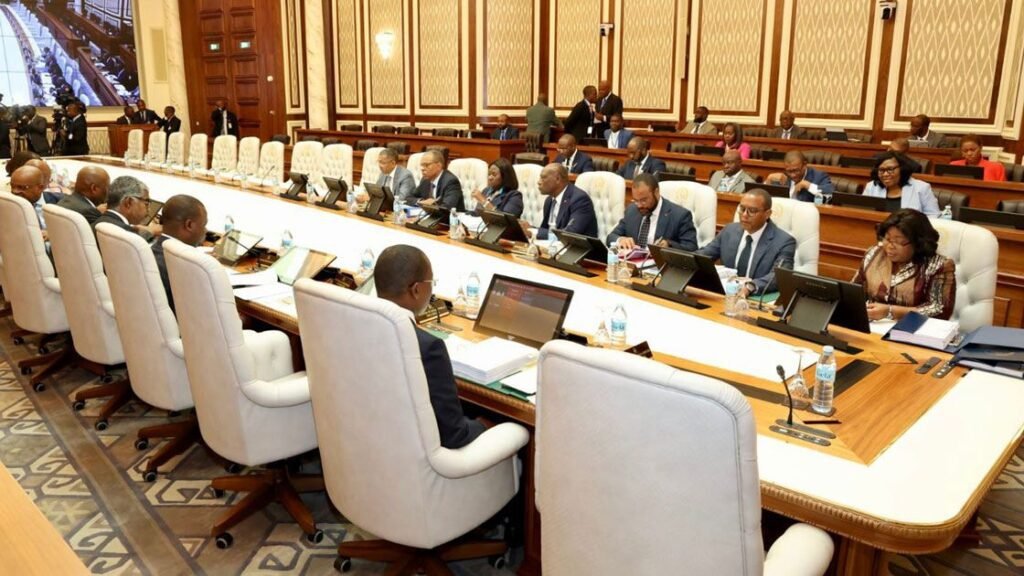
The Office of the President and the Ministry of Finance proposed the Angola legislation to ban cryptocurrency mining in August 2023. All 167 members of parliament voted for it on December 8, 2023, and it went into effect on April 10, 2024.
Law No. 3/24 explicitly prohibits:
- Mining cryptocurrencies and virtual assets throughout a national territory
- Using any electrical installation licenses for mining purposes
- Connecting mining equipment to the National Electrical System
Penalties are severe and escalate with the offense:
- 1–5 years imprisonment for possession of mining equipment
- 3–8 years imprisonment for connecting equipment to the national grid
- Up to 12 years for organized mining networks
- Confiscation of all assets and expulsion of foreign nationals
Secretary Otoniel dos Santos justified the law as necessary to:
“Protect Angolans and prevent conduct that jeopardizes national monetary sovereignty and also protect the energy and environmental systems.“
However, the law contains “an apparent error in the indication of the articles relating to penalties applicable to legal persons.”
This creates a legal loophole companies can exploit, especially with their consequences seemingly mired in ambiguities.
Energy and infrastructure behind the decision
Angola’s crypto mining ban is fundamentally an energy policy response; it’s more of a “grid paradox.” Despite approximately 6,200 MW of installed capacity (60–64% hydroelectric from the Laúca and Capanda dams), the country’s distribution network is fragile and unable to handle the constant high-load demand that crypto mining energy consumption requires.
Authorities reported that illegal mining operations consumed approximately 9.6 MW daily—equivalent to powering 3,000 Angolan households. This load, concentrated in industrial zones, destabilized local grids and diverted power from residential users.
The crisis further entangles since Angola’s heavily subsidized electricity tariffs of approximately $0.013 per kWh are among the world’s cheapest. Energy economists describe this as a “grid paradox”: the country has generation capacity but lacks distribution infrastructure to handle miners’ 24/7 demand without destabilizing neighborhoods.
Manuel Euclides, who started Yetubit, Angola’s biggest crypto exchange, called the ban a “significant setback” and said the government “stands to gain much more by regulating… rather than banning.” He suggested that instead of making mining illegal, miners should have to pay full industrial rates.
People also discussed the environmental impact of crypto mining, like how it puts a lot of stress on hydro dams during dry seasons and how it makes people use more diesel generators in places that aren’t connected to the grid.
Where Angola sits amid African crypto adoption policies
Angola’s strict rules are very different from the way other African countries are adopting cryptocurrencies.
South Africa: Full Licensing Regime
The Financial Sector Conduct Authority (FSCA) officially called crypto assets “financial products” under the Financial Advisory and Intermediary Services (FAIS) Act in October 2022.
The FSCA got 383 applications and gave out 138+ Crypto Asset Service Provider (CASP) licenses by June 2024. These licenses covered exchanges, wallet providers, and tokenization platforms. South Africa is now the best place in Africa for digital assets because it has strict KYC and AML rules that follow FATF standards.
Nigeria: From Ban to Recognition
Chainalysis (2024) says that Nigeria is the second most crypto-friendly country in the world. In February 2021, the country banned banks from processing crypto transactions. The Central Bank removed the prohibition in December 2023. In 2025, the Investment and Securities Act (ISA) officially recognized cryptocurrencies as securities under SEC jurisdiction. Virtual Asset Service Providers (VASPs) that are licensed must have at least ₦500 million in paid-up capital and a 25% fidelity bond.
Kenya: Tax-First Approach
President William Ruto signed the Finance Act 2023, which added a 3% Digital Asset Tax on the value of transfers and exchanges. Parliament passed the Virtual Asset Service Providers (VASP) Bill in October 2025. The legislation meant that instead of banning these services, they would be formally regulated.
Ethiopia: Mining Revenue, Then Pause.
Ethiopia, like Angola, has a lot of water, but it went in the opposite direction. It made mining legal in 2022 and signed power deals with more than 21 companies (most of them Chinese) to make money off of “stranded” hydro energy. The deal brought in about $55 million in revenue over 10 months. Ethiopia stopped giving out new permits and raised tariffs (from $0.03/kWh to over $0.06/kWh) by the end of 2024 because the grid was too full. However, they did not criminalize the industry.
Mining Viability Across Africa: Energy Costs Determine Fate
Crypto mining energy consumption makes electricity pricing the decisive factor in viability. Similar rates (estimates for 2024):
- Angola: $0.01–$0.02/kWh (subsidized/hydro)—now useless because of the ban
- Ethiopia: $0.03–$0.06/kWh (hydro, rising)—possible but getting harder
- South Africa: $0.15–$0.19/kWh (Eskom)—not possible; a lot of load shedding
- Nigeria: $0.14/kWh (Band A tariff)—high cost; miners use diesel generators
- Kenya: $0.08–$0.10/kWh (business)—the 3% tax makes it less likely to work.
The very low subsidized rate in Angola drew in foreign miners looking for arbitrage, but the weak distribution network couldn’t handle the load. Ethiopia’s tariff hikes are an example of a regulatory middle path that Angola decided not to take.
Angola is also not in the top 50 countries in the world for crypto adoption (Chainalysis 2024). The “crypto activity” the government talked about was mostly industrial mining, not retail use.
What This Means for Key Stakeholders
Angola’s ban shows that weak grids, not monetary sovereignty, are what make policies strict. Ethiopia’s tariff-based system and South Africa’s licensing system are both ways to manage energy load while also bringing in tax money.
Angola is now a banned area where criminals are actively punished. Ethiopia, despite tightening conditions, and emerging markets like Tanzania or Zambia may offer opportunities, but tariff and permit risks remain.
There is some good news. The ban targets mining, not trading or holding. However, the restrictive signal and lack of licensing frameworks (unlike Nigeria or South Africa) chill broader blockchain innovation.
Energy Capacity Shapes Africa’s Crypto Divide
Angola’s crypto mining ban, formalized in Law No. 3/24, is more of a policy choice to prioritize grid stability over potential revenue. Yet the contrasting African crypto adoption policies—from South Africa’s 138+ licenses to Nigeria’s ₦500 million VASP capital requirements to Ethiopia’s tariff adjustments—show that energy-constrained nations have regulatory alternatives to outright criminalization.
Under the current Angola legislation to ban cryptocurrency mining, its landscape does show potential. For now the nation serves as a reference point and a cautionary tale—for how energy security concerns can override economic opportunity in the race to regulate Africa’s crypto future.