
Table of Contents
TL;DR,
- The new Paycorp partnership enables crypto ATM withdrawal capabilities at over 3,000 Cash Express machines across South Africa, allowing users to cash out up to R5,000 ($293) per transaction without a bank card.
- Using the CryptoExpress app, South Africans can complete light KYC, send crypto on-chain, receive a voucher PIN and withdraw rand from Cash Express ATMs—no bank card required, but with R5,000 limits, variable fees and up to 30‑minute waits.
- South Africa’s strong licensing and AML/KYC rules allow Paycorp and Triple-A to run a large, compliant crypto cash-out network, but tight per‑withdrawal caps, opaque fees and operational risks mean it’s a practical tool, not a financial revolution.
Global payments company Paycorp and Singapore-based digital currency processor Triple-A announced a partnership to enable crypto ATM withdrawal across South Africa’s largest independent ATM network. The partnership will focus on using the CryptoExpress app to convert BTC, ETH, USDC, or USDT to rand and withdraw cash at “over 3,000” Cash Express ATMs nationwide.
The feature launched roughly two months after CryptoExpress’s soft debut in late 2023 and is distinct from South Africa’s small number of dedicated Bitcoin ATMs.
This is yet another reason why South Africa, despite lagging Nigeria in total crypto trading volume, is often cited as having stronger formal adoption and regulated use.
What the Paycorp–Triple-A Partnership Offers
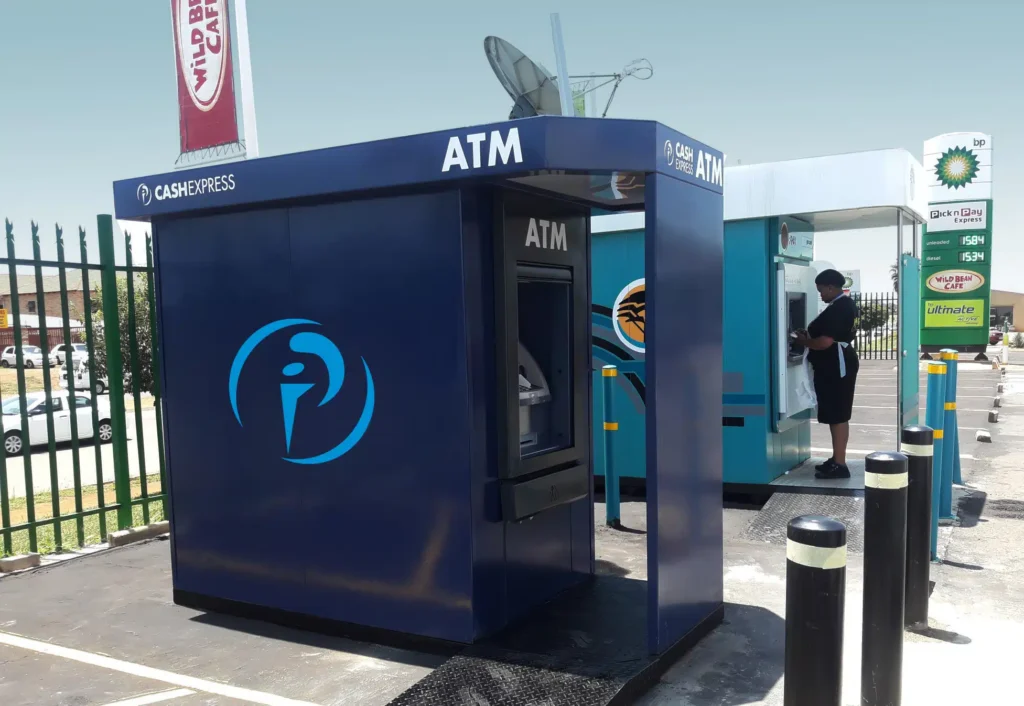
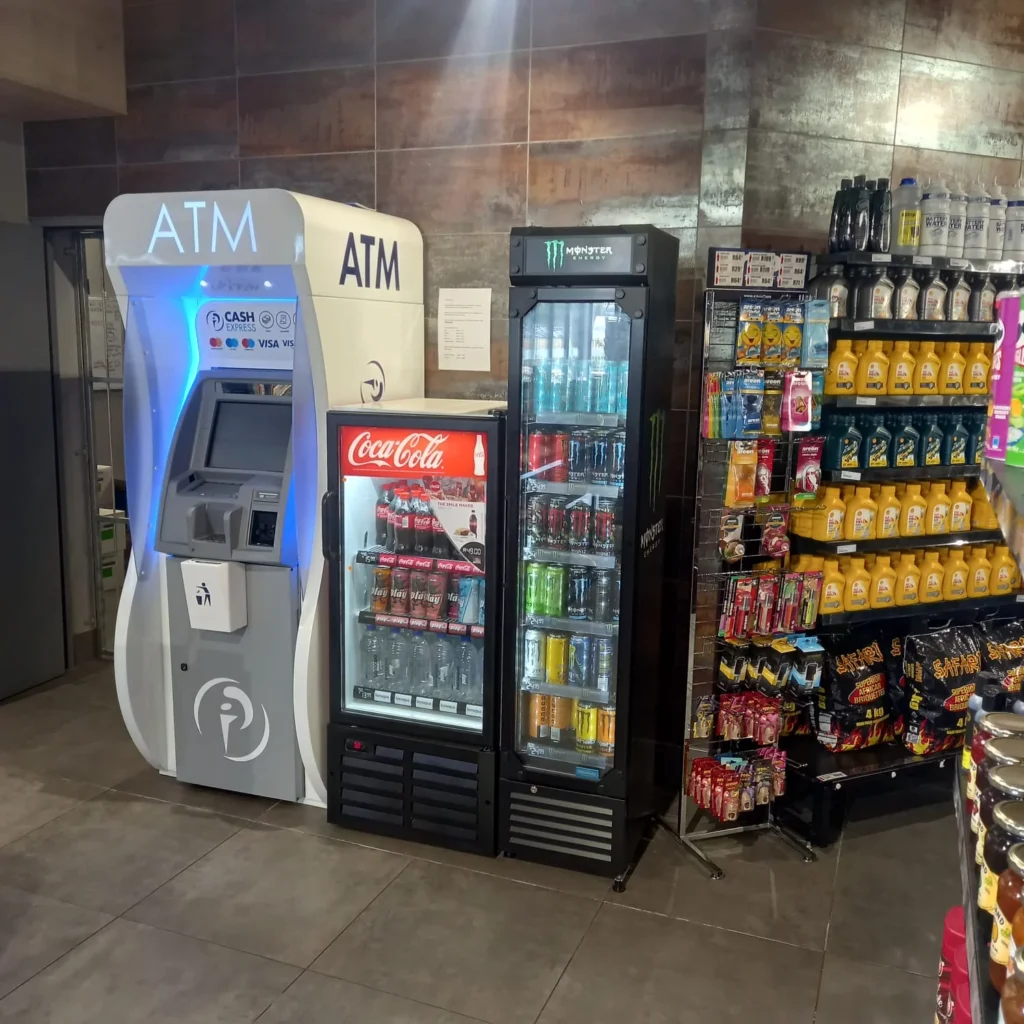
The partnership between Paycorp’s existing ATM infrastructure and Triple-A’s crypto processing capabilities introduces a bridge between digital assets and everyday spending. Currently the Paycorp ATM network operates more than 4,000 Cash Express branded machines across South Africa.
To further complement adoption, the CryptoExpress app feature fully functions on a subset of over 3,000 of these ATMs, located in urban centers, townships, and retail sites. These platforms support BTC, ETH, USDT, and USDC (on Tron and Ethereum).
Triple-A acts as the processing partner, handling the crypto-to-fiat conversion, know-your-customer (KYC) checks, anti-money laundering (AML) screening, and settlement with Paycorp. The CryptoExpress app is available for free on iOS and Android.
According to Steven Kark, CEO of Paycorp,
“By joining forces with Triple-A, a trusted leader in the digital currency payments space, we are providing a new and convenient way for crypto holders in South Africa to access and make use of their digital assets.”
Eric Barbier, founder and CEO of Triple-A, stated:
“Our mission of bridging the gap between digital and traditional currencies perfectly aligns with Paycorp’s dedication to connecting more people to their money.”
How Crypto ATM Withdrawal Works: The User Journey
The crypto ATM withdrawals have a straightforward process designed to work without a bank-issued debit card. The user simply needs to:
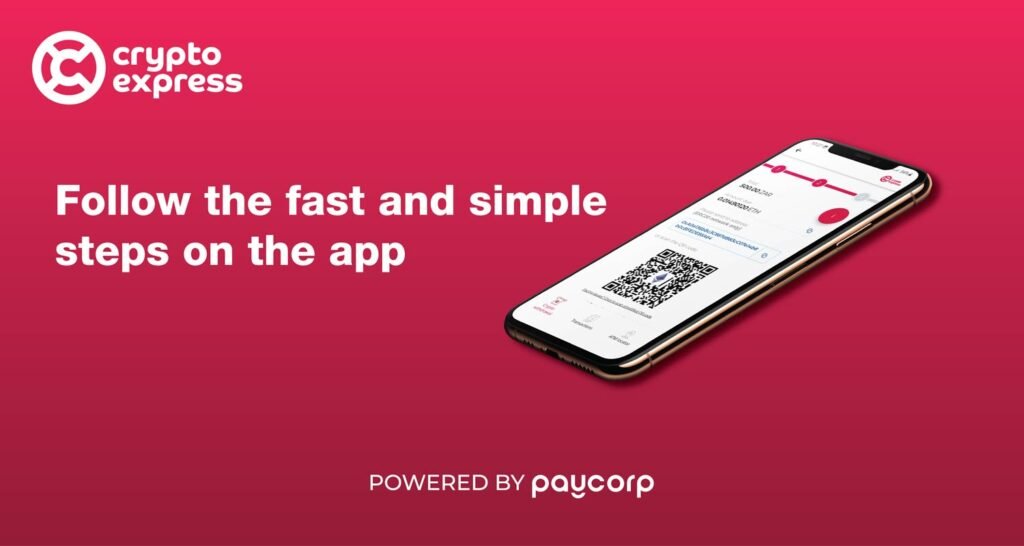
- Download and register: Install the CryptoExpress app and complete Level 1 KYC (full name, email, mobile number, date of birth, and gender). Data is screened against sanctions lists.
- Initiate a withdrawal: Select your cryptocurrency and the rand amount you want (maximum $293.25 USD (R5,000) per transaction). The app displays a conversion quote, including an undisclosed facilitation fee. You must accept the rate before proceeding.
- Send crypto from your wallet: Transfer the exact crypto amount to the address provided on the correct blockchain network. Processing can take up to 30 minutes.
- Get a voucher PIN: The app makes a 10-digit withdrawal voucher code after the transaction is confirmed on-chain.
- You can get cash at any Cash Express ATM: Use the app’s locator to find a nearby machine. Then, on the ATM screen, choose the CryptoExpress option, enter your mobile number and PIN, and get your rand.
For a bit of clarity, the $293 limit for the crypto ATM withdrawal is a hardware restriction, not a regulatory cap. Users needing to convert BTC to Rand or exchange larger amounts must make multiple withdrawals or use a licensed exchange with bank transfer options.
The Secret Behind South Africa’s Rapid Adoption Rate: Regulation
As mentioned, South Africa still trails behind Africa’s largest crypto hotbed, Nigeria, at $20 billion and $56.7 billion, respectively.
However, most Nigerian users often engage in underground transactions that occur outside of regulatory oversight, which restricts the adoption and everyday use of cryptocurrency. On the other hand, this regulatory clarity is exactly what enables services like the Paycorp–Triple-A CryptoExpress integration to operate at scale.
For example, the Financial Sector Conduct Authority (FSCA) said in October 2022 that crypto assets are “financial products” under the Financial Advisory and Intermediary Services Act (FAIS). This means that providers must have FAIS licenses.
In December of the same year, the Financial Intelligence Centre Act (FICA) added Crypto Asset Service Providers (CASPs) as “accountable institutions.” This required them to register, conduct KYC, monitor transactions, and report any suspicious activity.
The FSCA has given licenses to 138 CASPs so far. By December 2024, that number had grown to 248 approvals out of 420 applications.
Additionally, the region hosts the majority of Africa’s dedicated crypto ATMs, 26.
CHECK OUT: SA Slams the Door on Crypto Loopholes: Cross-Border Rules Drop in 2025!
Crypto ATM withdrawals are a by-product of a region aligning practical regulatory frameworks with infrastructure. Triple-A and any South African companies involved in the conversion must obtain an FAIS CASP license and comply with FICA rules. The CryptoExpress app enforces tiered KYC:
- Level 1 (when you sign up): Name, contact information, and a check for sanctions.
- Level 2 (after R25,000 in total): You need to upload a valid ID, passport, or driver’s license. If there are many requests, you may need to send in more documents.
This collaboration aligns with the FIC guidance (Public Compliance Communication 57), which classifies exchanging crypto for fiat as a CASP activity carrying “high” inherent risk for money laundering and terrorist financing.
Benefits, limits, and trade‑offs
The primary advantage of crypto ATM withdrawals is accessibility without needing a bank account or going through traditional bank processes. South Africa has approximately 7.8 million registered crypto users across the top three exchanges, holding R25.3 billion ($1.5 billion) in custodied assets as of end-2024.
There are more than 4,000 access points all over South Africa thanks to the large Paycorp ATM network and the CryptoExpress app. So 7.8 million users can access their stablecoins, profits, or payments using cryptocurrencies all through the comfort of a local ATM point.
While the Cash Express ATM crypto integration does have its perks, it is still a long way from perfection. For instance, the R5,000 cap means users moving substantial sums must make repeated trips or use bank-based exchanges.
The CryptoExpress app quotes an exchange rate inclusive of a “facilitation fee” that “varies based on market conditions,” but the percentage markup is not disclosed.
It can take up to 30 minutes for on-chain confirmation to happen. Sending crypto on the wrong network (e.g., USDT on Ethereum instead of Tron) may result in loss of funds. Overpayments are not automatically returned.
RELATED TOPICS: SARS Eliminates Crypto Anonymity Through CARF Reporting Framework
A Practical Step, Not a Revolution
For individuals without bank accounts or those seeking immediate liquidity, the crypto ATM withdrawal network provides a functional, regulated alternative to P2P cash trades.
The 3,000+ ATMs across formal retail and informal settlement areas are important for financial inclusion, especially in a country where stablecoin trading volumes reached R80 billion ($4.7 billion) per year and about 10.24 million South Africans held crypto, according to recent estimates.
However, users must be careful to follow the service’s rules, such as transaction limits, hidden fees, network-specific requirements, and a high-risk regulatory classification.
It is not the big change that early press releases said it would be; for now, it is simply a functional bridge between digital assets and physical rand.