
Table of Contents
TL;DR,
- Out of 355 total applicants, only 59 companies have successfully met the requirements to secure FSCA crypto licenses in South Africa’s first regulatory wave.
- The South African regulatory journey, starting in 2018, has evolved into a comprehensive framework that legitimizes crypto assets to protect consumers and prevent financial crimes.
- This regulatory move covers a wide range of services, from exchanges to advisory firms, positioning South Africa as a globally competitive and safe destination for digital finance innovation.
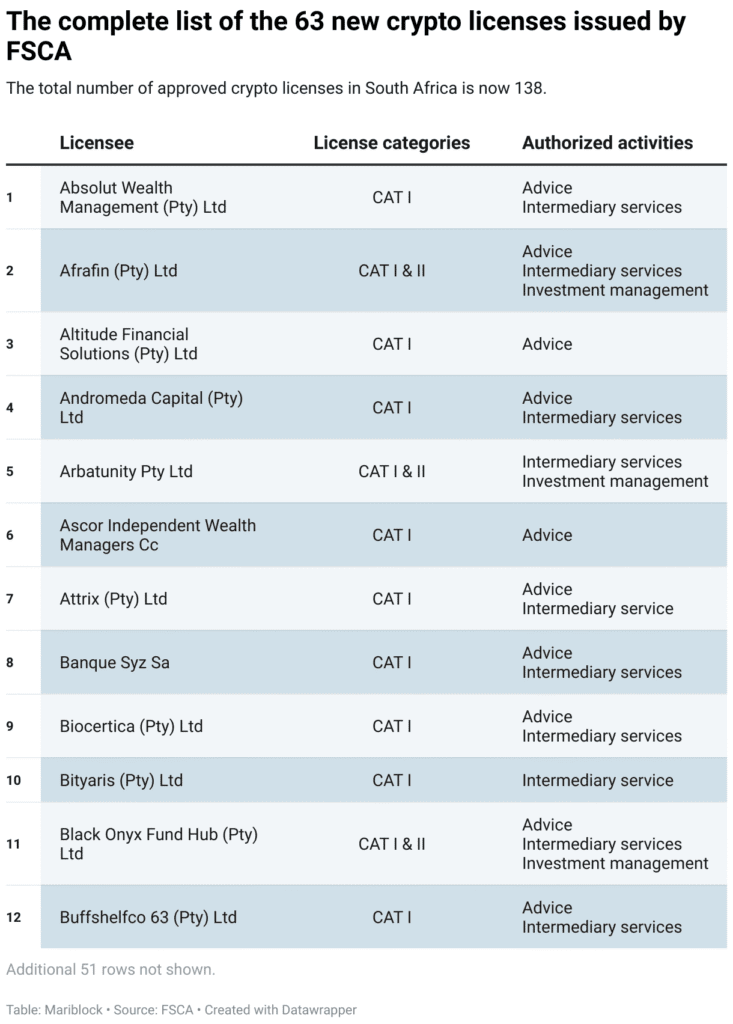
The Financial Sector Conduct Authority (FSCA) in South Africa has granted operational licenses to 59 cryptocurrency companies. This is a major step toward integrating and regulating cryptocurrency in the country’s financial landscape.
During the FSCA Industry Conference in Johannesburg, it was disclosed that out of 355 applications, 59 meeting FSCA crypto license requirements have received the green light, while the remaining are under review.
South Africa embraces crypto evolution with regulatory milestones.
The SA’s decision to issue these FSCA crypto licenses is part of its broader effort to establish a more accommodating regulatory environment for crypto assets. This journey began in November 2018 with the creation of the Crypto Assets Regulatory Working Group by the South African Reserve Bank (SARB), in collaboration with the FSCA, South African Revenue Services (SARS), and the Financial Intelligence Centre (FIC).

This collaborative effort led to the publication of a position paper in July 2021, recommending a comprehensive update to South Africa’s policy and regulatory stance on crypto assets. Following this, in August 2022, the SARB crypto guidelines for financial institutions stipulated how to service crypto clients, emphasizing the necessity to engage with the burgeoning sector rather than shun it.
The FSCA’s recent move to issue crypto licenses covers a broad spectrum of services within the crypto market. For firms exploring how to get FSCA crypto license approval, understanding FSCA crypto license requirements is essential. Approved business models encompass advisory services, exchanges, payment gateways, both crypto-to-crypto and crypto-to-fiat conversions, crypto asset arbitrage, tokenization services, index-based products, and wallet services.
Felicity Mabaso, the FSCA’s divisional executive for licensing, emphasized the authority’s commitment to enforcing compliance, stating that any entity operating without an FSCA crypto license will face investigation and consequent actions. This measure aims not only to legitimize the crypto market within the national economy but also to protect investors and consumers engaging with these digital assets.
Fostering Financial Inclusivity and Security Under South Africa’s Crypto Regulation
Adding crypto assets to South Africa’s regulatory framework is a big step toward making the financial system more open and safe. The FSCA protects consumers better and lowers the risks of money laundering and terrorism financing by treating crypto assets as financial products.
Also, regulated businesses are always being watched, which makes sure that the crypto market, which is always changing and can be unstable, works within a safe and structured framework. We think that this clear regulation will make both current and future crypto investors and service providers feel more confident, which will lead to more innovative and secure crypto-based financial services.
The FSCA’s issuance of Africa’s first-ever crypto licenses is a big step forward in South Africa’s financial history as the country’s crypto regulations continue to change. This change not only fits with the trend of more regulation of cryptocurrencies around the world, but it also makes South Africa a forward-thinking player in the crypto space.
The fact that applications are still being reviewed and that there is a commitment to strict oversight shows that there is a strong framework for managing crypto assets and a bright future for digital finance innovation in South Africa.
The FSCA and SARB, two South African regulators, are taking a proactive approach to embracing and structuring the crypto market through
As the world of financial services changes, South Africa’s regulatory milestones show how dedicated it is to building a safe, open, and cutting-edge financial ecosystem. FSCA crypto licenses, South African crypto regulations, tokenization services, wallet services, and broader crypto market regulation illustrates a keen understanding of the transformative potential of digital currencies.
The planned release of these first FSCA crypto licenses marks the beginning of a new chapter for South Africa’s role in the global financial and crypto markets. By creating a regulated framework for cryptocurrency operations, South Africa not only makes itself more appealing to crypto investors, but it also sets an example for innovation and financial inclusion.
The South African cryptocurrency rules are a mix of openness and caution. Their goal is to find a balance between the new opportunities that cryptocurrencies offer and the need to keep the market safe and stable.
Enhancing Global Competitiveness and Financial Innovation
The FSCA’s decision to approve a wide range of business models, from advisory to tokenization services, is a big step forward in South Africa’s goal to be a leader in financial technology and innovation.
The approved businesses, which include exchanges and wallet services, are ready to help create a lively ecosystem that encourages new ideas, makes international trade easier, and improves financial services. The move is expected to bring in more international interest and investment in South Africa’s growing crypto market, which will make the country more competitive on the world stage.
Setting the Stage for Future Growth
The FSCA establishes a regulatory framework that not only offers clarity and security to current stakeholders in the crypto market but also establishes the foundation for future growth and development in this sector.
By requiring ongoing supervision and setting FSCA crypto license requirements and guidelines for operation that complement SARB crypto guidelines, the FSCA ensures that the crypto market develops in a manner that is sustainable, responsible, and aligned with international best practices. This approach not only safeguards the interests of investors and consumers but also encourages innovation and experimentation in crypto-based financial products and services.
In conclusion, the issuance of FSCA crypto licenses is a progressive leap forward for South Africa’s financial sector, aligning the country with global trends towards the integration and regulation of digital assets.
It shows that you really understand how complicated and full of possibilities the crypto market is. As South Africa continues to deal with this changing situation, the current regulatory framework lays the groundwork for economic growth, greater financial inclusion, and the country’s rise to the top of the global digital finance market.