Table of Contents
TL;DR,
- DCI officers arrested four suspects linked to the GHash mining scam, seizing 1,336 SIM cards used to execute the fraudulent operation.
- This scheme lured investors with fake cloud mining machines and promises of 60–80% returns, hiding behind a false narrative of rural electrification while actually operating a Ponzi-style structure.
- Despite recent arrests, rising crypto fraud and a lack of licensed exchanges highlight the urgent need for better regulatory enforcement and investor caution in Kenya’s digital asset market.
Scammers often take advantage of cryptocurrency booms, but this time, authorities are proactively addressing the issue. Kenya’s Directorate of Criminal Investigations (DCI) arrested four suspects in the Kahawa area on February 16–17, 2024, in connection with the GHash mining scam.
The fraudulent crypto mining operation had lured thousands of Kenyans with promises of guaranteed returns and a socially responsible mission to electrify rural Africa. The operation seized four suspects and multiple devices as evidence, hauling them to Muthaiga and Pangani Police Stations with arraignment slated for the following Monday.
Crypto scams in Kenya have evolved from simple Ponzi schemes to full-on mining operations that “feel” legitimate, yet the high returns are still a sure way to tell the difference.
What Was the GHash Mining Scam? The Dual-Face Operation
In November 2023, GHash Mining distributed a press release via APO Group claiming to be a “leading technology-driven cryptocurrency mining company.” The announcement was a few months (on May 30, 2023) after the “UK-based crypto miner” kickstarted its operations in Kenya, Ghana, Tanzania, Egypt, Qatar, and Somalia. Access required a promo code, and earnings were framed in Kenyan shillings.
The company allegedly operated 25 small crypto data centers across Africa, with plans to expand to 140 facilities by 2024. One of their pitches included using Bitcoin mining to monetize excess capacity on rural mini-grids, making electrification financially sustainable for developers and communities.
However, no independent verification of sites in Kenya ever surfaced, but its campaigns were still very effective. In less than one month, the site drew 253,000 visits globally. The Ghash mining scam required users to purchase virtual “mining machines” priced from $27.85 to $1547.40 (KSh 3,600 to 200,000), with promised daily earnings of $0.31 to $7.30 (KSh 40 to 943) per machine and advertised returns of 60–80%.
To really get more users hooked, the organization’s public Telegram posted a VIP Tier feature, which offered cash dividends of 20%, weekly salaries for high-tier members, and aggressive referral incentives.
It was a dream of quick and easy money, which soon crumbled as by late January 2024, complaints of non‑payment began; soon enough, by early February, the site became inaccessible. The fraudulent crypto mining operations escaped with thousands, but the DCI was hot on their case.
The DCI Crackdown: How Authorities Moved In
The Ghash mining scam quickly fell apart, with payment soon failing and the website following suit. The DCI’s crypto scam investigations unit, working with multiple specialized divisions, moved swiftly. On Friday, February 16, 2024, officers raided locations in the Kahawa area (including Kahawa Wendani/Sukari on the Nairobi–Kiambu border) and arrested the four named suspects:
- Otieno Dismas Ongoro
- Robin Mwika
- Wycliff Otieno Olal
- Michael Otieno Kaumba
Authoritative evidence recovered:
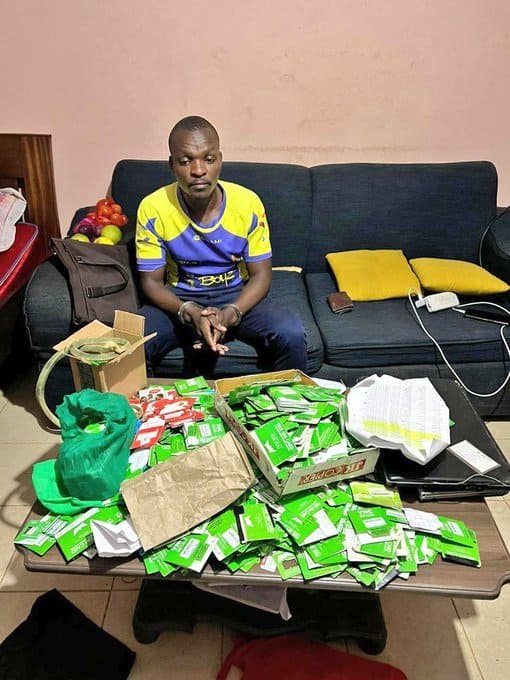
- 1,336 SIM cards linked to major Kenyan telcos (1,235 Safaricom, 80 Airtel, 21 Telkom)
- One laptop, one tablet, and eight phones
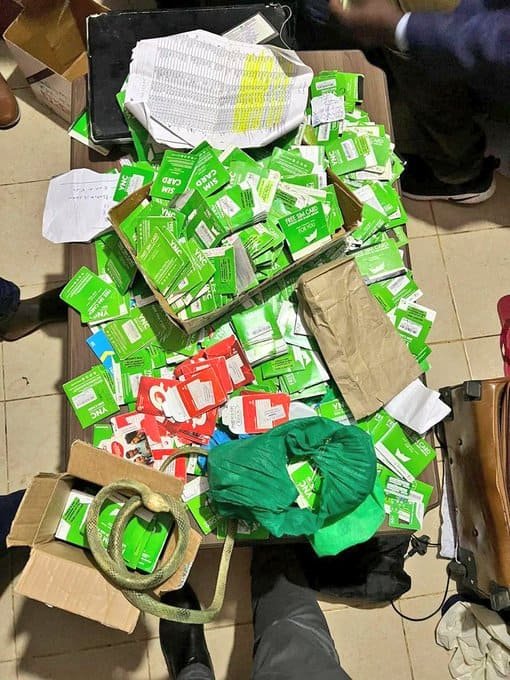
The volume of SIMs suggests an infrastructure for mass onboarding, mobile‑money routing, or withdrawal “workarounds,” typical in investment scams that fragment flows to evade scrutiny. DCI noted additional suspects were being sought.
Rural electrification claims vs. on‑the‑ground reality
The Ghash mining scam initially promoted Bitcoin mining as an “anchor customer” to improve mini‑grid economics. However:
- No third‑party energy or infrastructure sources identify specific GHash mini‑grids or data‑center sites in Kenya.
- In genuine mini‑grid anchor‑load models, operators typically document power‑purchase agreements, metering, site addresses, and equipment imports or interconnections—none of which GHash publicly provided.
- The Kenya‑facing product hinged on VIP levels, daily app “mining” returns, and referral commissions—features inconsistent with a real power‑offtake arrangement.
Ultimately it was a well-thought-of narrative, a layer of legitimacy to shroud the fraudulent crypto mining operation.
The alarming rise of crypto scams in Kenya is a significant concern.
While the Ghash mining scam was swiftly dealt with, there are still many concerns over the alarming rise of crypto scams in Kenya. The region boasts an impressive $3.3 billion in crypto transaction volume, representing Africa’s top three regions.
CHECK OUT: Harnessing Hydropower: Ethiopia’s Blueprint for Dominating Global Bitcoin Mining
This success is honey to scammers, and yet its major regulators have cautioned users. Kenya’s central bank has, since 2015, warned that virtual currencies are not legal tender and urged the public to avoid them.
In a parallel case, within the same month, fact-checking organization Africa Check confirmed that a scheme calling itself “MARA Company,” “Marathon Digital Holdings,” or “Marathon Cloud Limited” was circulating in Kenyan Facebook groups and WhatsApp chats.
The scam impersonated the legitimate US-based, Nasdaq-listed Bitcoin mining firm Marathon Digital Holdings (now MARA Holdings). It used websites like marake.com and marake.org, offered “leased cryptocurrency machines” with guaranteed daily returns plus recruitment commissions, and falsely claimed a Kenyan office. Africa Check concluded this was “likely a pyramid scheme.”
Importantly, the genuine Marathon Digital Holdings had issued a global warning on June 15, 2023, stating, “Marathon does not offer accounts for individual investors to participate in cryptocurrency mining, and we do not accept money from individual investors.”
To date no arrests or victim data specific to the Kenya Marathon impersonation scheme has been published, but the pattern mirrors GHash.
What this means for Kenyan Crypto Investors
Within a single year crypto scams in Kenya have increased. According to risk consultancy RiskHouse International, over $43,327,200 (KSh 5.6 billion) was lost to crypto scams in Kenya in 2024 alone—a 73% increase from the prior year.
CHECK OUT: No Servers, No Limits: OCEAN’s DATUM Transforms Mining
TransUnion’s 2025 fraud report found 82% of Kenyans were targeted by digital fraud between August and December 2024, with 45% reporting actual losses.
Kenya’s Virtual Asset Service Providers Act (Act No. 20 of 2025) was enacted and commenced on November 4, 2025, creating a licensing framework for exchanges, custodians, and issuers under the Central Bank of Kenya and Capital Markets Authority. However, as of late 2025, no VASPs had been licensed—meaning all crypto platforms remain technically unlicensed. The GHash and Marathon-branded scams operated in this regulatory vacuum.
Red Flags to Recognize
- GHash promised high returns of 60–80%, while the “Mara” scam promised daily profits.
- Recruitment incentives (referral commissions, VIP tiers, “weekly salaries” for bringing in new members).
- Opaque ownership (no verifiable company registration, leadership team, or physical address).
- Promo codes, country whitelists, and app-only platforms are examples of restricted access.
- Socially appealing narratives, such as rural electrification, ESG impact, and partnerships with unnamed entities, often lack third-party verification.
A Test Case for Kenya’s Crypto Enforcement
The GHash mining scam and the Marathon Digital Holdings scam exposed represent a vital understanding of how unregulated ecosystems pose greater risk. Adoption has doubled in the past year, but so has the creativity of fraudsters.
While the DCI arrests in February 2024 show law enforcement capacity to respond, the lack of follow-up conviction data, victim compensation mechanisms, or preventative licensing—more than a year later—highlights ongoing gaps.
Kenya’s crypto future depends on closing the gap between its vibrant adoption culture and the regulatory and enforcement infrastructure needed to make that adoption safe.