











In Brief
-
Crypto mining investment risks have spiked in 2025, with scammers using “cloud mining” as a cover for sophisticated Ponzi schemes like CBEX in Nigeria.
-
Investors must verify a mining farm’s physical infrastructure and regulatory status; if a platform promises “guaranteed daily returns,” it is likely a fraud.
-
The collapse of BitStream Circle (Kenya) and Africrypt (South Africa) serves as a stark reminder that even “secure” platforms can vanish with billions.
The crypto world has evolved over the years but more so in 2025 after the original digital asset showcased its might and surpassed the price of gold.
Since then Africa has kicked into high gear and now the crypto mining industry has received a renewed spotlight but does it mean it’s still safe? Crypto mining investment risks have been plaguing especially among Africans who have fallen prey to scammers and hackers.
Before diving into this new wave understanding common crypto mining scam tactics in Africa is a crucial element especially for those who steer clear from trading jargon. In fact, according to reports 16% of crypto users still fall victim to such schemes and African crypto scams are a sore spot for many veteran miners and traders alike.
Let’s explore secure cryptocurrency mining tips and see how best to aid one in identifying Ponzi schemes in crypto mining. Furthermore we will tackle an interesting topic many might not know of to best understand how to avoid cloud mining fraud and exactly what is cloud mining.
Understanding Crypto Mining Investment Risks
Crypto mining investment risks have become increasingly complex as the industry matures. Traditional risks such as hardware costs, electricity expenses, and market volatility remain relevant, but new challenges have emerged.
When crypto ETF was first introduced it’s completely changed the game the brought new opportunities for institutional investors to interact with the market reducing direct investments in mining operations. In addition, the 2024 Bitcoin halving has altered reward structures putting pressure on miners worldwide.
RELATED: Global Crypto Giants Eye Kenya: 5 Virtual Asset Firms Ready to List
Despite this trend, and shift from native mechanisms such as Proof-of-Work, crypto mining is still a core component for the digital asset world. In fact, the increased difficulty and energy demands of native crypto mining processes have enabled the creation of a new frontier: cloud-based crypto mining.
The Rise of Cloud Mining and Its Fraud Potential
Cloud mining has democratized access to cryptocurrency mining by allowing individuals to rent computational power without managing physical hardware.
Essentially, one doesn’t have to own a strong device to gain more rewards. Cloud mining effectively became a new trend, however this brought about a new form of fraud.
Let’s be honest for a minute, African crypto scams quickly teach you that the industry is not all roses and honey. From personal experience often many crypto mining scam tactics in Africa often involve promising unrealistic returns while requiring minimal upfront investment.
Quite honestly, given the circumstances of several African nations, this often looks like a way out of the high, unreasonable tax rates and borderline corruption we often face. It appeals to the naivety and desperation we as Africans often face from time to time.
The lack of transparency in these operations makes it difficult for investors to verify legitimacy, leading many to fall victim to fraudulent schemes. Causing us to lose the little we have, and paints a bad picture of Web3.
Fret not, let’s demystify those tactics that honestly led some to shed tears.
Latest Scam Tactics in Web3 Mining, Calling Out The Hyenas
Kenya: BitStream Circle Collapse
Operating between 2021 and 2022, BitStream Circle marketed itself as a premier cloud mining platform, promising investors daily returns of 5-10% for renting “mining power.”
The scheme gained rapid traction in Kenya through aggressive Telegram referral campaigns, amassing an estimated loss of over Ksh 1billion($7,730,962.50).
The Ponzi scheme was a sore spot for most Kenyan crypto traders especially after the administrator of the organizations left this message as a parting gift;
“Bye, haha, I am living a luxurious life with your dollars, if you have invited friends, wait to be killed by your recommenders. Idiots. There will be a time to meet.”
Let’s just say there are some words we cannot use to describe this.
RELATED: Unlock Your Crypto Clarity: Discover Hidden Scam Signals.
Mining City & Bitcoin Vault (South Africa)
Prominent around 2020 and 2021, Mining City operated a sophisticated Multi-Level Marketing (MLM) scheme centered on “mining packages” for a new token called Bitcoin Vault (BTCV). Investors were lured by promises of high hashrate returns and recruitment bonuses.
The scheme began to unravel when South Africa’s Financial Sector Conduct Authority (FSCA) issued a warning that the firm was unauthorized to provide financial advice. As the price of BTCV crashed and payouts ceased, thousands of investors were left holding worthless mining contracts.
CBEX (Nigeria & Kenya)
Between 2024 and 2025, the Crypto Bullion Exchange (CBEX) became a viral sensation in Nigeria and Kenya, promising automated wealth through a mix of cloud mining and AI-driven trading bots.
The platform reportedly defrauded investors of hundreds of millions of dollars (billions in Naira) before freezing withdrawals in 2024. In a classic “recovery scam” tactic, CBEX administrators claimed the freeze was due to a government audit and demanded users pay additional fees to unlock their funds, only to disappear with those deposits as well.
RELATED: Locked Accounts, Vanished Funds—CBEX’s Dirty Secrets Revealed
Mirror Trading International (MTI) (South Africa)
While technically pitched as an “automated trading pool,” Mirror Trading International (MTI) fits the profile of passive income mining scams that target novice investors.
Operating in 2020, MTI promised consistent 10% monthly returns using a proprietary bot, eventually accumulating over 29,000 Bitcoin (~$1.7 billion at the time) from investors worldwide.
It collapsed in late 2020 when its CEO, Johann Steynberg, fled to Brazil. South African courts later declared MTI a Ponzi scheme, confirming that no successful trading or mining operations ever existed.
Amazon Web Worker (Pan-African)
In 2021, a mobile app impersonating Amazon Web Services (AWS) swept across Kenya, Nigeria, and Ghana.
Known as “Amazon Web Worker,” the app claimed to offer users a way to earn passive income by “renting” cloud servers or completing digital tasks. The platform operated as a Ponzi scheme, using deposits from new victims to pay early adopters.
It vanished simultaneously from the Google Play Store and went offline across all regions, leaving thousands of young investors and students stranded with significant financial losses.
Africrypt (South Africa)
In 2021, South African brothers Raees and Ameer Cajee, founders of Africrypt, vanished along with an estimated $3.6 billion in Bitcoin. They claimed the platform had been hacked and urged investors not to report the incident to authorities, alleging it would slow down recovery.
Investigations later revealed that funds were drained from client wallets and mixed through various privacy protocols, marking it as one of the largest exit scams in crypto history.
How to Avoid Cloud Mining Fraud
How to avoid cloud mining fraud begins with thorough due diligence. Investors should research a company’s reputation through independent reviews and community feedback rather than relying solely on the company’s own marketing materials.
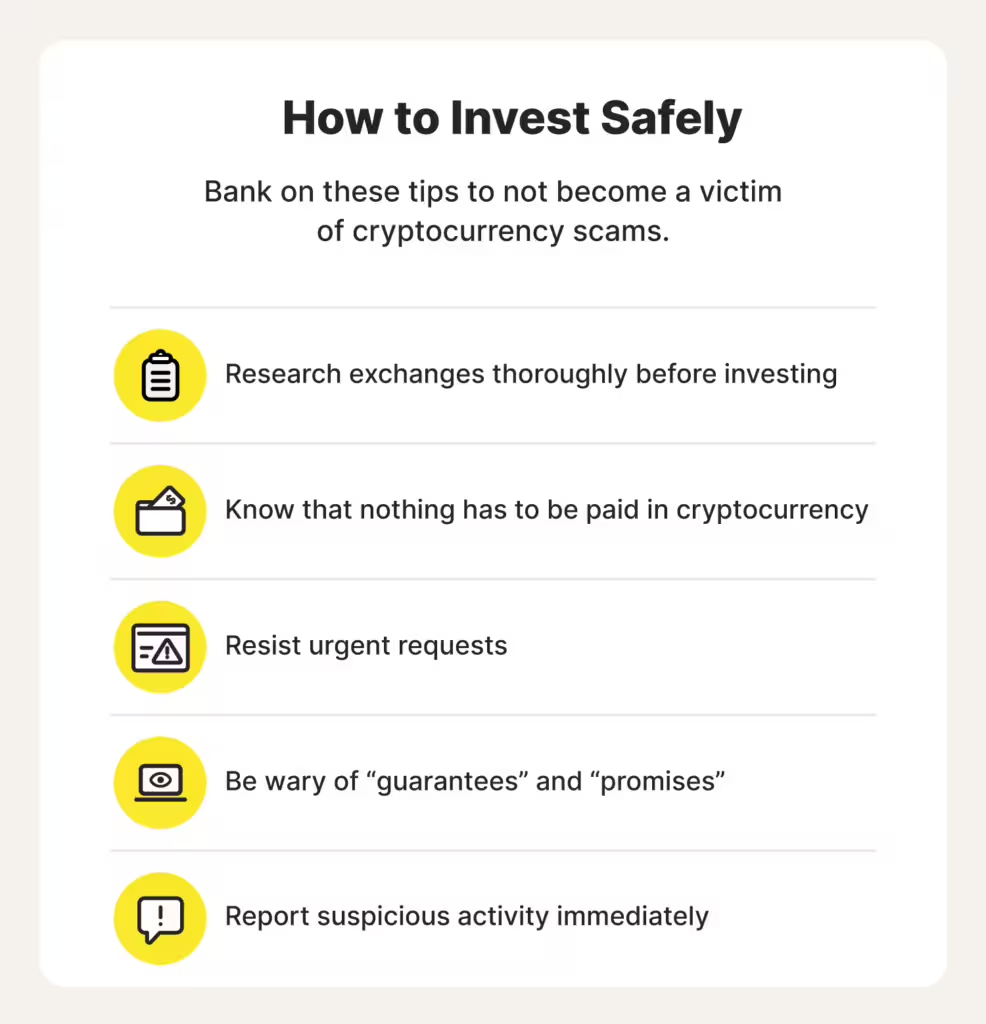
In a nutshell:
1. Verify Mining Providers
◦ Check regulatory compliance (e.g., SEC, FCA registrations).
◦ Look for real-time mining proofs and transparent payout logs.
2. Beware of Unrealistic Promises
◦ If a platform offers “risk-free” 500% returns, it’s likely a scam.
◦ Legitimate mining yields 5-20% monthly, depending on market conditions.
3. Use Escrow Services
◦ Platforms like Paxful Escrow or Binance Custody can mitigate fraud risks.
Secure Cryptocurrency Mining Tips
Secure cryptocurrency mining tips should be prioritized by all investors, regardless of their experience level. This includes using reputable mining pools with established track records, implementing strong cybersecurity measures to protect digital assets, and diversifying investments across different cryptocurrencies and mining approaches.
Additionally, investors should consider the environmental impact of their mining activities, as energy consumption remains a critical concern in the crypto community.
RELATED: Harnessing Hydropower: Ethiopia’s Blueprint for Dominating Global Bitcoin Mining
Some secure cryptocurrency mining tips often involve a key note we at Web3Africa have continuously emphasized; THINK FOR YOURSELF. This involves understanding why the reputable crypto mining platforms have maintained their stance. One common factor that aids in identifying Ponzi schemes in crypto mining is an established track record.
Web3 is not a get rich quick scheme and the plethora of common crypto mining scam tactics in Africa is a badge of proof. Often people forget since the keen focus on crypto mining investment risks, it’s usually on the risk part forgetting the investment part. Digital assets are a space with immense profitability but it comes with due diligence.
Essentially:
• Do your research before investing in any crypto mining operation. Look for reviews, feedback, and news articles about the company or individual offering the investment. If someone approached you specifically with the offer, look for information from sources other than them.
• Be cautious of high-pressure sales tactics or promises of quick returns. Scammers often use these tactics to lure in victims.
• Never invest more money than you can afford to lose. Cryptocurrency investments are inherently risky, and mining operations are no exception.
• Look for red flags such as unverifiable claims or unclear terms and conditions. If something seems too good to be true, it probably is.
• Use trusted and reputable cryptocurrency exchanges and wallets to buy, sell, and store your digital assets.
Discover more from Web3Africa
Subscribe to get the latest posts sent to your email.
You must be logged in to post a comment.