






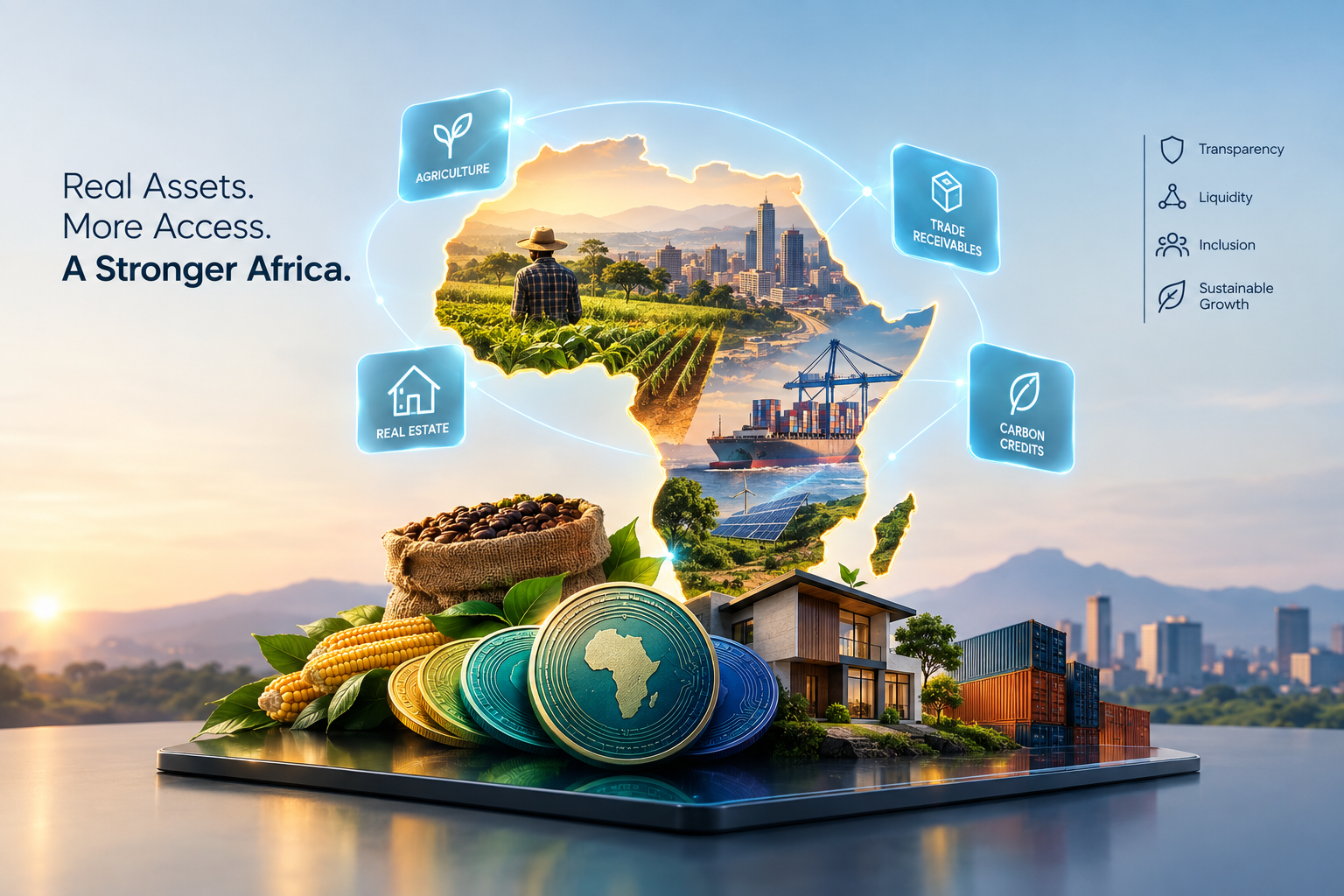
Blockchain goes beyond crypto, trading, and speculation. In fact, it is blockchain’s application in other sectors that makes Africa its most potent hub. The continent is at the center of it all, having enough resources and innovators to tokenize tangible assets like land, agricultural commodities, trade receivables, and carbon credits.
Take RWA tokenization, the process of creating blockchain tokens that represent legally enforceable rights to off-chain assets. Basically, a fintech founder can secure financing for a smallholder farmer using tokens backed by a future maize harvest.
Don’t just take our word for it. Global on-chain distributed tokenized asset value (excluding stablecoins) has surged from approximately $6 billion in early 2025 to $31–38 billion by August 2026.
According to Afreximbank and the African Development Bank, Africa technically owns billions in real estate, farmland, and commodities but still faces a $100–120 billion annual trade finance gap. Real-world asset tokenization offers infrastructure to unlock these untapped resources locked in illiquidity.
So what are real-world asset tokenizations? What is happening, and how will attending the Africa Blockchain Festival 2026 provide you a chance to interact with actual participants of the market?
The Core Mechanics of Fractionalizing Illiquid African Assets
At its simplest, a tokenized asset functions as a “digital deed.” Through smart contracts, blockchain tokens represent fractional or whole ownership of a physical asset. It can range from a hectare of farmland, a warehouse receipt for coffee beans, an invoice awaiting payment, or verified carbon credits from reforestation.
When structured correctly, these tokens enable the following:
Fractional ownership
For stock and digital traders, acquiring high-value assets can be challenging due to factors like inflation and currency devaluation. So blockchain breaks down the asset into affordable units.
Kenya’s Nomachain is tokenizing real estate into shares accessible for as little as $2 USD or approximately KES 220. Minah.io in Togo enables micro-investors to own fractions of properties and small businesses with minimum investments of around €40.
This process converts traditionally illiquid assets into tradable instruments. Nderitu Waithaka, co-founder of Nomachain, stated that Kenyans collectively hold an estimated Sh1.7 trillion in dormant or idle assets. “By leveraging blockchain,” he argued, “we can ensure no data can be altered in secret,” addressing the trust deficits that fuel ghost projects and land fraud.
Access to global capital
Blockchain transcends boundaries, and RWA tokenization is no different. International buyers or even a local buyer in South Africa can acquire assets in Kenya. This process also enables the easy transfer of remittances, proper product investments, and tokenized services.
Today, tokenization is not magic. While blockchain technology is prone to failure, especially without proper KYC checks, an important fact to understand is that tokens are only as credible as the “bridge” connecting them to the physical world, the custody arrangements, legal contracts, and enforcement mechanisms that ensure a token truly represents what it claims.
Translating Blockchain Theory into Tangible Commodities
Tokenized Real Estate
Tokenized real estate was among the first applications of RWA tokenization.
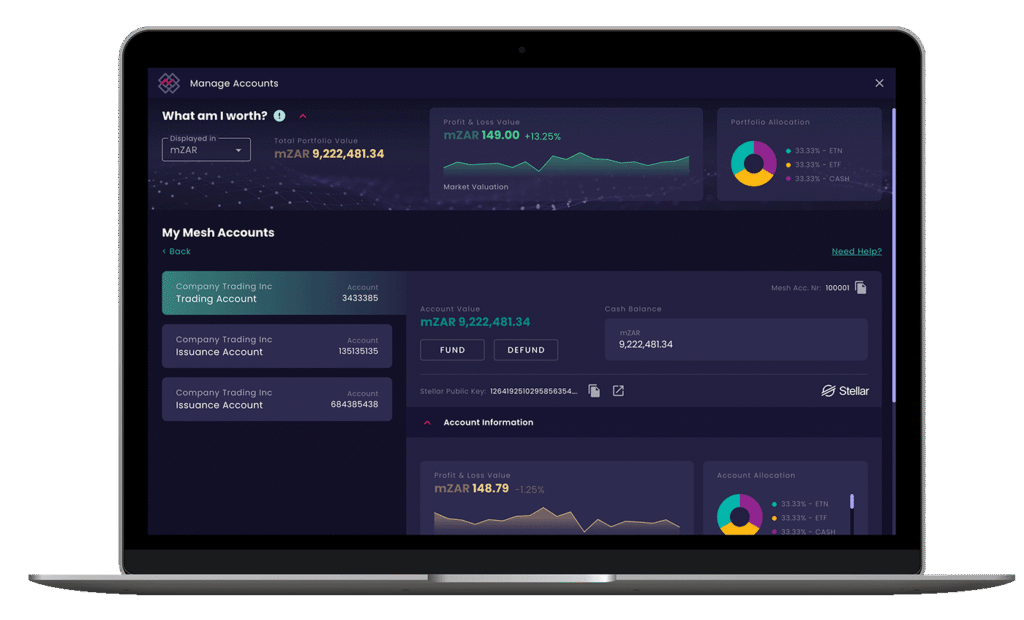
In South Africa, Mesh.trade became the first fully licensed crypto asset platform to issue tokenized bonds when it raised R100 million through the Die MOS 10Y bond on Stellar. They did have to acquire a Financial Sector Conduct Authority (FSCA) CASP license.
In Kenya, Nomachain has tokenized over $1.8 million in real estate across 68+ rent-to-own plans and is progressing through licensing under the Capital Markets Authority (CMA).
The platform supports over 1,000 users actively saving toward homeownership. Nomachain is a participant in the Lisk African Incubation program and has deployed its platform on both BSC and Lisk blockchains.
The company states it is “on track to tokenize over $40 million” in similar plans in the near future. Its $NOMA token is self-reported to have a market capitalization exceeding $3 million.
Minah.io, a Stellar-based fintech serving West Africa, secured a $110,000 Stellar Community Fund grant and closed a €300,000 pre-seed round (with €450,000 in soft commitments) at Web Summit 2025. The platform is currently tokenizing real estate, land titles, and SME equity, and its first investment strategy, which is already live, is valued at €40,000.
Tokenized Agriculture
Agriculture is a core economic pillar for Africa, so when tokenization came, its application made a difference.
In September 2025, the All Farmers Association of Nigeria (AFAN) and African Holdings Corporation (AHC) signed a memorandum of agreement to deploy blockchain registries and tokenize agricultural commodities. AFAN President Farouk Rabiu Mudi called it an approach that would unlock wealth for Africa.
In Kenya, 28-year-old entrepreneur Mara Maroa launched Pitaya, tokenizing dragon fruit production from three farms with approximately 2,600 trees on Solana.
“Many cryptocurrencies are just attention-based. So I thought, if people can trade attention, why not trade a commodity?”
Blockchain Trade Finance in Africa
One of the many core elements of blockchain is its traceability and immutability, which saves a lot when it comes to tracking invoices. StelloVault, a pan-African dApp, decided to apply this aspect and provide SMEs with immediate liquidity.
Afreum, a Stellar-based ecosystem, launched its Africa Wallet in November 2025, supporting over 300 tokens, including 150+ USDC-backed fiat tokens designed for cross-border settlement.
Even the Nairobi Securities Exchange (NSE) understands that blockchain can solve many financial dilemmas and delays. In 2025, the NSE partnered with DeFi Technologies and SovFi to launch the Kenya Digital Exchange (KDX), targeting tokenized equities, debt, funds, and commodities through a phased rollout extending into Q2 2026. The NSE has also signed a memorandum of understanding with Tether and is integrating Hedera infrastructure.
Overcoming the Fatal Custody Flaws Plaguing Early Tokenization Models
Unfortunately, RWA tokenization has something industry insiders call the bridge problem. It’s basically finding a way to ensure the integrity of the connection between physical assets and their digital representation.
Tokenization requires:
- Custody and control: Securing physical assets and controlling associated cash flows
- Accurate oracles: Reliable off-chain data feeds for asset valuation, harvest yields, invoice payments, and carbon verification
- Legal enforceability: Making sure that owning tokens is linked to accepted property rights using structures like SPVs, trust units, secured notes, or registry acknowledgements.
- Redemption rails: Functional fiat on/off-ramps and bank settlement channels
“Blockchain is the easy part,” one legal expert told Web3Africa. “Governance and enforcement are the hard part.” Without credible custodians, third-party audits, and enforceable legal contracts, tokenization risks becoming “digitized fraud” rather than genuine innovation.
There is also the concern of monopolization, a plague common in Africa. If the benefits of tokenization mainly go to those who already own assets and leave out unbanked people or smallholders, it could make inequality worse instead of better.
Aligning African Policymakers and Web3 Builders at ABF 2026
RWA tokenization is more complex than stablecoins or mobile money. It requires coordination between regulators, legal experts, exchanges, custodians, auditors, issuers, and developers. This is where the Africa Blockchain Festival (ABF) comes in.
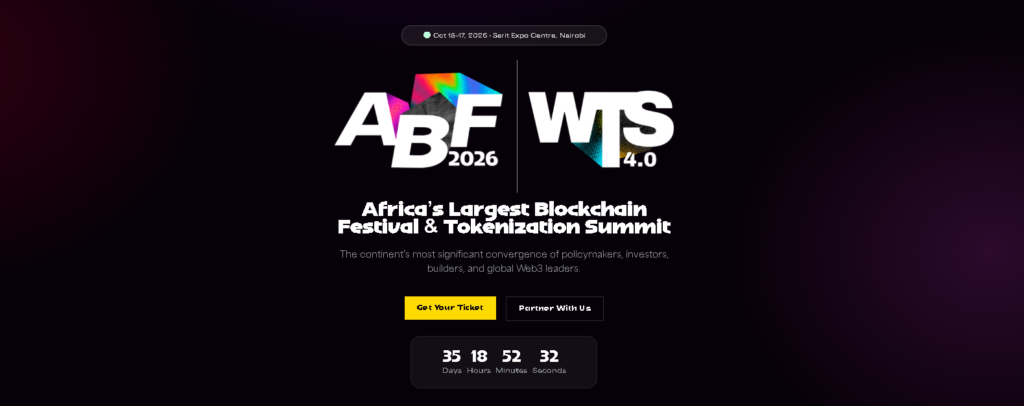
“Our vision has always extended far beyond cryptocurrency,” said ABF CEO Olubunmi Fabanwo in August 2026.
“Kenya has consistently demonstrated that innovation thrives when talent, entrepreneurship, and supportive ecosystems come together.”
This year’s Africa Blockchain Festival will be held in Nairobi’s Sarit Center from October 15-17 and will address key topics such as:
- Implementing Kenya’s new Part VII tokenization regulations
- Designing compliant security token structures under Nigeria’s ISA 2025
- Building credible custody and oracle infrastructure
- Unlocking the $100–120 billion trade finance gap through tokenized receivables
- Channeling diaspora investment into tokenized African assets
- Creating inclusive tokenization models that serve smallholders, not just elites
The trillion-dollar promise of real-world asset tokenization in Africa rests not on speculative hype but on solving concrete problems: unlocking Sh1.7 trillion in dormant Kenyan assets, closing a $100–120 billion trade finance gap, channeling diaspora capital productively, and providing smallholder farmers with collateral-free access to working capital.
The event itself will showcase how real world asset tokenization will be a game changer for the continent. With Africa’s biggest economies now operating explicit digital asset frameworks, licensed platforms issuing tokenized securities, and founders deploying real capital into tokenization, the hosts of the Africa Blockchain Festival will showcase how everyday citizens can benefit even greater, if they use this technology the right way.
Discover more from Web3Africa
Subscribe to get the latest posts sent to your email.

You must be logged in to post a comment.