










Table of Contents
The concept of retail trading initially kickstarted our journey in Web3, but as of today, it’s effectively over.
Today, most nations’ developers are thinking about B2B utility, blockchain-based agri-tech, and even voting systems. Bitcoin, Ethereum, Solana, and memecoins are all terms a business would care less about. For local non-tech people, it’s more about blockchain’s efficiency and how it can improve their livelihoods.
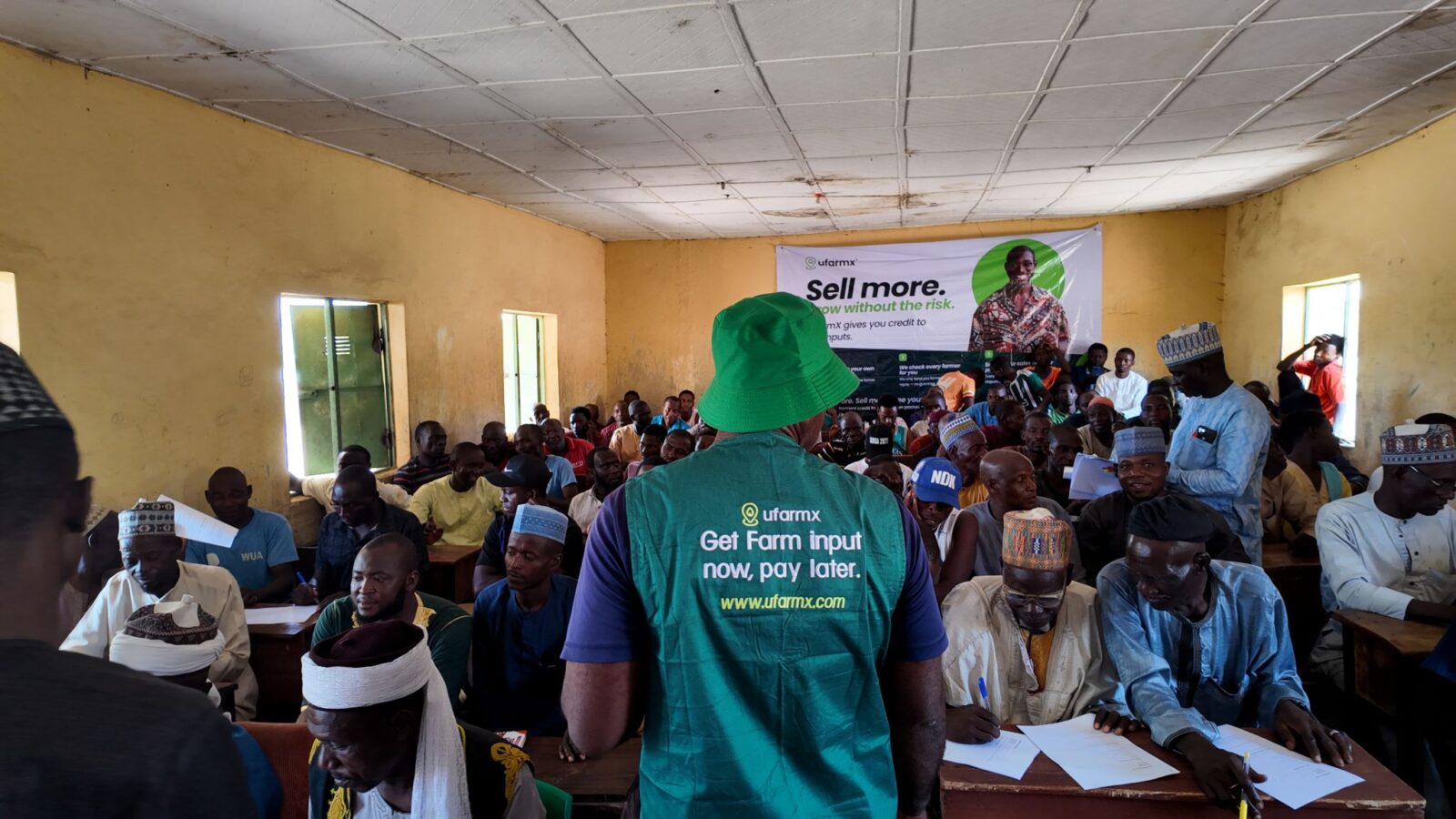
One such look is at UfarmX, a Nigeria-founded agri-fintech data provider that just crossed $6.8 million. UFarmX utilizes blockchain as a foundational middleware to dismantle a massive agricultural credit deficit.
The Anatomy of an Invisible Ledger
Agriculture is our top economic activity, having a gross valuation of US$189.07 billion in 2025 alone. Despite the lucrative figure, it still lacks any form of verifiable financial identity. It’s common for rural smallholder farmers to struggle as commercial banks underwrite their data because analog harvest and yield data cannot be trusted, verified, or audited at scale.
UfarmX CEO Alexander Zanders recognized this operational failure after operating a 100-acre farm in Iseyin, Nigeria, during the 2020 supply chain disruptions. His initial 15-farmer input-credit experiment proved that access to quality inputs directly correlated with tripled yields and minimized defaults.
RELATED: Ghana Ends the Crypto Grey Zone with Act 1154.
However, he highlighted how scaling requires something close to replacing commercial banks.
His solution was relying on a B2B2C insured retail network powered by a decentralized ledger infrastructure.
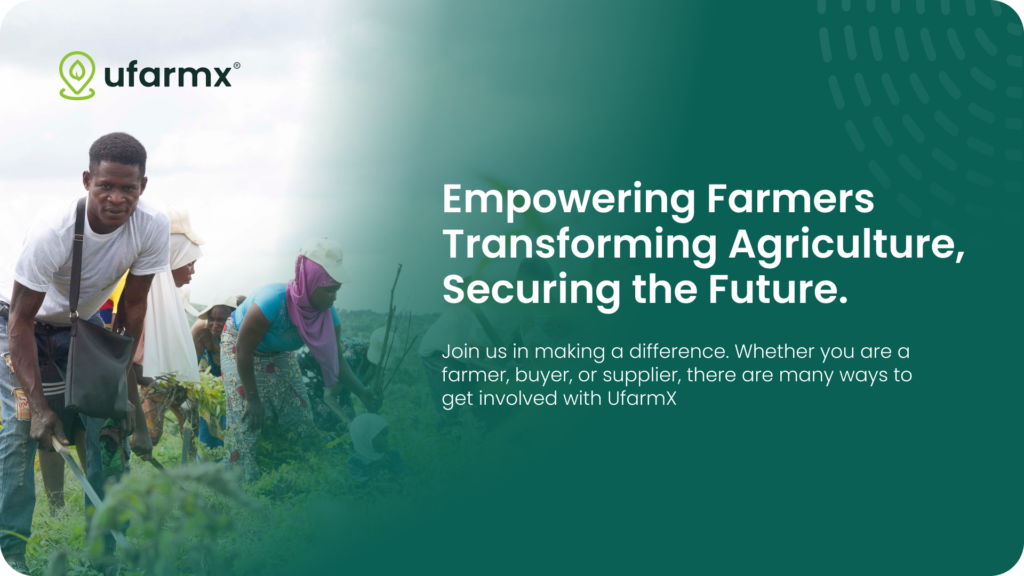
Basically, farmers can apply for credit through a USSD survey at vetted local agro-dealers, requiring no smartphone. The UfarmX algorithm instantly processes over 200 data points, including GPS coordinates, crop analytics, and regional market data. These datasets generate a unique credit score for each farmer.
The transaction is recorded on a transparent blockchain ledger, rendering the farmer’s offline harvest data and repayment history immutable.
UFarmX services establish a portable financial identity for the unbanked rural economy. The ledger provides the exact traceability required by risk assessors, effectively turning an opaque supply chain into structured, underwritable data.
The 1.17 Percent Anomaly
The financial mechanics of UfarmX’s $6.8 million milestone demand clinical analysis, primarily because traditional African microfinance has historically failed at this exact task. For context, the Central Bank of Nigeria’s (CBN) heavily subsidized Anchor Borrowers’ Programme (ABP) has recently struggled with non-performing loan rates estimated between 60 and 76 percent.
It’s no secret, traditional African microfinance has its shortcomings. Take Nigeria’s Anchor Borrowers’ Programme, for example. It’s a heavily subsidized government initiative, and yet its non-performing loan rates have been estimated anywhere from 60 to 76 percent. Most of the money lent to farmers never comes back.
UfarmX does things a bit differently. Across Nigeria, Senegal, and Liberia, the platform has built a credit-scored network of over 17,000 smallholder farmers, and its net default rate sits at just 1.17 percent.
That’s not a typo.
The platform has essentially removed the bank from the day-to-day equation, leaned on local retail partners, and built a smallholder financing model that runs at an 82 percent gross margin.
The Zone Infrastructure Parallel
UfarmX is but one example of how we are moving beyond retail trading and crypto currency. Take Zone, the platform, has successfully rewired Nigerian ATM and POS fiat settlements using an Ethereum-Virtual-Machine-compatible Proof of Authority network.
It secured official CBN licensing and surpassed $754 million (₦1 trillion) in transaction volume without ever touching retail crypto. Zone demonstrated that a decentralized ledger can take the place of a centralized trust system by acting as a regulated, hidden link for commercial banks.
RELATED: Bold Vision: Zone’s Regulated Blockchain Ecosystem Sparks Hope
UfarmX is executing the exact same blueprint, applied to agricultural risk rather than fiat settlement.
Both companies are Nigerian-founded. Both operate entirely outside the crypto-exchange niche. Both convert previously fragmented, unreliable data into shared, trustless infrastructure.
The API Endgame
The ultimate validation of this model arrives in the fourth quarter of 2026, as UfarmX formally expands into Kenya and launches a bank-facing API.
This interface will allow traditional financial institutions to process agricultural loan applications directly through UfarmX’s underwriting infrastructure. Operating in milliseconds, the API transitions UfarmX from a closed-loop lending facilitator into the equivalent of a decentralized credit bureau.
To legacy commercial banks, agricultural lending is a high-risk philanthropic mandate. UfarmX and others like Shamba Records, Cellulant (Agrikore), and CFT Africa have provided an immutable link of trust via decentralized agricultural credit scoring. They are adopting this technology beyond the ideological commitment we initially had to compete with our international neighbors.
As Zanders stated,
“African agriculture gets looked at through the lens of impact when the opportunity for capitalization is immense. This isn’t charity. It’s the largest credit market still sitting untouched.”
Blockchain goes beyond crypto, and in Africa, it’s solving real-world use cases. New startups simply look like commercial APIs, insured seed disbursements, and regulated fiat settlement networks, quietly rewriting the continent’s digital infrastructure from the ground up.
Discover more from Web3Africa
Subscribe to get the latest posts sent to your email.

You must be logged in to post a comment.