Table of Contents
TL;DR,
- Zone fintech, a regulated blockchain payments company, has processed over $689M across Nigeria. Its 2025 pilot aims to leverage this infrastructure to make cross-border remittances faster and cheaper for Africa.
- Instead of offering digital assets directly, Zone builds regulated blockchain rails for banks. Its focus on compliance and partnerships provides a template for scalable, reliable payment infrastructure in fragmented African markets.
- For IMTOs and fintechs, plugging into Zone’s network promises faster corridor launches, lower capital lockup via real‑time settlement, and regulatory leverage through Zone’s switching license—potentially cutting remittance costs in African corridors and increasing how much value reaches households.
Most local fintechs are increasingly focusing on regulation. Governments are noticing the billion-dollar sector, meaning digital asset laws will soon follow; thus, getting in first saves a lot of groundwork.
Zone Fintech, a blockchain payment infrastructure company, is advancing compliance by collaborating closely with the Central Bank of Nigeria. Instead of offering access to digital assets, the company intends to build the backbone of blockchain remittances in Africa, and its volume backs it up.
Between November 2022 and December 2024, the company processed over $689 million (₦1 trillion) and 100 million transactions across twelve Nigerian banks, primarily through ATM channels.
Now, the regulated fintech company showcases how regulation gives expansion, onboarding, and government support the edge in Africa’s fintech race.
Overview of Zone Fintech and its remittance product
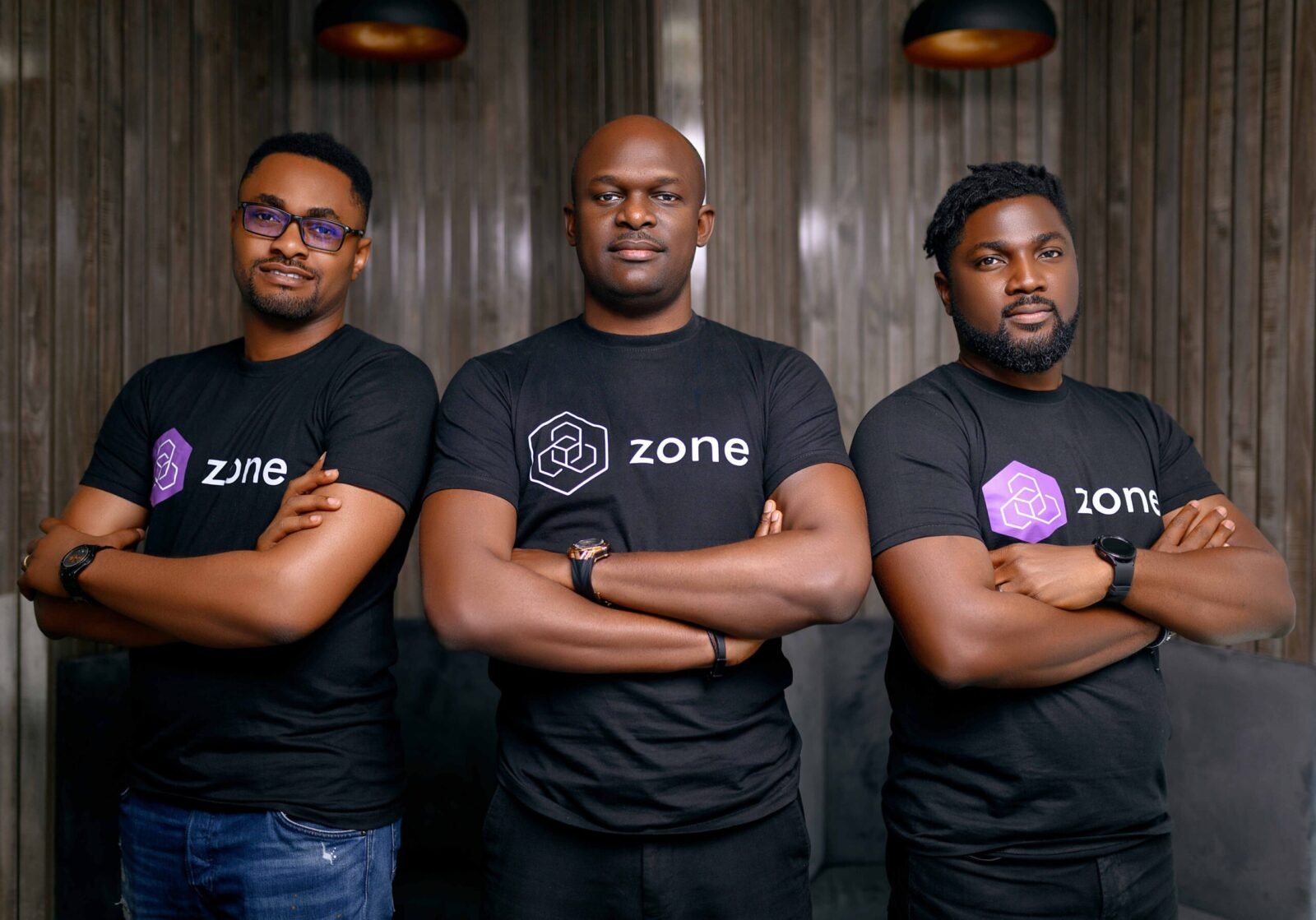
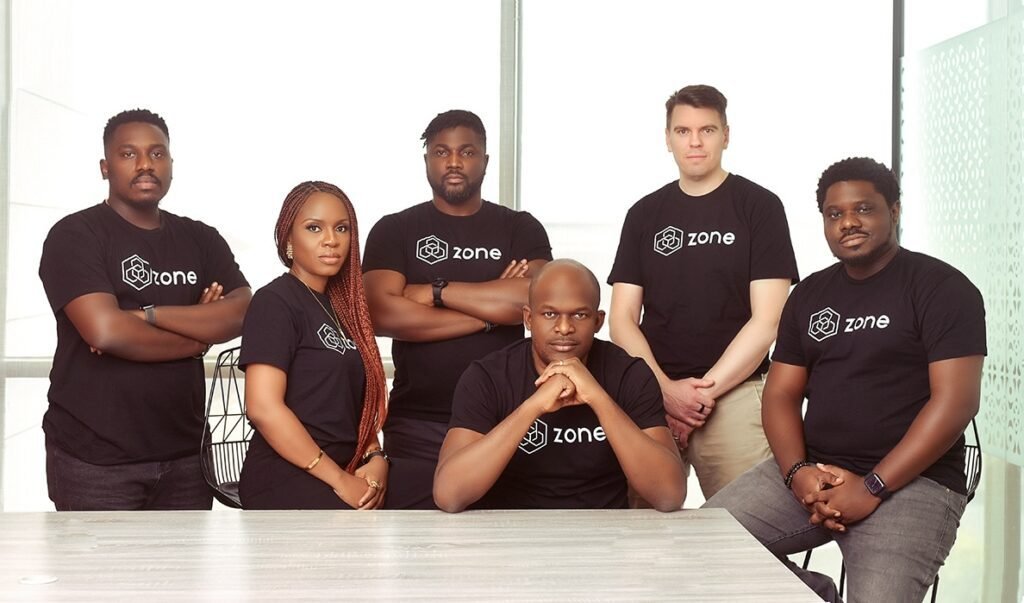
Founded in 2008 by brothers Emeka and Obi Emetarom alongside Wale Onawunmi, Zone fintech (originally Appzone) spent over ten years developing core banking software for more than 18 commercial banks and 450 microfinance institutions across Africa. In May 2021, the company secured a payment switching and processing license from the Central Bank of Nigeria.
Appzone formally rebranded to Zone and spun off its legacy banking-as-a-service business into a separate entity called Qore in November 2022. Zone operates Layer-1, permissioned blockchain that enables direct peer-to-peer transactions between licensed financial institutions—banks, fintechs, and the Nigeria Inter-Bank Settlement System (NIBSS)—without routing through a central hub.
CHECK OUT: MTN MoMo’s ₦131 Billion Secret: The Airtime Loan Gold Rush
In March 2024, Zone closed an $8.5 million seed round led by Flourish Ventures and TLcom Capital, earmarking part of the proceeds explicitly for a 2025 cross-border pilot.
Inside Zone’s blockchain infrastructure for payments
Zone 2.0 is a permissioned, Ethereum‑compatible Layer‑1. Nodes are operated by regulated institutions (banks, fintechs, NIBSS), enabling:
- Decentralized routing: Institutions communicate directly, avoiding single‑point hub failures.
- Real‑time settlement: Replaces batch settlement; smart contracts track transaction state end‑to‑end and trigger automatic reversals on failure.
- Programmable compliance: Rules can be encoded on-chain for oversight and auditability (outlined in Zone’s 2025 “Regulated Blockchain” whitepaper).
- Performance: The company reports 10,000 TPS “out of the box,” sub‑second processing, and high success rates. These are company claims; external benchmarking would add confidence.
For Zone, the focus was primarily divided among distribution, compliance, and liquidity, allowing banks to onboard without concerns while also providing retail access to digital assets.
Remittance providers can plug into Zone’s blockchain payment infrastructure for banks without negotiating individual integrations with each institution.
The 2025 Remittance Product: Solving Distribution, Liquidity, and Licensing
CEO Obi Emetarom described the remittance thesis in a 2024 interview, stating:
“We saw that those networks were unreliable and expensive. So we started asking ourselves, how can we build a payment network that can be a lot more reliable with a lot less friction?”
Obi distilled the three main issues remittances face and how their blockchain infrastructure comes into play.
1. Distribution
Many startups and smaller IMTOs don’t have direct banking relationships in their destination markets, so they have to rely on expensive correspondent banking networks or third-party agents.
Zone fintech solves this problem by using its existing network of 12 banks, 20+ fintechs, and other financial institutions, as well as more than 6,000 ATMs across Nigeria, as built-in distribution rails.
2. Liquidity
Managing pre-funded local-currency pools in multiple African markets ties up capital and creates FX risk. Zone’s real-time settlement model, already live for domestic ATM and point-of-sale transactions, promises to reduce or eliminate the need for large pre-funded nostro accounts.
This translated to instant settlement, meaning International Money Transfer Operators (IMTOs) can turn capital faster, lowering the liquidity buffer required per corridor.
3. Licensing
Operating cross-border payments in Africa legally requires navigating Africa’s fragmented regulatory frameworks. Zone already holds a CBN switching license and has formal partnerships with NIBSS, Nigeria’s central settlement infrastructure.
By acting as a regulated intermediary, Zone can onboard remittance providers under its license umbrella in markets where it operates, shortening the time-to-market for new corridors.
CHECK OUT: How Nigerian Founders Built a Trustless Cross-Chain Bridge to Fix Crypto’s $600M Security Flaw
Milestones that set up the cross-border pilot
- May 2021: CBN switching and processing license.
- Oct 2021: Appzone Switch launches “Zone,” a blockchain platform for payment processing with ten banks connected.
- Nov 2022: Rebrand to Zone; Qore spun out.
- 2022–2024: ATM transactions go live; POS gateway launches (June 2024); NIBSS partnership for PTSA functions (Aug 2024), with CBN approval for NIBSS‑Zone POS integration in Dec 2024.
- Mar 2024: Zone 2.0 is announced (EVM-compatible, subsecond processing).
- Mar 2024: $8.5m seed round; proceeds earmarked for 2025 cross‑border pilot.
- In March 2025, it was reported that there was a cumulative total of over ₦1 trillion across 100 million transactions, with twelve banks currently operational.
What this means for key stakeholders
For IMTOs and Fintechs
- Faster entry into the market:You don’t have to make deals with dozens of African banks; just sign up for Zone and you’ll be able to use its network.
- Lower capital lockup: Real-time settlement and automated liquidity management lower the amount of nostro funding needed.
- Regulatory leverage: In Nigeria, you can run your business under Zone’s CBN license, and this could be extended to other African markets where Zone grows.
In 2024, Nigeria alone got $20.93 billion in remittances, an increase of 8.9% from the previous year. This was about 35% of all the money that came to sub-Saharan Africa. According to the UN Office of the Special Adviser on Africa, remittances often make up 28% of the budgets of people who get them in developing countries. They help over 200 million Africans.
According to a 2024 meta-analysis, a 10% rise in remittances is linked to a 3% drop in the number, depth, and severity of poverty in Africa, Asia, and Latin America.
If blockchain remittances in Africa via Zone reduce the average corridor cost from 7.9% to closer to the 4.4–4.6% range of digital channels—or even lower—households could save hundreds of dollars a year, directly improving their access to nutrition, education, and healthcare.
Infrastructure First, Remittances Second
The thesis behind Zone fintech is to embed a regulated, bank‑operated blockchain rail under existing payment channels, then extend it to remittances with real‑time, programmable settlement.
The domestic footprint (twelve banks, ₦1 trillion+ processed) suggests the model can move serious volume; whether it measurably lowers the cost and latency of blockchain remittances in Africa will be proven corridor‑by‑corridor in the 2025 pilot.
If the results hold, Zone fintech’s model could become a credible template for compliant, high-reliability cross-border payments in Africa.