








Table of Contents
The theme for Africa 2026 is stablecoins, local blockchain networks and communities, regulations, and, unfortunately, the closure of various international policies.
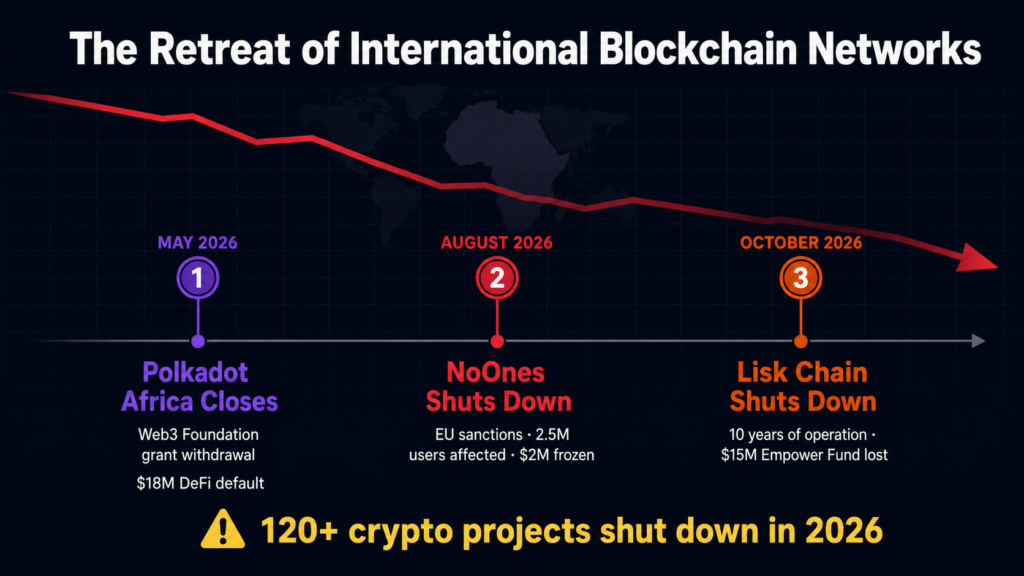
Recently Max Kordek announced the end of the highly publicized Web3 expansion for Lisk. According to the announcements, its Ethereum Layer 2 network will go offline on October 31. While the network’s use in Africa is limited, the loss of the $15 million Empower Fund is a heavy hit for startups all over.
It’s not just Lisk; Polkadot Africa was shut down after a sudden withdrawal of its grant sections. The DeFi lending protocol recently defaulted on its $18 million and NoOnes, freezing operations after the EU sanctioned their transactions.
Steadily, one by one, the international focus on growing Africa’s Web3 foundations has dwindled, yet the continent still has one of the highest adoption and transaction rates worldwide.
So what’s actually going on?
The Economic Mismatch of Subsidized Infrastructure
For years, international blockchain networks entered Africa with a standard playbook: launch a Layer-1 or Layer-2 network, establish an ecosystem fund, distribute grants to local developers, and wait for transaction fees to sustain the protocol.
Typically, since Africa became the latest hotbed for digital assets, international blockchain networks would follow a rigid guideline. In a nutshell, they’d launch a Layer 1 or 1 network and establish an ecosystem fund, which attracts and encourages developers. In the end, there’s always a winner, and the network also has to provide the tools and wait for transaction fees to sustain the protocol.
Lisk proved that failure is still an option if you don’t understand Africa’s approach to digital assets. Operating a blockchain requires constant capital to incentivize validators, developers, and liquidity providers.
In the continent, inflation, currency depreciations, and high FX transactions have conditioned most markets to be highly sensitive to transaction fees. In addition, the majority of transactions in Africa are less than $2 million. Keep in mind, one of the main goals for local fintech is to embed something that allows international access, low transaction costs, and simplicity enough to accommodate day-to-day expenditure. Solely relying on this causes networks to struggle to capture meaningful value.
Lisk simply failed to generate enough fee revenue to cover the cost of its incentive cycles. As total value locked (TVL) collapsed to a mere $139,000, the protocol’s native LSK token crashed to an all-time low of $0.07.
RELATED: Why Lisk is Betting on JavaScript, Farmers, and Local Heroes
Facing an unsustainable burn rate, the Lisk DAO was forced to propose burning 100 million tokens from its treasury to salvage remaining value. Capital deployed in emerging markets does not automatically translate into durable infrastructure when core unit economics are inverted.
The Compliance Choke Point
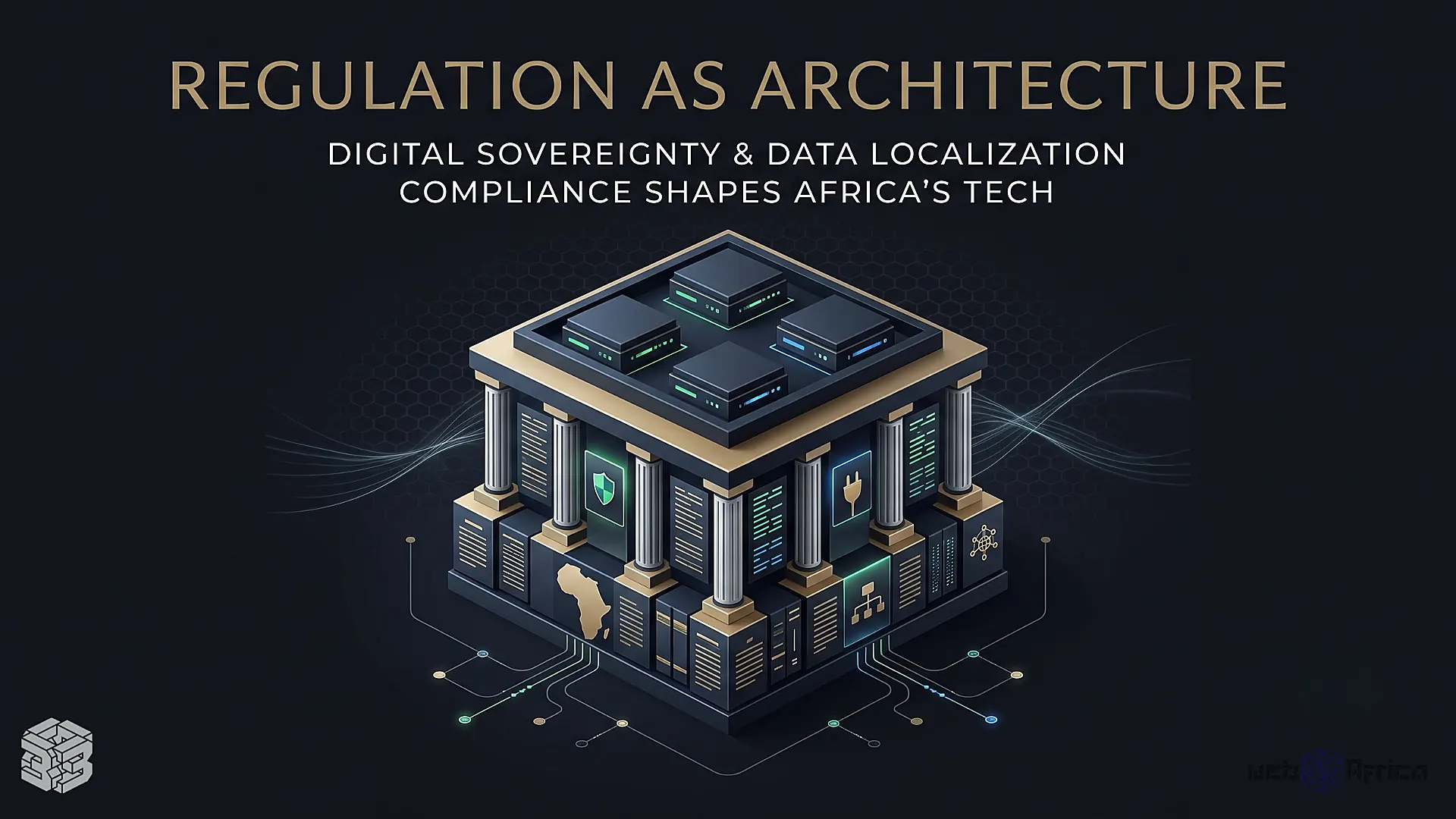
Despite recent improvements, regulations are still fragmented, nonexistent, or favor only local or international startups.
Kenya serves as the primary stress test for this new reality. After the country was added to the FATF grey list in February 2024 for deficiencies in its anti-money laundering (AML) frameworks, Nairobi moved aggressively to police virtual assets. The resulting VASP Act and its July 2026 draft regulations introduced prohibitive operational barriers.
Under the new Kenyan framework, stablecoin issuers must hold KES 300 million ($2.3 million) in paid-up capital, while exchanges must hold KES 100 million. Regulators now demand comprehensive compliance systems and threaten up to 10 years in prison for non-compliance.
This regulatory shift does provide a step, but it also limits the capabilities of international platforms. The collapse of NoOnes perfectly illustrates this vulnerability. Before winding down, the P2P platform saw $2 million in USDT frozen by a Kenyan court amid a money-laundering probe. Once international partners and KYT (Know Your Transaction) providers flagged the platform’s flows as high-risk, Binance severed ties, making continued operations impossible.
RELATED: Own Your Intelligence: How Blockchain Fuels Decentralized AI
Furthermore, before platforms could paper over high compliance costs and weak revenues with venture capital.
In 2026, things changed.
US venture capital participation in African deals dropped 53% in early 2026. Equity funding’s share of total capital fell from 76% to just 43%. By January and February, Series B rounds for local startups had flatlined to zero. Without a continuous injection of foreign venture capital, the subsidized crypto models of the early 2020s were forced into immediate, painful corrections.
The Survivors Are Now Betting on B2B Models and Regulatory Certifications
The ecosystem’s transformation and regulatory updates primarily drive this decline. However, while retail-focused, grant-dependent infrastructure fails, highly compliant, B2B-focused companies are capturing the continent’s growing on-chain volume.
Take the yellow card, for instance. The company acted swiftly, switching from a retail application to a B2B stablecoin infrastructure provider. In addition, it quickly secured its regulatory licenses to partner with traditional finance giants like Mastercard, and the company raised $40 million in an otherwise frozen market.
Quidax did the same; it’s operating under full SEC regulation in Nigeria and actively expanding its compliant stablecoin rails across more than 21 countries.
Even the retreating networks recognize this shift. Lisk is abandoning the blockchain consensus business entirely, migrating remaining developers to Celo, and pivoting to become a B2B treasury operations platform for enterprise finance teams.
The playbook has been rewritten, and now selecting a blockchain based on the availability of ecosystem funds is a massive operational risk. Now it’s more about strict compliance, sustainable unit economics, and alternative applications of digital assets.