









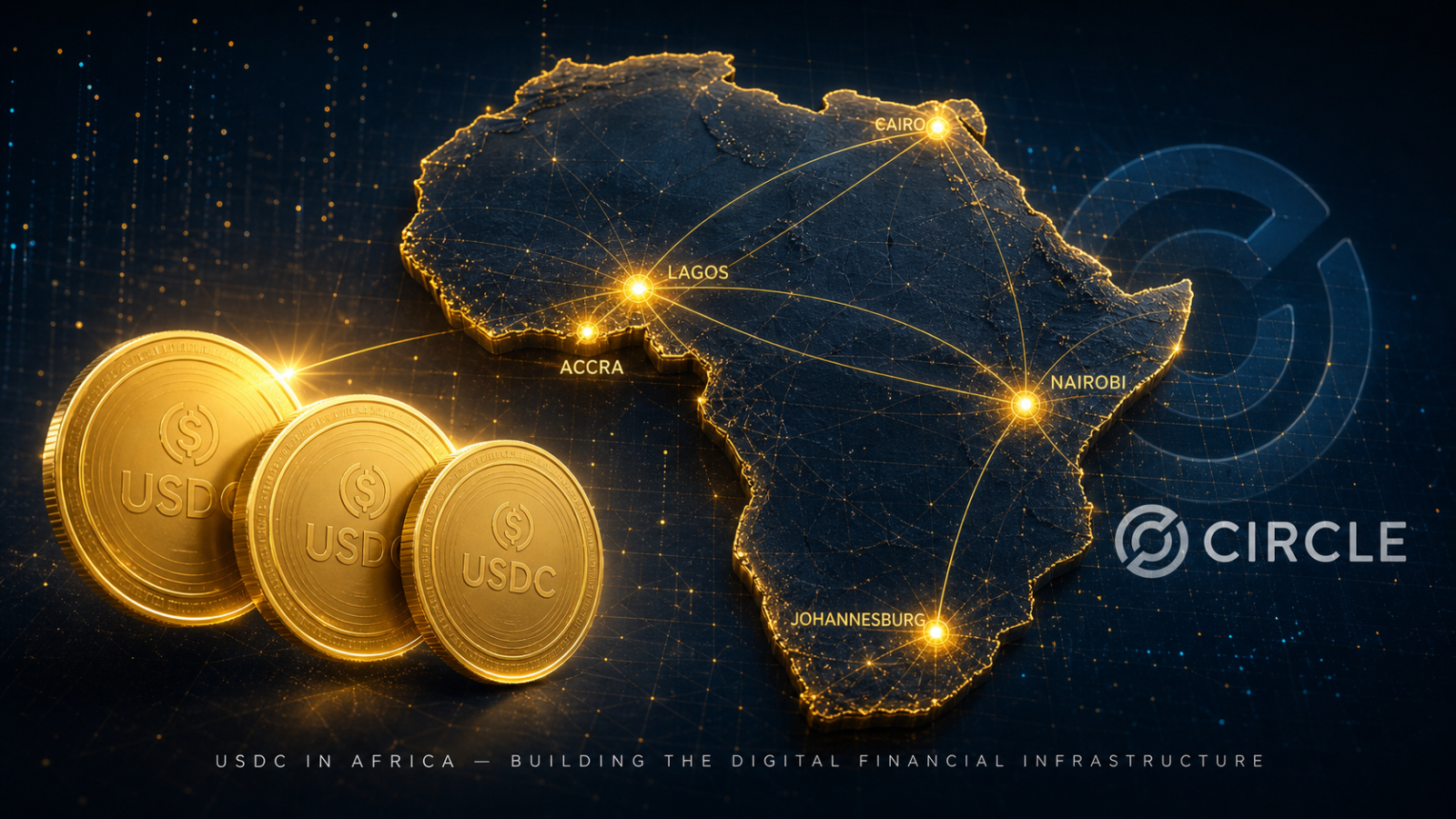
Circle and its proprietary stablecoin USDC have played a major role in Africa’s fintech and stablecoin economy. In under eight months, Cilrcle has expanded to 40 African markets with measurable improvements in settlement speed and cost reduction.
Here’s a look at how USDC adoption in Africa is solving real issues affecting citizens and operational challenges for African payment providers.
Why Circle Chose Africa as Its Next Frontier
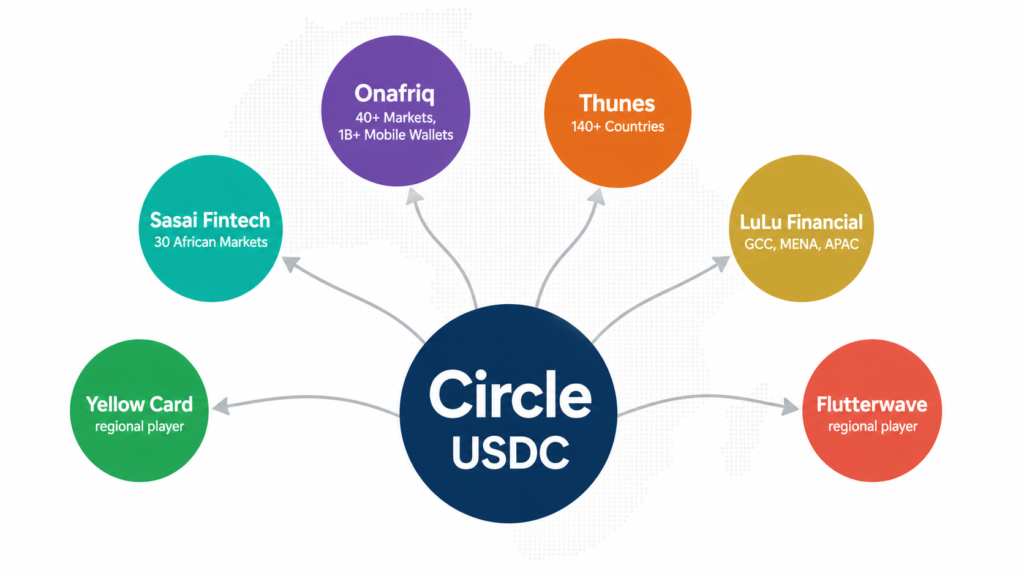
Circle has openly admitted that Africa is the future of blockchain and has invested heavily throughout the years. During Q1 OF 2026, the company partnered with Sasai Fintech, a business unit of Cassava Technologies, marking Circle’s entry into African markets.
Visa provides their payment infrastructure and access to their international network. Stablecoin payments are now a core service for Sasai’s network.
Jeremy Allaire, Circle’s CEO, stated:
“Emerging markets are at the forefront of stablecoin adoption, and Africa represents a significant opportunity for internet-native innovation.”
Thunes later joined Circle’s Payments Network, enhancing stablecoin payment capabilities across over 140 countries, with Kenya, Tanzania, and South Africa identified as priority corridors in Africa.
RELATED: Africa’s Fintech Trifecta: Circle, Flutterwave & Yellow Card Join Forces
By August, Onafrq joined up using Circle’s APIs and Circle Mint Infrastructure. Keep in mind Onafriq is among Africa’s largest digital payments networks alongside Yellowcard and Flutterwave.
However, while the partnerships show progress, Circle’s most striking aspect of its Africa agenda is the quantifiable operational improvements. USDC is at the top of the stablecoins leaderboard. Onafirqw reduced its rollout time for new stablecoin capabilities from approximately six months to just 4-6 weeks by using Circle’s infrastructure. While many stablecoin providers focus on the use, Circle is using its capabilities and services to form the bedrock of Africa’s stablecoin payment.
South African corridors that used to take half a day to settle are now finished in minutes thanks to Thunes’ integration. Ghana’s cross-border payments shifted from T+2 settlement to same-day processing.
LuLu Financial Holdings, operating remittance corridors between the Gulf and Africa, among other regions, reported 25-30% lower cross-border settlement costs and 40% volume growth after implementing USDC settlement. Recipients now receive funds in less than one minute with 100% accuracy and conversion success rates.
Integration is Circle’s core strategy. Partners like Onafriq use USDC as a “parallel rail” alongside existing fiat systems. This allows regulated institutions to maintain their current workflows while accessing faster settlement options and reducing implementation friction.
The technical foundation relies on Circle Mint, Circle’s institutional minting and redemption service that enables 1:1 conversion between USD and USDC.
Circle partnerships in Africa also leverage the company’s managed payments infrastructure, which abstracts blockchain complexity. Financial institutions interact in familiar fiat terms while Circle handles USDC minting, burning, and blockchain settlement in the background.
RELATED: Why Circle Ventures Backed CV VC’s African Blockchain Fund with $20M
Circle’s African deployment occurs against a backdrop of exceptional regional adoption. Africa leads the world in stablecoin ownership among crypto-active users at 79%, beating the global average by 25%. The reason is quite simple. Stablecoins do more than hedge against local currency volatility. These systems provide cheaper, faster, and more efficient cross-border transactions in an economically fragmented continent.
The remittance context makes Circle’s infrastructure particularly relevant. Sub-Saharan Africa faces the world’s highest remittance costs at 8.46%, according to World Bank data, compared to a global average of 6.36%. Bank-based remittances to the region cost an average of 14.55%, creating clear economic incentives for USDC Africa adoption as an alternative settlement mechanism.
The Regulatory Challenge Circle Can’t Ignore
Regulation is a factor even Circle has to consider.
Kenya’s Virtual Asset Service Providers Act, gazetted in July 2026, requires foreign stablecoin issuers to seek approval before local exchanges can list their tokens. Nigeria classifies stablecoins as securities under its Investment and Securities Act 2025, while maintaining a regulatory sandbox that opened in August 2026.
While South Africa is one of the most developed countries in terms of cryptocurrency regulation, it is also very restrictive regarding stablecoins, particularly those backed by USD.
The Reserve Bank indicated that foreign currency-pegged stablecoins are unlikely to be accepted for domestic use due to dollarization concerns. However, cross-border settlement applications face fewer restrictions, allowing USDC adoption for international payment corridors.
Circle’s strategy is a masterclass in restraint. The business is allowing local builders to take the lead, stepping back to ensure USDC becomes the silent engine of Africa’s digital economy, not just a foreign curiosity. By 2026, moving into 40+ markets, stablecoins will go from ‘experimental’ to ‘essential,’ and African innovators will have direct control over the power of global finance.
Discover more from Web3Africa
Subscribe to get the latest posts sent to your email.

You must be logged in to post a comment.