












Table of Contents
Four weeks after Chimoney shut down, the regulatory licenses it held became the focal point of the deal. African fintechs eyeing North America may find that the fastest route to market is not an application but rather an acquisition.
On June 10, 2026, CapitalSage Vantage Limited signed an agreement to acquire Chi Technologies Inc., the parent company of Chimoney. Chi Technologies Inc. is a Canada-based cross-border payments startup that had publicly announced its wind-down just four weeks earlier.
Acquiring Distressed Startups as a Global Expansion Hack
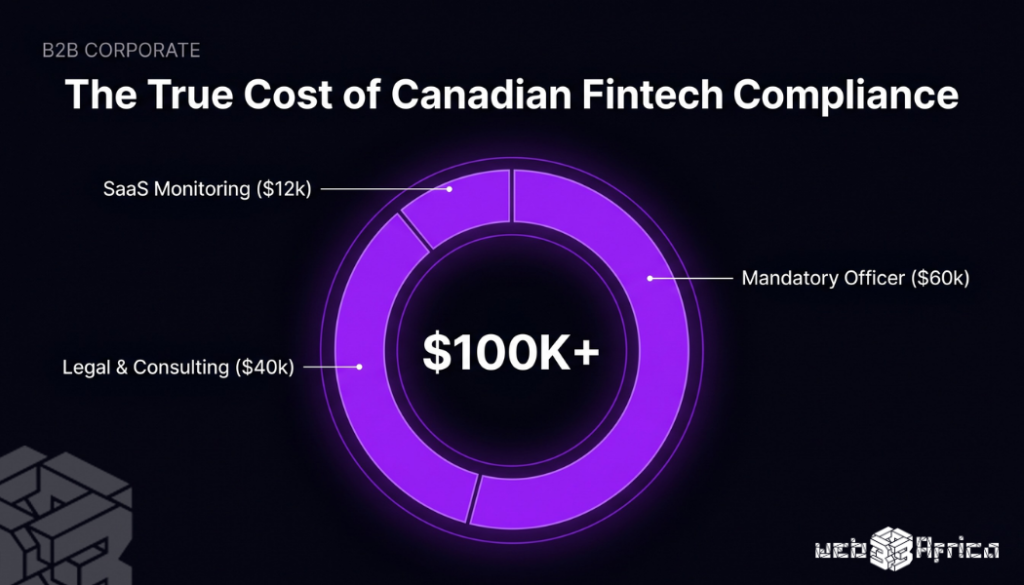
The acquisition has not yet closed but remains subject to re-registration under Canada’s Retail Payment Activities Act (RPAA). This process grants the Bank of Canada up to 45 days to review change-of-control applications. This also includes up to 180 additional days if a national security review is triggered, according to Canadian payments law firm Fasken LLP.
RELATED: How the 2026 CBN Strategy Decouples Fintech from Foreign Capital Cycles
But the Capital Sage Chimney acquisition details reveal something more instructive than a standard distressed M&A play.
“I preserved the PSP and MSB. Many people told me to let them lapse. Those licenses are why this deal happened,” Chimoney founder Uchi Uchibeke said in a statement to TechCabal.
Unpacking the Canadian Dual Licensing Stack for African Fintechs
What CapitalSage is acquiring is not Chimoney’s revenue. The company ceased new transactions on May 1, 2026, after raising less than $1 million over four years. It is acquiring regulatory infrastructure:
- A FINTRAC Money Services Business (MSB) registration, covering all 10 Canadian provinces and three territories under a single federal license
- A Payment Service Provider (PSP) license under Canada’s RPAA regime, secured in November 2025 as part of the first cohort issued by the Bank of Canada
- An established compliance program, including KYC/AML policies, transaction monitoring frameworks, and a track record of orderly customer refunds
- The company has existing Interledger integrations for payment rails and API documentation.
For CapitalSage Holdings, which already operates payments infrastructure in Nigeria, Kenya, the Gambia, the UAE, and the UK, this deal unlocks African fintech global expansion into North America’s tightly regulated payments market without the grinding timeline of greenfield regulatory applications.
The True Cost of Buying Versus Building Regulatory Infrastructure
How do African fintechs expand to North America legally? The traditional path is capital-intensive and slow.
African fintechs can expand to North America legally by pursuing a dual MSB license acquisition and establishing a Regulatory Partnership Agreement (RPA). A PSP registration from scratch in Canada requires the following:
| Metric | Build from Scratch | Acquire Route (Chimoney Model) |
|---|---|---|
| FINTRAC MSB timeline | 4–12 months | Immediate (corporate transfer) |
| RPAA PSP timeline | 8–12 months (dual reg.) | 45 days minimum (change review) |
| Estimated Year 1 cost | $100,000 USD all-in | Undisclosed + re-registration |
| Rejection risk | Moderate (per ComplyFactor) | Lower (proven applicant history) |
| Market entry delay | 12+ months | 3–6 months post-close |
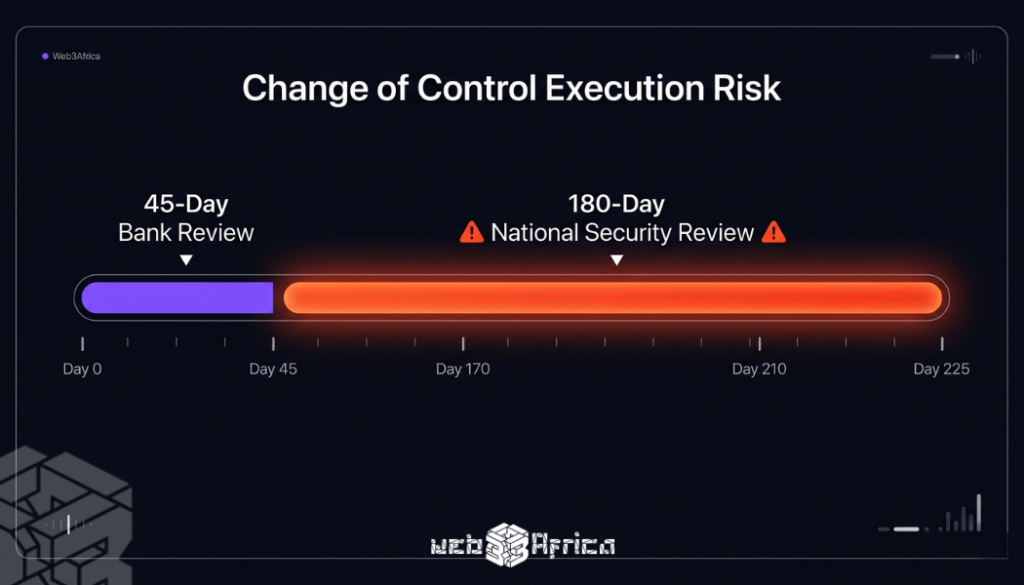
The build costs for Year 1 include the following items:
· Compliance program development ($5,000–$10,000).
· Staffing a mandatory compliance officer costs $60,000+ annually or $1,500–$3,000 per month if outsourced.
· Transaction monitoring infrastructure ($1,000–$5,000/month)
· Ongoing AML audits ($5,000–$15,000).
· Legal/consultancy fees for complex applications (up to $40,000 for crypto-enabled MSBs), according to Canadian compliance advisory firms.
The RPAA PSP registration alone carries a $2,500 CAD government fee, but the substantive cost lies in building risk-management frameworks, incident-response protocols, and end-user fund safeguarding mechanisms that meet Bank of Canada supervisory standards.
RELATED: CBN Fintech Report Shows Massive 70% Growth In Nigeria Sector
CapitalSage is effectively buying time and regulatory certainty, compressing a 12-month, high-rejection-risk process into a phased ownership transfer measured in weeks.
Why Canada is the Ultimate Launchpad for African Remittance Corridors
Canada is a structurally important corridor for fintech M&A Africa strategies targeting diaspora flows.
Africa receives approximately $100 billion in annual remittances, growing at a 10% compound annual growth rate, according to 2024 World Bank estimates. Nigeria alone accounts for $19.5 billion, 35% of all Sub-Saharan Africa inflows.
Yet the cost of sending money to Africa remains punishingly high, 7.9% on average in Sub-Saharan Africa (Q4 2025). That’s the highest of any global region, per the RemitSCOPE Africa database. Regional variation reveals a more profound issue: 5.9% in West Africa, 8.9% in Southern Africa, and 9.9% in East Africa.
Canada has a large and growing African-born diaspora, part of a foreign-born population representing 23% of the country’s total, among the highest in the G7.
RELATED: North Africa’s Crypto Ice Age: Why Algeria Outlawed EVERYTHING
For CapitalSage, a Canadian MSB license acquisition provides a stable, rules-compliant launchpad into North America with single-license, nationwide coverage. In the U.S., securing money transmitter licenses requires a state-by-state approach, often necessitating over $100,000 in bonding per state and 12–24 months of rolling applications.
Several African-founded fintechs, including LemFi, NALA, Fincra, and Grey Finance, have secured similar RPAA PSP registrations since early 2026, validating the strategic corridor even as Chimoney exited it.
The Execution Risk: Regulators Can Still Say No
The Bank of Canada and FINTRAC retain oversight, and recent enforcement signals suggest African fintech global expansion via shell acquisitions carries real scrutiny risk.
According to compliance research firm ComplyFactor, “a non-trivial proportion” of RPAA PSP applications submitted in 2024–2025 were refused, withdrawn after review, or are operating under enforcement conditions. The Bank of Canada has made clear it will assess substantive operational intent, not just paperwork.
To preserve the acquired licenses, CapitalSage must demonstrate:
- A Canadian-resident compliance officer and support team
- Active KYC/AML controls and transaction monitoring for new corridors
- Concrete infrastructure: bank accounts, settlement processes, treasury management
- A credible business plan beyond “we bought the license”
Canadian payments law firm Stikeman Elliott notes:
Change-of-control re-registration is mandatory, and the Bank of Canada’s 45-day decision window can extend significantly if Finance Canada initiates a national security review, potentially adding 180 days.
There is also an unresolved question: Can a dormant RPAA PSP registration survive indefinitely? Uchibeke stated he preserved the license during shutdown, but no official Bank of Canada guidance explicitly confirms dormant registrations remain valid without time limits or activity thresholds. This is a known unknown that could surface during re-registration.
RELATED: Mastering the 2026 Blueprint for African Crypto Compliance across its Powerhouses
The New Mergers and Acquisitions Playbook for African Fintech Founders
For mid-stage African fintech founders and M&A strategists, the Chimoney-CapitalSage deal codifies three operational lessons:
- Regulatory assets outlive products. Chimoney’s revenue stalled, distribution failed, and the product shut down, but its licenses retained market value because the replacement cost (time + capital + approval risk) remained high.
- Transparency during wind-down creates exit optionality. Uchibeke’s public shutdown narrative, complete with customer refunds and license preservation, became the acquisition pitch. “The wind-down became the pitch,” he wrote on X. Orderly closures signal competence to acquirers hunting for compliant shells.
- The “buy vs. build” calculus has shifted. For fintech M&A Africa deals targeting G7 markets, acquiring a distressed but compliant entity is now a standard play. This strategy is now standard when compared to U.S. fintechs that buy small bank charters or EU firms that acquire e-money institutions to inherit passporting rights.
For compliance officers and investors, there are some risks. For instance, regulators are aware of the strategy. The Bank of Canada, FINTRAC, and Canada’s Minister of Finance can block ownership transfers they view as purely cynical shell plays without local operational intent. The license is an asset, but only if you can prove you’ll use it properly.
After the deal closed, Uchibeke confirmed all investors will be repaid in full, and employees will receive proceeds. He will remain for six months to lead the transition, then focus on APort, a separate AI venture.
The deal has not yet closed. But the thesis has already been validated; an MSB license acquisition beats building from scratch if you can pass the re-registration test.
Discover more from Web3Africa
Subscribe to get the latest posts sent to your email.
You must be logged in to post a comment.