










Table of Contents
VASP compliance has drastically changed and improved over the last few years.
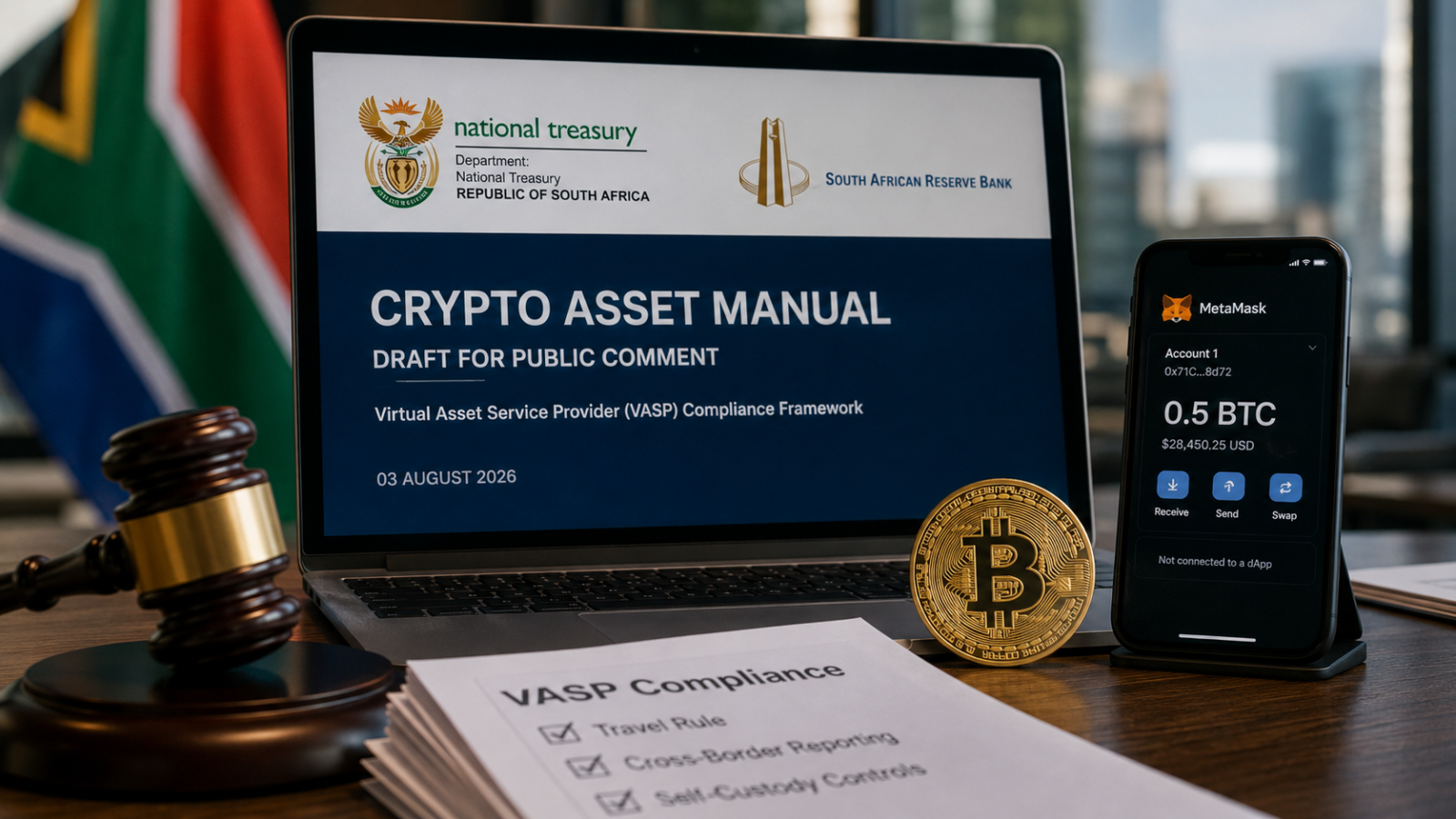
A compliance officer at a licensed South African crypto exchange gets a routine withdrawal request. A user wants to move 0.5 Bitcoin to their personal MetaMask wallet. Simple enough, right?
Not anymore.
Under the draft Crypto Asset Manual published by the National Treasury and the South African Reserve Bank on August 3, 2026, this exchange now has to report that transfer to the Financial Surveillance Department. But here’s the catch: they only have to report it if that MetaMask wallet is located offshore.
This is where things get complicated. Really complicated.
Here’s the fundamental problem: it’s mathematically and technically impossible to definitively prove the physical location of a decentralized private key. That’s not an exaggeration. It’s just how blockchain technology works.
A Routine Withdrawal and the Reporting Obligation It Creates
This is the central dilemma in South Africa’s proposed VASP Compliance framework. By forcing domestic exchanges to monitor and report cross-border flows to self-custody wallets, regulators are asking local platforms to police something blockchain was specifically designed to make unpoliceable.
The consequences? Massive compliance costs, operational friction that could reshape the entire South African crypto market, and strategic decisions that might push users offshore rather than improve regulatory visibility.
David Porter, Compliance Director at AltcoinTrader, put it bluntly when he spoke to ITWeb. He described the framework as having a “fundamental blind spot” when you try to apply geography-based controls to technology that doesn’t recognize borders.
“Blockchains update a global ledger via cryptographic keys, not physical borders,” he said.
The Reporting Trigger That Changes Everything
The draft manual (open for public comment until September 30, 2026) defines a clear “cross-border trigger point.” Any transfer from a domestic authorized crypto asset service provider to either an offshore CASP or a non-custodial wallet creates a reportable capital flow under FinSurv regulatory mandates.
This isn’t just another licensing requirement. It imposes a reporting obligation that assumes exchanges can figure out the jurisdiction of the recipient wallet. For transfers between two licensed CASPs, this is manageable. Counterparties exchange information through Travel Rule protocols. But when a user withdraws to a self-custody Ethereum address, Tron wallet, or Bitcoin address they control, the exchange faces a question with no reliable technical answer: where is that wallet?
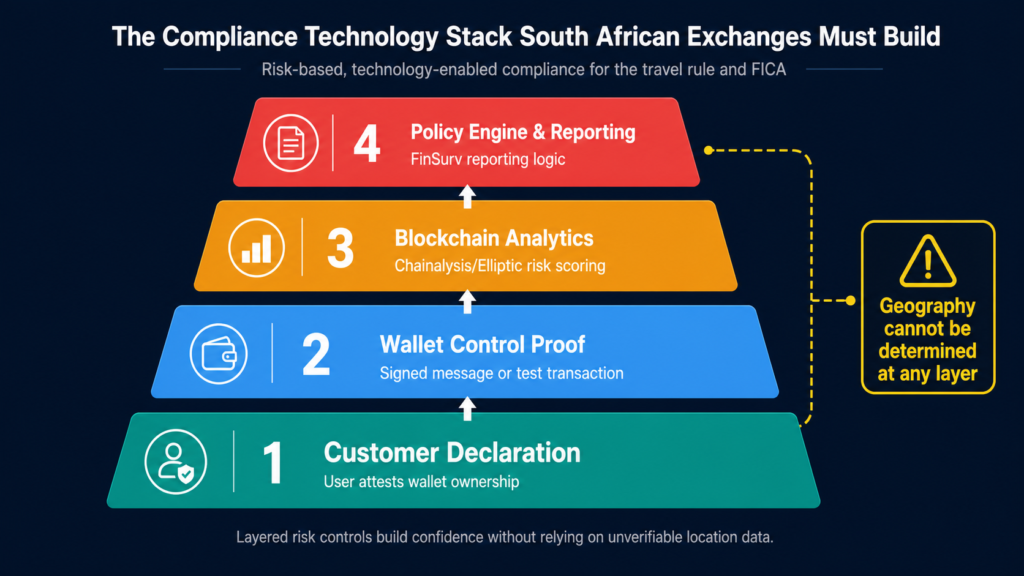
To comply with self-custody compliance mandates, South African exchanges will need to deploy a layered control system far more complex than existing know-your-customer (KYC) processes.
Layer 1: Customer Declaration
This is the simplest approach and also the most fraud-prone. Users attest that they own and control the destination wallet and that it’s not associated with sanctioned persons or located in a prohibited jurisdiction. It shifts legal liability but provides minimal assurance.
Layer 2: Wallet Control Proof
Exchanges can require users to demonstrate control by signing a message with the private key or completing a test transaction. This confirms ownership but reveals nothing about geographic location.
Layer 3: Blockchain Analytics Risk Scoring
This is where compliance costs really start to climb. Platforms like Chainalysis, Elliptic, and TRM Labs offer transaction monitoring that traces wallet activity, flags exposure to mixers or sanctioned entities, and assigns risk scores. But these tools measure behavioral risk, not jurisdictional location. A wallet used exclusively on South African IP addresses could still be controlled by someone physically in Dubai, or vice versa.
Layer 4: Policy Engine and Reporting Logic
Even after gathering declarations, control proofs, and risk scores, exchanges must make a decision: approve the withdrawal, flag it for manual review, or reject it outright. Then they need to translate this ambiguous data into a FinSurv report that expects clear jurisdictional categorization.
Shiven Moodley, CEO of Novaque, stated, “The requirements relating to minimum capital, local infrastructure, reporting, reconciliation, and prior approval for offshore liquidity arrangements create high fixed costs before a business has achieved scale.”
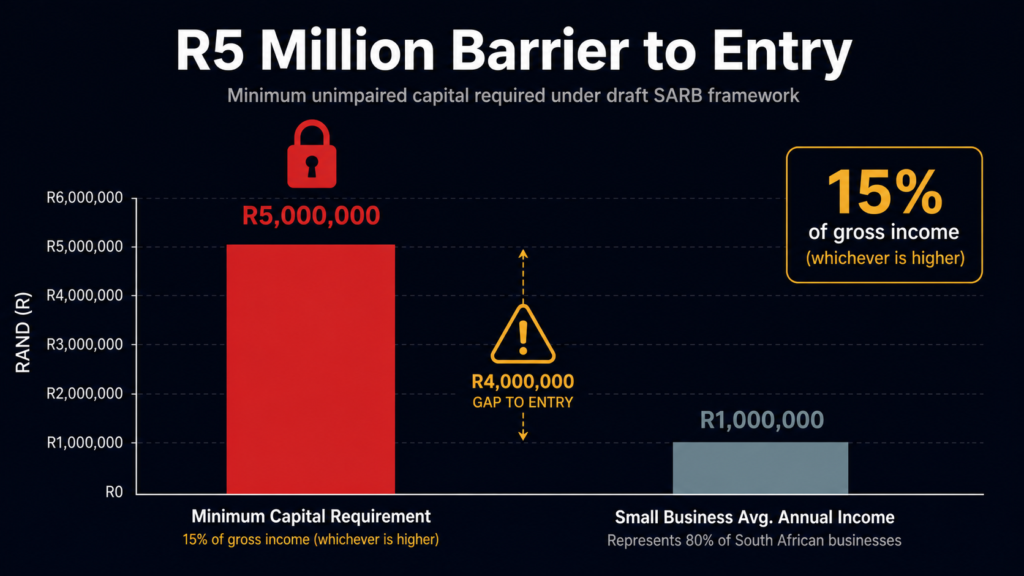
The draft manual requires exchanges to hold minimum unimpaired capital of R5 million (or 15% of average annual gross income, whichever is higher), maintain segregated reserves, and complete FinSurv Reporting System certification before receiving full authorization.
For smaller operators, this represents an insurmountable barrier. For larger platforms, it means choosing between expensive infrastructure investment and a simpler alternative: restricting or banning self-custody withdrawals entirely.
How Other Countries Handle the Same Problem
South Africa isn’t the first jurisdiction to grapple with the “unhosted wallet problem.” The Financial Action Task Force Recommendation 16, which forms the basis of the Travel Rule implemented in over 70 countries, requires virtual asset service providers to collect originator and beneficiary information for transfers between VASPs. But it takes a more flexible approach to self-custody.
Under FATF guidance, when a customer withdraws to a self-custody wallet, exchanges must obtain information from the customer and apply risk-based enhanced due diligence where appropriate. Some jurisdictions, including Switzerland, require ownership verification (like a signed message), but there’s no expectation that exchanges will geolocate private keys.
The European Union’s Transfer of Funds Regulation, fully in force by mid-2026 under the Markets in Crypto-Assets framework, requires CASPs to verify ownership and control for transfers above €1,000 to a user’s own unhosted wallet. The focus remains on ownership and risk assessment, not geographic classification.
Critically, the EU does not ban corporate use of cross-border crypto payments. This is a restriction South Africa’s draft manual imposes by prohibiting entities from externalizing crypto assets under the proposed Exchange Capital Controls regime.
Farzam Ehsani, CEO of South African exchange VALR, argued that the framework is “prejudicial to crypto assets and licensed CASPs and risks severely damaging South Africa’s crypto industry.” He noted that prohibiting corporate cross-border crypto payments locks South African businesses out of a growing global infrastructure, estimated at over $33 trillion in stablecoin settlement volume, while pushing individual users toward unregulated offshore channels that reduce, rather than enhance, regulatory visibility.
What’s at Stake for South Africa’s Crypto Market
The draft manual represents more than a compliance update. It’s a structural decision about whether South Africa’s crypto market will remain open to self-custody users, institutional participation, and cross-border innovation, or become a closed-loop domestic market accessible only to retail individuals with significant compliance overhead.
The public comment period, which closes September 30, offers stakeholders one opportunity to propose alternatives. These could include risk-based frameworks that focus on transaction monitoring and sanctions screening rather than geographic classification, carve-outs for corporate use cases involving stablecoin payments and treasury management, or tiered compliance regimes that reduce barriers for smaller platforms while maintaining oversight.
What remains clear is that asking exchanges to determine the geographic location of a private key isn’t a technical challenge. It’s a category error. The question is whether South African regulators will adapt their framework to the operational reality of decentralized infrastructure or whether local platforms will adapt by restricting the very features that define crypto asset ownership.
The answer will determine whether South Africa builds a competitive, transparent digital asset market or drives it underground.
Discover more from Web3Africa
Subscribe to get the latest posts sent to your email.

You must be logged in to post a comment.