












Table of Contents
NoOnes, the Global South-focused P2P crypto platform, has an unadvertised problem. While internal research shows stablecoin usage on the platform surged from roughly 35% to 60% of all trades over two years, crypto virtual card usage, the product the company positions as the “bridge” to global spending, has remained flat.
That disconnect is in its UX, and it’s endemic across African fintech UX infrastructure, not just NoOnes.
This narrative illustrates the challenges faced when attempting to cross-sell a Visa card to users who already possess digital dollars, only to discover that the final step from USDT to usable fiat is fraught with hidden fees on crypto virtual cards, stringent KYC requirements, and workarounds that activate fraud detection algorithms.
Unmasking the Hidden Fees on Crypto Virtual Cards
NoOne markets its Virtual Visa USD card as a zero-fee way to spend stablecoins globally. The reality is pricier.
According to the platform’s official fee documentation, every transaction made outside the US incurs a 3% + $0.50 cross-border fee, regardless of currency. On a $50 SaaS subscription, that’s $2 in card fees alone.
RELATED: Stablecoins in Hyperinflationary Markets: A Survival Guide for African Entrepreneurs
But the bigger gap is upstream. The USDT-to-USD conversion spread applied when users load the card is not publicly disclosed. This is the industry’s open secret: conversion spreads on stablecoin-funded cards typically range from 0.5% to 2%, invisibly shaved off the top-up amount before a single transaction is made.
A Web3Africa test scenario: if a Nigerian freelancer loads $100 USDT onto the NoOnes card and the platform applies a 1.5% conversion spread (industry standard, but unverified for NoOnes specifically), the user starts with $98.50. After one $50 cross-border payment, another $2 disappears. Total effective cost: 4.5%, before counting the P2P spread paid to acquire USDT in the first place.
For comparison, parallel black-market dollar rates in Lagos, Nairobi, or Accra often run 3–8% above official rates. The card’s advantage shrinks fast or inverts entirely depending on the week.
This is the USDT to fiat conversion cost problem that no press release mentions.
The $500 KYC Wall and African Fintech UX Constraints
To access the card at all, users must reach Level 2 identity verification, a full KYC process requiring a government-issued ID, a selfie, and often proof of address. The card is invisible to L1 users.
Even after verification, the default cumulative deposit limit is $500. For a freelance developer, routing monthly client payments is a non-starter. Unlocking the $50,000 tier requires Level 3 address verification, introducing another friction layer and further identity disclosure to an unnamed card issuer.
When a US-based merchant requests a billing address, common on Stripe, Shopify, and SaaS checkouts, NoOne’s official help documentation instructs African users to enter a specific Miami address: 3401 N. Miami Ave., Ste. 230.
This workaround is a failure vector. Merchants using Address Verification Service (AVS) controls flag shared or mismatched billing addresses as fraud risks.
Why P2P and Mobile Money Remain the Superior Off-Ramp
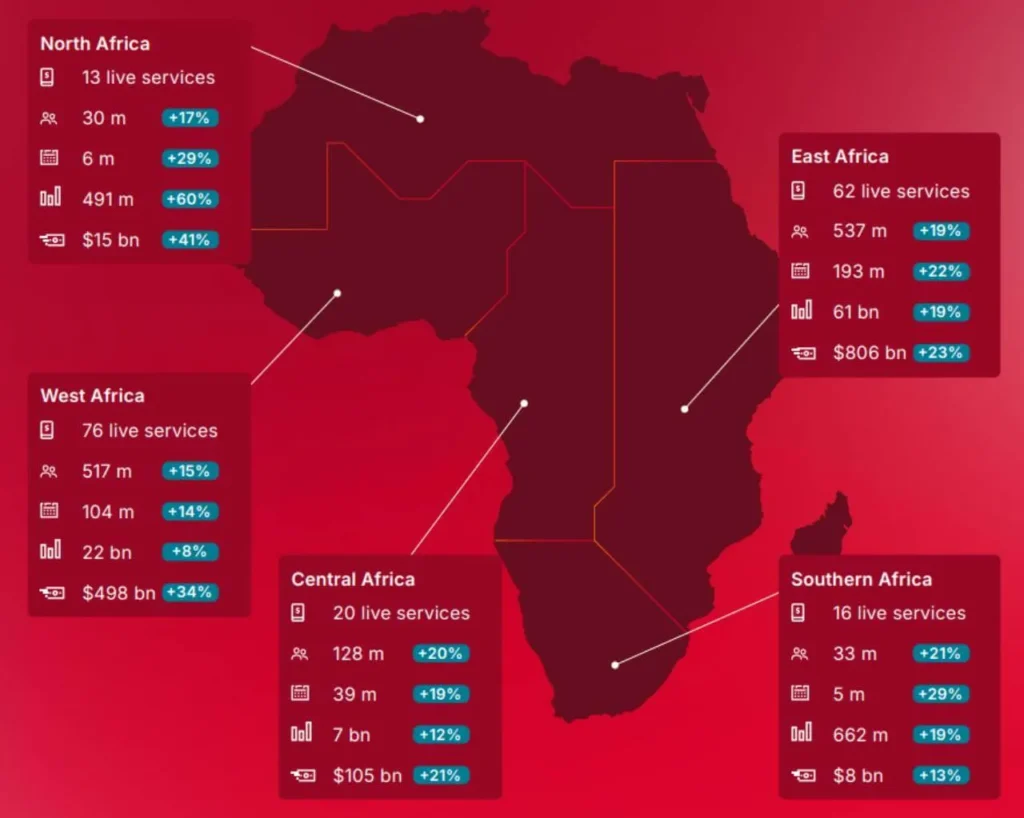
Mobile money remains Africa’s dominant digital rail. According to GSMA’s March 2026 State of the Industry report, $1.4 trillion flowed through mobile money in sub-Saharan Africa in 2025, more than 50 times Visa’s total global stablecoin transactions.
RELATED: Why Stablecoin Adoption in Africa Ignores Virtual Cards
For an African freelancer paid in USDT, the default off-ramp is not a virtual card. The default off-ramp for an African freelancer paid in USDT is through P2P trade on NoOnes (or Binance) into mobile money, followed by cashing out locally. Fees are visible, settlement is instant, and merchants accept it everywhere.
The Stablecoin Paradox
Over a 24-month period, digital dollar hoarding (store of value) surged to 60%, while global merchant spending via virtual cards remained functionally stagnant.
Crypto virtual cards compete poorly in this context, not because the technology is broken, but because the cost stack (P2P spread + conversion spread + cross-border card fee + potential declines) often exceeds the mobile money route, especially for local spending.
The card only wins for a narrow use case. The card is advantageous only for specific situations, such as paying for US-denominated SaaS, advertising platforms, or international e-commerce transactions where mobile money and local cards are not accepted.
The Future of the African Crypto-to-Card Market
So before loading a crypto card, reverse-engineer the total cost. Document what $100 USDT actually buys you in spendable balance after conversion and fees. Compare that to buying dollars on the street and loading a domiciliary account card.
For builders out there, flat card adoption despite rising stablecoin use is a product-market fit signal. The issue is cost opacity, KYC friction, and reliability, not user education. Any Card-as-a-Service product targeting Africa must publish conversion spreads, simplify the tiered KYC process, and address the issues of billing addresses and decline rates; otherwise, customer churn will remain high.
RELATED: Quidax and IFS Data Shows Most Users Earn Under ₦250k, Stablecoins Lead, and CEX Is Preferred
The African crypto virtual cards market will remain subscale until card networks, issuers, and platforms transparently compete on total user cost. It also depends on regulators to establish clearer frameworks for cross-border card licensing that do not default to maximum-risk treatment.
African fintech UX for crypto-to-card products is trapped between undisclosed conversion economics, rigid KYC tiers, workaround-dependent billing flows, and a mobile money rail that still works better for most real-world spending.
Until the hidden fees on crypto virtual cards are shown in a single line item at load time, and until African users can verify their identity once and spend without billing-address hacks or unexplained declines, stablecoin cards will remain what they are today: niche tools for cross-border SaaS payments, not the “global financial freedom” promised in the press release.
The bridge exists. It’s just expensive, fragile, and harder to cross than the marketing suggests.
Discover more from Web3Africa
Subscribe to get the latest posts sent to your email.
You must be logged in to post a comment.