






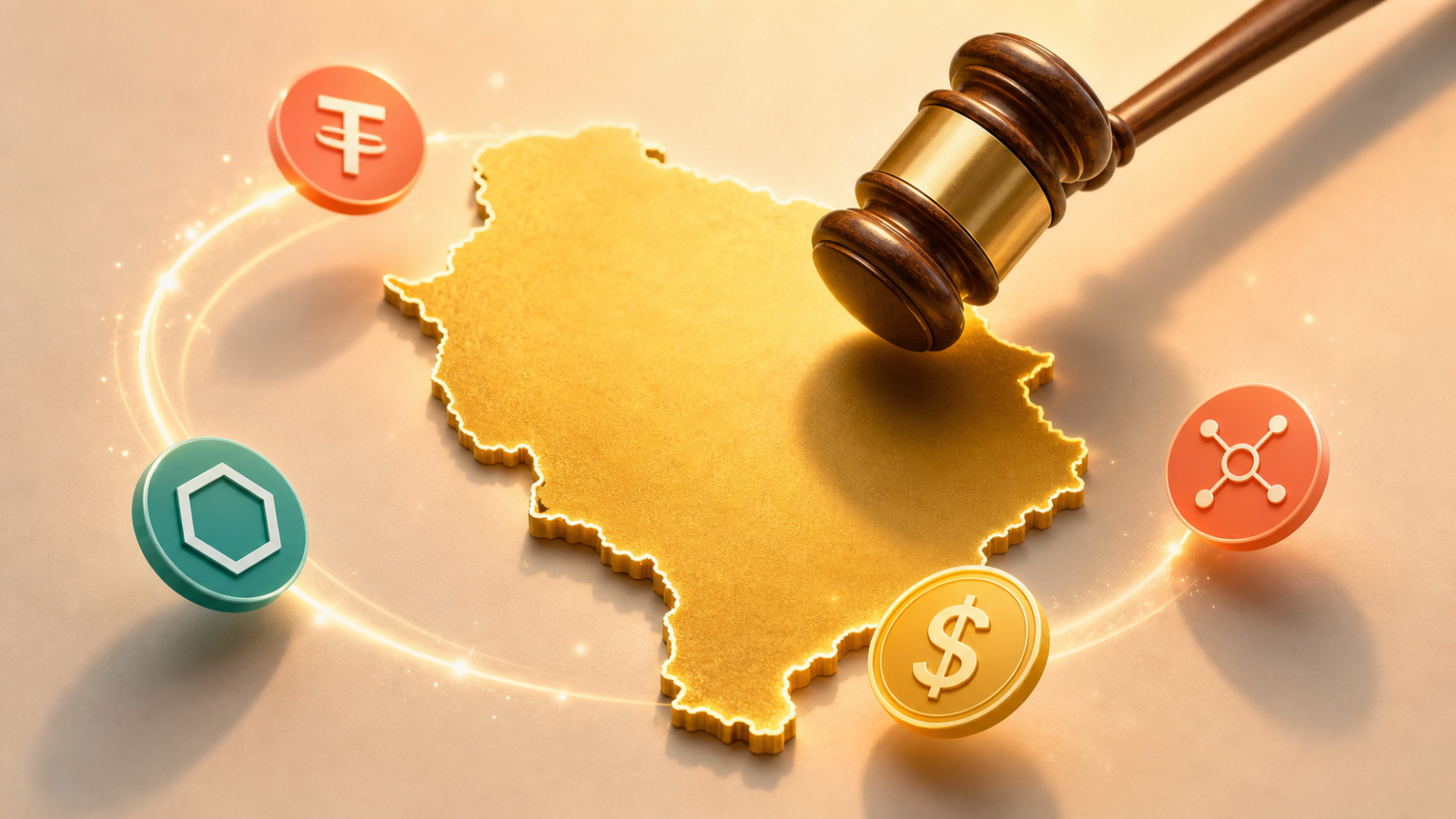

Access Bank, Nigeria’s largest lender by assets, sits at the center of a storm as law enforcement agencies and crypto traders clash over the legitimacy of account freezes.
In a sudden turn of events, traders woke up to “Post-No-Debit” restrictions justified by anti-money laundering (AML) concerns. While the regulatory environment has officially moved forward on paper, the reality of its implementation remains aggressive and often opaque.
Nigeria, as Africa’s P2P trading hub, faces valid concerns over rising “suspicious” transaction flows. However, the response from banks often leaves legitimate users as collateral damage. Here is what the documented cases, court rulings, and unverified reports tell us about why Access Bank and other lenders are freezing accounts, and how you can protect your funds.
TL;DR,
- Access Bank allegedly froze 500 USDT accounts in 2023, but verified 2024 EFCC cases show Nigeria’s freeze-first enforcement pattern continues. Traders have constitutional protections: banks can only freeze accounts 72 hours without a court order.
- Despite Nigeria’s December 2023 crypto policy shift, banks still freeze P2P trader accounts broadly during fraud investigations. Court precedent now confirms crypto trading is legal and offers damages for unlawful freezes beyond 72 hours.
- Nigeria leads Africa in crypto adoption ($59B annually) but enforcement lags policy. Documented cases show innocent traders frozen for months, though new legal precedent offers protection through the 72-hour rule and constitutional property rights.
The Freeze That Went Viral and the One Backed by Court Records
In October 2023, social media erupted with claims that Access Bank had frozen approximately 500 accounts belonging to USDT traders. According to unverified reports circulating, the freeze followed allegations that stolen funds, exceeding $10.4 million, had been laundered through USDT purchases on Binance.
However, what’s peculiar about this scenario is the lack of a court order text, case number, or official Access Bank statement. At the time of writing, the 500-account freeze remains unverified through primary sources.
What is documented: In September 2024, Nigeria’s Economic and Financial Crimes Commission (EFCC) secured a Federal High Court order (case FHC/ABJ/CS/543/2024) freezing 22 bank accounts holding ₦548.6 million ($330,000) belonging to USDT sellers operating on Bybit and KuCoin. The EFCC accused these traders of unauthorized foreign exchange dealing and manipulating the naira exchange rate.
[inline_related_posts title=”Related” title_align=”left” style=”grid” number=”1″ align=”none” ids=”” by=”categories” orderby=”rand” order=”DESC” hide_thumb=”no” thumb_right=”no” views=”no” date=”no” grid_columns=”1″ post_type=”” tax=””]
Eventually, in December 2024, the court unfroze six accounts totaling ₦89.5 million after an EFCC affidavit acknowledged the funds were not linked to unlawful activity.
Authorities are increasingly targeting P2P bank transfers to trace illicit funds. When a bank receives a warrant or an EFCC directive regarding crypto fraud, they are legally obligated to restrict access to the funds to prevent dissipation during the investigation.
The Regulatory Shift That Changed Everything (But Didn’t Stop the Freezes)
However, the reports do raise the questions over Nigeria’s stance on regulation. One of its biggest steps forward occurred on December 22, 2023.
The Central Bank of Nigeria (CBN) issued circular FPR/DIR/PUB/CIR/002/003, which superseded the notorious February 2021 directive that had ordered banks to close all crypto-related accounts. The 2023 guidelines permit banks to service SEC-licensed Virtual Asset Service Providers (VASPs) under strict know-your-customer (KYC) and anti-money-laundering (AML) protocols.
In May 2022, the Securities and Exchange Commission published its “Rules on Issuance, Offering Platforms, and Custody of Digital Assets.” The SEC launched the Accelerated Regulatory Incubation Programme (ARIP), granting Approval-in-Principle to compliant exchanges like Busha and Quidax in June 2024.
Most recently, the Investments and Securities Act 2025 (ISA 2025), signed March 29, 2025, legally recognizes digital assets as securities under SEC oversight and expands enforcement powers. This included asset seizure and forfeiture for unlicensed operators.
Policy has evolved toward regulated legitimacy. Enforcement, however, still deploys freezes first and sorts innocence later. The Access Bank fiasco served as a spark pushing regulators and Nigeria’s SEC to edit and rework their cryptocurrency regulations.
Why the Pattern Persists: The Gap Between Policy and Practice
Despite the December 2023 CBN crypto policy shift, freezes continue because:
Peer-to-peer (P2P) trading dominates: Nigeria ranked #1 globally in P2P exchange volume (Chainalysis 2023 index) and #2 in the Global Crypto Adoption Index (2023–2024). Most trades happen off-exchange, where users prefer P2P trading, and often through the same banking rails that law enforcement monitors for illicit flows.
“Taint” spreads through innocent counterparties: When stolen fiat enters P2P markets to buy USDT, blockchain traceability doesn’t help Nigerian banks identify the original thief. Instead, they see high-velocity transfers across dozens of accounts. The response: freeze broadly, investigate later.
Enforcement agencies operate under older assumptions: The EFCC’s September 2024 court filing accused traders of “unauthorized FX dealing,” language rooted in capital-control concerns, not crypto fraud per se. Yet after the CBN crypto policy, cryptocurrency trading itself is legal. However, the line between compliant VASP clients and “unauthorized” P2P traders remains murky.
No official “safe P2P” guidelines exist: Despite regulatory progress, Nigerian authorities have not published clear standards for individuals engaging in P2P transactions, leaving traders to guess at compliance.
What Courts Have Said About Freezing Crypto-Linked Accounts
On May 31, 2025, the Federal High Court delivered a watershed judgment in Udoka Clarence v. Kuda Microfinance Bank. A similar case that involved the freezing of assets involving digital assets:
Cryptocurrency trading is not illegal under Nigerian law.
Banks may restrict accounts for 72 hours maximum without a court order; anything beyond requires judicial authorization.
Funds in bank accounts are constitutionally protected property (Sections 43 and 44 of the 1999 Constitution).
Unilateral freezing clauses in bank contracts are unenforceable under CBN Consumer Protection Regulations.
The court awarded ₦200,000 in damages and ordered immediate account restoration. This precedent arms traders with legal recourse, but only after damage is done.
What This Means for Crypto Traders, a Practical Solution
Waking up to a frozen account is a nightmare for any trader, especially given how it has become a main source of income for many local traders.
[inline_related_posts title=”Related” title_align=”left” style=”grid” number=”1″ align=”none” ids=”” by=”categories” orderby=”rand” order=”DESC” hide_thumb=”no” thumb_right=”no” views=”no” date=”no” grid_columns=”1″ post_type=”” tax=””]
Today, with more pro-crypto regulations in Nigeria, using SEC-licensed platforms like Breet, Busha, Luno, and Quidax is preferred. These platforms are identified as compliant operators following KYC/AML rules.
In the unlikely scenario you find yourself among the frozen accounts, always document every P2P trade. Keep chat logs, proof of payment, counterparty details, and invoices. If frozen, you’ll need evidence that your transactions were legitimate.
Additionally, avoid high-velocity, mixed-use accounts. Regulators flag accounts with rapid, large-value in-and-out flows. Consider dedicated accounts for safe P2P trading separate from personal savings.
If Access Bank or any lender freezes your account, demand to see the court order. Restrictions beyond 72 hours without judicial backing are unlawful under the Udoka Clarence precedent.
Balancing crypto fraud risks with user rights
There is a real crypto fraud problem globally and in Nigeria. Chainalysis estimates that:
Illicit crypto volumes totalled about $14 billion in 2021 and have risen in absolute terms since then.
Revised data suggest illicit flows reached about $46.1 billion in 2023 and $40.9 billion in 2024, although these are lower‑bound estimates that increase as new addresses are identified.
Nigeria’s high adoption amplifies the stakes. Chainalysis has consistently ranked the country near the top of its Global Crypto Adoption Index (including #2 in 2023 and 2024 and #6 in 2025) and #1 globally for P2P volumes in 2023.
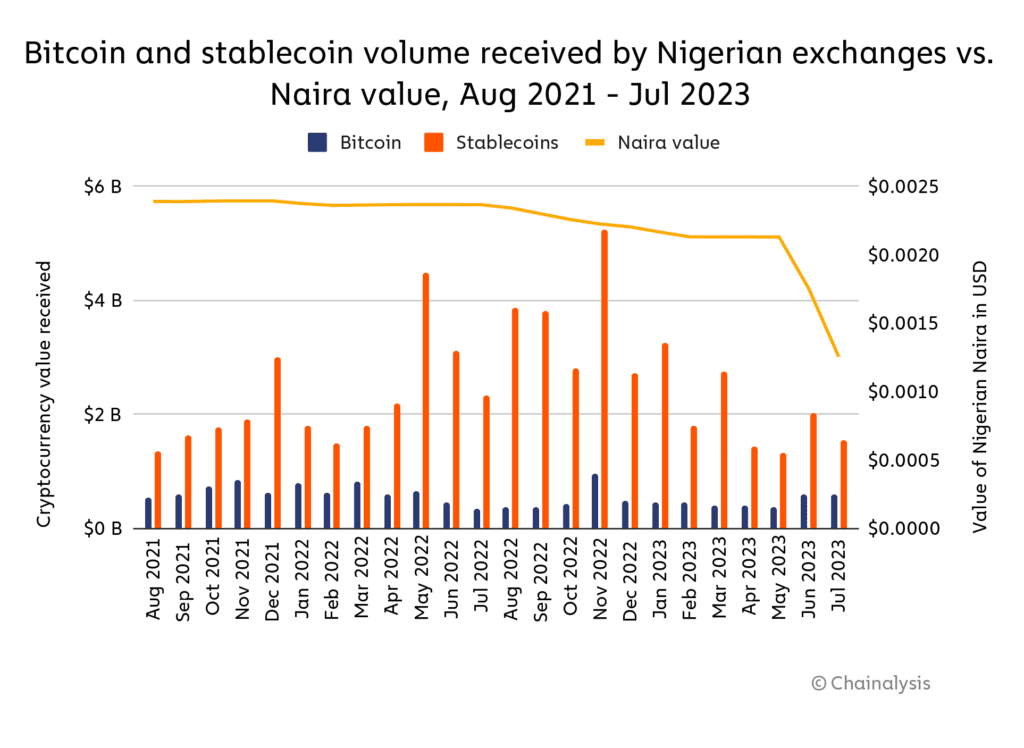
This also came with roughly $59 billion in on‑chain value received between July 2023 and June 2024. Stablecoins like USDT increasingly act as a “proxy dollar” amid FX shortages.
According to media reports, crypto educator and SiBAN‑affiliated voice Rume Ophi criticized the alleged 500-account freeze as “a disgrace to Nigeria’s banking systems,” arguing that regulators should “apprehend the criminals” through targeted investigation rather than sweeping freezes that hit compliant users.
That critique mirrors industry reaction to earlier hack-related freezes involving other fintechs.
The Access Bank Story as a Cautionary Signal
The Access Bank freeze story is a microcosm of Nigeria’s crypto regulation paradox. It’s a forward-looking legal framework undermined by enforcement tactics rooted in an earlier era of outright hostility.
The unverified 500-account reports from October 2023 and the documented EFCC freeze of 22 accounts in September 2024 share a common thread: broad action, limited transparency, and real harm to users caught in the sweep.
For traders, operate within licensed ecosystems where possible, document every transaction meticulously, and know your constitutional rights under the Udoka Clarence precedent. The 72-hour rule is your strongest protection, assert it.
For regulators and banks, the challenge is urgent. Nigeria’s removal from the FATF grey list in October 2025 signals progress on AML controls, but that progress rings hollow if legitimate traders remain collateral damage.
The path forward requires collaboration between banks, the EFCC, and licensed exchanges on forensic tools specific to crypto fraud. It demands clear guidance distinguishing compliant VASP clients from unauthorized operators. And it needs transparent disclosure when freezes occur, case numbers, legal basis, and resolution timelines.
With $59 billion in annual on-chain value and Africa’s highest P2P adoption, Nigeria’s crypto ecosystem is too important to govern through fear and freeze-first tactics. The question is no longer whether crypto will be regulated, it already is. The question is whether enforcement will evolve to match the sophistication of the policy, or whether the freeze sweeps will continue.
FAQ Section
Q1: Can Access Bank legally freeze my crypto trading account without warning?
Under the Udoka Clarence precedent, banks can only restrict accounts for 72 hours maximum without a court order. Beyond that requires judicial authorization. Always demand written proof of the legal basis.
Q2: How do I know if my P2P trading activity is triggering AML flags?
Red flags include high-velocity transfers, round-number amounts, mismatched sender/receiver names, and accepting payments from third parties. Use SEC-licensed platforms and keep detailed trade documentation.
Are all crypto exchanges legal in Nigeria after the December 2023 CBN policy change?
No. Only SEC-licensed Virtual Asset Service Providers (VASPs) like Busha, Quidax, Luno, and Breet operate legally. Unlicensed platforms and pure P2P trading remain in a legal grey zone.
Q4: What should I do in the first 24 hours if my account is frozen?
(1) Request the court order and case number in writing, (2) Screenshot all account details, (3) File a formal complaint with your bank, (4) Escalate to CBN Consumer Protection, (5) Consult a financial lawyer immediately.
Q5: Is cryptocurrency trading still legal in Nigeria?
Yes. The May 2025 Federal High Court confirmed cryptocurrency trading is not illegal. The 2021 CBN ban was superseded in December 2023, and the ISA 2025 legally recognizes digital assets under SEC oversight.
Discover more from Web3Africa
Subscribe to get the latest posts sent to your email.
You must be logged in to post a comment.