











TL;DR,
- Kotani Pay’s crypto on-ramp solution secured a major investment from Tether to expand its low-cost payment rails in Africa.
- The platform uniquely solves the last-mile problem by allowing users to convert stablecoins to local currency via mobile money, and even offers access through a USSD code for those without internet.
- This partnership is a key part of Tether’s strategy to embed USDT in Africa’s financial infrastructure.
Tether continues to expand its Africa strategy and now has partnered with Kotani Pay, a Kenyan crypto on-ramp and off-ramp startup connecting digital assets to African payment rails. While the specifics around the investment amount are yet to be disclosed, industry sources characterize it as record‑breaking and “Tier 2” in nature.
Stablecoin payments have become a go-to option for many businesses, freelancers, gig workers, and constituents. This particular partnership simply backs Kotani Pay’s enterprise-grade rails with Tether steadily expanding its influence throughout Africa.
What exactly did Tether invest in—and why now?
The investment was announced on October 21, coinciding with Tether’s 500 million user milestone. The global stablecoin provider has its sights set on Africa, with on-chain crypto transactions surpassing $205 billion, a 52% year-over-year increase.
However, simply providing access doesn’t guarantee adoption. For the most part, Tether requires a fiat-to-crypto bridge that directly integrates with Africa’s volatile currency. Most users outside the Web3 industry don’t really care about the underlying technology; their focus is on utility.
In comes Kotani Pay, a trusted crypto on-ramp platform with a strong regional and regulatory presence. It’s the perfect partner, and Tether’s new Africa strategy is framed on practical terms; investment aims to make digital assets and cross-border payments seamless but with USDT at the center.
Tether CEO Paolo Ardoino framed the investment clearly:
“Kotani Pay’s vision and strong regional presence make it the right fit to drive our shared goals in Africa and beyond. Together, we aim to empower enterprises and individuals to access digital assets for their global operations, reduce friction in cross-border transactions, and build a more inclusive financial future.”
Why Kotani Pay?
Since its launch in 2020. Kotani pays attention to a key problem: how do everyday users convert digital assets into spendable local currency? Using a standard USD platform generally costs much more, so instead Kotani Pay brought a chain-agnostic hub that converts stablecoins (USDT, USDC, cUSD, and USDGLO) into local currencies.
The icing on the top is conversion flow directly into mobile money accounts via M-Pesa, Airtel Money, and MTN Mobile Money, or through bank transfers regulated by central banks across Kenya, Ghana, and Zambia.
FOLLOW UP: Kotani Pay Becomes South Africa’s First Licensed On/Off-Ramp Fintech
In under five years, Kotani Pay has processed $23 million in transaction volume, with an average enterprise transaction size reaching $150,000. As a crypto on-ramp and off-ramp service provider, it’s powering DeFi protocols, decentralized autonomous organizations (DAOs), remittance operators, and international companies distributing payments to African freelancers, gig workers, SMEs, and institutes.
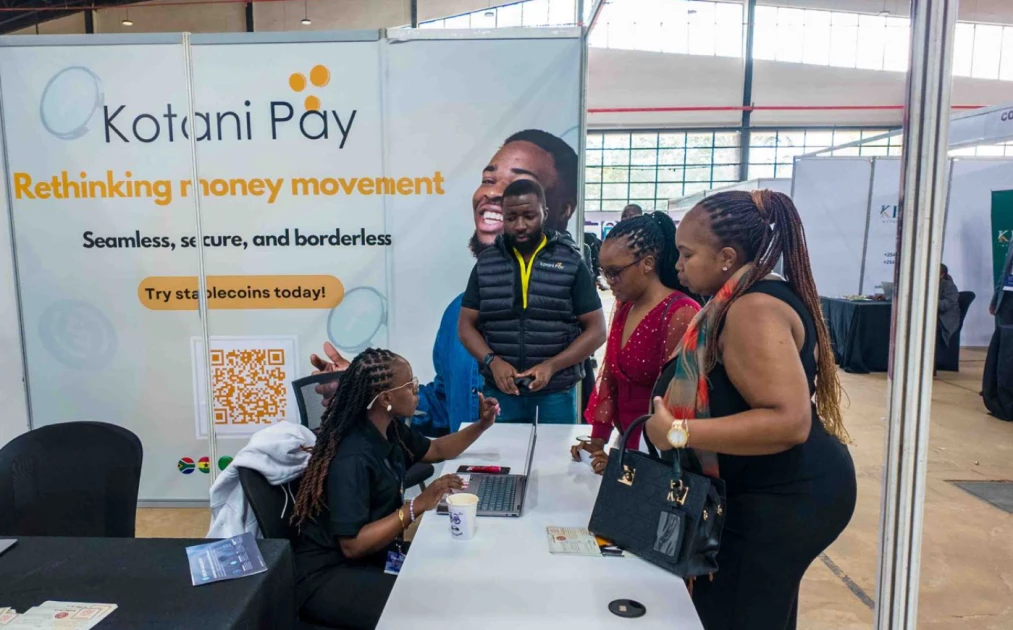
Kotani Pay is essentially a critical middle way providing white-label API access to multiple payment channels, enabling stablecoin on-ramp API integration for platforms like Yellowcard, DCG, Fonbank, Celo’s Valora, UNICEF Crypto Innovation Fund, and Stellar.
However, one of its most innovative aspects is its USSD-enabled access. While mobile penetration is significant in Africa, not many have access to the internet (in Kenya, only 32.7% of adults have internet access). Thus, simply dial *384*483#, and you can easily create blockchain wallets, receive stablecoins, and initiate conversions to mobile money. 326,000+ USSD wallet transfers show traction, especially for programs like UBI and micro‑gigs.
FOLLOW UP: Tether Pursues Big Four Audit Amid Africa’s USDT Growth.
Processing over $20 million wasn’t solely built on good APIs and partnerships but a regulatory-first mindset. Kotani Pay became the first crypto on-ramp/off-ramp blockchain fintech to receive a Crypto Asset Service Provider (CASP) license from South Africa’s Financial Sector Conduct Authority. The platform is also compliant with the national payments acts and banking regulations in Kenya, Ghana, and Zambia.
[inline_related_posts title=”We thought you’d appreciate this.” title_align=”left” style=”grid” number=”4″ align=”none” ids=”” by=”tags” orderby=”rand” order=”DESC” hide_thumb=”no” thumb_right=”no” views=”no” date=”no” grid_columns=”2″ post_type=”” tax=””]
Blockchain Payment Infrastructure for Cross-Border Transactions
Using Kotani Pay is an immediate upside when it comes to cost and speed. The platform charges 0.6–2% on transactions, compared with 8.72% average fees in Sub‑Saharan remittance corridors.
Mercy Corps gig workers in Kenya generally process a $5 micro payment from the US with a cost of up to 11% in fees. KotaniPay reduces that to as low as 2% by enabling workers to receive USD-pegged stablecoins via the Celo-based Valora wallet and convert instantly to M-Pesa Kenyan shillings.
As a blockchain payment infrastructure, its main purpose is saving up to 95% of transaction costs. These rails convert on-chain liquidity into local utility. Since USDT-denominated transfers are increasingly popular, even outpacing USDC transfers, increasing your presence is a defining factor.
Inside The Tether Investment Portfolio and Africa Strategy
Tether’s Africa playbook blends infrastructure, liquidity, and education—creating network effects around USDT:
- In the Tether investment portfolio, MANSA (pre-seed lead, 2024) raised $3 million and $7 million in liquidity financing to help payment companies settle payments in real time. MANSA gets liquidity from DeFi pools and stores reserves on Base (an Ethereum Layer-2). This gets rid of the need to pre-fund, with USDT as the main way to settle.
- Shiga Digital (June 2025) serves African businesses and industries that deal with a lot of foreign exchange. It lets them get USD liquidity through USDT. Since it started in August 2024, it has processed $27 million in on-chain cross-border payments, including $11 million in January 2025 alone (574% growth), making USDT a settlement currency for trade.
- In terms of education, the Tether investment portfolio of partnerships includes Yellow Card (which reached 1 million people in 20 countries), Quidax (which trained more than 15,000 people in Nigeria and Ghana), the Africa Blockchain Institute (which held workshops at universities in Ivory Coast), and Bitnob (which trained more than 2,800 students in Ghana). This makes users, developers, and policymakers trust you more.
Tether has expanded its presence in Africa to include Zanzibar, South Sudan, and Guinea, with partners such as Quidax and Yellow Card. Its main goal, though, is to improve local blockchain payment infrastructure through investments or services.
USDT is a stablecoin that is always present in Africa, making up 57.3% of the continent’s stablecoin flows. Exchanges like Binance handle 74.3% of the continent’s stablecoin volume. It’s no lie, USDT is the de facto digital dollar in Africa, with many opting for it as payment and a transaction medium.
Tether’s CEO Paolo Ardoino highlighted the goal: empowering enterprises and individuals to access digital assets for global operations while reducing friction in cross‑border transactions. For SMEs, Kotani Pay’s fiat-to-crypto bridge and stablecoin on-ramp API integration streamline disbursements, supplier payments, and payroll. This even accounts for micro‑payouts that were previously uneconomical.
Discover more from Web3Africa
Subscribe to get the latest posts sent to your email.
You must be logged in to post a comment.