






Table of Contents
Startups are evolving; Kenya, Nigeria, and South Africa have passed laws establishing their regulatory framework, and platforms like the Africa Blockchain Festival provide a space for the community.
Africa’s blockchain utility is outpacing speculations; we are showcasing that blockchain exists beyond crypto. However, the single headlines often don’t capture the whole picture.
Below is a mere snapshot of the State of Blockchain & Crypto in Africa 2026 report, developed in-house with the Africa Blockchain Festival, diving into the facts that define us as a community.
The Numbers That Define Africa’s Crypto Moment
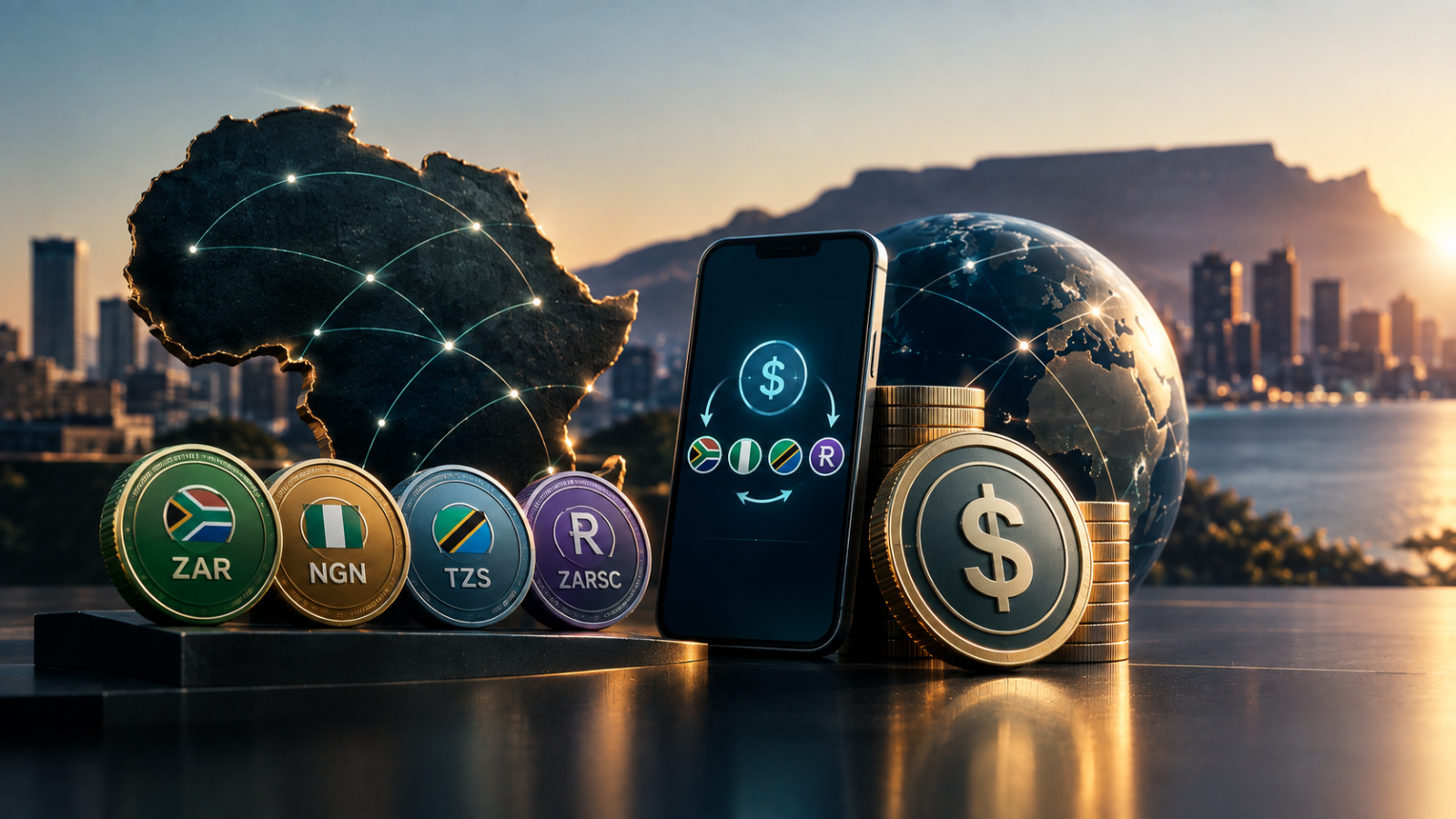
Sub-Saharan Africa received $205 billion in on-chain volume between July 2024 and June 2025, marking 52% year-over-year growth and cementing the region as the world’s third-fastest-growing crypto market. Yet the African crypto market remains sharply bifurcated: massive transaction volumes collide with constrained venture funding.
One of the biggest wins Africa’s web3 community had was the $205 billion on-chain valuation from Chainalysis. In under one year (July 2024 to June 2025), Africa showcased a 52% year-over-year growth. This basically cemented our continent as the third fastest-growing crypto market.
RELATED: The Bigger Bet Behind Africa Blockchain Festival 2026.
The ripple was evident with a massive rise in blockchain-based fintechs around Africa, with many banking on stablecoins as a medium of transaction and a hedge against it. Innovators and entrepreneurs proved we can develop our solutions to real local problems. The trend, however, the $205 valuation has not generated much enthusiasm.
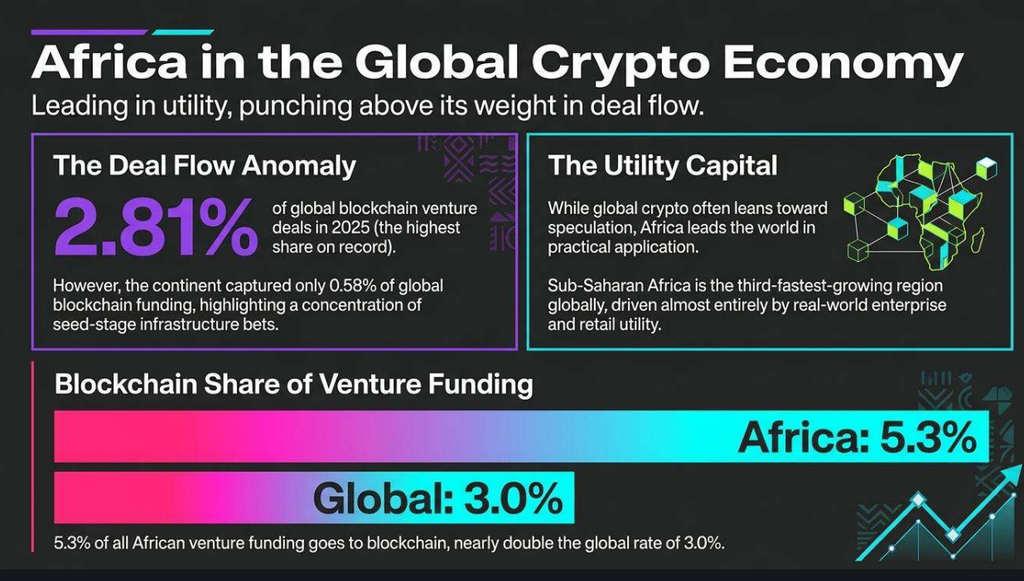
The report showcases that while African blockchain startups secured $90.1 million across 28 deals in 2025, that was only about 0.58% of global blockchain capital, barely a whole number.
While the figure also represented 5.3% of all African venture funding, nearly double the global rate of 3.0%, the median deal size remained under **$2 million.
Seed-stage infrastructure plays received the majority of the funding, while growth-stage scale-ups received less.
Honestly, it’s a generational mispricing. The continent accounts for 2.81% of global blockchain venture deals, the highest share on record, but a fraction of total capital deployed. Basically, it only provides the necessary initial support but fails to continue as growth capital in later stages.
Why We Actually Move Money On-Chain (Spoiler: It’s Not Meme Coins)
The reports highlight a fundamental truth and difference between us and the global crypto market. For many, it’s all about speculation and trading, but for Africa, it’s a chance to redefine our structure. This is why stablecoins represent 43% of all crypto transactions in Africa.
The report best elaborates the findings in four dominant use cases.
Wealth preservation
Inflation is a common term in almost all nations on the continent. Thus, it’s often common for users to convert depreciating local currencies into USD-pegged ones. It’s a smart move considering the severe dollar shortages. Therefore, digital dollars emerge as the next best option, offering functional advantages.
B2B cross-border payments
Importers, exporters, and service providers use on-chain liquidity to bypass the 4-to-7-day settlement delays of correspondent banking. Platforms like HoneyCoin provide same-day settlement across 15 African markets, treating stablecoins as working capital rather than speculative assets.
Retail remittances
While dealing with inflation, Africa also has the most expensive transaction cost, averaging 8.46%. Blockchain collapses these fees to under 1%, and it only takes minutes to complete.
Institutional settlement
The $205 billion figure also caught the attention of traditional banks and fintechs. Now many legacy systems have either adopted the technology or partnered with a regulated rail for backend clearing. Nigeria’s Zone operates a layer-1 processing transactions for more than 15 commercial banks. South Africa’s Old Mutual Wealth manages the cash reserves backing ZARP, a rand-pegged stablecoin.
Moving from Shiny Apps to Core Financial Plumbing
Africa’s focus, as per the report and the progress, is on building its own infrastructure. Local exchanges have extended their services to become a capital and savings platform across the continent.
VALR (South Africa) functions as an institutional powerhouse. It offers 200 trading pairs and maker-taker fee structures for active traders and desks.
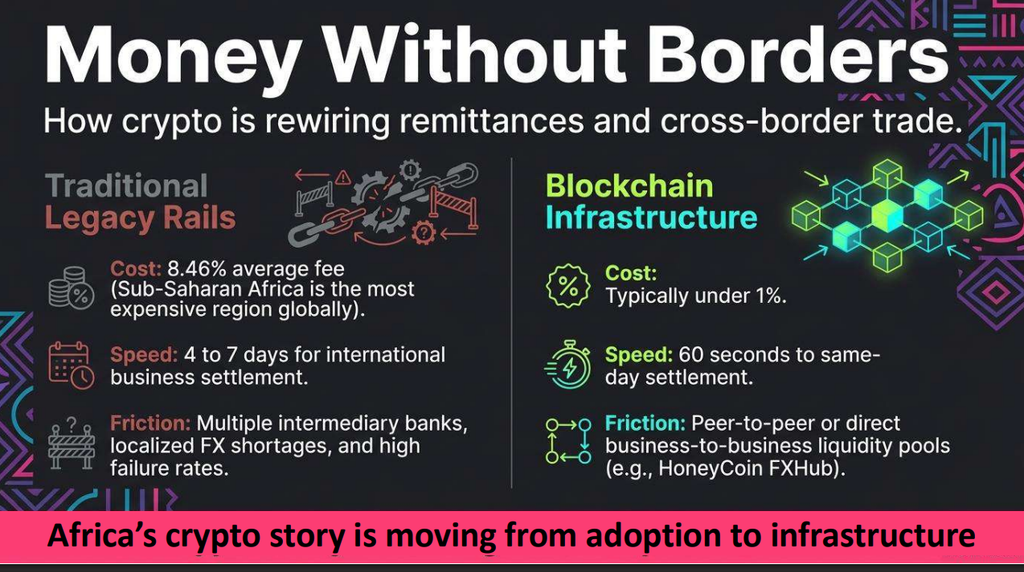
Busha (Nigeria) operates with provisional SEC licensing and recently focused on dollar-pegged savings products offering up to 7.5% APY. HoneyCoin provides B2B settlement engines across 15 markets, allowing finance teams to trade up to 49 currencies and eliminate four-day correspondent banking delays.
The report also highlights how platforms like Kotani Pay and Tether connect global blockchain rails to local mobile money networks like M-Pesa, MTN Mobile Money, and Airtel. For a region that heavily relies on mobile money (processing $1.4 trillion), seamlessly converting stablecoins into fiat provides the tangible aspect of Web3.
Even local stablecoins focus on ensuring their backend doesn’t collide with legacy systems. Nigeria’s cNGN stablecoin uses ISO 20022 architecture to integrate directly into the formal banking sector.
It’s a practical way to disprove norms or misconceptions about blockchain replacing traditional finance. For instance, Kenya’s Telcoin operates eUSD and eKHS using GSMA-member mobile operators as validators, embedding crypto infrastructure directly into telecom networks.
Africa Blockchain Festival 2026: Where the Ecosystem Meets
The Africa Blockchain Festival 2026, scheduled for October 15–17 in Nairobi, Kenya, will showcase all of these developments and more. After attracting over 2,000 attendees from more than 50 countries for their first event in Kigali, their 2026 aims are much bigger.
How Lagos and Nairobi Got the Conversation Started Early
ABF understands that it’s through community that our ecosystem thrives, and it’s got a head start. Shortly after announcing its event and partnering with us, ABF hosted two successful Block and Chill mixer series.
- Block and Chill Nigeria brought together founders, developers, and investors in Lagos, creating a dynamic space for networking and deal flow discussions. The event showcased Nigeria’s vibrant Web3 community, reflecting the country’s status as Africa’s crypto giant, accounting for nearly half of Sub-Saharan Africa’s on-chain volume.
- Block and Chill Kenya convened Nairobi’s fast-growing blockchain community, connecting local builders with international stakeholders.
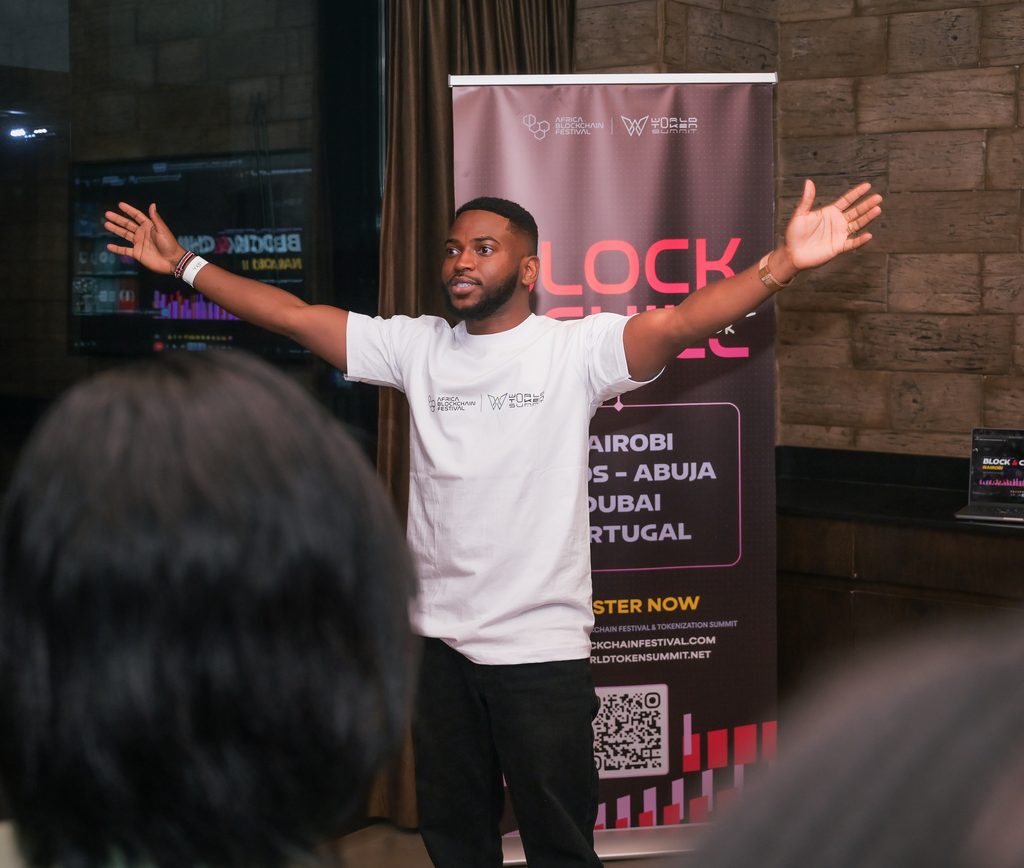
They each worked with many popular names, like Peter Onyango, chairman of virtual asset management. The Nairobi festival will build on this momentum, bringing together the pan-African ecosystem to translate the report’s findings into actionable partnerships and investments.
What to Expect at ABF 2026 Nairobi
- Founder & Investor Track: Deep dives into the report’s funding reality, exploring why Africa captures 2.81% of global deals but only 0.58% of capital and how to bridge that gap.
- Regulatory Summit: Sessions with policymakers from Nigeria, South Africa, Kenya, Ghana, and Rwanda, examining the shift from prohibition to FATF-aligned licensing frameworks.
- Stablecoin & Infrastructure Showcase: Live demonstrations from Zone, VALR, Busha, HoneyCoin, and Yellow Card, highlighting how blockchain is becoming essential financial plumbing.
- Tokenization & Real-World Assets: Exploring the $20B+ global tokenized private credit market and its application to African agriculture, real estate, and sovereign debt.
- Mobile Money & Blockchain Bridge: How the $1.4 trillion mobile money economy is integrating with programmable stablecoins, featuring M-Pesa, Kotani Pay, and Telcoin.
ABF 2026 is where the data meets the builders. As the report states:
“Africa didn’t wait for the world to wire it. It chose to skip the slow build and land directly on what comes next.”
Nairobi will serve as the stage for writing that next chapter.
Join the conversation at the Africa Blockchain Festival 2026.
The State of Blockchain & Crypto in Africa 2026 report makes one thing clear: our digital economy has grown from buying and holding bitcoin to developing our own default infrastructure. So far, fifteen nations have developed FATF-aligned frameworks, with Nigeria and South Africa exiting the FATF grey list.
Blockchain is more than just finance.
The data tells the story. The builders will write the next chapter. Africa Blockchain Festival 2026 in Nairobi is where these two forces converge.
Whether you are a founder seeking capital, an investor scouting the next big deal, a policymaker shaping the regulatory future, or a developer building the infrastructure of tomorrow, ABF 2026 is the place to be.
Event Details:
- Dates: October 15–17, 2026
- Location: Nairobi, Kenya
- Website: www.africablockchainfestival.com
Visit www.web3africa.tech for the full report. Secure your tickets to Africa Blockchain Festival 2026 and be part of the continent’s digital future.
About the Report: The State of Blockchain & Crypto in Africa 2026 was created by Mediapix Limited under its digital media asset, Web3Africa. tech, in partnership with Africa Blockchain Festival.
Discover more from Web3Africa
Subscribe to get the latest posts sent to your email.
You must be logged in to post a comment.