







Table of Contents
Africa’s digital economy is being built in separate rooms. Developers ship protocols in one room, investors underwrite them in another, and regulators write the rules in a third. Often with little contact between them.
The dialogue around this issue is now finding a room in Nairobi where all three aspects are present. This year, the Africa Blockchain Festival 2026 is the room where opportunities for all three are converging, a rarity in Nairobi, where more action will take place vs. hot air.
Founded in 2024, the organization focuses on creating a platform were
“Builders meet funders, and funders meet policymakers, in a context built for Africa.”
This framing is worth holding onto as ABF 2026 approaches. The festival’s second edition runs October 15–17 at Nairobi’s Sarit Expo Centre under the theme
“Code, Capital, and Continuity: Building Africa’s Permanent Digital Economy.”
Where the Africa Blockchain Festival Started
ABF was founded by Olubunmi Fabanwo, a Nigerian entrepreneur whose path runs from GTBank to fintech startup Mono and then to Binance Africa, where, from March 2022, he managed over 1,500 affiliates as the affiliate program manager.
Fabanwo has said the idea was conceived around 2021; he “dreamed it in Accra” after watching Africa’s most talented builders work in silos. “We saw fragmentation. We saw brilliant innovators building in silos,” he said when the festival launched.
ABF’s answer was a single gathering structured around three pillars: policy, innovation, and capital. The organization is young, energetic, and private, meaning this is an origin story and a progress report.
Rwanda: What the Africa Blockchain Festival Built
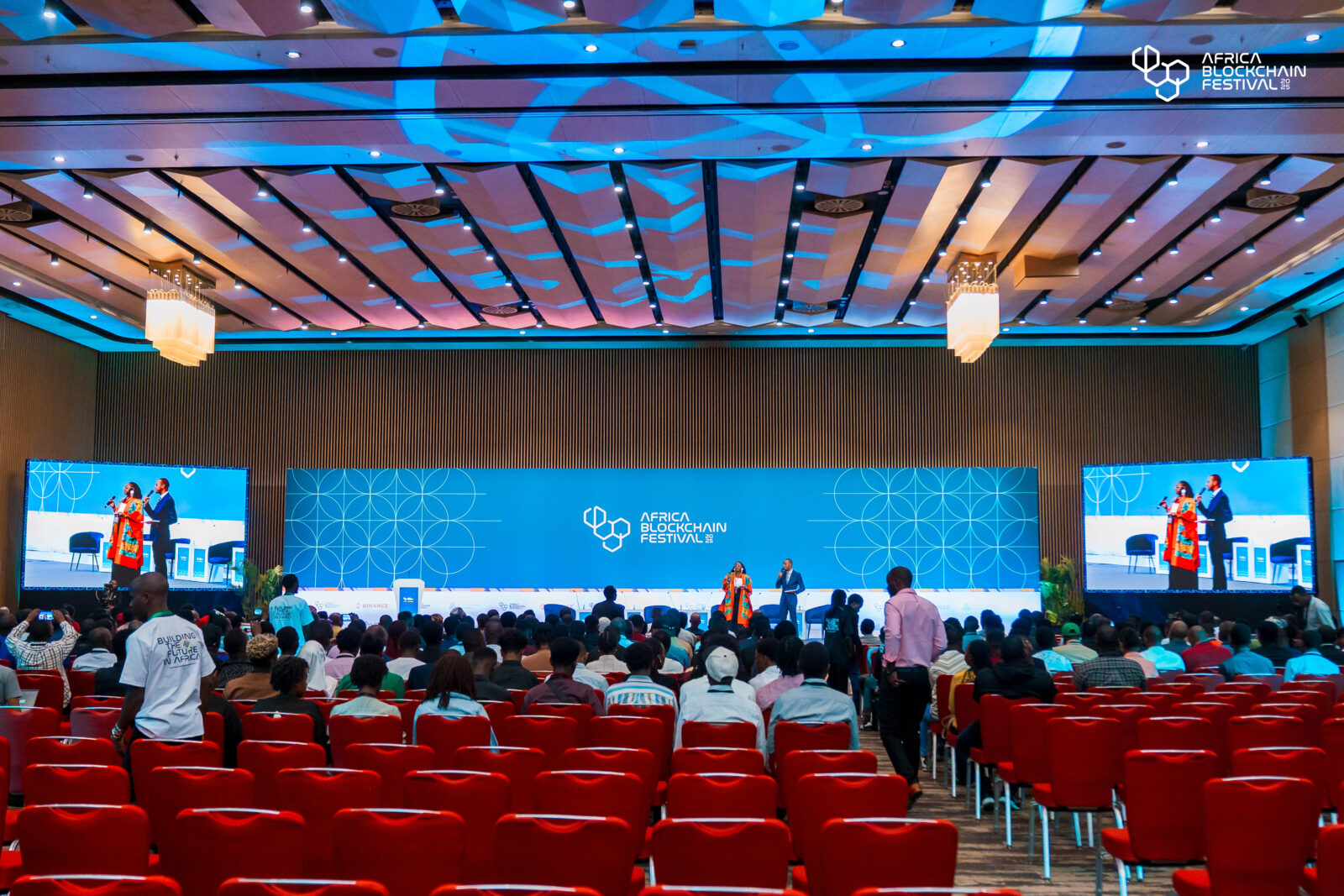
The debut edition, held at the Kigali Convention Centre from November 7–9, 2025, was the main evidence ABF can point to. Organizers reported more than 2,600 attendees; media estimates ranged from 1,000 to 2,000, and the ABF website later said “over 1,600.”
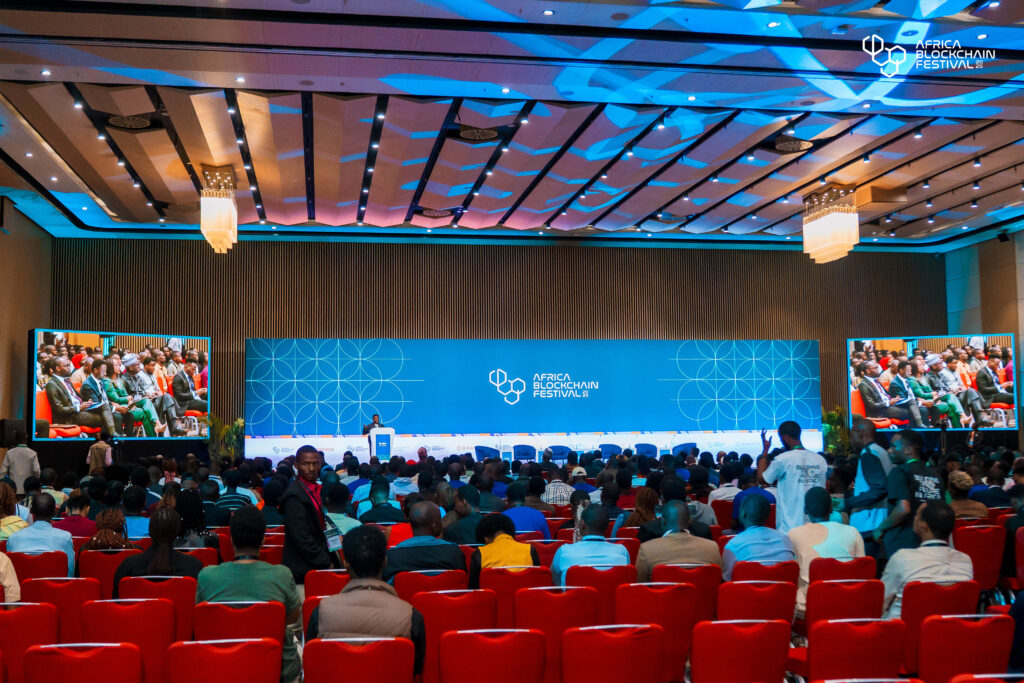
Highlighting the number of attendees and the community is important, as the presence of influential individuals in the room is also significant. Binance was the title sponsor, joined by OKX, Bybit, MEXC, Tether, the Stellar Development Foundation, the Aptos Foundation, and Hyperbridge.
Olubunmi Fabanwo, founder and head of the ABF, shared some insight on how Kigali was an experience and a half:
Kigali taught us that the energy is never really on the main stage. We went in thinking the keynotes would carry the event, and what we watched instead was a Nigerian developer closing a seed round from a conversation in the exhibition hall. The corridors did more work than the program.
Government participation also took place, which included Rwanda’s ICT Minister Paula Ingabire, the Rwanda Capital Markets Authority, and Nigeria’s SEC Director-General Emomotimi Agama. A Web3Bridge-powered hackathon drew 124 participants from six countries, producing 30 submissions, won by SovSeas, KuvarPay, and MedSeal, and 25 startups presented in the showcase.
The most important question is what happened after the ABF’s inaugural conference.
RELATED: Why Nigeria and South Africa Dominate Global Stablecoin Utility
Unlike many blockchain events in Africa, ABF claims year-round operations. For instance, the ABF Labs, which was announced in Kigali as a policy think tank and venture studio, and the ABF Dispatch, which is a weekly intelligence briefing, are both initiatives of ABF and are currently running today.
He added:
Kigali proved that African builders, investors, and policymakers do not want to be talked at. They want to be in the room together, which sounds obvious until you count how few events actually make that happen.
Code, Capital, and Continuity
Ifemide Adekanbi, Partnerships Manager, hinted at what ABF is here for and why the World Token Summit:
“With our alliance with World Token Summit, we are bringing a Gulf-based institutional investor network into direct contact with builders who, until now, have mostly been pitching to each other. The startups presenting at ABF are people who have been in this ecosystem for years. Our job is to put them in front of the capital and the institutions that the local circuit, for all its strength, cannot reach on its own.”
The 2026 edition makes ABF’s framework explicit; it’s resting on three pillars.
Day 1 is Capital: investors, founders, and regulators, with a closed policy roundtable and an investor masterclass.
Day 2 is Code: a builders’ day with hands-on workshops, a live onstage smart contract deployment, hackathon demos, and pitch finals.
Day 3 is Continuity: an invitation-only day of football, a Nairobi National Park game drive, and a closing dinner where the ABF 2027 host city will be announced.
Continuity is the most distinctive aspect of this. It asks what happens after the conference: do startups find capital? Do prototypes reach users? Does regulation become implementable? Most Web3 events in Africa end when the lights go down. ABF’s argument is that the ecosystem needs institutions that outlast any single gathering.
Why the shift to Nairobi?
ABF’s next destination is Nairobi. Kenya is East Africa’s largest crypto hub. The nation recorded roughly $19 billion in crypto inflows between July 2024 and June 2025, according to Chainalysis. Stablecoin use accounts for about 43% of sub-Saharan Africa’s transaction volume.
The regulatory timing also plays a major aspect. The VASP Act was assented to in October 2025, implementing regulations were gazetted in July 2026 (Legal Notice No. 134), and existing operators face a November 2026 licensing deadline under a dual-regulator system.
The Central Bank of Kenya regulates stablecoins and wallets, while the Capital Markets Authority oversees exchanges and token issuance. Tether’s July 2026 MoU with the Nairobi Securities Exchange on tokenization adds an institutional endorsement. ABF 2026 is deliberately scheduled for this regulatory-rich moment.
Olubunmi added:
“For Nairobi we stopped designing around stages and started designing around collisions, deliberately putting founders, funders, and regulators in the same physical spaces at the same time rather than sequencing them into separate tracks.”
On one side is the strategic alliance with World Token Summit 4.0, giving the event a Gulf-based institutional investor network and a co-branded African debut.
“Africa has become one of the most exciting blockchain markets globally,” said WTS founder Ahmed Refaie when the partnership was announced.
The other is the format. Two full conference days at Sarit Expo Centre, a curated third day, and a startup showcase and fellows’ program to move companies and talent into the ecosystem. ABF is marketing the room as founders, investors, regulators, policymakers, developers, and international delegates convene. The combination of capital, builders, and institutions that it says the continent otherwise lacks.
The main value of this event is for startups that focus on the capital track. For these startups, the pitch competition, the investors present, and the WTS network could serve as their golden ticket. For developers, the Code Day offers workshops and live builds rather than slide-heavy talks. The closed roundtable and regulatory briefings give policymakers a unique opportunity to connect directly with builders.
What happens after ABF
A conference lasts three days. An ecosystem has to last much longer, and the founders of the ABF say that it’s not the foot traffic that will be judged post-event at the Sarit Center, but what remains afterward.
By offering a platform, Kenyans, and for that matter, African startups can meet with the key players, such as VCs and other blockchain entities and developers, to build solutions for Africa’s needs. Whether introductions become businesses or whether conversations become policy largely depends on where one shows up.
Olubunmi stated:
The ABF Dispatch keeps the ecosystem talking to itself every single week between editions. Our fellows’ startups showcase is designed to move specific companies and specific people into the pipeline. We measure ourselves less by how many people walked through the door and more by how many of the introductions made in that room were still alive months later.
The ABF will be one of the largest blockchain and technology events to mark the final quarter of the year and provide a chance to find one’s next partner, idea, or VC who actually believes in and invests in ideas.
RELATED: Why Nigeria and South Africa Dominate Global Stablecoin Utility
ABF has built a credible platform and a clear thesis. The thesis will be tested in Nairobi, determining its status as an ecosystem institution rather than just an event company.
Discover more from Web3Africa
Subscribe to get the latest posts sent to your email.
You must be logged in to post a comment.