









The debate around central bank digital currencies is almost obsolete, with Africa already learning from past scenarios. For instance, the Central Bank of Nigeria (CBN) made a striking confession at the Cedi @ 60 conference.
“It’s not a rosy story… Nigerians were not interested in the eNaira… The market was already providing solutions.“
These candid acknowledgements after four years of the eNaira place a lot of questions over its practical use.
As of December 2025, 25 African countries are exploring central bank digital currencies, up from just 14 countries previously cited. Yet the continent’s early movers like Nigeria, Ghana, Zimbabwe, South Africa, and Kenya have delivered a sobering lesson.
Launching a CBDC without first figuring out the fundamental design, technology, economic, regulatory, and social questions leads to stagnation, public rejection, or outright abandonment of retail ambitions.
Here is a questionnaire governments and regulators must answer before diving into central bank digital currencies.
TL;DR,
- Despite 25 African countries exploring central bank digital currencies, Nigeria’s eNaira achieved only 0.37% adoption, proving that CBDCs must answer 15 critical design, technology, and social questions before launch.
- Nigeria’s eNaira reached just $11.4 million in circulation while Kenya’s M-Pesa dominates with 85% financial inclusion, showing mobile money outperforms government digital currencies across Africa.
- Ghana’s token-based CBDC with offline functionality offers a blueprint for inclusion, while Nigeria’s account-based model excluded 26% of unbanked adults, highlighting fatal design flaws.
What Are Central Bank Digital Currencies? The African Context
Central bank Digital currencies are digital representations of a nation’s fiat currency, issued and regulated by the central bank. Unlike decentralized cryptocurrencies such as Bitcoin, CBDCs are centralized, government-backed legal tender designed to digitize traditional money.
Globally, 114 countries representing 98% of global GDP are exploring CBDCs. In Africa, only one country has fully deployed a CBDC: Nigeria (eNaira, launched October 2021).
Five other African nations have deployed testnets or are piloting central bank digital currencies: Ghana’s eCedi, South Africa’s Project Khokha, Eswatini, Uganda, and Tunisia.
However, the outcome has not been all that favorable. The IMF reported 13 million eNaira accounts created, yet noted that “most remain inactive.” CBN data later put eNaira in circulation at ₦18.3 billion (about $11.4 million) and 0.37% of total currency in circulation.
Design Questions Central Bank Digital Currencies Must Answer
1. Token-Based vs. Account-Based Model?
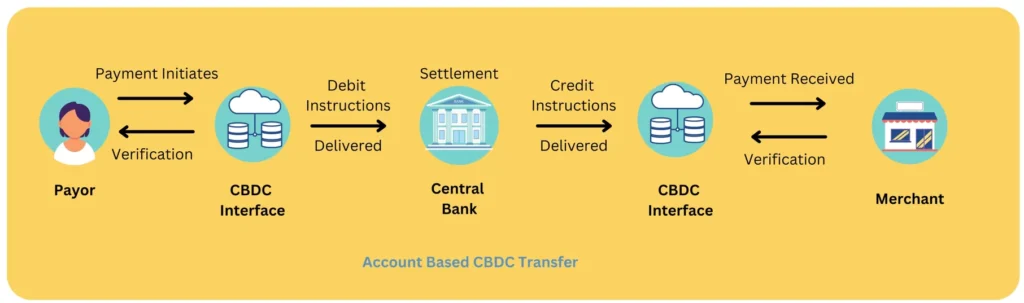
Nigeria used Hyperledger Fabric to create a hybrid account-based CBDC model that required users to connect their eNaira to their current bank accounts. An IMF Article IV Consultation from May 2024 says that this design is “only accessible to those people with bank accounts.” This makes it very hard for people to get involved in the economy in a country where 26% of adults don’t have bank accounts.
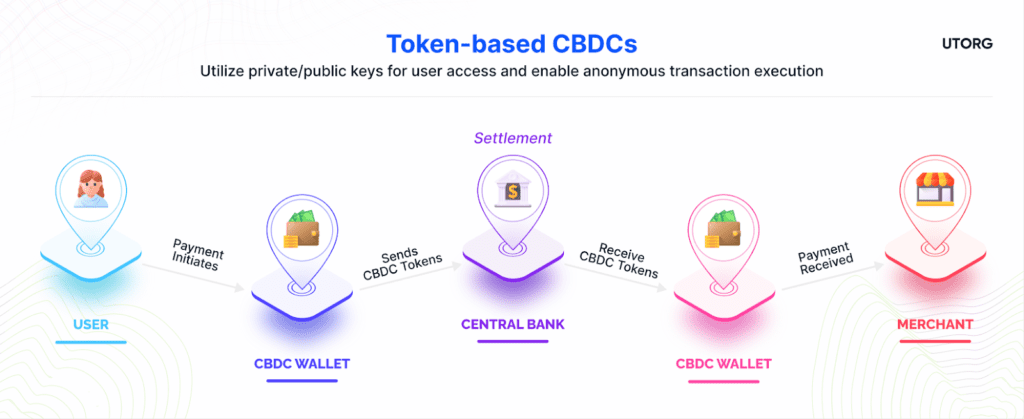
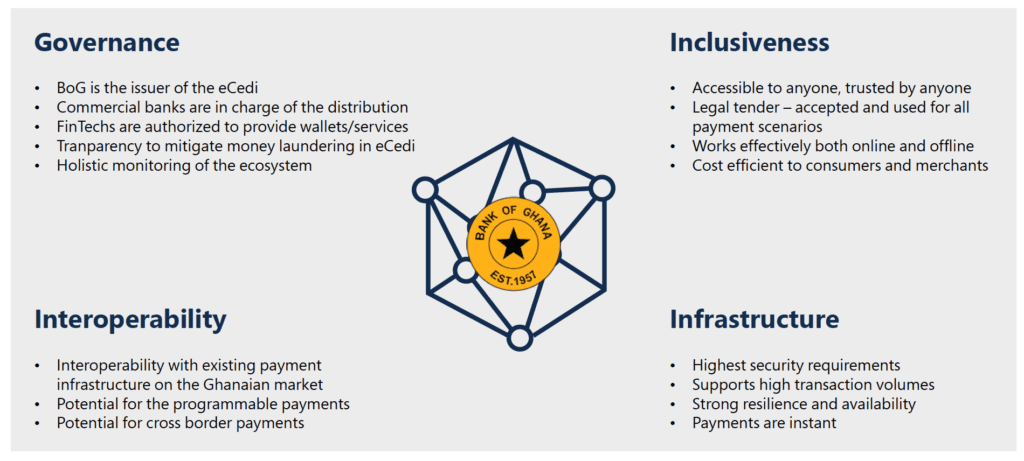
Ghana, by contrast, piloted a token-based CBDC using offline smart cards in Sefwi Asafo, validating a model that functions without internet connectivity. This was structured to open access to a nation where 47% lack consistent internet access despite mobile penetration exceeding 100%.
[inline_related_posts title=”Related” title_align=”left” style=”grid” number=”2″ align=”none” ids=”” by=”categories” orderby=”rand” order=”DESC” hide_thumb=”no” thumb_right=”no” views=”no” date=”no” grid_columns=”1″ post_type=”” tax=””]
Basically an account-based CBDC reinforces existing banking infrastructure but excludes the unbanked. A token-based CBDC can navigate around traditional barriers, but it needs strong hardware distribution and protections against counterfeiting.
2. Interest-Bearing or Interest-Free?
The eNaira in Nigeria and the eCedi in Ghana do not pay interest on purpose. This is to keep commercial banks from losing business by making the CBDC a better place to store value than regular deposits.
The CBN’s economic research (2023) found that the eNaira’s volume “has not exerted a significant impact on transferable bank deposits,” because this design kept things the same. The same goes for Ghana’s eCedi.
3. Direct Distribution or Through Intermediaries?
Nigeria decided to use an intermediated model, which meant that only deposit money banks could send eNaira. Musa Itopa Jimoha said that the CBN “was not ready to be a retail bank,” which is why it decided to focus on wholesale CBDCs, which it announced in late 2025.
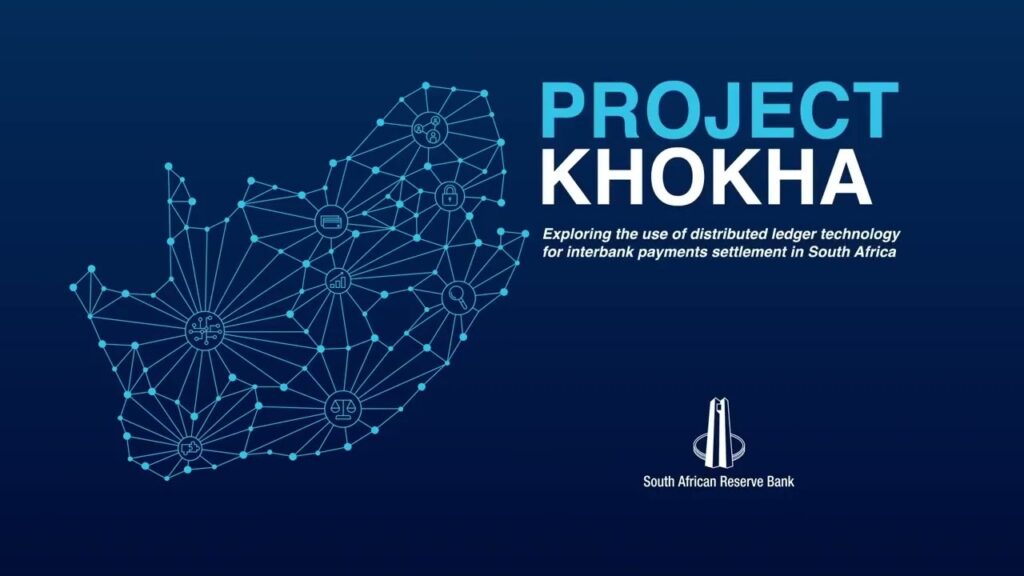
This choice also mirrors South Africa’s take, with the South African Reserve Bank (SARB) clearly stating how there was no immediate need for retail central bank digital currencies and focusing on wholesale settlement instead.
Technology Questions and African Infrastructure Realities
4–5. Blockchain or Alternative Technology? What About Offline Functionality?
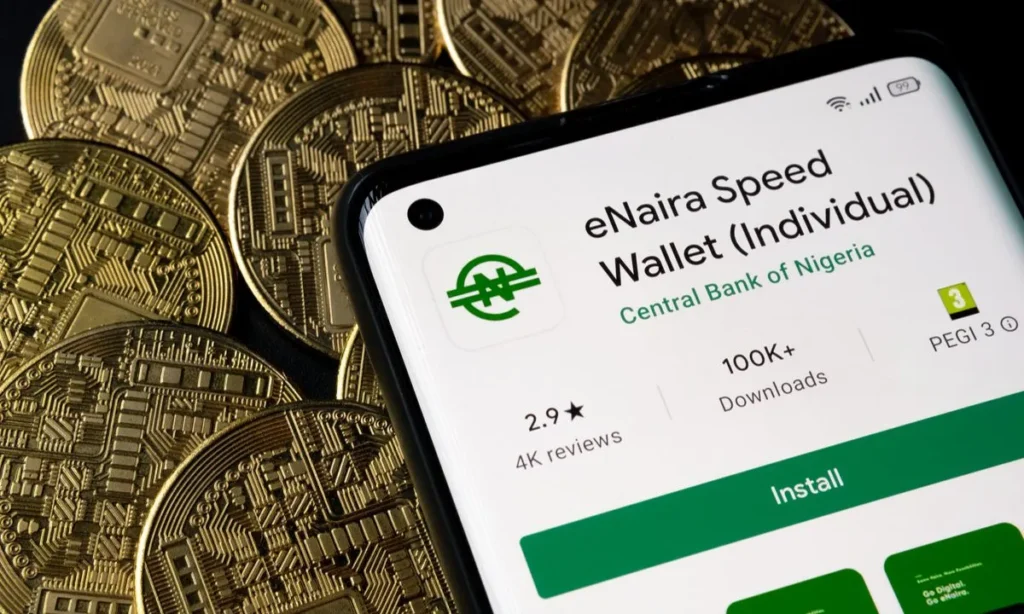
The Nigeria Inter-Bank Settlement System (NIBSS) works with Hyperledger Fabric, a permissioned distributed ledger that powers Nigeria’s eNaira. But a Cornell Business Analysis from 2023 said that the eNaira “fails to capitalize on many of the real benefits of blockchain technology,” which is why only 1.3% of Nigeria’s 55 million financial accounts are using it.
Ghana’s offline pilot is all about using new technology to make things more useful and easier to get to. Using smart cards from Giesecke+Devrient, the eCedi enables true peer-to-peer transactions without internet or electricity.
It’s a “first-mover advantage” to design for how Africans connect instead of bringing in Western ideas. Nigeria eventually mimicked a similar design by introducing “eNaira v2.0” features focusing on NFC/contactless and offline functionality.
6. Cybersecurity Protocols?
Global crypto hacking losses reached $2.2 billion in 2024 (Chainalysis), showcasing how the industry is a threat environment. While neither eNaira nor eCedi has suffered a publicized breach, critics note that the eNaira’s private node structure gives the CBN complete ledger visibility:
“If the government wanted to edit the internal eNaira ledger… it easily could, and no one would be any the wiser.”
The Regulatory Questions and Inclusion Paradox
7–9. Regulatory Oversight, Preventing Illicit Activities, and Interoperability
All African central bank digital currencies mandate Know Your Customer (KYC) requirements with tiered wallet limits to prevent money laundering. This usually means that you can’t be anonymous when you make important transactions. This surveillance architecture goes against what people expect in terms of privacy, which is one reason why people are against it.
Interoperability projects like the Pan-African Payment and Settlement System (PAPSS) could one day allow CBDC to replace the US dollar in trade between African countries. However, these plans are still just ideas as of December 2025. However, this still mainly remains ideal.
10–11. Financial Inclusion and Monetary Policy Impact
Unfortunately, Africa’s history decisively contradicts the pro-CBDC narrative. Kenya, with 85% financial inclusion achieved through M-Pesa mobile money, dismissed a retail CBDC as “not a compelling priority in the short to medium term.” The Central Bank of Kenya’s position showcases how robust mobile money systems can achieve inclusion goals without Central Bank Digital Currencies.
This concept is the core of how CBDCs affect financial inclusion in Africa. According to EFInA, 26% of adults in Nigeria remain financially excluded. This is mostly because of companies like MTN Momo.
Don’t assume that a CBDC will help people who don’t have access to banking if the private sector already offers better, more user-friendly options. An academic study (RSIS) found that “low awareness” and a lack of practical use cases were the main reasons why people weren’t using eNaira. It suggested that eNaira be used for targeted social programs and student loans. This is precisely the programmability of CBDCs that Nigeria’s v2.0 now pursues.
[inline_related_posts title=”Related” title_align=”left” style=”grid” number=”1″ align=”none” ids=”” by=”categories” orderby=”rand” order=”DESC” hide_thumb=”no” thumb_right=”no” views=”no” date=”no” grid_columns=”1″ post_type=”” tax=””]
12. Scalability in Transaction Volume
According to the IMF, Nigeria only had 854,512 consumer-to-merchant transactions through May 2024, with a total value of around ₦22 billion ($14 million). This is tiny for Africa’s largest economy. Scalability remains untested because adoption never materialized.
Social Ramifications: Privacy, Trust, and the “Solution in Search of a Problem”
13–15. Concerns about privacy, access to financial services, and trust in the financial system
The Nigerian government caused a cash shortage in December 2022 to force people to use eNaira. This led to protests and riots as people demanded real cash instead of the CBDC. Olayemi Cardoso, the governor of the CBN, later promised to “review the implementation of the eNaira to optimize broad and positive economic impact.” His statement showed that he knew there was a lack of trust.
CBDCs can be programmed to allow conditional spending, like agriculture loans that can only be used at approved stores. This is useful for targeted welfare, but it also raises dystopian concerns about the government’s control over people’s freedom to buy things.
A Decision Framework for African Governments
Before pursuing Central Bank digital currencies, ask:
- Does a compelling problem exist that mobile money or fintech hasn’t solved? (Kenya’s lesson)
- Can your central bank operate retail banking infrastructure? (Nigeria’s admission: no)
- Have you piloted offline functionality for low-connectivity populations? (Ghana’s model)
- Will the design exclude the unbanked you claim to serve? (Nigeria’s account-based failure)
- Is public trust sufficient to overcome privacy concerns? (2022 protests say no)
- Are you prepared to pivot to wholesale focus if retail fails? (Nigeria and South Africa’s path)
The Verdict over Africa Adopting Central Bank Digital Currencies
While Africa’s CBDC journey has evolved over time, it’s still heavily overshadowed by the alternatives the other digital assets offer. How CBDCs affect financial inclusion in Africa depends entirely on the vast reach of mobile money and fintech as well as access to stablecoins.
Additionally, the limitations of CBDCs are a monumental driving factor of their low use. It generally provides governments with absolute control over finance, an aspect institutions, startups, and individual traders can live without.
At the end it all depends on whether or not it can answer these 15 questions with evidence or face a similar trajectory as the Enaira.
FAQ section:
What is the difference between a CBDC and cryptocurrency?
Central bank digital currencies are government-issued digital versions of fiat currency, fully centralized and regulated by central banks. Cryptocurrencies like Bitcoin are decentralized, not backed by any government, and operate on public blockchains.
Why did Nigeria’s eNaira fail to gain adoption?
The eNaira achieved only 0.37% of currency in circulation due to an account-based design that excluded the unbanked, lack of compelling use cases beyond existing mobile money solutions, low awareness, and privacy concerns about government surveillance.
What is a token-based CBDC and why does it matter for Africa?
A token-based CBDC functions like digital cash using smart cards or devices, enabling offline transactions without internet or bank accounts. This matters in Africa where 47% of Ghanaians lack consistent internet and 26% of Nigerians are unbanked.
Which African countries have launched CBDCs?
Only Nigeria has fully launched a retail CBDC (eNaira, October 2021). Ghana, South Africa, Eswatini, Uganda, and Tunisia are piloting or testing CBDCs. Kenya explicitly rejected retail CBDC development, citing M-Pesa’s success.
Can CBDCs compete with mobile money like M-Pesa in Africa?
Evidence suggests no. Kenya achieved 85% financial inclusion through M-Pesa without a CBDC. Nigeria’s eNaira has struggled against MTN Momo and other private mobile money platforms that offer better user experience and established trust.
Discover more from Web3Africa
Subscribe to get the latest posts sent to your email.

You must be logged in to post a comment.