











In November 2023, the Australian Tax Office (ATO) published updated web guidance that mainly echoed that they were in charge and not the industry. The Australian crypto tax guidance will treat DeFi actions (including “wrapping” and “unwrapping” tokens) as capital gains tax events.
However, within weeks, responses to its efficiency were harsh. arrison Dell, director of crypto tax laws specialist firm Cadena Legal, stated that the Australian crypto tax guidance was, in his words, “single-ply toilet paper at best.”
Here’s a look at whether or not he was right.
TL;DR,
- Australian crypto tax guidance (Nov 2023) treats DeFi wrapping and liquidity pools as CGT events. Experts call it non-binding and poorly designed, leaving 1.2M investors in regulatory uncertainty.
- The ATO’s DeFi guidance is non-binding yet enforced, triggering CGT on token wrapping and lending. Legal experts say it hinders innovation and requires legislative fixes.
- Harrison Dell called Australia’s DeFi tax rules “single-ply toilet paper.” With no crypto-specific legislation and aggressive enforcement, investors face a compliance minefield.
The Controversial ATO Guidance: What It Says and Why It Matters
On November 9, 2023, the ATO updated its public web guidance on “Crypto asset classification” and DeFi activities. This new update defined DeFi as “a blockchain-based form of finance that is conducted without relying on a financial intermediary (peer-to-peer).”
It then takes the position that, in many DeFi workflows, when you transfer a crypto asset to a DeFi platform, beneficial ownership may change, and that change is treated as a Capital Gains Tax (CGT) event.
The key line (as the ATO frames it) is effectively
“When you transfer a crypto asset to a DeFi platform… beneficial ownership of the crypto asset may change… This is a CGT event.”
So in a nutshell:
- Wrapping ETH to WETH for use in DeFi protocols: CGT disposal and acquisition.
- Depositing tokens into a liquidity pool: CGT event.
- Lending on decentralized platforms: CGT event.
Additionally, the Australian crypto tax guidance is non-binding web guidance, meaning it’s the Commissioner’s opinion but does not carry the legal weight of a “Public Ruling.” Taxpayers cannot rely on it for protection from penalties, yet the ATO uses it to inform private rulings and compliance activity.
The entire dispute over this latest addition is whether a DeFi interaction is more like retaining ownership while using a service (arguably not a disposal) or transferring ownership rights to another party/arrangement (arguably a disposal).
Furthermore, the very structure of decentralized finance makes it difficult to implement since smart contracts often employ a unique mechanism. Users often relinquish direct control to a contract, receive a receipt token, or accept protocol-level terms—facts that can cut differently depending on the legal characterization.
Why Industry Experts Are Pushing Back strongly
Harrison Dell’s November 27, 2023, critique was bold, harsh, and factual.
As this is mere non-binding web guidance, you could, as my lecturer said, treat it as single-ply toilet paper at best… I am actively telling people they are best ignoring it and getting their own advice.
He also argued that treating wrapping/unwrapping as CGT events is poor policy because “economically, nothing has changed when these transfers occur,” and that fixing this would require legislative change, not just a website update.
In submissions to the Board of Taxation, Cadena Legal noted the ATO is “very unwilling to participate in meaningful early engagement.” Seeking private rulings to clarify individual situations involves “substantial cost and stress,” and dozens of clients had been forced down this path despite the guidance’s non-binding status.

[inline_related_posts title=”Related” title_align=”left” style=”grid” number=”1″ align=”none” ids=”” by=”categories” orderby=”rand” order=”DESC” hide_thumb=”no” thumb_right=”no” views=”no” date=”no” grid_columns=”1″ post_type=”” tax=””]
Australia’s high adoption of crypto was a well-founded source of tension. In Australia, the percentage of adults who own crypto ranges from 20% to 27.5%, with the number of Gen Z users growing by 11% in 2024 alone. New South Wales hosts 50% of Australia’s blockchain businesses, with an expected $3.5 billion in sales by 2030.
The Government’s “Wait and See” Response
The tension behind Australia’s crypto tax laws has been steadily building since the region’s first attempt. The Australian Government said on March 21, 2022, that the Board of Taxation would look into how digital assets are taxed. The Board then sent out a 295-page final report in February 2024, which included a main recommendation:
“The Board does not recommend the introduction of any crypto-specific legislative taxation regime at the present time.”
The government released its official four-page response on March 21, 2025. The government stated that the same tax laws that govern other assets also apply to digital assets, advising people to exercise patience. No new crypto tax laws specific to digital assets were announced. Instead, the ATO was directed to continue issuing “targeted guidance”—the very type of non-binding material that sparked Dell’s critique.
On the other hand, enforcement has gotten stronger. In May 2024, the ATO announced a Crypto Asset Data Matching program that would affect about 1.2 million Australian crypto investors. The program asked exchanges for personal and transaction information to make sure they were following the rules for the 2023–2024 financial year. Warning letters have gone to hundreds of thousands of investors since 2020.
The “balanced law” narrative
Some elements of Australia’s crypto tax laws are relatively stable:
- For tax purposes, crypto is not money or foreign currency; it is property and usually a CGT asset. This classification of crypto assets is what the ATO uses to decide how to handle them. (ATO advice)
- Common triggers include selling for AUD, trading one token for another (a disposal and acquisition), using crypto to buy goods or services, and earning crypto (through staking, airdrops, or mining), depending on the situation. (ATO advice)
- If you hold a CGT asset for more than 12 months, you may be able to receive a 50% CGT discount (the same rules that apply to crypto in Australia).
But the DeFi edge cases are still hard to deal with, especially when the “literal” approach means keeping track of many small disposals.
CHECK OUT: Kenya Scraps 3% Crypto Tax: New Fee-Based System Explained.
New Exchange Licensing Rules Add Pressure
The Australian crypto tax guidance debate isn’t happening on its own. The Australian Treasury put out the “Regulating Digital Asset Platforms” proposal in October 2023. It says that crypto exchanges that hold client assets above certain levels must get an Australian Financial Services license (AFSL).
The proposal says that platforms that hold more than AUD 1,500 ($946) of a single client’s assets or more than AUD 5 million ($3.15 million) in total assets would need to get a license from the Australian Securities and Investments Commission (ASIC). The industry is undergoing a transformation as it anticipates the enactment of new laws in 2024–2025.
ASIC has been using a “regulation by enforcement” strategy, which critics say means going after platforms like Finder Earn and Block Earner using current laws.
Still, the crypto tax laws have some positive points:
- If you own an asset for more than 12 months, you can get a 50% CGT discount.
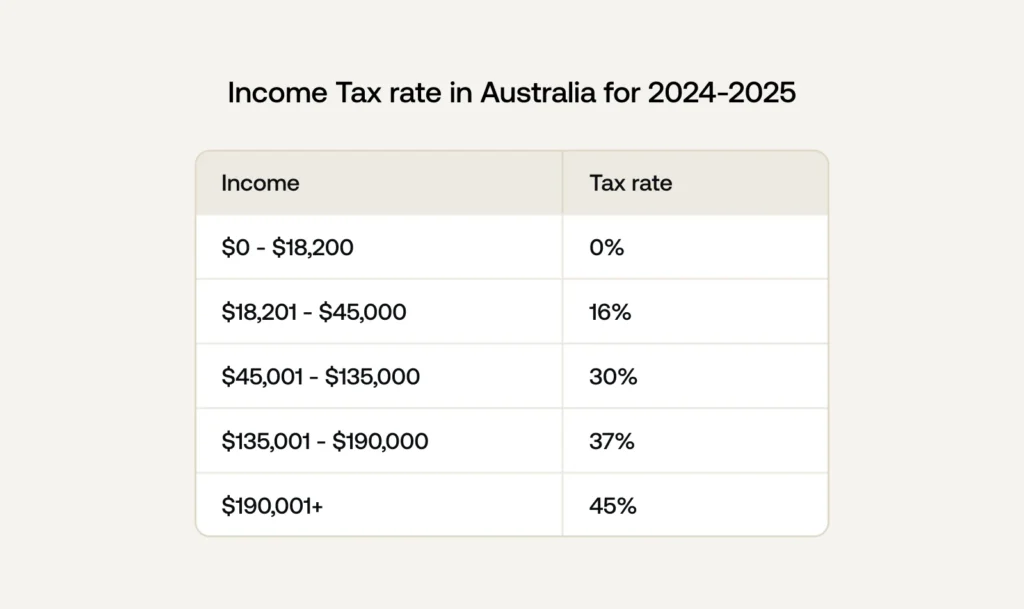
- A total annual income of $18,200 that is not taxed
- You can use capital losses to offset gains, and there are rules for carrying them forward.
The current state of Australian crypto tax guidance and its implications for Australians.
This story is less about whether crypto should be taxed and more about whether DeFi can be taxed coherently under today’s crypto asset classification. The ideal is to do it without drowning users in microdisposals or legal uncertainty.
To add more pressure, its government declined to create new crypto laws in its March 2024 response.
Until legislation or higher-authority rulings clarify the “beneficial ownership” question, Australians interacting with DeFi are effectively navigating crypto tax laws in a high-enforcement, low-certainty environment—where careful records, defensible positions, and professional advice aren’t optional extras but risk controls.
FAQ section:
Is the ATO’s DeFi guidance legally binding?
No. The November 2023 guidance is non-binding web material, not a Public Ruling. However, the ATO uses it to inform compliance activity and private rulings, so ignoring it carries audit risk.
Does wrapping ETH to WETH trigger a capital gains tax event in Australia?
According to the ATO’s position, yes. The guidance states that transferring crypto to a DeFi platform where beneficial ownership changes is a CGT disposal and acquisition event.
How does the ATO track crypto transactions?
Through the Crypto Asset Data Matching program (May 2024), the ATO collects personal and transaction data from exchanges, affecting ~1.2 million Australian crypto investors for the 2023-2024 financial year.
What are the benefits of Australia’s crypto tax laws?
Stable elements include the 50% CGT discount for assets held >12 months, an $18,200 tax-free threshold, and ability to offset capital losses against gains.
Should I get a private ruling for my DeFi activities?
Given the guidance’s non-binding status and DeFi’s legal uncertainty, a private ruling offers protection but involves “substantial cost and stress” according to Cadena Legal. Consult a crypto tax specialist to assess your risk.
Discover more from Web3Africa
Subscribe to get the latest posts sent to your email.

You must be logged in to post a comment.