











South Africa is among the first early adopters and embracers of cryptocurrency. Unlike 90% of Africa back in 2015 and 2016, South Africa actually adopted and became one of the first nations to have functioning guidelines on crypto. However, when it came to crypto tax, South Africa had to maneuver a bit.
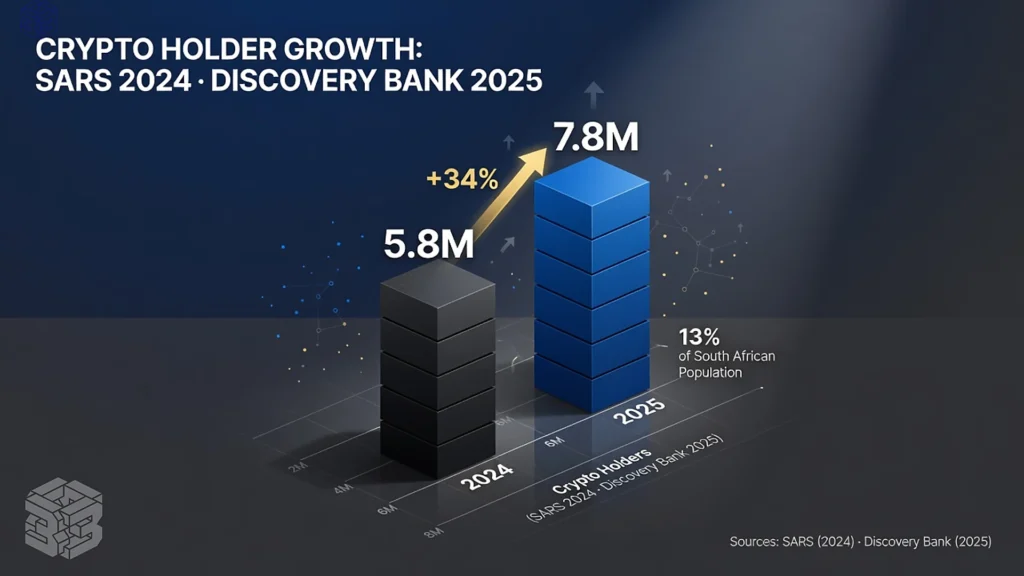
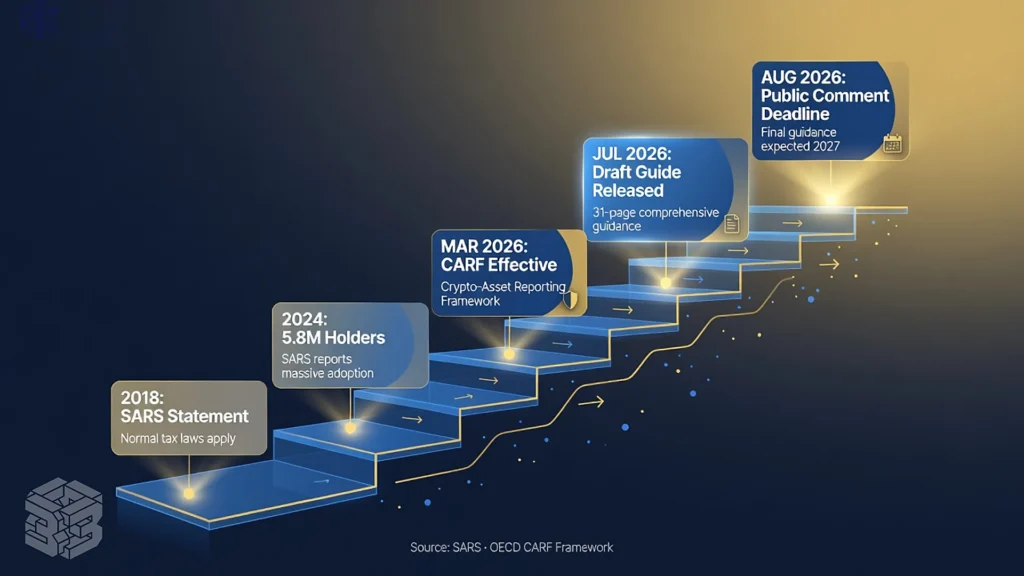
Its first attempt dates back to April 2018 with a brief statement confirming that normal tax laws applied to digital assets—and then left more than 5.8 million crypto holders to guess how.
That uncertainty recently ended when SARS released its Draft Guide to the Taxation of Crypto Assets. Basically, it’s SA’s first comprehensive explanation of how existing income tax and capital gains tax rules apply to cryptocurrency activities. The 31-page document does not introduce new taxes. Instead, it offers what tax professionals describe as regulatory certainty in a market where ambiguity has long been a hidden cost.
“The biggest value of the guide is that it reduces uncertainty. It gives taxpayers a deeper understanding of how SARS is likely to approach audits and assessments.” — Tertius Troost, a tax specialist at RSM South Africa
Crypto Tax Guide: Key Clarifications from SARS
The draft resolves several foundational questions that have lacked official answers since cryptocurrency regulation first became a compliance issue. SARS confirms that crypto-to-crypto swaps are taxable barter transactions. This means a Bitcoin-to-Ether trade triggers a gain or loss even when no fiat currency changes hands. Using cryptocurrency to pay for goods or services is treated as a disposal, not a purchase.
The guide also addresses the central question of whether profits are taxed as ordinary income (18%–45% marginal rates) or capital gains (effective maximum 18% for individuals). Unlike shares, which qualify for capital treatment after three years, cryptocurrency has no safe harbor period.
RELATED: SARS Eliminates Crypto Anonymity Through CARF Reporting Framework
SARS will examine holding periods, transaction frequency, and overall trading patterns to determine intent—a case-by-case analysis that echoes how SARS taxes cryptocurrency across other asset classes.
Mining rewards are classified as ordinary income at market value when received, but staking is still being resolved. Decentralized finance receives only foundational coverage. Think of it as a gap that tax advisers expect will dominate the public consultation process, which runs until 31 August 2026.
The Urgency of Crypto Tax Compliance in South Africa
The guide arrives as SARS expands enforcement infrastructure. The Crypto-Asset Reporting Framework (CARF) became effective 1 March 2026, requiring South African crypto service providers to collect and report transaction-level data. SARS has established a Crypto Revenue Augmentation Unit and deployed AI-driven audit tools to match third-party data against taxpayer returns.
Jashwin Baijoo, a partner at Tax Consulting SA, said the crypto tax guide “signals enhanced regularization and monitoring” and noted that many traders who failed to declare gains due to uncertainty must now use the Voluntary Disclosure Program to regularize their affairs. A solid grasp of crypto tax obligations is no longer optional.
RELATED: The Return of the Cajee Brothers and the Unresolved AfriCrypt Investigation
Wiehann Olivier, global co-head of Digital Assets at Forvis Mazars, described the guidance as “several years late” and said limited direction on DeFi, tokenized assets, and crypto-backed lending leaves key questions unanswered.
Troost cautioned investors against compliance strategies based on invisibility. “The days of assuming crypto is invisible to SARS are over,” he said. “Don’t make compliance decisions based on what SARS cannot see today.”
As one of the pioneers, South Africa’s crypto regulations have taken it a step further by offering a predictable framework that really deals with the interpretive guesswork most policymakers go through.
FAQ
Are crypto-to-crypto trades taxed in South Africa?
Yes. SARS considers crypto-to-crypto swaps to be taxable barter transactions, meaning traders must declare a gain or loss even when no fiat currency is involved in the exchange.
Does cryptocurrency qualify for the three-year capital gains safe harbor?
No. Unlike traditional shares, which qualify for capital treatment after three years, cryptocurrency has no safe harbor period in South Africa. SARS evaluates holding periods and trading frequency on a case-by-case basis to determine investment intent.
How does SARS treat cryptocurrency mining and staking?
The draft guide classifies mining rewards as ordinary income based on their market value when received. However, the exact taxation rules for staking and decentralized finance (DeFi) yields remain foundational and are expected to be refined following public consultation.
Discover more from Web3Africa
Subscribe to get the latest posts sent to your email.
You must be logged in to post a comment.