










Table of Contents
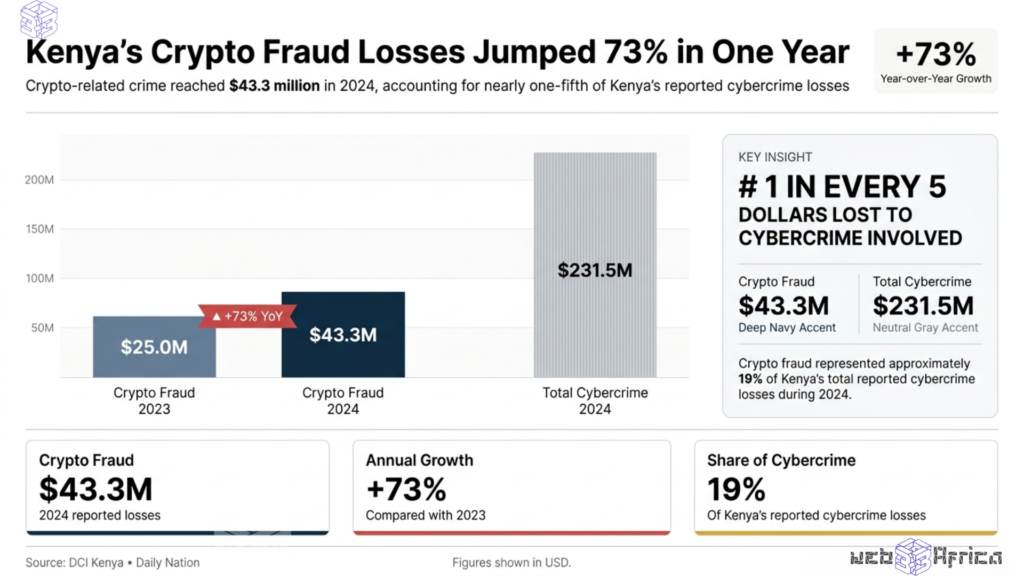
When Kenyan investors lost over $43 million to digital asset crime in 2024, the country’s law enforcement apparatus faced a familiar problem. They were investigating fraud after victims had already been fleeced, tracing funds that had often disappeared across borders, and building cases against perpetrators who operated with relative impugnity in a regulatory vacuum.
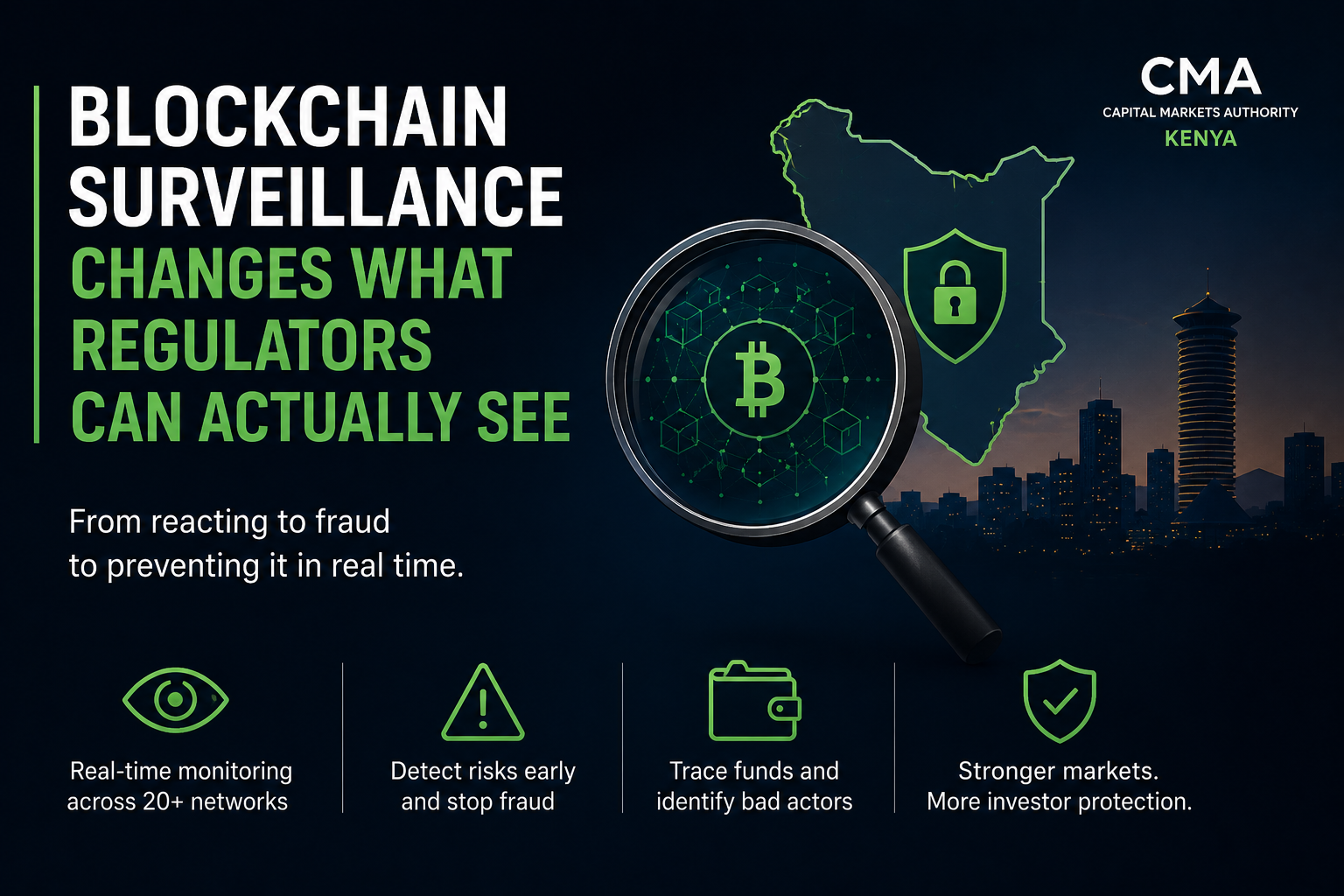
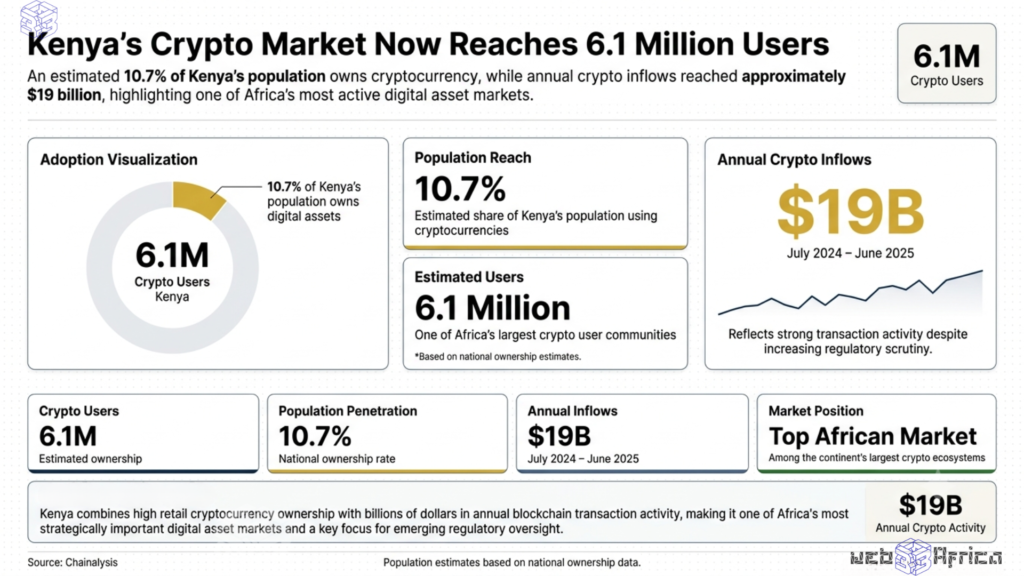
Eighteen months later, Kenya’s approach to crypto enforcement has evolved. The Capital Markets Authority (CMA) is now procuring blockchain surveillance infrastructure capable of monitoring transactions across Bitcoin, Ethereum, and more than 20 other networks in real-time.
Now Kenya has taken to proactive surveillance rather than reactive investigation, showcasing how legislation quickly follows adoption.
Blockchain Surveillance Changes What Regulators Can Actually See
Kenya’s reactive enforcement approach operated on a predictable cycle. The fraud occurred, victims reported losses, investigators attempted to trace funds, and prosecutions followed where evidence permitted. This model, while necessary, proved structurally inadequate for digital asset crime.
It’s essentially like placing a net over an entity that is specifically designed to evade it. By the time fraud was reported, funds had typically moved through multiple wallets, crossed international borders, or been converted through mixing services that obscured the trail.
Investigators lacked real-time visibility into wallet activity, making it nearly impossible to freeze assets or intervene during ongoing schemes. Furthermore, without surveillance infrastructure, enforcement agencies could not identify emerging fraud patterns, unlicensed operators, or systematic market manipulation before victims accumulated.
RELATED: Kenya’s Biometric Data Ruling Sparks Bold Regulatory Shift
The $43 million in documented losses during 2024 represented only reported cases; the actual losses were almost certainly higher. More importantly, each fraud case revealed the same enforcement pattern. Kenya could investigate crime after it happened but lacked the infrastructure to detect or prevent it.
From Investigating Fraud to Watching Markets in Real Time
The first institutional response came in 2025, when the Directorate of Criminal Investigations (DCI) established a specialized unit dedicated to digital asset crime. Rosemary Kuraru, who heads the DCI’s forensic lab, framed the decision in operational terms:
“As criminals migrate to digital spaces that offer anonymity, law enforcement must innovate with equal speed.”
The DCI also partnered with the European Union to launch the “Blockchain and Cryptocurrency Investigation Training Module,” building investigative capacity from the ground up.
RELATED: The Return of the Cajee Brothers and the Unresolved AfriCrypt Investigation
But specialization alone didn’t solve the visibility problem. Even with trained investigators, the DCI still operated reactively, responding to reported crime rather than monitoring markets for suspicious activity. The unit improved investigative outcomes but didn’t change the fundamental enforcement posture.
Why Enforcement Capacity Matters More Than Surveillance Technology
The CMA’s blockchain surveillance procurement marks Kenya’s transition from reactive to proactive crypto enforcement. The system will deliver capabilities that fundamentally alter what regulators can see and do.
The platform will monitor transactions across major blockchain networks both in real-time and retrospectively, generating automated alerts for high-risk activity.
These include large transfers, sanctioned entities, cryptocurrency mixers, darknet-linked addresses, and transactions involving high-risk jurisdictions. Investigators will be able to flag specific wallet addresses and receive instant notifications when those wallets initiate new transactions.
RELATED: Kenya Scraps 3% Crypto Tax: New Fee-Based System Explained.
The system also includes wallet attribution functionality. It’s basically linking blockchain addresses to known exchanges, DeFi protocols, OTC desks, gambling platforms, scam wallets, and suspected criminal networks. This changes enforcement from a reactive process of tracing individual fraud cases to a proactive surveillance operation that can identify patterns, unlicensed operators, and systematic violations across the market.
The system will also enable compliance monitoring against global sanctions lists, including United Nations and U.S. Office of Foreign Assets Control (OFAC) designations.
This is a requirement under Kenya’s Virtual Asset Service Providers Act of 2025, which took effect in November and established a licensing framework for exchanges, brokers, and investment advisers.
The CMA plans to use the surveillance infrastructure to identify unlicensed offshore platforms operating in Kenya and trace which exchanges Kenyan users most frequently access.
The Real Test for Kenya’s Crypto Enforcement Strategy
Proactive surveillance changes several enforcement dynamics. Regulators gain market visibility that enables pattern detection rather than case-by-case investigation. The capacity to monitor flagged wallets in real-time creates opportunities to intervene during ongoing fraud rather than investigating after the fact.
Regulators also can identify unlicensed operators becoming compliance-focused, deterring through visibility rather than punishment after a violation.
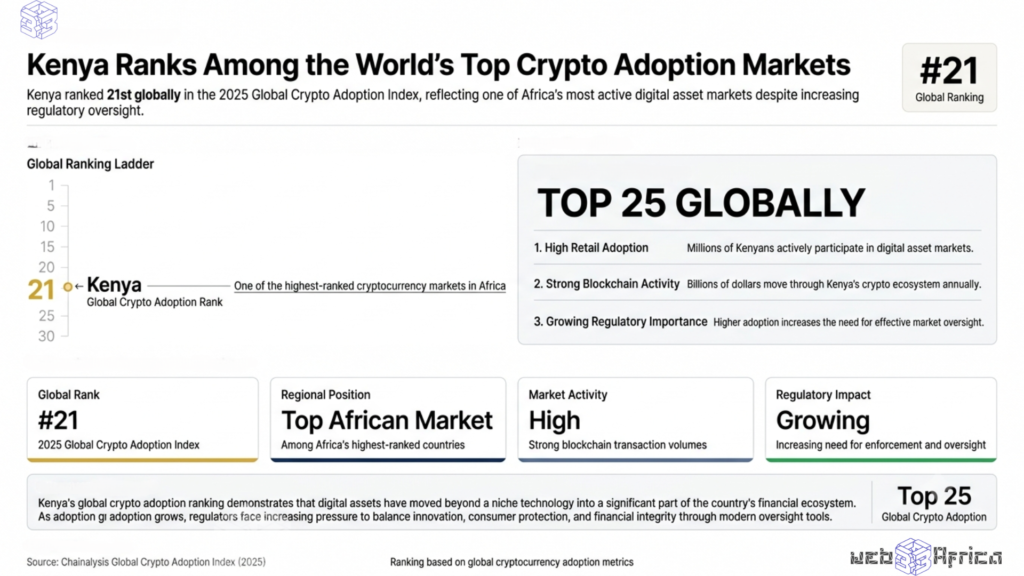
But it’s not without its flaws. Cross-border enforcement continues to depend on international cooperation, and surveillance infrastructure doesn’t automatically translate to successful prosecutions. The DCI’s specialized unit will still face jurisdictional limitations, resource constraints, and the technical complexities of building criminal cases around blockchain evidence.
RELATED: No Licenses Yet: Inside Kenya’s New Crypto Playbook for VASPs
There’s also a capacity question. Proactive surveillance may generate more leads than investigators can meaningfully pursue. If the system flags hundreds of potentially suspicious wallets, unlicensed operators, or sanctions violations, does the DCI have sufficient resources to investigate? The risk is that surveillance overwhelms enforcement capacity rather than enhancing it.
Could This Become the Blueprint for Digital Asset Regulation Across Africa?
The surveillance procurement positions Kenya ahead of most African markets in enforcement infrastructure, but outcomes will ultimately measure effectiveness.
For proactive crypto regulation to work, visibility must translate to action. That requires not just surveillance technology but investigative capacity, prosecutorial expertise, judicial understanding of digital asset cases, and international enforcement cooperation. Kenya is building the first component; the others will determine whether the evolution of crypto enforcement in Kenya produces meaningfully different results.
What’s clear is that Kenya is no longer waiting for fraud to happen before responding. Whether proactive surveillance proves more effective than reactive investigation will shape how international organizations approach digital assets in Africa.
The $43 million lost in 2024 served as a painful tuition fee, but it was a valuable lesson.
FAQ
What is crypto enforcement?
Crypto enforcement refers to the actions regulators and law enforcement agencies take to detect, investigate, and prevent illegal activity involving digital assets. This includes tackling fraud, money laundering, sanctions violations, and unlicensed crypto businesses.
Why is Kenya strengthening crypto enforcement?
Kenya is strengthening crypto enforcement after significant losses linked to digital asset crime and the introduction of the Virtual Asset Service Providers Act. Regulators are also adopting blockchain surveillance tools to improve oversight and identify suspicious activity before investigations begin.
How does blockchain surveillance help investigate digital asset crime?
Blockchain surveillance enables regulators to monitor transactions across multiple blockchain networks, flag high-risk wallet activity, trace fund movements, identify links to known entities, and generate alerts for suspicious transactions in real time.
What is proactive crypto regulation?
Proactive crypto regulation focuses on identifying potential risks before they become enforcement cases. Instead of relying solely on complaints after fraud occurs, regulators use monitoring tools and oversight systems to detect suspicious activity earlier.
Discover more from Web3Africa
Subscribe to get the latest posts sent to your email.
You must be logged in to post a comment.