








Table of Contents
Capital does not flow to opportunity. It flows to a de-risked opportunity.
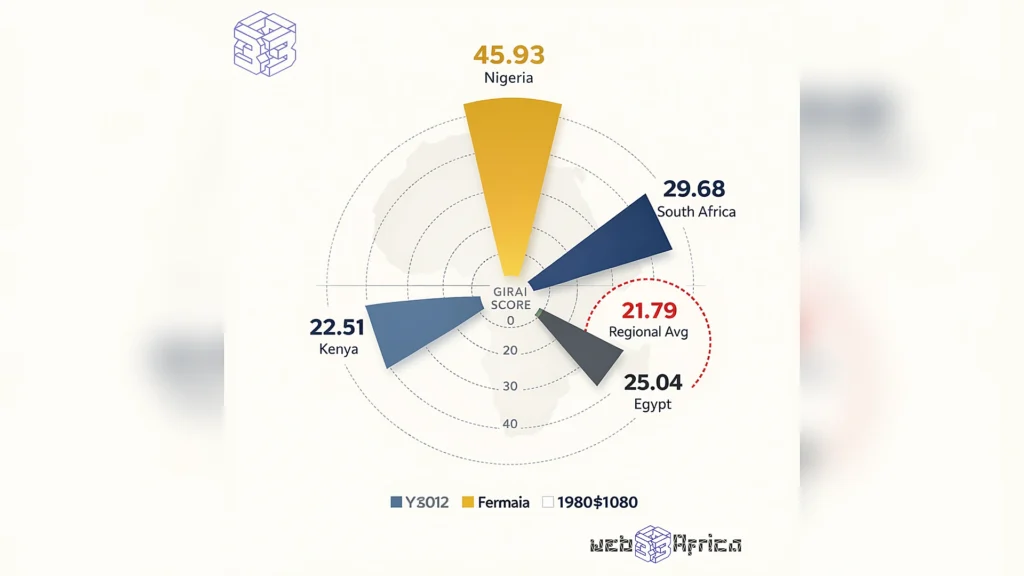
When Nigeria jumped 42 places in the Global Index on Responsible AI, rising from 80th globally in 2024 to 38th in 2026 with a score of 45.93, it caught the attention of investors all over. The country now ranks first in Africa for responsible AI governance and AI investment, ahead of South Africa (77th, score 29.68) and Egypt, in a region where the average score sits at just 21.79.
So is the regulatory environment stable enough to deploy patient capital?
The answer and the numbers backing Nigeria’s AI ambition are staggering.
The African Development Bank projects AI could add $1 trillion in additional GDP to Africa by 2035, with Nigeria eyeing the largest portion. Underscoring how AI will impact African GDP.
However, let’s take a closer look at the infrastructure being developed to attract institutional capital that has previously shied away from the continent.
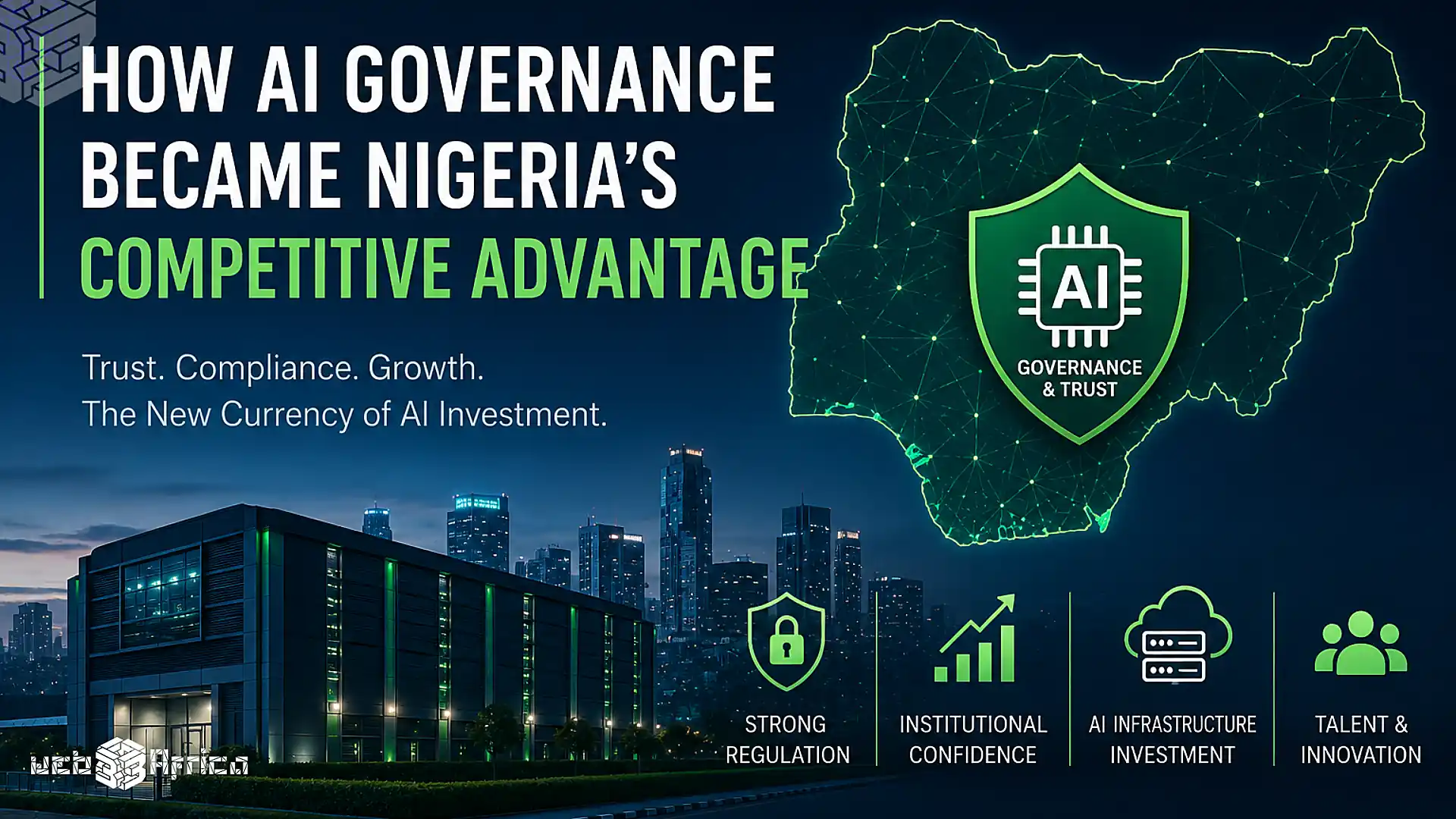
How AI Governance Became Nigeria’s Competitive Advantage
Nigeria’s rise in the GIRAI index reflects the operationalization of three legal instruments that function as a compliance roadmap for foreign investors.
RELATED: Why Africa Cannot Scale AI Without Better Identity Rails
The Nigeria Data Protection Act (NDPA, enacted June 2023) established foundational data privacy law and created the Nigeria Data Protection Commission. Section 37 specifically addresses automated decision-making for AI credit scoring, healthcare diagnostics, and supply-chain optimization.
The General Application and Implementation Directive (GAID 2025, effective September 2025) operationalized the NDPA with enforceable obligations. Data Protection Impact Assessments (DPIAs) for high-risk AI systems, legitimate interest assessments, and rules governing major data controllers.
The National Artificial Intelligence Strategy (NAIS, finalized September 2025) set a five-year framework (2025–2029) covering infrastructure, ecosystem development, enterprise adoption, responsible AI principles, and governance.
Together, these create what institutional investors call “regulatory certainty,” the legal predictability that compresses risk premiums and unlocks growth-stage Nigerian tech FDI.
Global corporate AI investment hit $581.7 billion in 2025, nearly triple the 2023 figure. Hyperscalers are committing over $300 billion in annual capex. So where does the continent fit in this equation?
Where the Capital Is Actually Landing
The governance framework has catalyzed approximately $1 billion in data-center investment commitments over the past 18 months, creating the physical infrastructure layer necessary for AI workloads.
Kasi Cloud commissioned Kasi LOS1 in May 2026, West Africa’s first AI-native hyperscale data center, designed to meet NDPA and the National Cloud Policy 2025 mandates for in-country hosting of sensitive government and financial data.
The facility has an initial 5.5 MW capacity, with plans to scale to 100 MW. The investment was not speculative; data-localization mandates converted it into a regulatory requirement.
Equinix announced a $22 million LG3 Lagos facility in November 2025, part of a $100 million Africa expansion plan. Airtel Nxtra deployed high-performance GPUs for a $120 million AI-focused Lagos facility in late 2025. MTN is building a $240 million Lagos cloud and AI infrastructure hub. Open Access Data Centers is expanding its Lekki site to 24 MW capacity by 2027, backed by $240 million in investment.
RELATED: RETINA-AI CEO’s Bold Plan: Spend $1 Billion Annually on Nigeria’s AI Future
Publicly traded telecom operators and global hyperscalers have made these board-level infrastructure commitments. These are entities that conduct sovereign risk assessments before deploying nine-figure capex.
The B2B AI system for enterprises is currently in development. Helium Health, which operates electronic medical records and AI clinical assistants (CareCopilot) across West Africa, raised over $42 million and cites NDPA/GAID compliance as essential for institutional investor confidence.
Field, a pharma supply-chain platform using predictive AI, raised $11 million from the Gates Foundation, leveraging Nigeria’s health-data protections to de-risk impact capital.
In fintech, Zone, a payment infrastructure provider, raised an $8.5 million seed round led by Flourish Ventures and TLcom Capital. The governance-aligned architecture was a selling point for institutional LPs.
The Governance Stack as Financial De-Risking
Nigeria’s policy framework is ahead of its execution capacity, and sophisticated capital allocators know it.
The government’s flagship 3 Million Technical Talent (3MTT) program targets training 3 million youth in AI and emerging technologies. An independent policy brief from April 2026 indicates that approximately 30,000 individuals have received training. That’s a two-order-of-magnitude implementation gap.
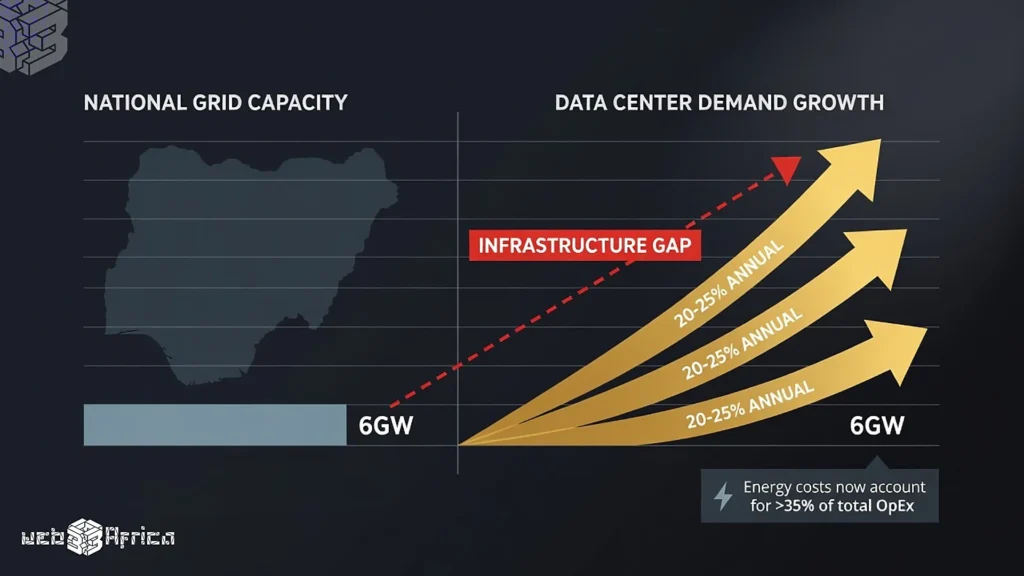
Power infrastructure is the deeper structural constraint. Nigeria’s national grid operates below 6 GW, while data-center demand is growing 20–25% annually. Every hyperscale facility announcement includes backup generation, a capital and operational cost premium that erodes margin.
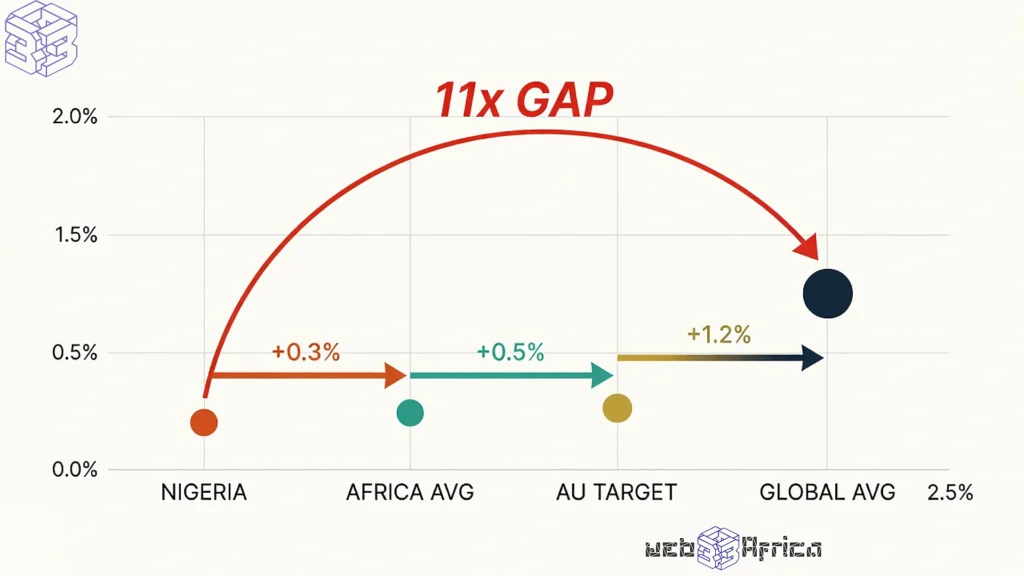
Public R&D spending remains at approximately 0.2% of GDP, compared to a global average of 2.2%. Just 20% of Nigeria’s 120+ AI startups have attracted international funding, and only 6% have received government grants.
RELATED: Nigeria’s AI Plan Still Faces a Basic Delivery Problem
Institutional investors accustomed to frontier markets understand that governance maturity precedes infrastructure maturity. Nigeria’s governance lead is a leading indicator; its infrastructure deficit is a lagging one.
Can Nigeria Stay Ahead of Africa’s AI Race
Nigeria’s governance advantage creates a capital-allocation question for pan-African venture funds.
Does a superior regulatory score justify concentrating deployment in one geography, or does it increase the risk of single-country exposure?
South Africa retains deeper infrastructure (the largest data center capacity in Africa, mature financial markets, and Microsoft’s $300 million investment).
RELATED: AI Payments and Financial Trust: How Fintechs Must Adapt
Kenya has demonstrated operational excellence. Its AI strategy includes an implementation roadmap, and the Konza Technopolis project is progressing. Egypt has high startup density and EU regulatory alignment.
But Nigeria offers the governance clarity that institutional LPs, pension funds, endowments, and sovereign wealth funds require to approve African allocations.
As one data-center executive noted at the February 2026 Hyperscalers Convergence Africa event:
“Rapid AI adoption is constrained by Africa’s power infrastructure.”
The corollary is equally true: governance frameworks unlock capital that infrastructure can then absorb.
The Signals That Will Define Nigeria’s AI Future
Based on the research and our analysis, various factors determine whether Nigeria’s governance advantage translates into sustained institutional capital inflows and measurable progress on how AI will impact African GDP.
- Data-center utilization rates by Q4 2026. Commissioned capacity must convert to revenue-generating workloads, not stranded assets.
- The 3MTT Program provides quarterly data on enrollment and completion rates. Transparent reporting will either validate the talent pipeline or confirm the implementation gap.
- The Nigeria Data Protection Commission is responsible for DPIA filing and enforcement activities. Governance on paper must become governance in practice. Institutional investors will track whether high-risk AI systems are actually undergoing mandated impact assessments.
In a $500+ billion global AI capital cycle searching for emerging-market exposure, regulatory clarity is the difference between curiosity and conviction.
FAQ
Why is AI governance important for investors?
AI governance creates regulatory certainty by establishing clear rules for data protection, compliance, and responsible AI deployment. That predictability helps institutional investors assess long-term risk.
How is Nigeria improving AI governance?
Nigeria has introduced the Nigeria Data Protection Act, the General Application and Implementation Directive (GAID 2025), and the National Artificial Intelligence Strategy to strengthen responsible AI oversight.
How does AI governance support AI investment?
Strong AI governance reduces legal and regulatory uncertainty, making it easier for investors to commit long-term capital to AI infrastructure, startups, and enterprise technology.
Why are institutional investors paying attention to Nigeria?
Nigeria now ranks first in Africa on the Global Index on Responsible AI, providing stronger governance signals alongside growing investments in data centers and AI infrastructure.
Discover more from Web3Africa
Subscribe to get the latest posts sent to your email.
You must be logged in to post a comment.