







Table of Contents
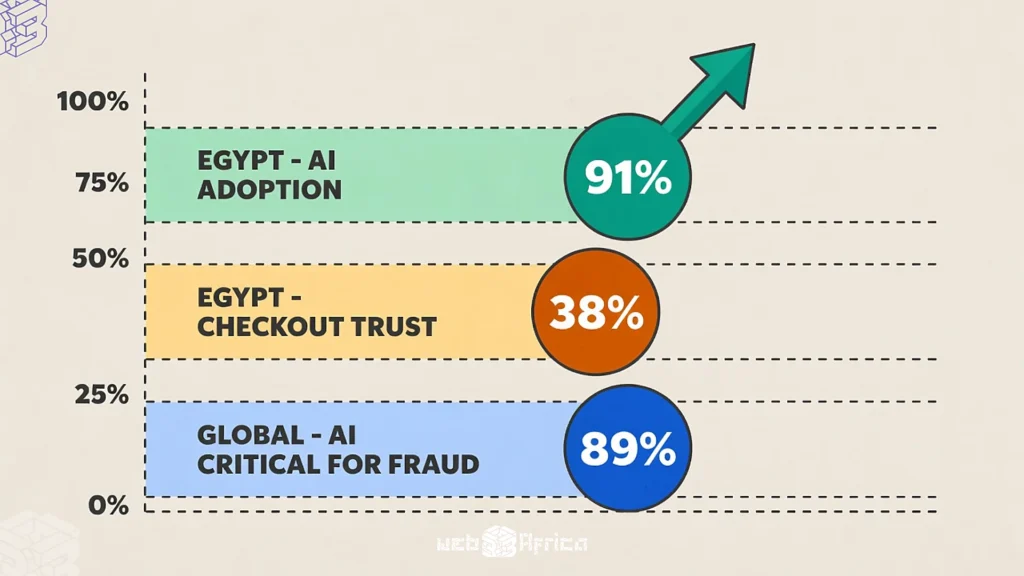
According to Visa’s June 2026 Stay Secure study, 88% of Nigerian consumers utilize AI to assist with shopping, one of the highest adoption rates globally, yet a trust gap persists, with only 34% willing to authorize an AI agent to complete the checkout process.
That’s common sense.
Consumer sentiment varies globally. In the UK, trust is fragile, with a majority of consumers indicating they would lose confidence in an AI agent following a payment error.
In Ukraine, a paradox exists where 77% believe AI will be critical for future fraud protection, yet only a small fraction (approx. 10%) currently trust AI agents to execute payments autonomously.
It’s only natural given how AI is prone to mistakes. It’s only natural that consumers are comfortable letting AI help them discover products, compare prices, and research options. But handing over the authority to spend money is a different proposition entirely.
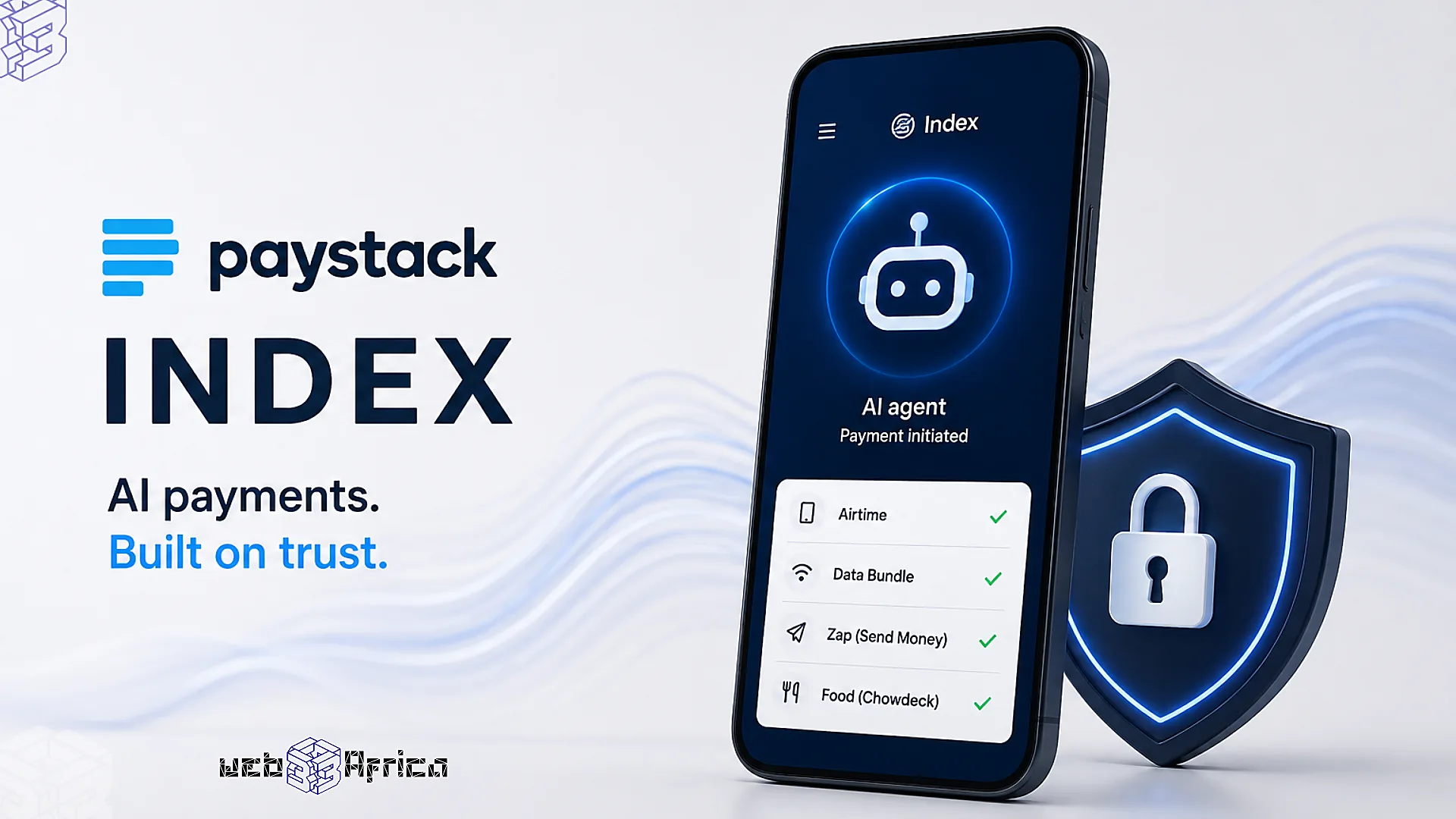
So Paystack decided to step up and launch Paystack Index. An early-access product that lets AI agents execute everyday payments on behalf of users in Nigeria. The product works with ChatGPT, Claude, and OpenClaw.
The product allows users to purchase airtime, mobile data, send money through Zap, or order food from Chowdeck by simply asking an AI assistant. Index intercepts the intent, verifies permissions, routes the transaction to the right provider, and processes payment through Paystack’s existing rails.
It’s an experiment in agentic commerce, the emerging acronym, but in this case, one where AI systems autonomously complete multi-step purchases.
The technology exists. The Trust Doesn’t.
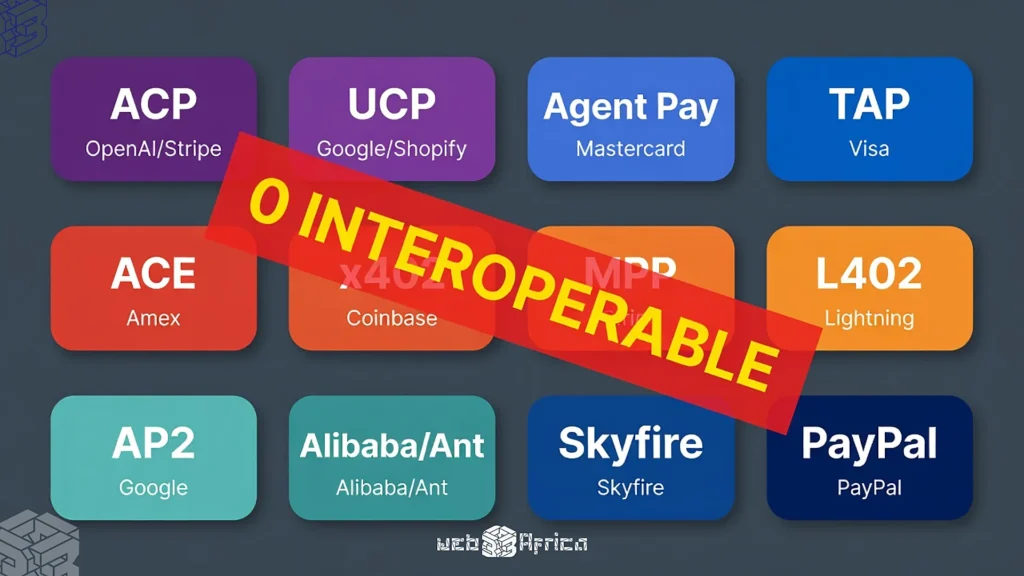
The infrastructure for AI-initiated payments already exists. Stripe, OpenAI, and Shopify have developed the Agentic Commerce Protocol (ACP), which uses cryptographically scoped payment tokens so that AI agents never touch raw card data.
Google, PayPal, and Mastercard have built similar frameworks. Mastercard launched Agent Pay in early 2026, a network-level credentialing system designed to bring card-network governance to machine speed transactions.
RELATED: Applied AI Tech Stack African Fintech Startups_optimized
But AI financial trust frameworks are not primarily technical problems. They’re social and psychological ones.
Paystack CEO Shola Akinlade is explicit about the issue.
What we know is that there are many early adopters in Nigeria and Africa. Back to the spirit of TSG Labs, we wanted to start building with those early adopters.”
He does not expect mass adoption for at least a year. That timeline reflects the reality that trust is not built through product announcements. It’s built through repeated, low-stakes interactions that gradually expand the boundary of what feels safe.
That’s why Paystack Index is starting with airtime, data top-ups, and food delivery. These are routine, repeatable, low-value transactions. The trust equation for a ₦2,000 airtime purchase is fundamentally different from the trust equation for a ₦200,000 laptop.
What Permission Actually Looks Like
The source of anxiety around AI payments is simple: autonomy. If an agent can act on your behalf, what stops it from acting against your interests?
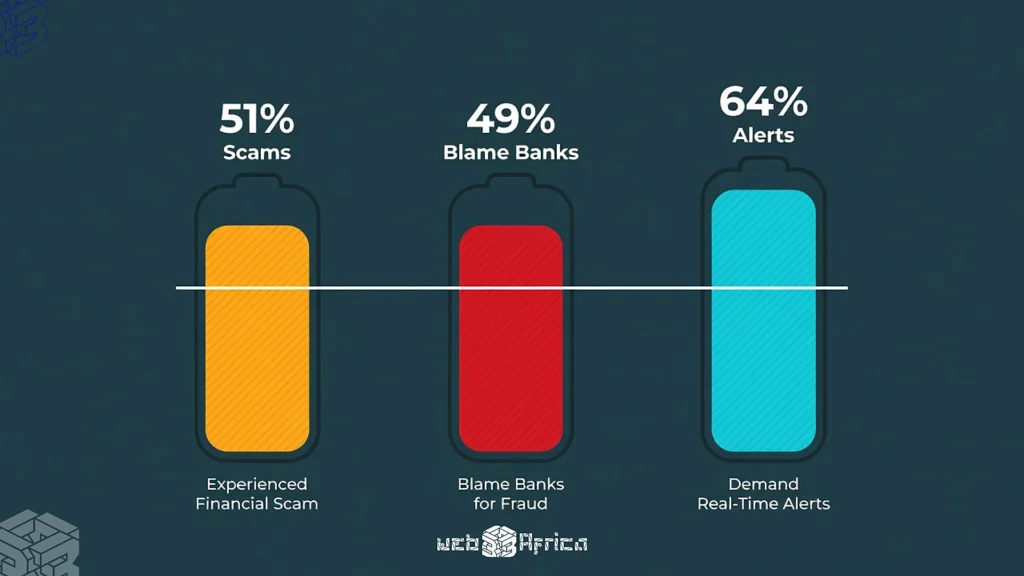
Paystack says users set permissions and spending limits after signing up for Index, creating “guardrails around what an AI agent is authorized to do.”
But the product documentation doesn’t yet detail what that interface looks like.
Is it a dashboard where users toggle categories and set caps? A conversational workflow where the agent asks for permission thresholds? A set of pre-defined templates?
More importantly, what happens when users want to adjust those limits mid-transaction? Or when the agent encounters an edge case, like a merchant offering a discount that exceeds the spending cap?
These design choices determine whether users feel in control or out of control.
Similar trust frameworks for agentic commerce are emerging across the ecosystem.
Anchor, a Nigerian financial infrastructure company and licensed microfinance bank, launched Africa’s first fintech Model Context Protocol (MCP) server, allowing AI agents to access real-time API documentation for seamless integration while keeping strict controls on autonomous transactions.
RELATED: Why WAXAL is the Infrastructure Play Africa Needs for Global AI Leadership
However, Anchor opted for caution and intentionally disabled live agentic payments due to concerns about fraud and anti-money laundering risks. It’s a smart move considering the disasters, such as the CBEX platform, which also had an AI trading feature.
The Liability Question No One Has Answered
So, let’s tackle the key issue for most households.
When something goes wrong, where does liability land?
If an AI agent makes an unauthorized purchase, is the user responsible because they granted initial permissions? Is the fintech liable because it built the infrastructure? Is the AI provider liable because its model misinterpreted intent? Or is the merchant liable because it accepted the transaction?
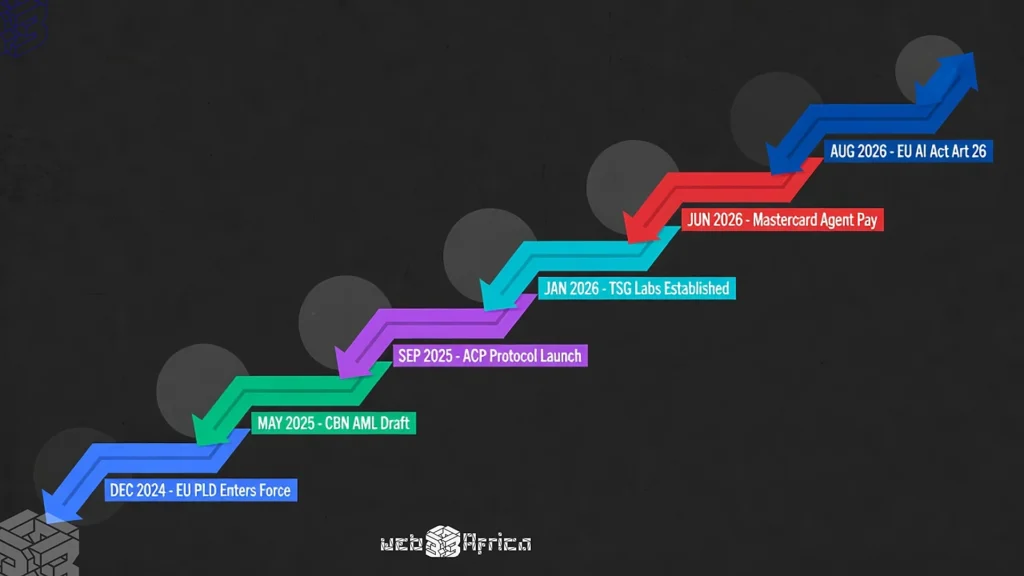
The EU’s Product Liability Directive, which came into force in December 2024, treats AI software as a “product” subject to strict, no-fault liability. That means manufacturers can be held responsible for harm caused by AI systems, even if the failure occurs through continuous updates rather than at the point of sale.
The UK’s Competition and Markets Authority has taken a similar position, stating that “delegating decisions to software does not delegate legal accountability.”
But in Nigeria, the regulatory framework is still catching up. The Central Bank of Nigeria’s May 2025 AML overhaul mandated real-time transaction screening with explainability and audit trails.
A March 2026 Court of Appeal ruling (Kuda Bank v. Amarachi Kenneth Blessing) established that banks can autonomously freeze accounts upon suspicion of fraud without prior court orders. This applies only if the action is grounded in customer-agreed terms and CBN guidelines.
That ruling creates a legal foundation for AI middleware to halt suspicious transactions. But it doesn’t clarify who bears the cost when a legitimate transaction is incorrectly flagged or when a fraudulent one slips through.
Paystack has protected its core regulated payments business from this uncertainty by placing Index within TSG Labs, the venture studio it established in January 2026.
RELATED: Nigeria’s AI Plan Still Faces a Basic Delivery Problem
That structure allows the company to experiment without exposing its microfinance bank license or its primary payment rails to agentic commerce liability. It’s a hedge against regulatory ambiguity.
How Trust Gets Built: Lessons from M-Pesa and PayPal
Financial trust is built by absorbing risk on behalf of users until the system proves itself.
M-Pesa didn’t scale in Kenya because Safaricom educated users about SMS-based ledgers. It scaled because Safaricom turned existing airtime resellers into human liquidity agents, giving users physical proof that they could turn their digital balance into cash. Trust was borrowed from an existing relationship, then reinforced through capped transactions that limited downside risk.
PayPal didn’t overcome online payment anxiety by teaching users about SSL encryption. It absorbed fraud liability and built superior fraud detection so that users didn’t have to understand the system. They simply needed to recognize that PayPal would restore their funds in the event of an issue.
So how does one build trust in AI payments? It’s safe to state that it should be a system designed where users can test the boundaries with clear accountability when things fail.
Akinlade hints at this concept when he describes the merchant relationship in agentic commerce.
“If you have a commerce website, you can’t talk to it, but with agentic commerce, the merchant can actually add a lot of context to their website,” he says.
So, transparency flows both ways. Users need to understand what the agent did and why, and merchants need to communicate value in ways that agents can parse and relay.
But that vision assumes a level of AI interpretability that doesn’t yet exist at scale.
The Long Game
Paystack Index is more of a learning exercise. The company is curating merchants manually, limiting transaction types, and explicitly targeting early adopters who are already comfortable with AI interfaces. The goal here is to understand how agentic commerce can be permeable, or will it still be a far-off dream like the metaverse?
That’s a bet that African fintechs can uniquely explore. Nigeria has 88% AI shopping adoption. Kenya has an 85% cybercrime concern but also a decade of experience with mobile money trust-building. The regulatory environment is evolving in real time, with frameworks like the CBN’s AML requirements and the Kuda court ruling creating precedent for autonomous financial decision-making.
So can fintech companies design permission architectures, liability frameworks, and transparency mechanisms that make users willing to let them?
Paystack Index might just provide that verdict.
FAQ
u003cstrongu003eWhat are AI payments?u003c/strongu003e
AI payments allow artificial intelligence agents to complete purchases or financial transactions on a user’s behalf after receiving authorization and operating within predefined permissions or spending limits.u003cbru003e
u003cstrongu003eWhat is agentic commerce?u003c/strongu003e
Agentic commerce is a model in which AI systems can independently perform multi-step shopping tasks, including discovering products, comparing options, and completing purchases with user approval.
u003cstrongu003eWhat is the biggest challenge facing AI payments today?u003c/strongu003e
The primary challenge is trust rather than technology. Payment infrastructure is advancing rapidly, but widespread adoption depends on clear permission controls, transparent decision-making, well-defined liability, and regulatory safeguards.
u003cstrongu003eWhy are fintech companies starting with small AI-powered purchases?u003c/strongu003e
Low-value transactions such as airtime top-ups and food orders carry less financial risk, allowing users to gradually build confidence in AI payments before trusting agents with larger purchases.
u003cstrongu003eHow does Paystack Index handle AI payments?u003c/strongu003e
Paystack Index enables compatible AI assistants to complete approved transactions for services such as airtime, mobile data, food delivery, and money transfers. Users are expected to define permissions and spending limits before an AI agent can initiate payments.
Discover more from Web3Africa
Subscribe to get the latest posts sent to your email.
You must be logged in to post a comment.