










Table of Contents
Inflation is a well-known aspect when considering African currency. Its instability is one of the primary factors as to why locally backed stablecoins are viewed as a means of transaction rather than value retention or yield farming.
The Naira is a prime example. It lost 60% of its value against the dollar between 2023 and 2025. This caused millions of salaried workers and freelancers to turn to cryptocurrency or USD-backed stablecoins.
Several remote companies quite openly met this very need. Instead of passing through PayPal’s tedious security checks and the banks’ delayed processing time, dollar-pegged stablecoins are becoming the best alternative, providing a win-win scenario for both the employee and the company.
Kjartan Rist, Concentric’s founding partner, pegged it as unique:
“Large, geographically distributed workforces are increasingly using stablecoin payments so employees don’t have to receive pesos or naira.”
While Rist was discussing the recently announced $1.8 billion Mastercard acquisition of stablecoin infrastructure firm BVNK, his observation pointed to a deeper transformation in how pan-African and global companies manage payroll in unstable currency environments.
Stablecoin payments are a successful crypto experiment, especially in Africa. However, stablecoin payments also have their own drawbacks.
The Inflation Tax on African Wages
Unfortunately, for the traditional employer, there are frequent salary adjustments, dollar-denominated contracts settled through banks, and plenty more loopholes they have to skip. Ultimately, it’s expensive, slow, and often runs into regulatory friction.
For instance, a dual exchange-rate regime and forex scarcity make timely cross-border payments unpredictable. Tanzania’s recent liberalization of foreign-exchange regulations opened some channels, but it also came with a 3% digital services tax.
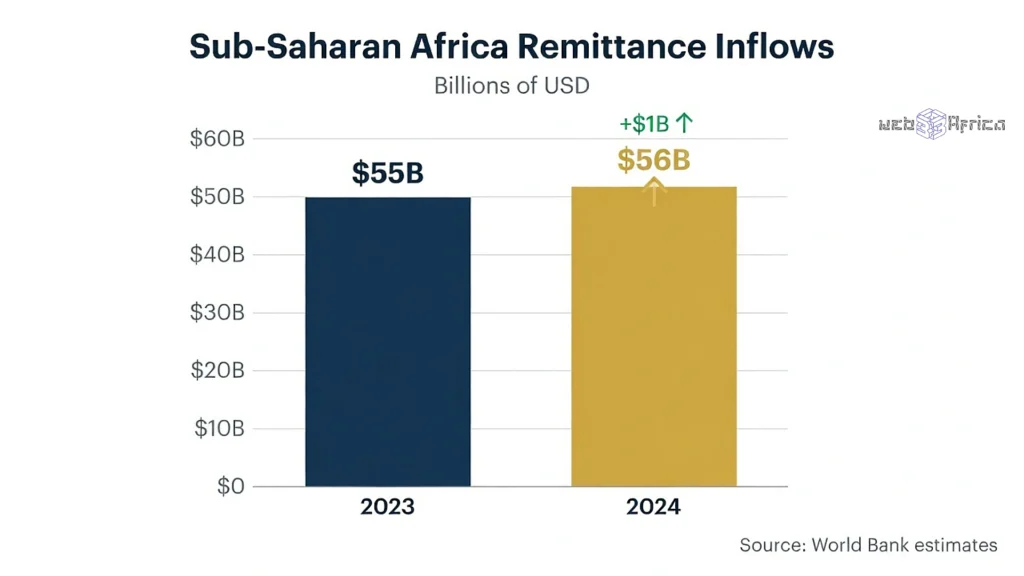
According to World Bank data, remittance inflows to Sub-Saharan Africa totaled $55 billion in 2024 and had an estimate of it reaching $56 billion. This is coupled by delayed transactions and high FX costs, and by the time it’s converted to local currency, its value drops, plus the hectic means of access. For gig workers and freelance talent relying on international clients, this is a nightmare.
How Stablecoin Payroll Actually Works
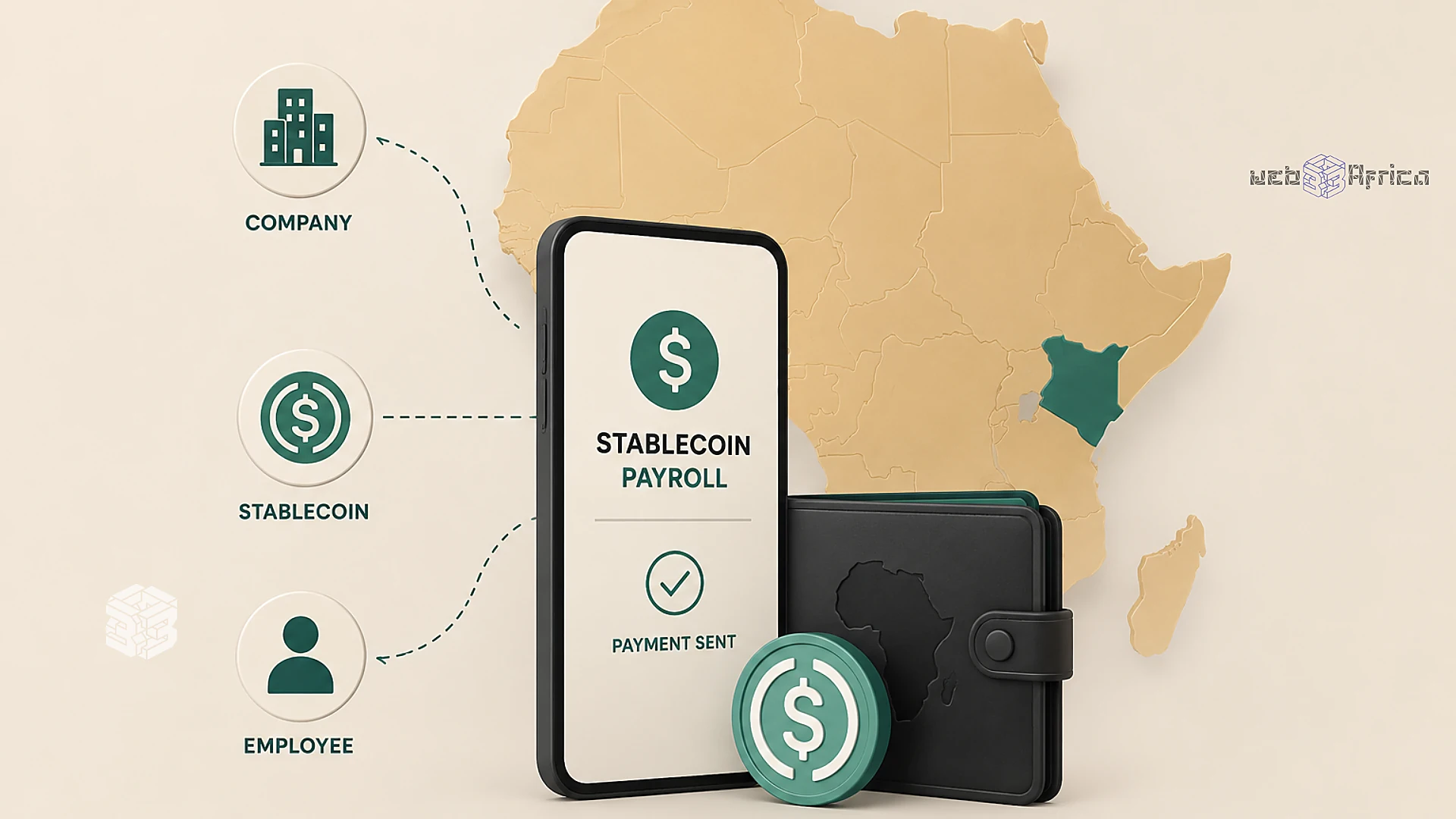
The operational model is simpler than most CFOs expect. Employers disburse dollar-pegged stablecoins directly to workers’ non-custodial crypto wallets. Employees receive the payment instantly, 24/7, regardless of banking hours or correspondent-bank delays.
From there, workers have full control over their funds. They can hold their stablecoins to preserve purchasing power, converting only what they need for immediate expenses through local peer-to-peer markets or integrated off-ramp apps like Yellow Card, Chipper Cash, or Binance P2P.
RELATED: Stablecoins in Hyperinflationary Markets: A Survival Guide for African Entrepreneurs
In Nigeria, where stablecoin transaction volume reached $92 billion between July 2024 and June 2025, liquidity for cash-out is deep.
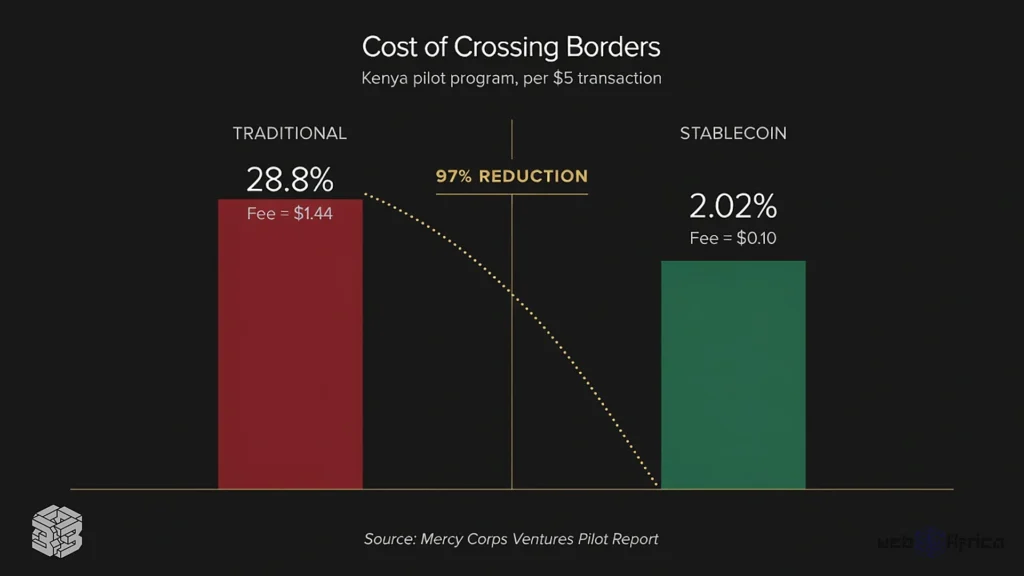
A Kenyan pilot program documented by the Heritage Foundation saw cross-border payment fees drop from 28.8% to 2% when routed through stablecoins rather than traditional remittance operators.
Infrastructure providers like BVNK offer full-stack rails for pay-ins, payouts, and foreign exchange conversion across more than 130 countries. Its vast reach and efficiency help explain its recent $1.8 billion Mastercard acquisition.
Companies don’t need to become crypto experts. They only need to plug and play, integrate an API, and handle payroll, but with settlement finality measured in minutes rather than days.
What Companies Actually Gain From Stablecoin Payments
Local startups or businesses evaluating stablecoin payments must understand its three aspects: cost reduction, speed, and employee retention in competitive talent markets.
Understanding the costs is effortless. Simply compare what we have and what SWIFT or Western Union wired. Stablecoin transactions typically cost a flat network fee (often under $1 for Tron-based USDT, slightly more for Ethereum-based USDC) plus modest off-ramp spreads. Total blended costs rarely exceed 2–3% or less.
Africa’s Stablecoin Regulatory Landscape
Key legislative developments across the continent
Speed is a factor, especially when transactions occur. BVNK’s products enable a company to roll its treasury every 24 hours using stablecoins.
Employee preference is a major factor often overlooked. Currently, Gen Z youths are vibrant, tech-savvy, and understand the basic concept of inflation. Unless a 9-to-5 job actually pays enough, if any, most Gen Z’s opt for international clients. Africa’s gig worker community and the reliance on stablecoins are a byproduct of understanding how to use digital assets to hedge against inflation, combat fiscal leakage, and have actual control.
RELATED: The Quiet Rise of Stablecoins as Global Business Infrastructure
However, it’s important to understand that concept and implementation are two different things. Employers must establish wallet policies, ensure KYC/KYB compliance with local regulations, and educate employees unfamiliar with crypto wallets. The onboarding overhead is real; however, the times are changing, and whoever adapts first wins.
The Regulatory Patchwork
The final nail in the coffin is the legal fragmentation across the continent. Nigeria’s Investment and Securities Act of 2025 classifies digital assets as securities, and the Central Bank of Nigeria has eased some restrictions on bank-crypto relationships following the country’s exit from the FATF grey list in October 2025.
Kenya’s Virtual Asset Service Provider Act, signed in October 2025, establishes a dual-regulator model under the Central Bank of Kenya and the Capital Markets Authority. The licensing path is clearer, and as regulations mature, authorities could explicitly accommodate stablecoin payroll applications.
In contrast, South Africa offers the most developed framework, with Crypto Asset Service Provider (CASP) licensing under the Financial Sector Conduct Authority and adoption of FATF travel rule standards. Institutional-grade stablecoin infrastructure can operate with regulatory confidence.
Tanzania’s liberalized foreign-exchange regulations have opened traditional capital markets globally but have not yet addressed stablecoins directly. Ghana’s reported VASP Act from December 2025 remains in early implementation.
These are baby steps, the first forward movement to incorporate blockchain technology into the economy. In some circumstances companies have to navigate country-by-country nuances and anticipate ongoing evolution.
Legacy financial infrastructure firms, like Mastercard (with its acquisition of BVNK) and Stripe (with its $1.1 billion purchase of stablecoin API platform Bridge), are currently internalizing stablecoin payments.
As per Rist, only about 10% of firms positioning themselves as stablecoin infrastructure companies have the “full stack, institutionally verified” capabilities to serve enterprise clients. The rest, he says, are “just a front end and some APIs.”
As BVNK co-founder Chris Harmse noted, it has been an “incredible journey,” but the real work begins now as these rails open up for broader workforce adoption. The next phase will depend on localized education and regulatory cooperation to ensure these tools serve the communities that need them most.
FAQ
Why are businesses using stablecoin payments for payroll?
Stablecoins can help businesses move wages across borders faster while reducing delays linked to banks, correspondent payments and foreign-exchange conversion.
How do stablecoin payroll payments work?
Employers send dollar-pegged stablecoins to workers’ crypto wallets, where they can hold the funds or convert them into local currency through available off-ramp services.
Why are stablecoins attractive in markets with currency volatility?
Dollar-pegged stablecoins can give workers an alternative to receiving wages entirely in currencies that may lose purchasing power or face foreign-exchange shortages.
What makes stablecoin payroll difficult for businesses?
Companies still need to manage wallet policies, KYC/KYB requirements, employee education, local regulations and reliable ways for workers to convert stablecoins into local currency.
Discover more from Web3Africa
Subscribe to get the latest posts sent to your email.
You must be logged in to post a comment.