











In recent months, Ethereum restaking has witnessed a dramatic drop in its total value locked(TVL), staggering by roughly 37% in just 6 months from its $18.6 billion valuation to just $12 billion by May.
While Ethereum remains the heavyweight of DeFi, it has recently succumbed to fierce competition from alternative ecosystems with faster, broader and more efficient services.
Solana DeFi TVL has surged tremendously, surpassing Ethereum by having the highest revenue in 2025.
Let’s dive into the factors behind Ethereum’s liquid staking struggles and highlight the rise of the new King of DeFi, Solana.
Why Has Ethereum Restaking TVL Declined?
Ethereum TVL decline has become a focal point for analysts tracking the progress of the DeFi industry. What was once the leader of decentralized finance, particularly with its liquid staking protocols and restaking options is facing a capital flight scenario.
Data indicates a shift in user preference toward Solana, which now dominates daily active user metrics.
The substantial decrease in these protocols’ TVL from $18 billion to $12 billion paints a broader picture of the advancements of ecosystems, with many offering cheaper alternatives with better services.
This trend is particularly visible within Africa’s Web3 market, where the disparity in fiat currency value makes Ethereum’s gas fees prohibitive.
CHECK OUT: Solana dApp Revenue Dominance Signals New DeFi Era
Factors Contributing to Ethereum TVL Decline
The primary drivers are fading airdrop incentives, risk management adjustments and competition from emerging chains like Solana, Avalanche and many more.
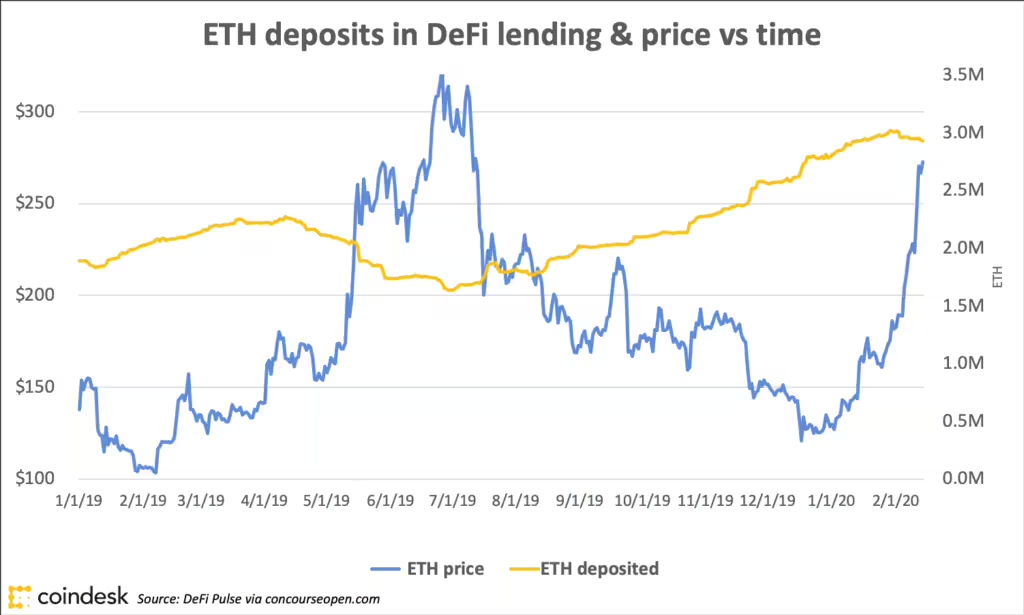
The middleware protocol enabled ETH holders to restake assets for shared security across the decentralized applications.
Sid Powell, CEO of Maple Finance, stated in an interview;
“Early EigenLayer incentives and the model’s novelty drove the initial TVL boom. That speculative inflow naturally tapers once rewards stabilize or dry up”
Powell’s assessment proved accurate EigenLayer’s TVL fell from 5.4 million ETH in June 2024 to 4.4 million ETH as deposit caps tightened to manage systemic risks.
In hindsight it reflected the hype trend surrounding meme coins back in 2024, where an initial coin never heard of before skyrockets in the first two weeks before tanking to nearly zero.
Willian McKinnon of Beluga notes that inflated TVL figures were driven by “airdrop farms”, many of which have dried out with yield hunters quickly changing targets to other short-duration, higher risk opportunities.
Other protocols that suffered similar fates include:
- Kelp: TVL dropped 10% from 615,000 ETH to 557,000 ETH.
- Renzo: TVL plummeted 61% from 1.04 million ETH to 387,000 ETH.
The Rise of Solana DeFi TVL as a Competitive Force
While Ethereum’s liquid staking protocols decline, Solana DeFi TVL exploded, showcasing a $10 billion growth driven mainly by decentralized exchange activities, Phantom Wallet hype even in Africa, Pump.fun’s meteoric rise and lending platform efficiency and low payment fees.
Furthermore, Solana’s high throughput of 65,000+ TPS and low gas fees of $0.025 is honey to any yield seeker. DEXs such as Raydium and Jupiter have also showcased impressive trading volumes surpassing Ethereum’s activity.
The ecosystem is also well known amid the meme-coin sectors with its ecosystems being the spotlight of the meme coin hype in 2024 hosting tokens like TRUMP.
Notably, Solana’s DeFi staking yields have outpaced Ethereum’s by 5-7%, drawing capital seeking higher returns as more investors prioritize chain agility over brand loyalty.
For African developers, Solana provides a more accessible sandbox for building financial tools, creating a “stickier” user base.
CHECK OUT: Stateless Ethereum Node Cuts Storage Needs, Boosts Network Security.
The Role of Risk-managed Liquid Restaking Strategies
As the yield opportunities in Ethereum restaking decline, investors are staking a turn for risk-managed liquid restaking strategies to maximise the returns.
Ether.fi has defied the trend with its TVL skyrocketing from 44,000 ETH in January 2024 to 2.75 million ETH today.
This unprecedented growth is attributed to Its focus on ETH staking yields offering users real and tangible returns in markets while still offering cautious approach.
Furthermore, the ETHFI, a governance token, incentivises long-term participation, providing possible pans of a full banking suite.
In addition its Dual reward approach offered by its staking yield and points systems have retained users during its market downturns.
Powell commented;
“Ether.Fi’s rebound is notable, and most likely this is tied to their current focus on a strong community and real yield as they are one of the few protocols offering both points exposure and actual ETH staking yield, which makes them sticky in a risk-off market.”
The Future of Ethereum Restaking and DeFi Shifts
The Ethereum restaking sector’s contraction and Solana’s ascent highlight DeFi’s evolved cyclical nature.
While Ethereum rebuilds around sustainable models and its recently announced stateless node agenda, Solana’s blend of speed, novelty, and lower costs positions it as a formidable contender.
For yield hunters, diversification is key.
Allocate to risk-managed liquid restaking strategies on Ethereum while capitalizing on Solana’s high-octane opportunities—but always anchor decisions in long-term viability, not fleeting trends.
Related Reading:
Discover more from Web3Africa
Subscribe to get the latest posts sent to your email.

You must be logged in to post a comment.