










TL:DR,
- Google’s integration, including its new Bitcoin address search function, now covers 75% of the entire crypto market, signaling massive mainstream adoption and a major vote of confidence.
- Users can now search a Bitcoin wallet address directly in Google to see its balance and last transaction, drastically simplifying a process that once required a dedicated block explorer.
- While this move boosts crypto’s accessibility and transparency, it has ignited significant privacy concerns over making public ledger information easily searchable for everyone.
Google recently integrated Bitcoin and five other Ethereum Virtual Machine (EVM) chains into its search functionalities. The silent move further brings the bitcoin address search closer, bridging the gap between Web3 and everyday life.
Among the first Google EVM chain integrations was Ethereum (back in 2023), a strategic blockchain search update. Now Arbitrum (ARB), Avalanche (AVAX), Optimism (OP), Polygon (MATIC), and Fantom (FTM) have been added to the roster.
As of August 2025, Google Cloud announced Google Cloud Universal Ledger (GCUL), a Layer‑1 blockchain for payments and financial products with Python‑based smart contracts.
What Can You Actually Find? A Walkthrough of Google’s Bitcoin Address Search
Google indexing blockchain data from Bitcoin along with five EVM-compatible networks—Arbitrum (ARB), Avalanche (AVAX), Optimism (OP), Polygon (MATIC), and Fantom (FTM)—into its search results is a signal of the search giant further wading into the waters of cryptocurrency and blockchain. It is a clear and deliberate effort to bridge the gap between the conventional internet experience and the rapidly evolving world of blockchain technology. Additionally, it breaks down what EVM-compatible chains are, with the world’s top 5 receiving Google’s green light.
Users can easily search for basic information about Bitcoin addresses through a simple search. The results include the last known balance, the last transaction, and the date these were last updated. Users can perform a simple Bitcoin transaction search by entering a wallet address into Google’s interface, whether mobile or web-based. This is a minimal Google blockchain search experience for Bitcoin that confirms the wallet balance and most recent on-chain activity.
Unsurprisingly, the function has ignited privacy concerns. Although Bitcoin transactions are public and knowing an address does not reveal the owner’s identity directly, the availability of such information on Google has still stirred the proverbial hornet’s nest in regard to potential privacy implications.
Regulatory compliance is also a concern, especially with GDPR and similar regimes, creating tensions over transparency. In response, privacy improved: zero‑knowledge proofs, ring signatures, stealth addresses, secure multi‑party computation, and Zama’s FHEVM enable encrypted smart‑contract processing.
However, 66% of sampled transactions lack proper privacy mixing (chaff coins or mixins), making user behavior traceable through Bitcoin address search tools.
Mainstream Endorsement: What Google’s Move Signals for Crypto
Incorporating more blockchain data directly into search results, Google gives a further nod to the importance of blockchain going forward. Bitcoin address search is proof that blockchain will eventually become mainstream. Nothing says this more than bringing the biggest product of blockchain technology thus far into the fold and widening the options with the quintet of EVMs also added to Google search.
FOLLOW UP: Bitcoin’s Next Price Targets Revealed by Top Analysts (Crypto Insights)
The Google EVM chains integration captures a dominant share of on-chain interest with BTC at 62% and Ethereum at 12-13%.
This idea vastly improves the visibility of blockchain technology-based products. Taking the verification of cryptocurrency wallets out of the preserve of a few savvy users and bringing them into the mainstream on the world’s most utilized search engine.
The Logic Behind Google’s Chosen EVM Chains
With scores of cryptocurrencies in the market, there is, of course, an element of strategy in the selection of the options that have been added to Google search. While it is obvious that Bitcoin is the first and biggest cryptocurrency in the world, the 5 EVMs would require a closer look to understand the method behind the madness. The networks are well-known names in Decentralized Finance (DeFi) and Non-Fungible Tokens (NFTs). They are amongst the most active platforms in their respective areas.
No More Block Explorers? The New Ease of Checking Crypto Wallets
With Google integration, we can expect improvements in the accessibility and transparency of blockchain data from respective networks. This feature, once limited to those with superior knowledge of the workings of blockchain technology, is now available to anyone with internet access and a wallet address.
Organizations now calibrate for regulatory compliance while leveraging public ledgers. The Bitcoin address search is now an entry point to broader and better chains.
[inline_related_posts title=”To build on your interest in” title_align=”left” style=”grid” number=”4″ align=”none” ids=”” by=”categories” orderby=”rand” order=”DESC” hide_thumb=”no” thumb_right=”no” views=”no” date=”no” grid_columns=”2″ post_type=”” tax=””]
The improvements in accessibility and transparency will overflow into matters to do with illicit flows in the cryptocurrency space. Cryptocurrencies have on many occasions been accused of providing a haven for the transfer of illicit funds thanks to the cryptographic nature of the digital assets. Improved accessibility and transparency may not eliminate such beliefs, but they will certainly contribute to curbing them.
Google’s Focus on Utility and Activity
The availability of blockchain data from more and more chains is expected to create opportunities for the creation of applications and value-added services for blockchain users. We are likely to see analytics tools and advanced financial products mushrooming as a response to the functionality. Google’s GCUL has shifted from indexing to infrastructure, with major tech and investment firms treating blockchain as the next financial plumbing.
The EVM Chains Now on Google’s Radar
Arbitrum (ARB)
Arbitrum operates as a Layer 2 scaling solution for Ethereum, focusing on improving transaction efficiency by processing transactions off the main Ethereum blockchain. It employs optimistic rollup technology, which operates under the assumption that transactions are valid unless proven otherwise, thereby integrating a dispute resolution period to handle potential inaccuracies.
Its main selling point is its fault proofs and its open development philosophy, which allows for a broader range of participation from developers. This inclusivity is paired with a flexible fee structure and compatibility with Ethereum’s virtual machine that aims to minimize barriers for developers looking to deploy decentralized applications (dApps) on a scalable infrastructure.
Optimism (OP)
Optimism, similarly, functions as a Layer 2 scaling solution, delivering approximately 2,000 transactions per second and a TVL of around $5.5 billion. By assuming the validity of transactions upfront, Optimism streamlines the verification process, subjecting transactions to scrutiny only if a dispute arises.
Unlike Arbitrum, Optimism initially implemented an allow-listing process, controlling access to its network to ensure stability and security.
Over time, differences have also emerged in virtual machine compatibility and the specific mechanics of their fee structures. Optimism focuses on creating a developer-friendly environment, contributing to its $3 billion+ market cap.
Avalanche (AVAX)
Avalanche is a Layer 1 blockchain, independent of Ethereum, boasting its consensus mechanism. Its EVM compatibility enables the development of projects that remain interoperable with Ethereum’s tools and languages, offering a unique blend of high transaction speeds and low fees.

Polygon (MATIC)
Known initially as Matic Network, Polygon operates as a sidechain distinct from Ethereum’s mainnet, facilitating rapid transactions at minimal costs. Its classification as a Layer 2 solution and its validator set for security purposes make it an attractive option for those prioritizing efficiency and cost-effectiveness.
[inline_related_posts title=”Follow Up” title_align=”left” style=”grid” number=”1″ align=”none” ids=”” by=”tags” orderby=”rand” order=”DESC” hide_thumb=”no” thumb_right=”no” views=”no” date=”yes” grid_columns=”1″ post_type=”” tax=””]
Fantom (FTM)
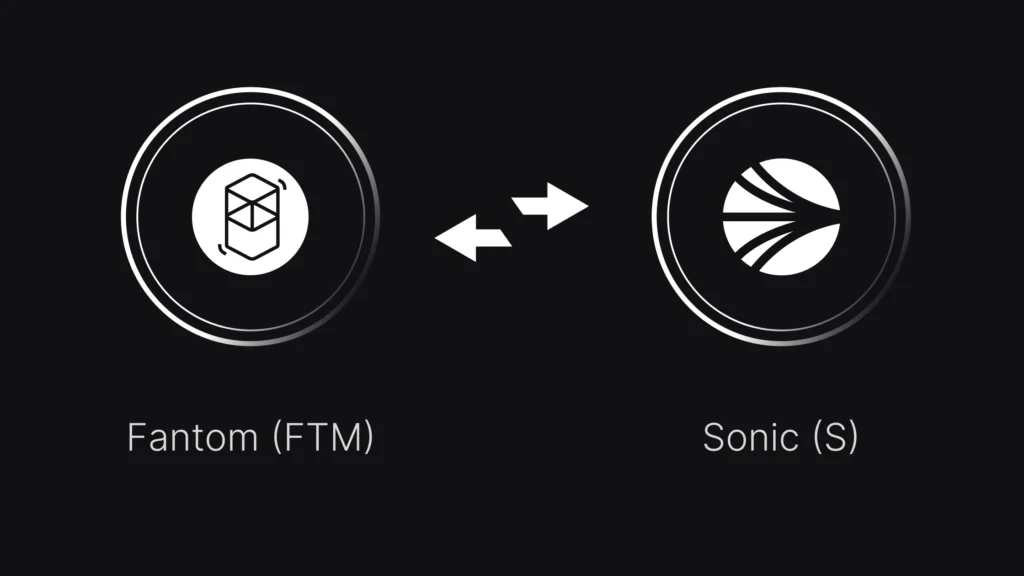
Fantom, another separate Layer 1 blockchain that is EVM-compatible, mirrors Avalanche in its approach but differentiates itself with its unique consensus mechanism and use of the FTM token for transaction fees. It operates Lachesis consensus based on Asynchronous Byzantine Fault Tolerance (aBFT). Currently the platform transitioned into its Sonic upgrade, changing its entire brand and token to S token.
Google Now Indexes 75% of the Crypto Economy
Bitcoin address search is a vote of confidence from Google. The facts speak for themselves, with Bitcoin’s market capitalization at $2.218 trillion (62% of the total crypto market). Ethereum’s market reached $470.74 billion, representing approximately 12-13% of the market cap. This means Google’s Bitcoin address search and broader blockchain integration now cover roughly 74-75% of the total cryptocurrency market capitalization.
Most integrated networks are centered around DeFi and NFTs. While the DeFi declined from its 2021 peak (when total value locked reached $175.6 billion), the market has recovered, with DeFi’s TVL reaching $148 billion as per CoinGecko and DeFiLlama.
Google’s advancement from mere search integration to independent blockchain infrastructure development through GCUL demonstrates that the strategic importance of blockchain integration extends far beyond search functionality into fundamental financial infrastructure provision.
Discover more from Web3Africa
Subscribe to get the latest posts sent to your email.

You must be logged in to post a comment.