










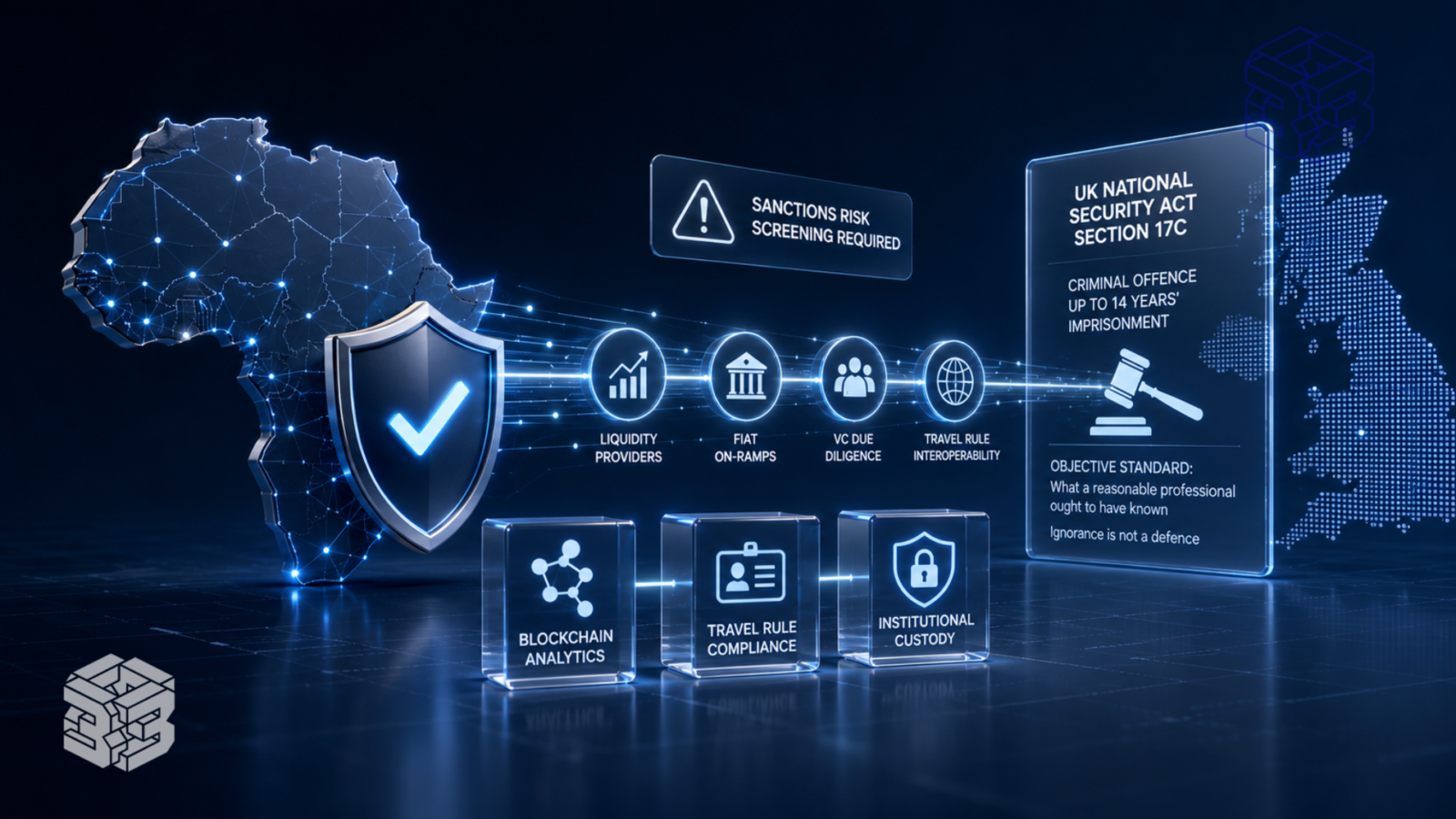
African crypto startups without a single UK customer are receiving urgent compliance ultimatums from their European liquidity pools and fiat on-ramp partners. This situation is mainly brought about via a new UK criminal liability standard that is cascading through the global financial infrastructure they depend on.
The UK activated Section 17C of the National Security Act, creating a criminal offense carrying up to 14 years’ imprisonment for receiving value from designated entities where the recipient “ought reasonably to have known” the source.
The test is objective: what a reasonable professional with standard blockchain analytics tools would have identified. Pleading ignorance is no longer a defense, as basic wallet screening would have flagged the connection.
The law targets UK entities, but the enforcement pressure is transmitting to African startups through four critical dependencies: crypto liquidity providers, fiat on-ramp platforms, venture capital due diligence, and Travel Rule interoperability. Each channel now treats enterprise-grade sanctions screening as a contractual precondition.
How Global AML Laws Affect African Fintechs
When the UK designated the HTX exchange and 17 associated entities for facilitating over $1.5 billion in Russian sanctions evasion—the first time banking-style Regulation 17A was applied to a major crypto exchange—global liquidity providers and competing platforms, including Binance, OKX, and Bybit, immediately tightened counterparty risk controls by warning of enhanced scrutiny on transfers involving HTX.
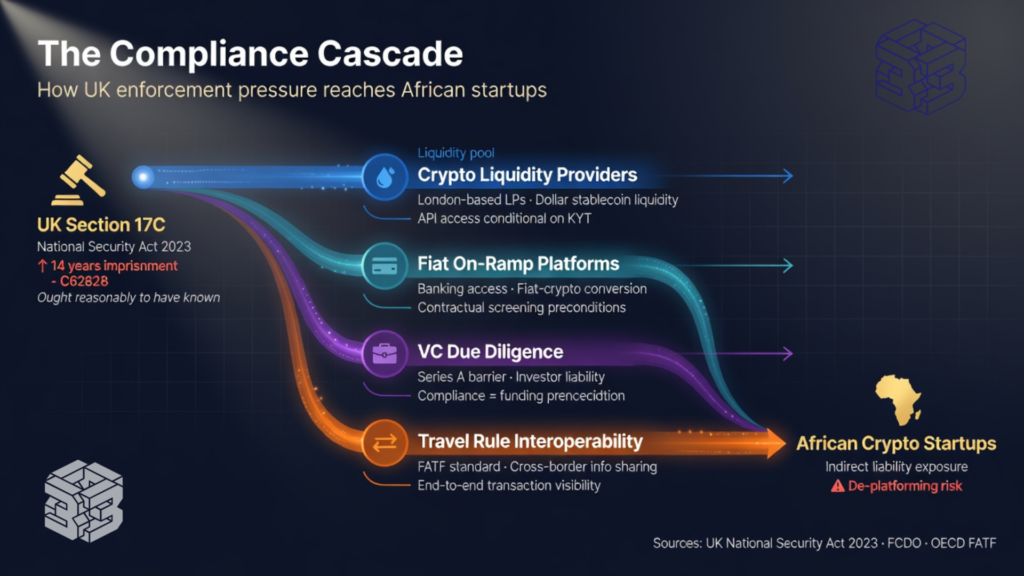
African exchanges that depend on dollar stablecoin liquidity from London-based liquidity providers (LPs) now face indirect strict liability exposure because the UK applied Regulation 17A to crypto entities; if an African platform processes a flagged transaction, the LP’s UK banking access is jeopardized, forcing LPs to require that African partners use Tier-1 Know Your Transaction (KYT) monitoring or lose API access.
RELATED: Measuring Stablecoin Adoption Beyond Market Capitalization
The cost structure is punishing for seed-stage firms: crypto startup compliance infrastructure now requires blockchain analytics (Chainalysis, TRM Labs, Elliptic: $50,000–$120,000/year), Travel Rule protocols (Sumsub, Notabene: $30,000–$80,000/year), and institutional custody (Fireblocks: $50,000–$150,000/year).
Base compliance approaches $250,000 annually, representing over 13% of the median $1.9 million African blockchain seed round (recorded in 2025), before product development begins. Startups processing under $10 million monthly now allocate 22–35% of their operational budgets to compliance.
A two-tier market is crystallizing. Yellow Card (with its $6 billion cumulative volume and its pursuit of EU MiCA registration and Mastercard partnership) and VALR (processing 80,000–100,000 travel rule transactions monthly) are using sophisticated compliance frameworks as a competitive moat to capture institutional liquidity.
RELATED: African Fintechs in the Crosshairs of Europe’s MiCA Compliance Deadline
Conversely, undercapitalized platforms face exit pressure. For instance, Hurupay announced its exit from Kenya in July 2026 due to intensified AML scrutiny and licensing requirements driven by Kenya’s efforts to leave the FATF grey list.
London and New York venture capital now see crypto startup compliance readiness as a critical barrier to Series A funding, because a portfolio company with weak sanctions controls exposes investors to criminal liability under the UK’s objective negligence test.
As global venture capitalists increasingly treat compliance readiness as a critical precondition for Series A funding, African founders must audit their partner dependencies. The alternative is simple: invest in an automated screening stack or face complete commercial de-platforming.
FAQ
Why are European liquidity pools pressuring African crypto platforms?
European partners are enforcing strict counterparty risk controls because of a new UK criminal liability standard. If an African platform processes a sanctioned transaction, the European crypto liquidity provider risks losing its domestic banking access.
How much does basic crypto startup compliance infrastructure cost?
Implementing essential infrastructure like Tier-1 blockchain analytics, Travel Rule protocols, and institutional custody can cost an early-stage company up to $250,000 annually.
How do global AML laws affect African fintechs currently seeking investment?
Venture capital firms in London and New York now treat robust compliance frameworks as a strict precondition for funding. Venture capital firms increasingly view startups without automated sanctions screening as too legally risky for Series A investment.
What happens to African platforms that cannot afford enterprise screening tools?
Undercapitalized platforms are facing severe exit pressure. Without the budget to afford institutional transaction monitoring, these startups risk complete commercial de-platforming and are often forced to shut down local operations.
Discover more from Web3Africa
Subscribe to get the latest posts sent to your email.
You must be logged in to post a comment.