











The July 1 cutoff has more repercussions than many might think. African fintechs and exchanges relying on EU-based liquidity, custody, or stablecoin rails may face a service blackout if a counterparty fails.
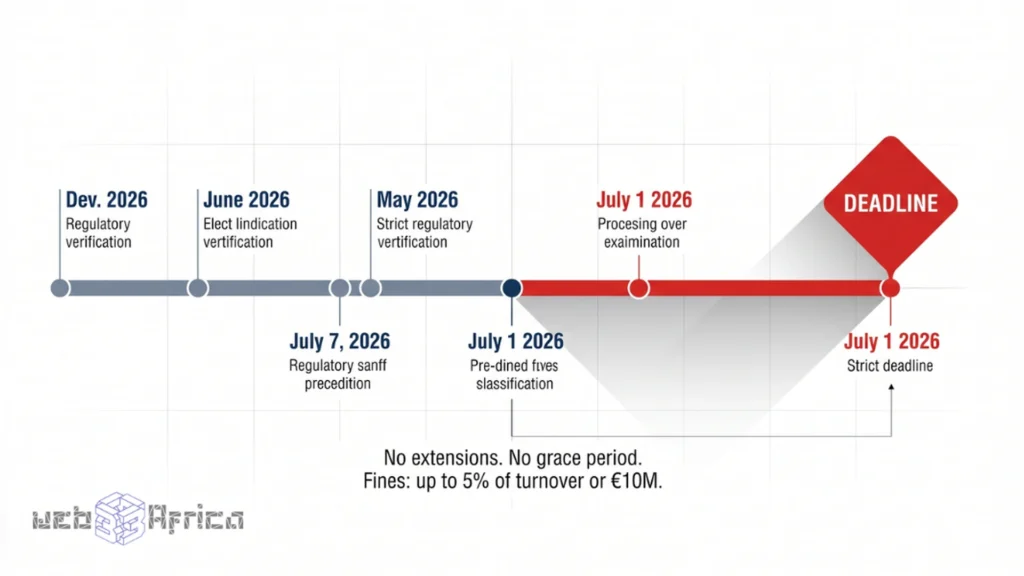
Europe’s MiCA compliance deadline arrived with finality on July 1, 2026. The European Securities and Markets Authority confirmed in April that any crypto-asset service provider (CASP) without authorization must stop serving EU clients, no extensions, no grace periods.
RELATED: Crypto Self-Regulation in Africa: Navigating the Legal Landscape
But the real shock is arithmetic.
Only around 204 firms out of more than 1,200 previously registered virtual asset service providers secured full CASP authorization under the Markets in Crypto-Assets framework, a conversion rate of roughly 17%. The rest either exited, consolidated, or missed the window entirely.
For African crypto exchanges, remittance apps, and treasury operators, that 83% attrition rate creates an infrastructure problem they didn’t choose. Many depend on European counterparties for liquidity depth, fiat on-ramps, stablecoin settlement, and regulated custody.
Inside Europe’s 80% VASP Consolidation Under MiCA
ESMA has been explicit:
CASPs cannot outsource or delegate services, especially custody, to entities that aren’t themselves authorized.
Any African platform routing flows through a European exchange, payment processor, or liquidity venue now faces a binary question: Is that partner among the surviving 200?
If the answer is no or uncertain, the impact of MiCA on African fintechs becomes immediate. Unlicensed EU counterparties must wind down. That means frozen withdrawals, delisted trading pairs, and interrupted settlement, even for non-EU end users.
How MiCA Restricts African Cross-Border Stablecoin Settlement
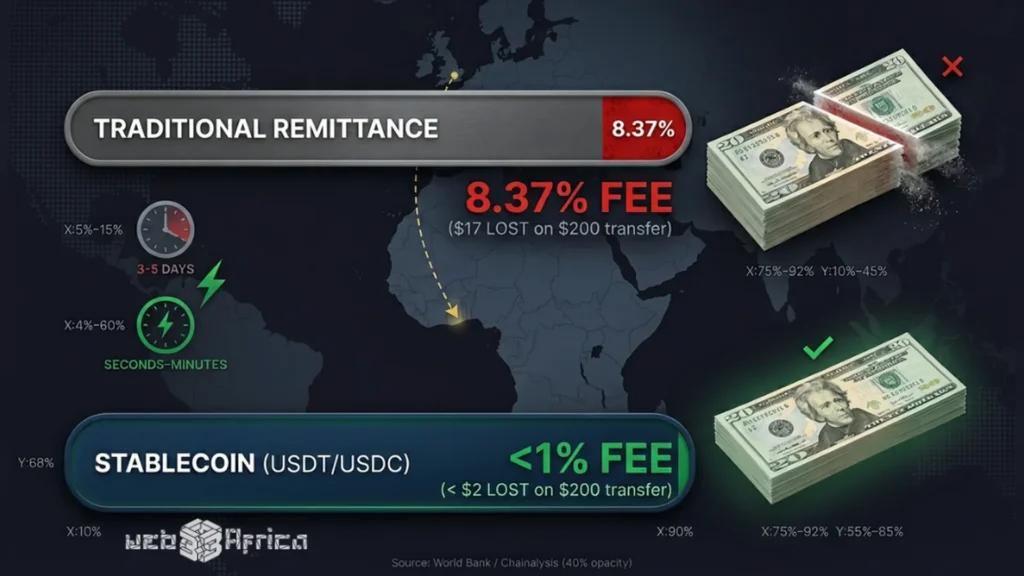
The dependency is sharpest in stablecoins. Sub-Saharan Africa moved over $200 billion in on-chain value between mid-2024 and mid-2025, with stablecoins representing 43% of that activity. Nigeria alone accounts for 40% of stablecoin inflows.
The dominant instrument? USDT, the very asset that Binance, Coinbase, Kraken, and Crypto.com all delisted for European Economic Area retail users during 2024 and 2025. Tether has stated no intention to pursue MiCA authorization.
African crypto exchanges reliant on Europe for stablecoin liquidity now face a structural mismatch. The token their users prefer is effectively unavailable on compliant EU rails. Switching to Circle’s USDC or EURC requires treasury rebalancing, new custody relationships, and integration changes often with tighter spreads and thinner books.
Immediate MiCA Compliance Actions for African Fintechs
Operators at African platforms should immediately map their dependency chain:
- Liquidity sources: Which OTC desks, market makers, or exchanges provide your EUR, GBP, or stablecoin depth? Are they MiCA-licensed?
- Custody and settlement: If you hold client assets or route transactions through a European custodian, does it appear on ESMA’s live CASP register?
- Fiat on/off-ramps: Payment processors and e-money institutions serving crypto liquidity risk corridors may need dual licensing under both MiCA and PSD2 from March 2026.
- Travel Rule interoperability: Every crypto transfer to or from an EU CASP now requires full originator and beneficiary data, with no minimum threshold. Can your compliance stack support that?
The Global Reality of Offshore Infrastructure Dependency
MiCA was designed for Europe. But liquidity, custody, and stablecoin infrastructure don’t observe regulatory borders. African firms that have built their operations on European frameworks now face concentration risks that they may not have adequately stress-tested.
The issue is dependency. Platforms with diversified counterparties across multiple jurisdictions have optionality. Smaller operators or corridor-specific businesses relying on a single unlicensed EU partner are exempt.
MiCA compliance is Europe’s rulebook. But the compliance cliff is global.
Discover more from Web3Africa
Subscribe to get the latest posts sent to your email.
You must be logged in to post a comment.