











Table of Contents
Regulation is now the main topic when crypto or digital assets come into question for both founders and policymakers. Now governments and regulatory bodies demand real-time transaction monitoring while also providing an audit trail for cross-border payments.
These requirements have become a technical architecture assessment for any aspiring startup. Compliance now has become foundational infrastructure, baked into product roadmaps, engineering sprints, and capital allocation decisions from day one.
The question was no longer whether to comply, but whether a company’s technology stack could support the increasingly automated, API-native, real-time compliance that global and domestic regulators now demanded.
Why Venture Capitalists Are Auditing Fintech Compliance Infrastructure
Venture capital due diligence for local startups and fintech increasingly resembles enterprise software audits. Beyond unit economics and growth metrics, investors probe AML compliance architecture, governance frameworks, and regulatory roadmaps across multiple jurisdictions.
However, compliance gaps delay banking partnerships, block payment rail access, and create valuation risk during later funding rounds or exit scenarios.
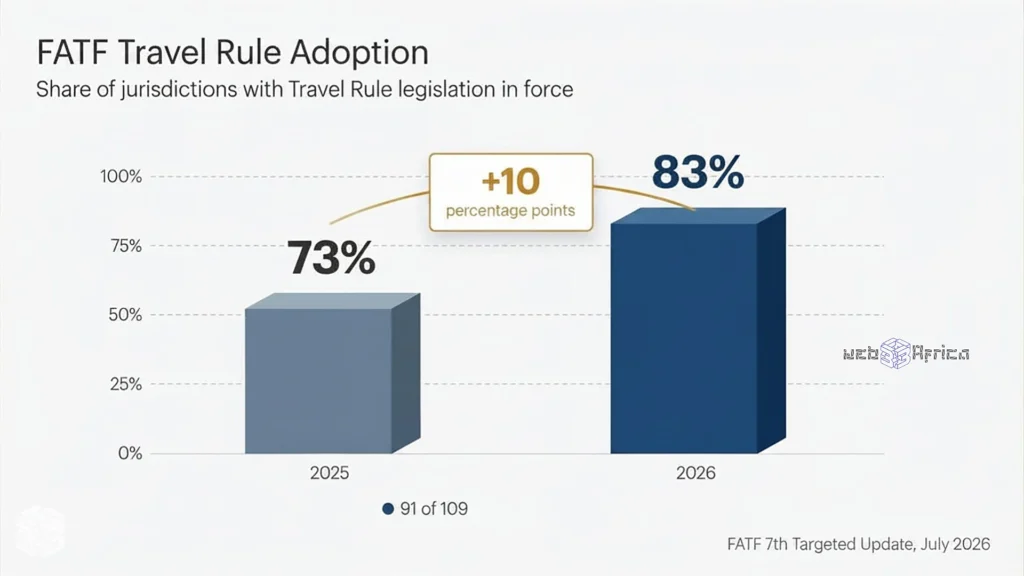
The stakes have risen in part because regulatory convergence is accelerating. The Financial Action Task Force Travel Rule now applies in 83% of surveyed jurisdictions, up from 73% in 2025, requiring virtual asset service providers to collect and share identity data for crypto transfers.
Europe’s Markets in Crypto-Assets Regulation, or MiCA regulation, ended its grandfathering period on July 1, 2026, forcing any African fintech with EU banking links or European customers to hold full authorization or exit those relationships.
RELATED: African Fintechs in the Crosshairs of Europe’s MiCA Compliance Deadline
In the United Kingdom, anti-money laundering expectations for payment firms serving African corridors have tightened, even as remittance flows from the UK to Sub-Saharan Africa exceed £4 billion annually.
These directly determine whether a local startup can access liquidity providers, secure institutional investment, or maintain the correspondent banking relationships that underpin cross-border payments.
Navigating Fragmented AML Compliance Across Africa
Across Nigeria, Kenya, South Africa, Ghana, and Rwanda, VASP regulations have moved from policy discussion to operational reality.
In Nigeria, the Securities and Exchange Commission raised capital requirements for digital asset exchanges to ₦2 billion in January 2026, up from ₦500 million. More importantly, the Central Bank of Nigeria’s changes in May 2025 to anti-money laundering rules now require that all transactions be checked in real-time, with clear explanations and unchangeable records, which significantly changes how payment systems are built.
The 2026 Payment System Management Regulations go further, stipulating that every financial transaction must be auditable within 30 seconds with full traceability across each intermediary. This requirement necessitates architectural redesigns of microservices and payment orchestration layers.
Kenya’s Virtual Asset Service Providers Act, enacted in October 2025, established dual oversight by the Central Bank of Kenya and the Capital Markets Authority. Following the close of the public consultation period in April 2026, operators are currently awaiting the finalization of the VASP Regulations to clarify exact licensing and compliance deadlines.
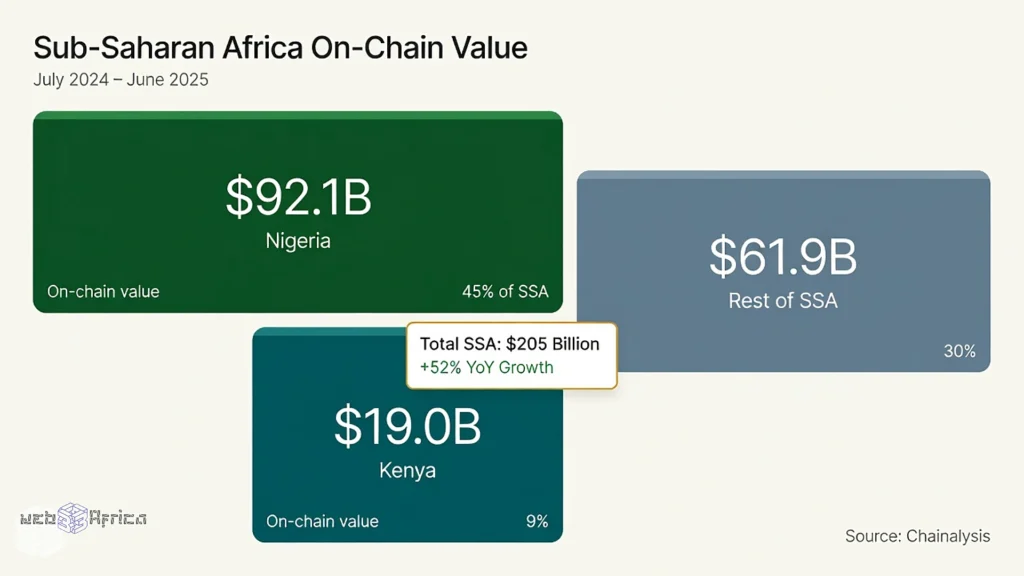
With approximately $19 billion in crypto inflows recorded between July 2024 and June 2025, according to Chainalysis, Kenya represents a market where compliance infrastructure must be built rapidly or operators risk exclusion.
South Africa’s Financial Sector Conduct Authority has approved 310 licenses for crypto asset service providers from 533 applications as of March 2026, reflecting its rigorous standards. The Financial Intelligence Centre published draft Travel Rule guidance in March 2026, requiring CASPs to obtain and transmit originator and beneficiary information for all crypto transfers, including those involving unhosted wallets.
What unites these frameworks is the expectation of continuous, automated monitoring rather than periodic manual reviews. Regulators increasingly demand that compliance run in the software itself, not in spreadsheets reviewed quarterly by legal teams.
The Financial Burden of Digital Asset Licensing
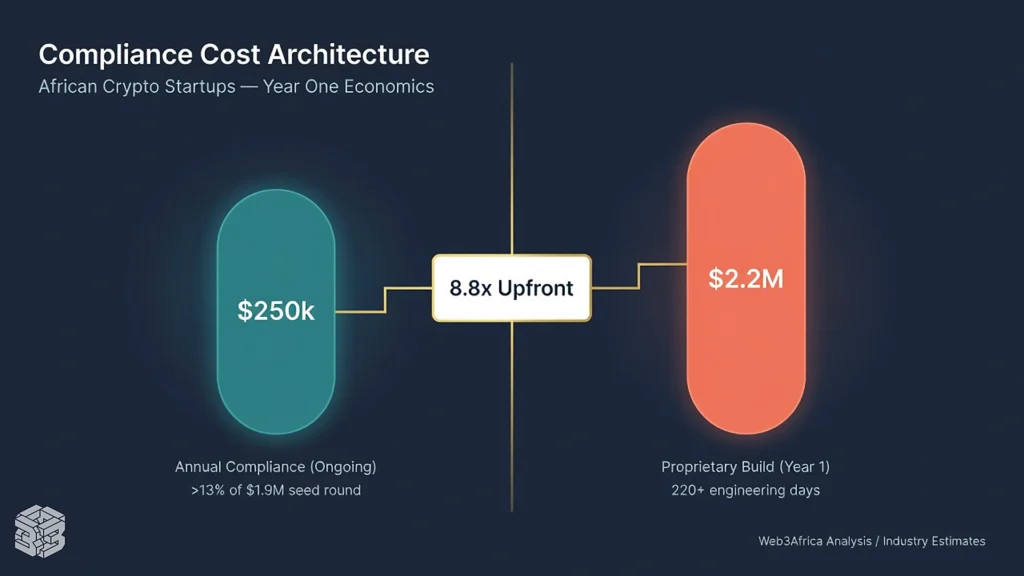
The financial burden is substantial and front-loaded. Baseline compliance for a crypto startup now approaches $250,000 annually, more than 13% of the median African blockchain seed round, according to Web3Africa analysis. For companies attempting to build proprietary know-your-customer, know-your-business, and AML compliance systems in-house, year-one costs reach an estimated $2.2 million and consume more than 220 engineering days.
Fintech infrastructure specialists report that 83% of early-stage fintechs spend their first year on “plumbing”—identity verification, transaction monitoring, audit logging, and sanctions screening—rather than product differentiation or customer acquisition.
One fintech cost benchmarking analysis found that compliance typically represents 10 to 20% of operating expenses for digital financial services companies, rising to 18 to 22% for neobanks.
RELATED: Kenyan Regulators Prioritize Consumer Protection, Vendor Risk Mapping, and AML/CFT Oversight
The cost disparity between building compliance early versus retrofitting it later is stark. Industry estimates suggest that designing systems for regulatory auditability after initial product launch costs two to ten times what building it in from the start requires, factoring in engineering time, legal fees, go-to-market delays, and lost banking relationships.
This cost structure has reshaped the build-versus-buy calculus. Cloud-based RegTech solutions—which accounted for an estimated 65 to 75% of the regulatory technology market in 2025—have become the default choice.
Instead of using their limited engineering resources to build basic compliance systems, fintech companies are more often using third-party platforms for tasks like checking identities, screening for sanctions from lists with over two million names, monitoring transactions, and managing cases.
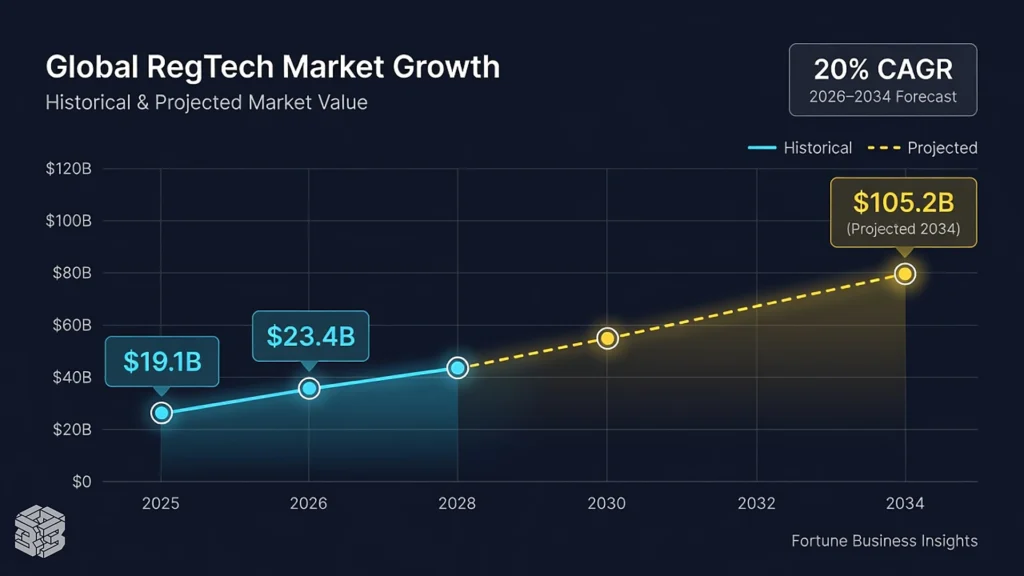
Market projections reflect this shift. While estimates vary widely depending on scope, major research firms forecast the global RegTech market growing from approximately $19 billion to $24 billion in 2025 to between $85 billion and $112 billion by the mid-2030s.
That’s a compound annual growth rate of 16% to 21%. African RegTech, though a smaller segment, is projected by industry analysts to reach approximately $1.2 billion within five years, driven by the operational demands VASP regulations and digital asset licensing frameworks create.
Turning Regulatory Friction Into a Competitive Moat
The irony is that high compliance costs, while burdensome for bootstrapped startups, create defensibility for those able to absorb them. Fintech compliance infrastructure acts as a barrier to entry, protecting incumbents and well-capitalized entrants while disadvantaging smaller competitors who cannot afford the requisite technology stack.
Despite African Union aspirations for digital market harmonization, national VASP regulations remain fragmented, forcing startups to repeat compliance engineering and legal expenditure in each territory.
Yet investors and banking partners increasingly view robust compliance architecture as a proxy for institutional readiness. A fintech that can demonstrate it has systems for checking sanctions, regularly verifying customers with updates when needed, and keeping unchangeable audit records while following MiCA regulation standards shows it is well-prepared and reduces the risk for financial institutions looking to partner.
This dynamic mirrors developments in Europe, where MiCA regulation licensing has proven a gating factor for market access.
A single authorization in one EU member state grants passporting rights across all 27 markets. For African fintechs seeking European banking partners or customers, holding or connecting through a MiCA-licensed entity has become functionally mandatory.
The operational pivot required by MiCA illustrates the standard’s stringency: in major hubs like Lithuania, over 500 previously registered digital asset firms are currently navigating complex operational overhauls to secure full CASP authorization before the grandfathering period expires.
The End of the Legal Gray Area in African Web3
The shift toward embedded, automated compliance introduces genuine tensions. Smaller startups face disproportionate burdens, such as compliance software subscriptions, legal counsel, and engineering overhead, that consume resources that might otherwise fund product development or geographic expansion.
Regulatory fragmentation across African markets increases costs without corresponding improvements in financial crime prevention, as each jurisdiction imposes distinct reporting formats, capital thresholds, and technical standards.
There is also the risk of over-reliance on automation. While adoption of artificial intelligence in AML processes jumped from 42% in 2024 to 82% in 2025 according to compliance technology surveys, automated screening can generate false positives, de-risk legitimate customers, or misalign with nuanced internal risk assessments.
Compliance remains a socio-technical challenge requiring human judgment alongside algorithmic efficiency.
African regulators, for their part, are attempting to balance financial integrity obligations with ecosystem development. Nigeria’s Presidential Executive Order creating a Virtual Asset Council in July 2026 signaled government intent to provide clearer guidance.
Ghana’s Virtual Asset Service Providers (VASP) Bill, passed in December 2025, established a strict regulatory regime requiring all operators to obtain full licenses from the Bank of Ghana, introducing robust FATF-aligned compliance and consumer protection measures.
Rwanda’s proposed law gives the Capital Markets Authority the power to issue licenses but bans the use of local currency for tokenization, showing a desire to support innovation while also protecting its interests.
RELATED: Bank of Ghana Partners with University of Ghana Forging Financial Revolution From the Ground Up
The operational reality for founders, CTOs, and compliance officers is that infrastructure decisions made in the first six months increasingly determine market access for the next five years.
Choosing identity verification providers, transaction monitoring platforms, and audit-logging architecture is a strategic question that shapes banking relationships, fundraising prospects, and cross-border expansion timelines.
Product managers must design user experiences around regulatory constraints such as sanctions screening latency, document verification workflows, and perpetual KYC triggers. Engineering teams must design systems that keep a clear record of every transaction, wallet interaction, and risk decision, making sure they follow not only local laws but also international rules like FATF recommendations, MiCA regulation, and UK financial crime guidance that affect access to global payment systems.
For investors, the due diligence checklist has expanded. In addition to looking at how well a product fits the market and its financial details, investors now also check if a fintech’s technology can handle quick, API-based transactions that are unchangeable and can work across different countries.
General counsel must map out the compliance requirements necessary for sustained growth. Digital risk has become valuation risk.
From Afterthought to Architecture
The transformation of compliance from legal paperwork to core infrastructure marks a maturation of African fintech. Experimentation, rapid iteration, and regulatory ambiguity characterized the sector’s early growth. That era has not ended, but it is narrowing.
Sub-Saharan Africa’s remarkable $205 billion in on-chain value in 2024 serves as compelling evidence. Nigeria alone recorded $92.1 billion in on-chain crypto transactions during the same period. These volumes have attracted regulatory attention and institutional participation in equal measure, raising the operational baseline for companies seeking to serve these markets at scale.
The companies that begin using fintech compliance tools early—such as real-time monitoring, API-based sanctions checks, governance systems, and preparing for digital asset licensing—are positioning themselves to form partnerships with institutions, manage cross-border payments, and draw in venture capital that is increasingly looking for evidence of regulatory trust.
Compliance is not overhead. It is the infrastructure that allows participation in the global financial system. And in 2026, that system expects African fintechs to meet the same technical and governance standards it imposes everywhere else.
VASP regulations are not slowing African fintech. They are defining which companies will scale.
FAQ
What are VASP regulations?
VASP (Virtual Asset Service Provider) regulations are legal frameworks that require crypto and digital asset companies to implement real-time transaction monitoring, identity verification, and anti-money laundering (AML) protocols to operate legally within the formal financial system.
How does MiCA regulation affect African fintech companies?
MiCA regulation requires any African fintech connecting to European banking rails or serving EU customers to hold full authorization. Without it, startups risk being immediately cut off from European liquidity providers and correspondent banking networks.
How much does AML compliance cost for an early-stage crypto startup?
Baseline compliance infrastructure costs a crypto startup approximately $250,000 annually. Attempting to build proprietary KYC and monitoring systems entirely in-house can push first-year costs as high as $2.2 million.
Why are venture capitalists focusing heavily on fintech compliance infrastructure?
Investors now view compliance architecture as a primary indicator of institutional readiness. Without robust digital asset licensing and automated AML systems, startups face severe delays in securing banking partnerships, creating major valuation risks during subsequent funding rounds or exit scenarios.
Discover more from Web3Africa
Subscribe to get the latest posts sent to your email.

You must be logged in to post a comment.