











In Brief
Stablecoin-as-a-service is rapidly becoming the standard for regulated financial institutions, allowing them to outsource complex blockchain operations while retaining customer trust and regulatory oversight.
SoFi Bank’s launch of SoFiUSD utilizes BitGo’s infrastructure for minting, custody, and compliance, proving that traditional banks prefer renting secure blockchain rails rather than building them from scratch.
While SoFi Bank holds the 1:1 cash reserves in a Federal Reserve master account, the token itself includes centralized control features like freeze and burn capabilities, and it lacks FDIC insurance.
This outsourced technology model directly benefits Africa by providing local fintechs with instant, compliant, and cost-effective U.S. dollar settlement channels to bypass legacy correspondent banking networks.
SoFi Technologies just turned what could have been “another stablecoin launch” into a clearer signal of where the market is heading. The platform, in collaboration with BitGo, is launching a stablecoin-as-a-service model by introducing a stablecoin designed specifically for institutions eager to join the trillion-dollar market.
SoFi is renting the hardest parts (security, on-chain operations, compliance tooling, and institutional connectivity) from specialist providers like BitGo, while keeping distribution and customer trust in-house.
SoFi’s project, SoFiUSD (“SOFID”) issued by SoFi Bank, is best read as a productization of a “digital dollar” settlement rail that can plug into existing payments networks (Mastercard) and fintech plumbing (Galileo), with BitGo acting as the enabling layer underneath.
The SoFiUSD stablecoin and its stablecoin-as-a-service approach
SoFi first announced SoFiUSD on December 18, 2025, positioning it as a fully reserved, USD-pegged token meant to power financial infrastructure for banks, fintechs, and enterprise partners.
Key metrics of the stablecoin-as-a-service model include:
- Issuer: SoFi Bank, N.A. (OCC-regulated; SoFi Bank is FDIC-insured as a depository institution, but the token is not a deposit).
- Token: SoFiUSD (ticker: SOFID) – a bank-issued stablecoin on a public, permissionless blockchain (initially Ethereum).
- Backing: 1:1 reserves of cash/cash equivalents, SoFi’s terms say reserves are “primarily held” in a Federal Reserve master account, with some reserves potentially held at other regulated institutions to facilitate liquidity/redemptions.
- Disclosures: SoFi says it will publish reporting on outstanding supply and reserve composition; BitGo’s announcement says “attestations provided by third-party auditors,” though the auditor name and cadence have not been publicly confirmed.
RELATED: Locked Out: FTX Freezes Repayments for Victims in 16 African Nations
Anthony Noto, SoFi’s CEO, stated:
“For every SoFi USD outstanding, we will have a dollar of cash in our Fed master account, which means there is no credit, liquidity, or duration risk.”
BitGo’s role: the outsourced operating system for a bank-issued stablecoin
SoFi is still the issuer of record. But the day-to-day reality of making a stablecoin behave like bank-grade infrastructure, secure, policy-controlled, and operationally resilient, is where BitGo’s platform becomes central.
In March 2026, BitGo Bank & Trust was selected to provide stablecoin infrastructure services and distribution support via its stablecoin-as-a-service platform. BitGo also operates under OCC oversight under, an approval letter in December 2025 for BitGo Trust’s conversion to BitGo Bank & Trust, National Association.
BitGo provides what many banks do not want to build end-to-end:
- Custody & key management: institutional-grade wallet infrastructure and controls.
- Mint/redemption workflows: orchestration tooling linking fiat movements to on-chain supply changes (mint/burn), including reconciliation and authorization policies.
- Transaction policy controls: the ability to enforce rules around transfers and counterparties.
- Compliance and monitoring tooling: screening/monitoring integrations and reporting primitives designed for regulated actors.
- Connectivity: pathways to exchanges, liquidity venues, and payment providers—distribution that’s difficult to replicate quickly.
For SoFi Bank, this means the institution can launch a dollar token quickly, with bank-level controls and regulatory clarity, while BitGo handles security, operational resilience, and settlement rails.
RELATED: USDC Overtakes Tether to Claim the Crown in Global Transfer Volume
Turning SoFiUSD into settlement plumbing
SoFi’s second move was tying SoFiUSD to global payment settlement. In an official statement, SoFiUSD would be enabled as a settlement option across Mastercard’s network and supported on the Mastercard Multi-Token Network (MTN). Mastercard’s Sherri Haymond claimed that the effort expanded “choice and flexibility” while maintaining the “reliability, security, and reach” expected in payments.
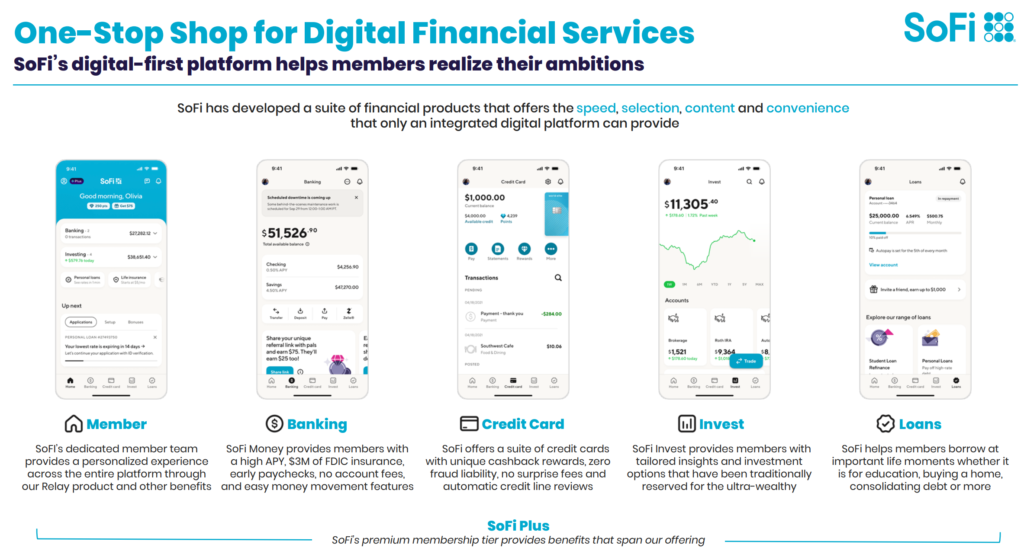
SoFi also disclosed that Galileo (SoFi’s platform that serves 128 million accounts) will offer issuing banks the option to settle in SoFiUSD. This is a vital detail since it places SoFiUSD as a stablecoin infrastructure for financial institutions.
The trade-offs and open questions (read the terms, not just the press releases)
SoFi’s documentation makes the product’s guardrails and constraints clear.
While this does fashion a narrative for a stablecoin-as-a-service, it’s important to note that SoFiUSD is not a bank deposit and is not FDIC or SIPC insured (even though SoFi Bank itself is FDIC-insured as a depository).
Additionally, redemption for USD is generally limited to “SoFi customers” under separate agreements. Secondary-market holders typically do not have a direct contractual right to redeem with the issuer.
Finally, the smart contract includes administrative/compliance features such as the ability to pause or restrict transfers, block/denylist addresses, freeze tokens at addresses, and burn/reissue/replace tokens.
These controls may be necessary for regulated settlement use cases, but they also mean SoFiUSD is not “censorship-resistant cash.” Institutions adopting it must evaluate operational and governance risk alongside the benefits of a stablecoin-as-a-service model.
A further accuracy note: SoFi has described SoFiUSD as the first stablecoin issued by a U.S. nationally chartered and insured deposit bank on a public, permissionless blockchain. “First” claims can depend on definitions (stablecoin vs. tokenized deposit, public vs. permissioned, direct issuance vs. consortium structures).
The Accidental Pivot That Made Accrue Fintech Africa’s Stablecoin Remittance Leader
Why this matters now: the stablecoin-as-a-service race is becoming bank-grade.
SoFi and BitGo are but two examples of 2026’s stablecoin wave theme. For instance:
- Bridge (acquired by Stripe for $1.1B) received conditional OCC approval for a national trust bank charter (February 2026).
- Stablecore integrated with Jack Henry’s Fintech Integration Network, reaching approximately 1,670 U.S. banks and credit unions (February 2026).
- Visa expanded a stablecoin-linked card program with Bridge to over 100 countries (March 2026).
There’s a common thread: regulated or regulation-ready intermediaries are competing to become the default “stablecoin middle layer” so banks can launch faster with less bespoke crypto engineering.
Stablecoin signals for African banks and fintechs
African institutions are following the similar pattern. Distribution and customer trust sit locally, while issuance and settlement capabilities are increasingly outsourced to global infrastructure providers.
Some noteworthy claims include:
- Onafriq piloted USDC settlement with Circle across 40+ African countries (April 2025), with CEO Dare Okoudjou citing lower costs and stronger trust.
- NALA uses Noah’s infrastructure for instant stablecoin settlement (January 2026), relying on a partner for regulated USD accounts, KYC/AML entry controls, and conversion before local payouts.
- South Africa’s ZARU Consortium launched a rand-pegged stablecoin with a multi-partner model, Standard Bank as fiat custodian, Sanlam as asset-liability manager, and Moore Johannesburg for monthly audits (February 2026).
- Absa partnered with Ripple for institutional digital-asset custody, effectively renting security infrastructure rather than building it alone.
Practical Benefits and Strategic Implications
For institutions evaluating SoFiUSD or similar stablecoin-as-a-service models, the value proposition centers on the following:
- Predictable settlement – Dollar-denominated finality on public rails, 24/7, without correspondent bank intermediaries
- Speed and cost efficiency – Faster reconciliation and lower fees than SWIFT or traditional cross-border channels
- Transparency and auditability – On-chain transaction records and reserve attestations improve compliance workflows
- Bridge product utility – Suitable for payroll, remittances, merchant settlement, and fintech-to-fintech transfers
“By working with SoFi to enable SoFiUSD across the Mastercard network, we’re expanding how trusted digital currencies can be used at a global scale,” said Sherri Haymond, Mastercard’s Global Head of Digital Commercialization. The Mastercard Multi-Token Network integration positions SoFiUSD as enterprise settlement infrastructure, not merely a consumer token.
Super Group Goes “All-In” on Africa with Regulated ZAR Stablecoin
Infrastructure Over Ideology
SoFi’s launch of the SoFiUSD stablecoin is less a crypto branding exercise than a blueprint for how regulated institutions may scale stablecoin settlement.
The model, stablecoin-as-a-service, reduces time-to-market, operational risk, and capital requirements for institutions.
African banks and fintechs are validating the same thesis: building blockchain infrastructure in-house is rarely strategic. Partnering with specialist providers that handle security, treasury orchestration, and compliance tooling is faster, safer, and more scalable. As these regulated rails mature, the question for African institutions is not whether to adopt stablecoins but which infrastructure partners to trust.
Discover more from Web3Africa
Subscribe to get the latest posts sent to your email.
You must be logged in to post a comment.