











In Brief
The SARB stablecoin warning identifies USD-pegged assets as a primary threat to the “oneness of money” and the central bank’s control over the repo rate.
Digital dollarization is accelerating in South Africa with 7.8 million users now holding over R25.3 billion in digital assets as of late 2024.
A major legal loophole exists following the Standard Bank v. SARB court ruling which declared that 1961 regulations do not legally cover crypto assets.
Institutional response includes the launch of ZARU, a rand-backed stablecoin designed to recycle capital back into South African government bonds.
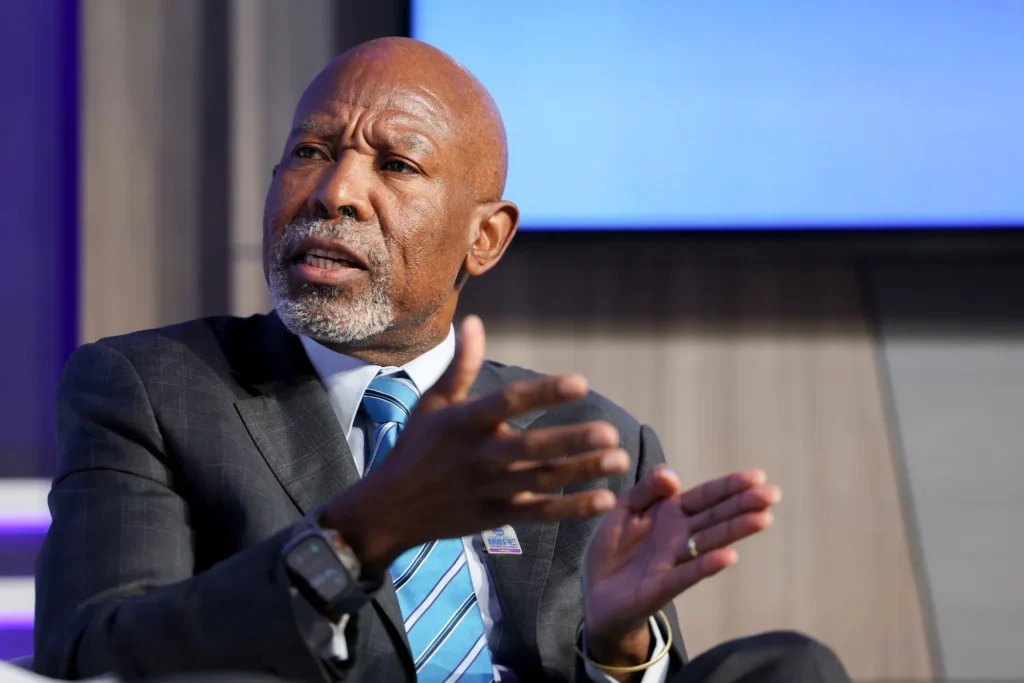
Amid the measured tones of the Warwick Economics Summit, South African Reserve Bank (SARB) Governor Lesetja Kganyago delivered what may prove to be one of the defining monetary warnings of the digital currency era. Addressing global policymakers and economists, Kganyago issued a stark caution: the proliferation of stablecoins carries an inherent danger that they could “break apart.”
Kganyago framed the issue as a matter of sovereign duty, stating that
Central banks must protect the oneness of money and the affordability of money to the public.
The SARB stablecoin warning might change how South Africa’s monetary authority views these digital assets. No longer as peripheral speculative instruments, but as a systemic vector for what economists now call “digital dollarization.”
The timing amplifies the urgency. As of mid-2025, the number of registered users on South Africa’s three largest licensed Crypto Asset Service Providers (CASPs)—Luno, VALR, and Ovex—had reached 7.8 million, representing approximately 13% of the population.
How Luno’s Tokenized Stocks Introduces a New Investment Era for Africa
Furthermore, the total value of crypto assets held in custody surged from under R10 billion at the start of 2023 to R25.3 billion by the end of 2024. USD-pegged stablecoins like Tether (USDT) and USDC are increasingly displacing Bitcoin as the preferred store of value, with top exchanges estimating nearly R80 billion ($4.7 billion) in trading volume by October 2025.
SARB Stablecoin Warning; It Could “Break Apart” Money
When Kganyago warns that stablecoins could “break apart,” he is articulating two distinct but equally dangerous forms of monetary fragmentation:
Technical Decoupling Risk
Stablecoins like USDT rely on the market’s confidence that they are backed 1:1 by liquid reserves, primarily U.S. Treasury bills. During periods of extreme stress, if redemption demands exceed available liquidity, the peg can collapse (trading below $1.00).
For South African holders treating these assets as safe havens, a de-pegging event would trigger massive, unrecoverable wealth destruction. There is no domestic deposit insurance coverage for these losses, leaving the 7.8 million users as unsecured creditors of offshore entities.
Monetary Sovereignty Erosion
More insidious is the fragmentation of the domestic payment system itself. If a significant portion of economic activity begins pricing goods and settling debts in USDT, a dual-currency system emerges.
The “oneness of the Rand,” the principle that one Rand in a bank account equals one Rand in value everywhere, shatters. This phenomenon directly undermines monetary control. When consumers hold savings in USDT (yielding interest rates determined by U.S. Federal Reserve policy), they become immune to SARB rate adjustments. The central bank’s primary tool, its control over the repo rate, loses potency.
During an Absa CIB webinar in February 2026, Lasbery Oludimu, the Managing Director of Yellow Card, provided a clear explanation of the demand driver.
“Stablecoins are taking off in Africa because they help solve some of the problems we cannot solve using the traditional financial system… We need an alternative that is better at holding value in a more stable form.”
A Legal Vacuum Undermining South Africa Crypto Regulations
A critical legal vacuum amplifies the SARB stablecoin warning. In May 2025, the Standard Bank of South Africa v. South African Reserve Bank judgment delivered a devastating blow to the regulator’s enforcement capacity.
The Gauteng High Court ruled that “crypto assets” do not fall within the legal definitions of “currency,” “money,” or “capital” under the archaic Exchange Control Regulations of 1961 legislation designed for an era of telex transfers and physical gold.
RELATED: South Africa’s Crypto Payments Surge: From Speculation to Daily Spending
The SARB was granted leave to appeal to the Supreme Court of Appeal in September 2025, with virtual hearings scheduled between February 16 and March 6, 2026. Until this verdict, a dangerous grey zone persists.
As of late 2025, while the Financial Sector Conduct Authority (FSCA) had licensed approximately 300 CASPs under the FAIS Act, the Intergovernmental Fintech Working Group (IFWG) admitted in its March 2025 Stablecoin Landscape Diagnostic that South Africa has “no framework in place” for comprehensive prudential regulation of stablecoins.
The SARB’s own Financial Stability Review (November 2025) was explicit:
“Since crypto payments are borderless, they present an avenue for circumventing exchange controls.”
Governor Kganyago himself warned in October 2025 that stablecoins could be used to short the South African rand, a scenario where capital flight via digital assets accelerates currency depreciation in a devastating feedback loop.
African Monetary Sovereignty in the Age of USD-Pegged Stablecoins
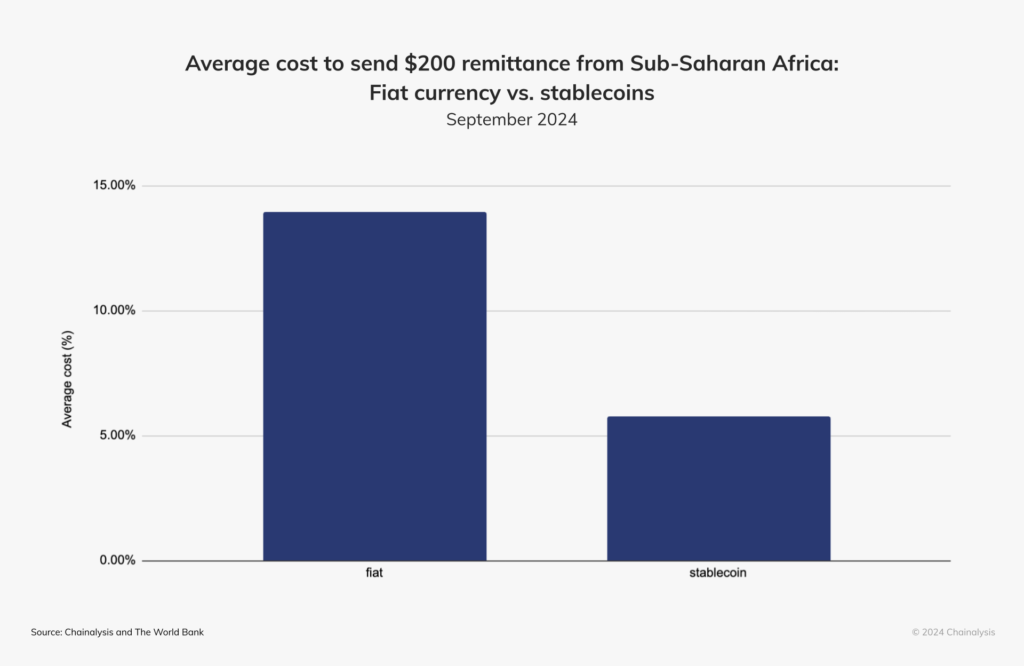
Across Sub-Saharan Africa, 43% of all crypto transactions involve stablecoins (mid-2024 to mid-2025), with over $200 billion in on-chain value moved during that period. The region now has the highest stablecoin adoption rate globally at 9.3% in 2025, serving over 54 million digital asset users.
This stablecoin threat to monetary sovereignty operates through multiple channels:
Seigniorage Loss: When a South African resident exchanges ZAR 1,000 for USDT, they are selling a claim on the SARB to buy a claim on Tether Limited, which invests backing dollars in U.S. Treasuries. The interest income (seigniorage) flows to the U.S., not the South African National Treasury, a material leakage of public revenue.
Monetary Policy Impotence: As documented by the SARB, widespread stablecoin adoption leads to “disintermediation” of domestic banks. If deposits migrate from Standard Bank or FirstRand to offshore stablecoin issuers, banks lose cheap funding and must rely on expensive wholesale markets, driving up credit costs regardless of the repo rate.
BRICS De-dollarization Paradox: South Africa is a BRICS member committed to reducing dollar dependence, yet market forces are driving mass adoption of dollar-backed digital assets. One analyst pointed out that this raises questions about how governments would perceive the widespread adoption of dollar-backed stablecoins.
The drivers are powerful. In Nigeria, the naira declined 70–75% after the 2023 reforms. Similarly, in Ethiopia, a 30% birr devaluation triggered 180% year-over-year stablecoin growth.
Yellow Card’s Oludimu described the practical necessity:
“You could go to the bank and find you cannot make a payment for up to a week due to a lack of foreign currency. People are now using stablecoins to pay for their obligations abroad.”
Can Rand-Backed Stablecoins Like ZARU Protect Domestic Money?
Recognizing that outright prohibition would merely drive activity underground, South Africa’s financial establishment has launched a strategic counteroffensive. On February 3, 2026, a consortium comprising Luno, Sanlam Specialised Asset Management, EasyEquities, and Lesaka Technologies launched ZARU (ZAR Universal), a Rand-pegged stablecoin designed to offer blockchain utility without currency substitution risk.
ZARU’s strategic architecture directly addresses concerns about sovereignty in the following ways:
Domestic Reserve Custody: Backing reserves are held in Standard Bank deposits and South African government bonds, ensuring digital liquidity remains within the domestic banking sector, supporting local credit creation.
Regulatory Alignment: Operating under South African crypto regulations, ZARU undergoes monthly reserve audits by Moore Johannesburg, unlike offshore stablecoins with opaque attestations.
Capital Recycling: By channeling backing into government securities, ZARU drives demand for rand-based assets rather than U.S. Treasuries.
As Joel Hugentobler, Cryptocurrency Analyst at Javelin Strategy & Research, observed:
“I don’t see other people or countries using it all that much due to lack of liquidity and potentially higher volatility exposure. This will be mainly used for South Africa-based transactions.”
The fundamental tension persists as South African users adopt USDT to hedge against Rand depreciation, a protection ZARU, by design, cannot offer.
What This SARB Stablecoin Warning Means for You
For policymakers: The Supreme Court of Appeal ruling (expected by early March 2026) represents a critical juncture. A victory allows the SARB to interdict unauthorized crypto outflows; a loss forces emergency legislative amendments, leaving months of vulnerability.
For financial institutions: Robert Downes, Head of Digital Assets at Absa CIB, confirmed that:
“Banks are actively partnering with crypto exchanges to see how their services can be augmented using stablecoins and blockchain technologies.”
Strategic positioning on ZARU adoption will determine competitive advantage.
For users: The 7.8 million South Africans holding crypto assets face a binary risk: de-pegging events without regulatory protection or future capital controls that restrict offshore stablecoin access.
Will South Africa’s Money “Break Apart”? ”?
Governor Kganyago’s Warwick warning is a recognition that the “oneness of money” is no longer a given; it is a policy objective under siege. The SARB’s defense relies on three fronts: legal (the SCA appeal), regulatory (closing prudential gaps), and competitive (supporting ZARU).
The outcome of this battle will determine whether South Africa retains meaningful monetary control or becomes a case study in digital dollarization. The answer remains uncertain, but the SARB stablecoin warning has made the stakes unmistakably clear.
FAQ Schema
What exactly is the SARB stablecoin warning issued by Governor Kganyago?
Answer: The warning highlights that USD-pegged stablecoins could “break apart” South Africa’s financial unity by promoting digital dollarization, which erodes the central bank’s ability to control interest rates and manage the domestic economy.
How many South Africans are currently using crypto assets?
Answer: As of mid-2025, approximately 7.8 million South Africans (13% of the population) were registered on major local exchanges, with total crypto assets in custody reaching R25.3 billion.
What is the ZARU stablecoin and how does it help South Africa?
Answer: ZARU (ZAR Universal) is a rand-pegged stablecoin launched by a local consortium to keep liquidity within the South African banking sector and ensure that digital transactions remain under domestic regulatory oversight.
Why did the Standard Bank v. SARB ruling create a legal vacuum?
Answer: The Gauteng High Court ruled that current 1961 exchange control laws do not define crypto assets as money or capital, effectively stripping the SARB of its power to regulate cross-border crypto flows until the law is updated or the appeal is decided.
Discover more from Web3Africa
Subscribe to get the latest posts sent to your email.

You must be logged in to post a comment.