











Table of Contents
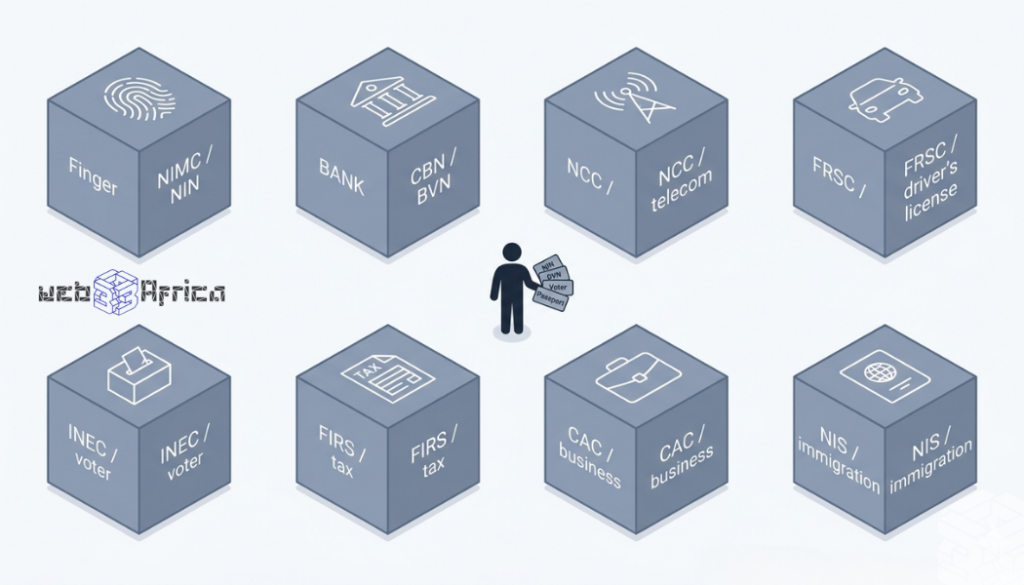
Eight major government agencies across Nigeria hold some of the continent’s most valuable citizen datasets. Yet these databases remain siloed, operating in parallel rather than as integrated infrastructure.
Digital identity is not a precondition for Africa’s AI and fintech future. It is the foundation. The distinction matters because well over 500 million people in Africa lack any form of legal identification. That’s roughly half of the 1 billion people without ID worldwide.
This is one of the few gating factors for financial inclusion, digital services, compliance frameworks, and any AI system that depends on verified, linkable records. Identity infrastructure determines whether data, services, and verification can scale.
Without it, AI-driven credit scoring, fraud analytics, mobile money, and cross-border payments remain trapped in low-trust, high-friction loops.
As one 2026 editorial analysis put it:
“Identity infrastructure is the backend. Identity usability is the front end. Nigeria invested heavily in one and has almost entirely neglected the other. That neglect has a cost measured not in naira but in hours lost, queues endured, and trust eroded.
This argument is the structural thesis now shaping conversations across Africa’s builder and investor ecosystem. Digital identity in Africa is the shared infrastructure layer on which AI, finance, telecom, and public services all depend.
High Enrollment Exposes Interoperability Flaws
Nigeria’s National Identity Management Commission (NIMC) has issued approximately 127 million National Identification Numbers (NINs) as of December 2025, up from just 41.5 million in June 2020.
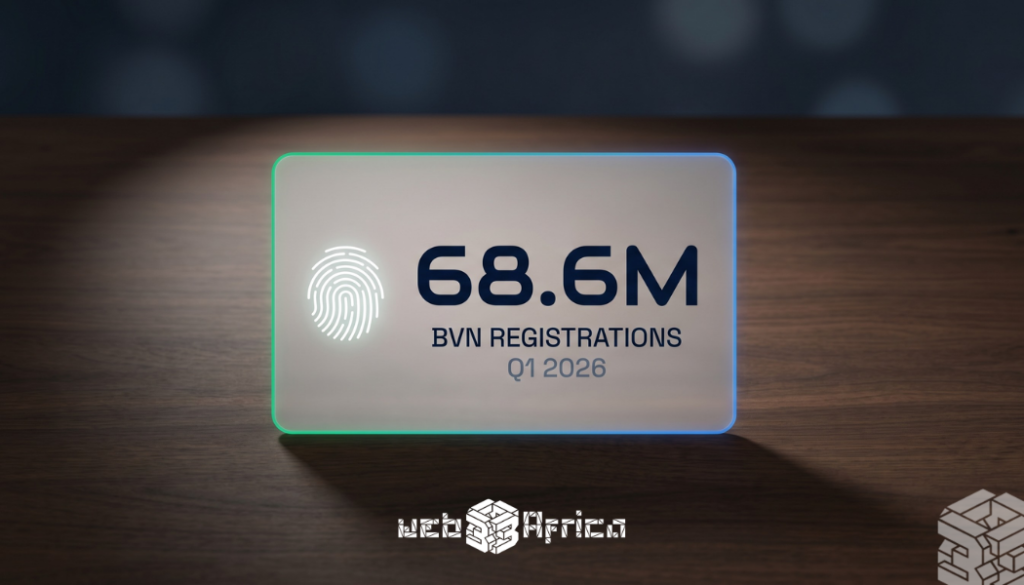
The Central Bank of Nigeria’s Bank Verification Number (BVN) registry reached 68.6 million in Q1 2026. NIN-SIM linkages surpassed 172 million, driven by a government mandate that barred unlinked SIM cards from making calls.
By volume, this figure represents one of the largest biometric enrollment efforts on the continent. By function, it remains fundamentally incomplete.
The challenge here is more about connection. NIMC manages the NIN database. The CBN oversees BVN.
The Nigerian Communications Commission (NCC) holds telecom subscriber data. The Federal Road Safety Corps (FRSC), the Independent National Electoral Commission (INEC), the Federal Inland Revenue Service (FIRS), the Corporate Affairs Commission (CAC), and the Nigeria Immigration Service (NIS) each maintain separate databases for driver’s licenses, voter records, tax identification, business registration, and passports.
RELATED: Nigeria’s AI Debate Has Moved Into Enforcement
Each was built by a different agency, on a different timeline, using different standards. None delivers a joined-up citizen experience.
A typical Nigerian adult navigates NIN, BVN, a voter’s card, a Tax Identification Number (TIN), a passport, health insurance registration, and university matriculation records at different life stages, submitting the same biometrics and demographic data each time.
Jadon John, a resident of Jimeta, Adamawa State, keeps a diary in which he records reference numbers for government-mandated registrations.
“It has been stressful from the beginning,” he told HumAngle in June 2026. “I first registered for my voter’s card, then later did BVN at the bank, and thereafter, I spent almost two days trying to get my NIN.”
On multiple occasions, service disruptions arose from identity mismatches; his bank account was once restricted because his NIN details did not exactly match the BVN record.
This design governance failure is rooted in institutional silos and the absence of a standardized identity verification infrastructure layer that allows systems to talk to one another.
The BVN model validates unified identity rails.
If fragmentation is Nigeria’s cautionary tale, the Bank Verification Number (BVN) is its proof of concept.
Launched by the CBN in 2014, the BVN introduced an 11-digit biometric identifier for bank customers. It enables Know Your Customer (KYC) compliance, fraud detection, and credit history tracking across financial institutions, becoming the trust layer for Nigeria’s fintech boom.
According to NIBSS,
“The underexplored impact is how BVN itself repriced risk. It turned from being just an identity to an input in the credit model, a single biometric anchor that lets any institution verify a customer, trace their history, and assess their risk in seconds.”
The CBN’s own Fintech Report 2025 identifies tiered KYC onboarding, built on BVN and NIN, as the most effective financial inclusion strategy, cited by 75% of fintech respondents.
RELATED: CBN Fintech Report Shows Massive 70% Growth In Nigeria Sector
Without a BVN, there is no Moniepoint lending product, no Paystack merchant onboarding at scale, and no open banking data sharing. Identity infrastructure made these services structurally possible.
The evidence is quantifiable. Digital payment fraud losses fell 51%, from ₦52.26 billion in 2024 to ₦25.85 billion in 2025, following stricter identity verification and stronger data standards, according to NIBSS. Total fraud cases dropped from over 123,000 in 2021 to approximately 67,515 in 2025.
Dr. Olajide Olasiyan-Ola framed the relationship plainly:
“The absence of strong identity systems continues to fuel fraud and weaken trust in digital services.”
The decline demonstrates the direct economic return on identity verification infrastructure.
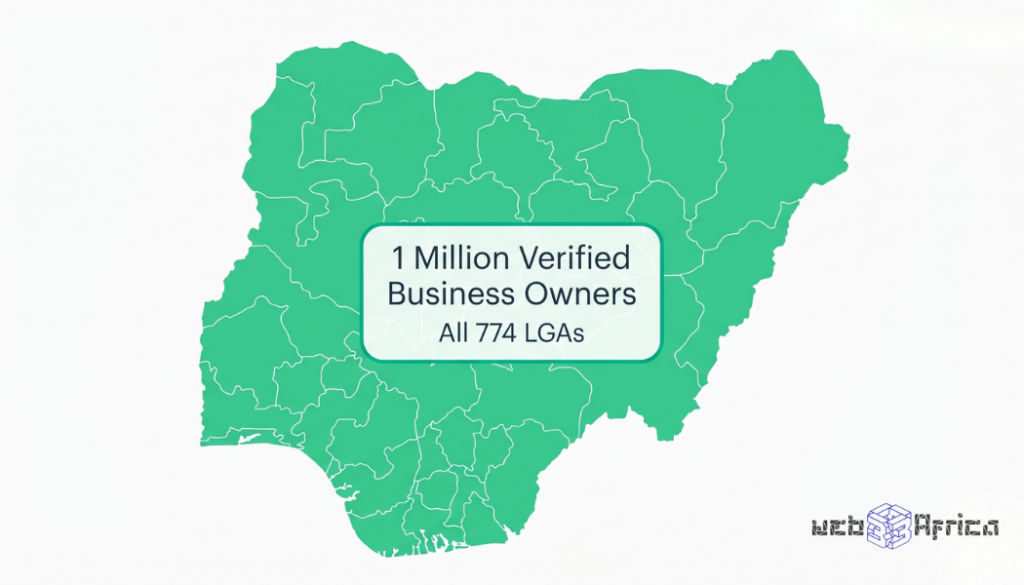
BVN also enabled the Presidential Conditional Grant Scheme (Nano Grants), ensuring accurate distribution to one million verified business owners across all 774 local government areas.
The system prevented individuals from receiving multiple grants by linking biometric identity (NIN) to financial identity (BVN). Since May 2024, 449,000 students have received ₦86.35 billion in loans via NIN verification, according to the NIMC Director-General.
These are state capacity use cases, made possible because one agency, the CBN, built a unified identity infrastructure rail and enforced its use.
Why AI Cannot Scale Without Verified, Linkable Identity
Artificial intelligence does not run on algorithms alone. It runs on data, specifically, data that is verified, linkable, and structured for integration across systems.
RELATED: Inside Nigeria’s Ambitious Plan to Regulate Artificial Intelligence by 2030
Kashifu Inuwa Abdullahi, Director-General of Nigeria’s National Information Technology Development Agency (NITDA), made this explicit at the AI Summit Nigeria in Abuja in 2025:
“Artificial intelligence does not run on algorithms alone. It runs on energy, compute capacity, data, talent, infrastructure, and most of all, trust.”
Trust, in operational terms, is digital identity. It is the mechanism by which an AI system can distinguish a unique individual across healthcare records, tax filings, bank transactions, and service requests without re-verifying identity at each point of contact.
Source: NIBSS · Values in ₦ billion
This is why digital public infrastructure (DPI), the integrated rails of identity, payments, and data exchange, has become the core policy framework for AI readiness across Africa. The African Union’s Digital Transformation Strategy classifies digital identity as a cross-cutting component of the digital ecosystem.
The AU has adopted a Digital ID Interoperability Framework (2022) to define common technical and governance standards across countries.
Without interoperable identity, AI models face three compounding problems:
- Data fragmentation: AI systems must integrate information from multiple sources. When identity records use different formats, standards, or verification methods, integration becomes manual, error-prone, and expensive.
- Poor data quality: Duplicate records, mismatched names, and unverified entries corrupt training datasets and inference pipelines. Fraud detection, credit scoring, and risk models depend on clean, deduplicated, historically consistent identity records.
- KYC and compliance friction: Fintech and AI-driven services require regulatory compliance. Automated KYC, anti-money laundering (AML) monitoring, and sanctions screening depend on verified identity. Without unified identity infrastructure, compliance becomes a bottleneck, not a checkbox.
John Edokpolo, Microsoft’s Head of Legal Affairs for Africa, pointed to the United Arab Emirates and Singapore as examples of countries that lead in AI adoption. They’ve accomplished this feat by “digitizing governance and creating centralized systems that enable data sharing and AI diffusion.”
The World Bank believes Nigeria’s digital identity project could set a regional benchmark.
“Nigeria can set the standard for developing systems that are based on open standards, are interoperable, and enable access to services.
By investing in digital identification and the accompanying analog systems, Nigeria can unlock its digital economy, creating a ripple effect across the continent,” the institution stated in 2025.
Regional Infrastructure Closes Africa’s Identity Gap
Sub-Saharan Africa is the only region where ID ownership is not near-universal. The World Bank’s Identification for Development (ID4D) initiative estimates that over 500 million people in Africa still lack a legal ID. Meeting the continent’s digital identity and civil registration needs will require an estimated US$6 billion, with nearly US$1 billion already mobilized across 30 countries, 23 of them in Africa.
This is not a documentation problem. It is an infrastructure problem with direct economic consequences. Participation in any modern economy begins with identity. Individuals must prove who they are to open accounts, receive payments, access healthcare, register for school, vote, or engage in digital marketplaces. Weak, fragmented, or exclusionary identity systems lock out entire populations.
RELATED: How blockchain privacy failures threaten enterprise payments in Africa
Regional bodies are responding by building identity infrastructure as shared cross-border rails. The West Africa Unique Identification for Regional Integration and Inclusion (WURI) program, supported by the World Bank and ECOWAS, aims to create basic ID systems that work across borders.
This enables people to access services regardless of their nationality, citizenship, or legal status. The ECOWAS National Biometric Identity Card (ENBIC), approved in 2015, serves as a residency permit, passport, and proof of identity for 320 million citizens across the West African zone.
These initiatives are not humanitarian projects. They are digital systems meant to lower costs for transactions, allow payments between countries under the African Continental Free Trade Area (AfCFTA), and provide the reliable data needed for AI services.
Yet progress is uneven. The Datasphere Initiative notes that fewer than half of African countries have any DPI system in place and that cross-border DPI interoperability remains weak even within regional economic communities. Africa has the lowest digital public infrastructure coverage in the world.
Rwanda And Ghana Prove Usability Matters
If Nigeria demonstrates the cost of fragmentation, Rwanda demonstrates the value of integration.
Rwanda’s IremboGov platform digitizes more than 100 public services, from permit applications to documentation processing and payments. Citizens access government services online, reducing wait times and administrative friction.
Since the establishment of its Smart Rwanda Master Plan (2015–2020), the Ministry of ICT has emphasized open databases, open standards, and open-source digital solutions.
RELATED: Advanced to CBDC Proof-of-Concept: Rwanda Tests Real-World Use Cases
Rwanda solved this problem by connecting the data it already had, using a citizen-facing usability layer built on identity infrastructure.
Ghana offers a different model. The Ghana Interbank Payment and Settlement Systems Limited (GhIPSS), established by the Bank of Ghana in 2007, created the foundational framework for all financial data exchange in the country.
GhIPSS has been operational for 18 years, providing the backbone for interoperability across banks, savings and loan companies, mobile network operators, and third-party payment providers. It aligns closely with digital public infrastructure principles through its strong interoperability base.
Nigeria announced its data exchange platform, the Nigeria Government Data Exchange (NGDX), in August 2025.
Described by NITDA Director-General Kashifu Inuwa Abdullahi as “essential digital infrastructure” comparable to nationwide fiber optic rollout, the NGDX is designed to end repeated data submissions across government agencies.
Citizens would no longer need to repeatedly hand over personal data each time they interact with a ministry, department, or agency. Instead, authorized agencies would verify and share records on the backend.
The NGDX is backed by the European Union under its Global Gateway project, with technical support from Finland, Estonia, Germany, and France. A Q1 2026 deployment target was announced.
Dr. Vincent Olatunji, National Commissioner of the Nigeria Data Protection Commission (NDPC), framed the challenge clearly at a September 2025 NITDA forum:
“Trust is critical to the adoption of DPI and NGDX. Without trust, even the most advanced infrastructure will fall short, as citizens will hesitate to engage, and the promise of an efficient, inclusive Nigeria will remain out of reach.”
Strong Governance Mitigates Exclusion Risks
Digital identity is not automatically pro-poor. Research by The Engine Room documents how digital ID can empower marginalized people while also increasing surveillance and exclusion. In Uganda, the digital ID system excluded approximately 23% of eligible citizens from health and social services by 2023, with refugees, rural women, and older people hit hardest.
RELATED: Six Pillars to Power Uganda’s Digital Financial Revolution
The European Centre for Development Policy Management (ECDPM) notes that digital ID systems in Africa were “mostly deployed before robust data-governance frameworks, data protection, and cybersecurity laws were in place.” “This governance gap heightens risks of exclusion, rights violations, and erosion of public trust, especially for vulnerable groups.
Nigeria’s Data Protection Act (2023) and the work of the NDPC provide a legal backbone. But laws must be enforced, systems must be designed for inclusion, and technical architecture must account for failure modes. Factors such as biometric mismatches, connectivity gaps, documentation barriers, and data errors that can lock citizens out of essential services.
Identity as Shared Infrastructure
Africa’s AI and fintech future depends on connected data and the governance, standards, and institutional coordination that make connection possible.
Digital identity is the base layer. It determines whether verification can be automated, whether services can be digitized, whether fraud can be contained, and whether trust can be systematically built into digital systems.
The BVN proved the model works. The NIN shows the scale is achievable. Rwanda and Ghana demonstrate that usability is not a luxury; it is the difference between identity infrastructure that sits in a database and infrastructure that transforms how economies and governments actually operate.
The question facing Nigeria and the continent is whether institutions can move from enrollment to integration, from data collection to data exchange, and from building infrastructure to making that infrastructure work for the people it is meant to serve.
Until those systems are interoperable, usable, and governed with care, Africa’s AI ambition will remain constrained by its most foundational layer.
Discover more from Web3Africa
Subscribe to get the latest posts sent to your email.
You must be logged in to post a comment.