











Table of Contents
While the government talks about AI strategy, the Nigeria Data Protection Commission is already shaping what AI systems can do through high-stakes enforcement and compliance mandates that are live today.
Heavy Enforcement Signals Market Reality
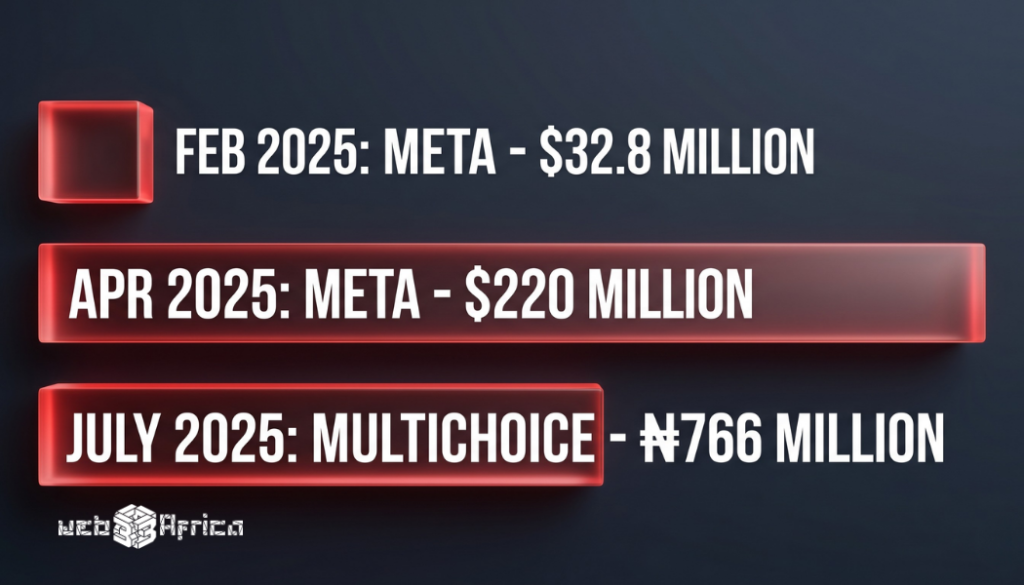
In July 2025, the Nigeria Data Protection Commission (NDPC) fined Multichoice Nigeria ₦766.2 million for cross-border data transfer violations and inadequate consent frameworks. Three months earlier, the Competition and Consumer Protection Tribunal upheld a separate $220 million penalty against Meta.
This is the most significant enforcement action for data privacy in the Global South. In February, the NDPC issued another $32.8 million fine against Meta for behavioral advertising without explicit user consent.
Now, these are the clearest signals available that Nigeria’s AI regulation framework is not waiting for dedicated AI legislation. It is being enforced right now through the Nigeria Data Protection Act (NDPA) 2023 and the General Application and Implementation Directive (GAID) that took effect on September 19, 2025.
RELATED: Nigeria’s AI Plan Still Faces a Basic Delivery Problem
In Nigeria today, AI regulation is being enforced primarily through data protection law. And the regulator has already shown it is willing to act.
How Data Protection Law Constrains AI Systems Today
Section 37 of the NDPA is explicit: data subjects cannot be subjected to decisions based solely on automated processing that produces legal or similarly significant effects without human intervention. That provision alone restructures the design of every consequential AI system operating in Nigeria.
The GAID goes further. It mandates Data Protection Impact Assessments (DPIAs) for any processing likely to result in high risk to individual rights. This also includes large-scale AI training and automated profiling.
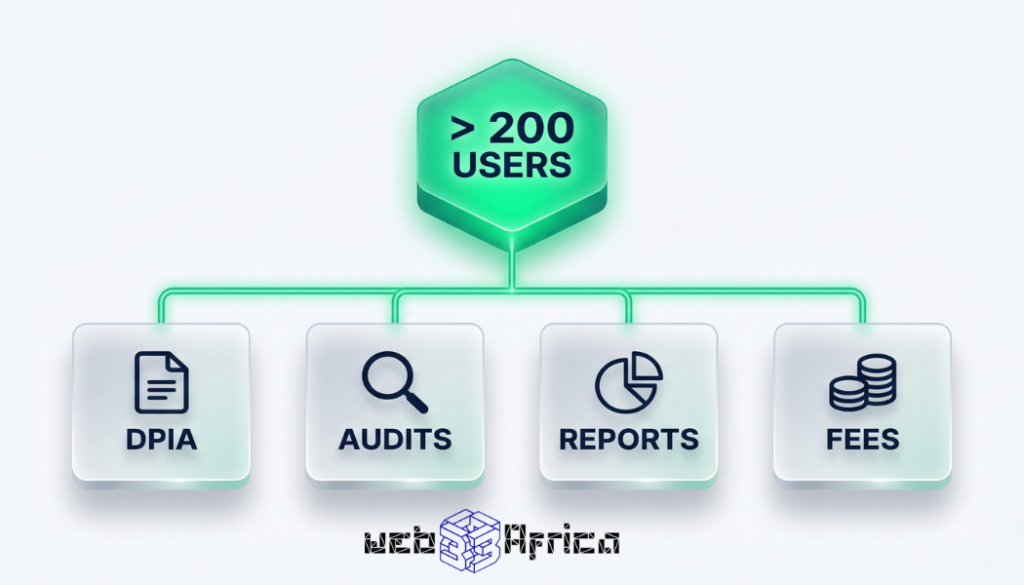
Organizations classified as Data Controllers or Processors of Major Importance, those processing data of more than 200 individuals in six months or operating in critical sectors, face annual compliance audits, semiannual internal privacy reports, and tiered registration fees.
“Data minimization requires a careful assessment of whether the scale and granularity of the data used for model training are proportionate to the intended outcomes,” according to a legal analysis published by Streamsowers & Köhn in January 2026.
“Purpose limitation requires that training datasets be clearly defined and documented in relation to specific and legitimate objectives, rather than collected indiscriminately for unspecified future use.”
This is an AI compliance framework that applies at every stage: data collection, storage, model training, deployment, breach response, and citizen redress.
RELATED: Nigeria Blockchain Leadership Crisis Exposes Deep Organizational Corruption Issues
Data Fragmentation Creates Compliance Roadblocks
There are several critical operational challenges. Eight major government agencies – NIMC, CBN, NCC, NIS, FIRS, FRSC, CAC, and INEC – hold Nigeria’s most valuable datasets, but they have little interoperability and remain siloed.
What the policy narrative often misses is that data integration is also a legal and compliance problem. Historical datasets collected for unrelated purposes cannot simply be repurposed for AI training without violating purpose limitation rules under the NDPA.
As Kayode Opeyemi, a former KPMG consultant and fintech risk expert, told Radarr Africa in August 2025:
“One of the big challenges for AI and KYC in Nigeria remains the country’s fragmented ID system. While tools like Smile ID now allow startups to verify identities using BVN and NIN in real-time, issues like data access and inconsistent records still slow down onboarding.”
That friction is not a bug in the regulatory system but a feature. This insistence reflects the NDPA’s view that data subjects’ rights, transparency, and lawful processing cannot be bypassed in the name of AI efficiency.
Identity Rails Drive AI Trust
The strongest counter-evidence to the “regulation blocks innovation” narrative comes from the Bank Verification Number (BVN) system. Built over more than a decade as a compliance and fraud-prevention tool, BVN has become the foundational identity layer for AI-powered fintech in Nigeria.
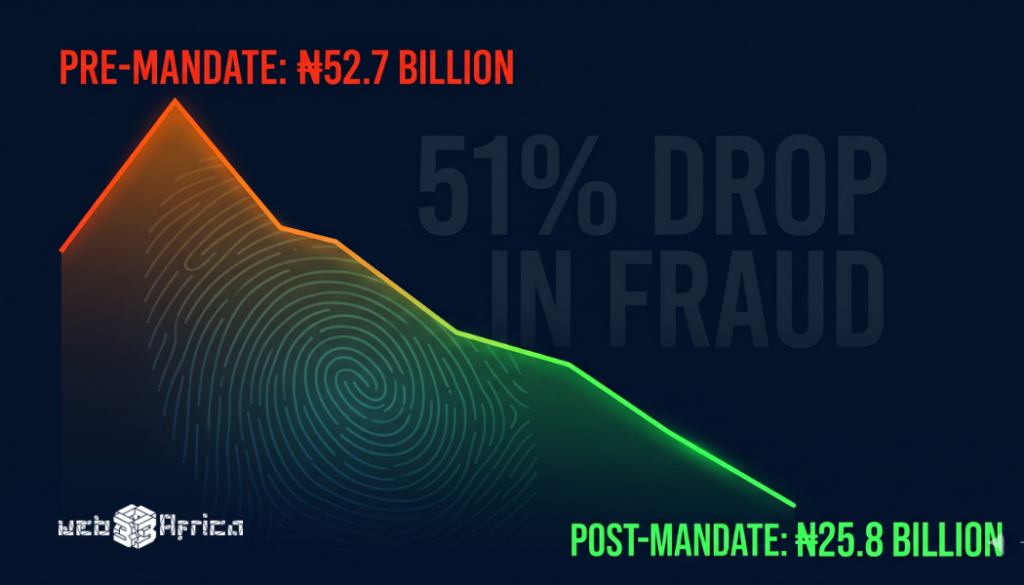
In December 2023, the Central Bank of Nigeria mandated that all account opening must commence by electronically retrieving BVN or NIN-related information from NIBSS databases.
The result: digital payment fraud losses fell 51% to ₦25.85 billion in 2025, directly attributed to stronger identity infrastructure and real-time fraud monitoring that compliant fintechs had already built.
This is how the compliance-first model works. Investing in secure, standard identity systems that use biometrics improves data and builds trust, which is essential for AI-powered credit scoring, KYC automation, and transaction monitoring.
Mandatory Steps For AI Builders
“If your product uses OpenAI, Google Gemini, or Anthropic’s APIs to make or materially influence consequential decisions about users, the compliance obligation follows your product, not the model provider.”
Users must be told at the point of interaction, not buried in terms of service, that they are engaging with an AI system, what data it uses, and how to contest outcomes. For credit decisions, hiring screens, or health recommendations, disclosure must be immediate, in plain language, with a clear path to human review.
As Dr. Vincent Olatunji, National Commissioner of the Nigeria Data Protection Commission, explained in July 2025:
“Usually, when we investigate and find a breach, if they are ready to comply with the law, what is the point of making noise? We only impose sanctions when an organization refuses to comply.
The enforcement posture is remediation-first, but the Commission has already demonstrated it will act.
The Gap Between Policy and Enforcement
Nigeria’s National Artificial Intelligence Strategy was published in September 2025. The National Digital Economy and E-Governance Bill, which would position NITDA as an AI super-regulator with mandatory risk classification and audit powers, remains pending as of June 2026.
RELATED: How The NFRC Will Unify Nigerian Fintech Regulation Rules.
But Nigeria’s AI compliance is not waiting for those instruments. It is being worked on right now through NDPC enforcement actions, GAID-required DPIAs, audits for cross-border data transfers, and the compliance processes that developers are putting in place to prevent it from becoming the next case study for enforcement.
“You cannot be ahead of innovation,” said Kashifu Inuwa Abdullahi, Director-General of NITDA, in January 2026.
“But regulation is not just about giving commands. It’s about influencing market, economic, and societal behaviour so people can build AI for good.”
The builders who understand that Nigeria’s AI regulation framework is already operational, through data protection enforcement, not aspirational strategy documents, will be the ones best positioned when formal AI-specific legislation arrives.
Today, data protection compliance is shaping Nigeria’s AI future. The infrastructure is live. The penalties are real. The obligations are enforceable. The question is whether founders will treat compliance as the foundation of their product design or as an afterthought that risks becoming a ₦766 million lesson.
Discover more from Web3Africa
Subscribe to get the latest posts sent to your email.
You must be logged in to post a comment.