









TL;DR,
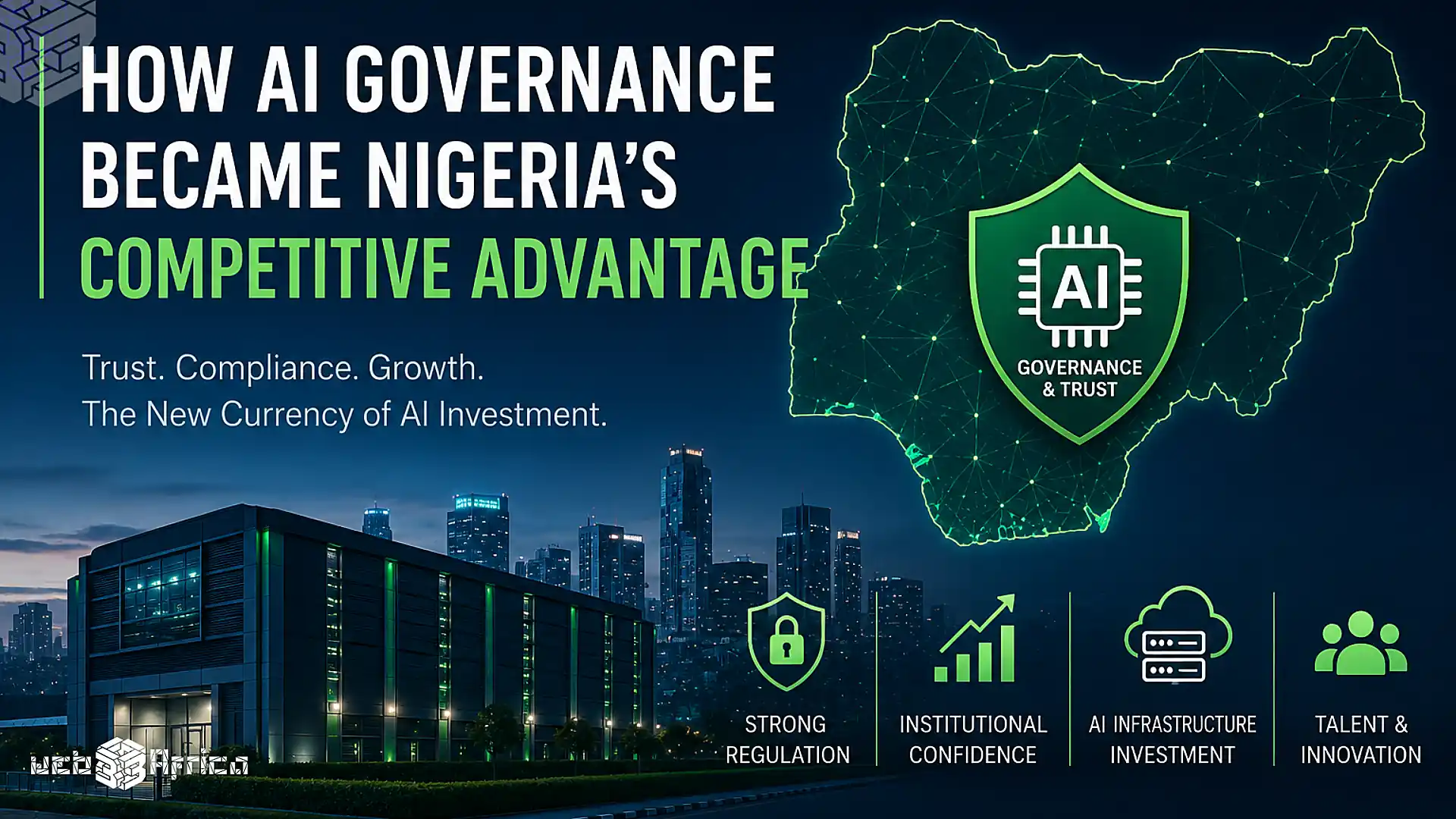
- As AI is projected to boost Africa’s economy by up to $4.8 billion by 2030, the Nigeria AI bill aims to regulate this boom through a new National Artificial Intelligence Council (NAIC).
- The proposed bill requires AI developers, importers, and commercial operators in Nigeria to register with and get approval from a new national council.
- Critics fear the Nigeria AI bill’s focus on control and compliance could create bureaucratic hurdles that stifle startups and be misused to block foreign platforms.
AI is the next new frontier of technology alongside blockchain, and African regulators intend not to make the same mistake as when they delayed regulating digital assets. Nigeria, Africa’s leading blockchain hub, has moved up its schedule, accounting for the AI boom.
The proposed Nigeria AI bill, officially titled “A Bill for an Act to Ensure Proper Control of Usage of Artificial Intelligence (AI) Technology in Nigeria and for Related Matters, 2023,” received its first reading at the House of Representatives on November 22, 2023.
The core aim: regulate and use AI to boost Nigeria’s economic state. According to PWC, AI will contribute $15.7 trillion to global GDP by 2030. From Africa’s standpoint, AI is expected to grow between $2.9 and $4.8 billion by 2030, and Nigeria is ready with a regulatory framework at hand.
What Is in Nigeria’s AI Control and Regulation Bill: Core Provisions
AI has broken boundaries and is used almost everywhere. The Nigeria AI bill is an attempt at establishing regulatory barriers that contain this massive growth, preventing its “adverse use” already witnessed throughout the world. The bill cited the National Artificial Intelligence Council as its lead regulatory authority for AI developments and deployments.
According to the documents, the NAIC would control, supervise, and approve all AI-related activities in the country. Its functions would span from issuing guidelines and setting technical standards to conducting audits and enforcing AI compliance through sanctions or suspensions.
Additionally, its main focus is to promote the safe and ethical use of AI while aligning Nigeria’s technological advancements with human rights, public safety, and national security priorities. Here’s a brief breakdown of what’s in store for AI.
Registration and licensing: who must register?
The Nigeria AI bill emphasizes mandatory registration and licensing requirements. The draft requires any person or organization that develops, imports, distributes, or uses an AI system in Nigeria to register with the National Artificial Intelligence Council. This also includes obtaining official approval before deploying or operating the system.
Ordinary users of AI tools like ChatGPT or Claude are exempted from this clause. Its main focus is on developers, distributors, and AI-based startups that integrate AI into commercial services.
FOLLOW UP: How The NFRC Will Unify Nigerian Fintech Regulation Rules.
This clause also has a unique way of putting AI technologies into groups based on their level of risk, from low to high. Healthcare, finance, public services, and national security are all examples of high-risk systems.
[inline_related_posts title=”CHECK OUT” title_align=”left” style=”grid” number=”4″ align=”none” ids=”” by=”tags” orderby=”rand” order=”DESC” hide_thumb=”no” thumb_right=”no” views=”no” date=”no” grid_columns=”2″ post_type=”” tax=””]
Such systems will have to follow stricter rules that require them to do mandatory assessments and tell people where they get their data and how they design their algorithms. To keep their approvals, developers would have to do impact assessments, reveal where their data comes from and how their algorithms work, and have compliance reviews every so often.

Enforcement, redress, and import controls
The Nigeria AI bill empowers the NAIC to investigate complaints, withdraw approvals, and take non‑compliant AI systems offline. Its scope also accounts for foreign AI systems deployed in Nigeria requiring mandatory registration.
The legislation puts different limits on platforms that don’t meet local standards or put the public’s interest at risk. People who are affected can ask the National Artificial Intelligence Council to look into the matter and, if necessary, give them money or take other steps to make things right.
What AI compliance will require from builders and deployers
The unique bill aligns with Nigeria’s Data Protection Act (2023). Its responsibilities extend beyond a one-time filing.
Developers and affected institutes must maintain comprehensive records of design processes, data sources, and operational use for inspection by the National Artificial Intelligence Council.
Any and all affected parties must maintain user notice and explainability. If employing an AI that makes consequential decisions like credit, hiring, and law enforcement, users must be informed and work hand in hand with the AI system.
In addition to the NDPA 2023, it is necessary to keep AI compliant, which means that there must be a system of lawfulness, fairness, transparency, and purpose limitation as a minimum standard. This connects the new AI oversight framework to groups that already exist, such as the Nigeria Data Protection Commission (NDPC) and the National Information Technology Development Agency (NITDA).
The Nigerian government also signed the 2023 Bletchley Declaration on AI and the NDPA GAID directive (May 2024), which set rules for how AI can be used to process data. These measures create a complex regulatory framework that fosters the evolution of AI compliance.
Foreign providers and imports: what to expect
One of the most important parts of the Nigeria AI bill for global companies is how AI systems will be controlled at the border. Before using any AI that was made outside of the country but is being used in the country, it must be registered and approved.
[inline_related_posts title=”Follow Up” title_align=”left” style=”grid” number=”2″ align=”none” ids=”” by=”categories” orderby=”rand” order=”DESC” hide_thumb=”no” thumb_right=”no” views=”no” date=”no” grid_columns=”1″ post_type=”” tax=””]
The National Artificial Intelligence Council can limit or stop platforms that don’t meet standards or raise security concerns, and systems that don’t comply can be blocked. In real life, this means stricter background checks, clearer paperwork, and more proactive communication to meet AI compliance standards.
Ethics by design: transparency and accountability
The Nigeria AI bill also accounts for the ethical principle often associated with the heavy use and integration of AI. The legislation mandates that all AI systems must be safe, fair, and non-discriminatory, and operators must keep audit trails to make systems traceable and explainable.
FOLLOW UP: Nigeria’s 2025 Crypto Tax Guide: What Traders, Developers and VASPs Must Know Before Jan 2026
This legislation reduces the AI commonly termed “black-box” effect by ensuring users understand when they’re interacting with AI, what decisions the machine makes, and an explanation or a process to contest AI decisions. The bill also proposes an AI Ethics Expert Group (AIEEG) that would bring together technologists, ethicists, civil society, and affected communities.
Risks, trade-offs, and implementation challenges
Regulation and innovation are a murky mixture, with most strong rules introducing friction between regulators, developers, and stakeholders.
For instance, with the steady advancement of technology, the definition of AI systems is broad, sweeping into automation tools. Does it classify all software, hardware, or even a hybrid system that utilizes AI for automation? Within the legal space, court officials often favor the specific and punish the ambiguous.
The bureaucratic load of the bill often tends to favor well-established organizations over startups. Most often lack the resources and personnel to navigate the complex approval under tight AI regulation timelines.
Nigeria’s AI bill is not short of complexity, especially with the overlapping jurisdictions (NITDA, NDPC, NCC, or CBN). While it serves as a link between Nigeria’s regulatory bodies, it ultimately weaves a complex web of regulatory duplication and conflict.
This very web could provide the necessary cover-up to restrict AI systems deemed “contrary to national interest.” Self-interest is the nature of most African governments; hence, the powers granted to suspend AI systems might be misused to limit access to foreign platforms or censor online tools under broad security justifications.
While Mauritius, Egypt, and Kenya focus on research, capacity building, and supportive ecosystems to encourage innovation, Nigeria’s bill is mostly about control and AI compliance. Kenya’s National AI Strategy (2025–2030) has a $1.1 billion budget set aside just for AI, which is the biggest in Africa.
Senegal, on the other hand, set aside $46 million just for AI. Nigeria has a bigger economy, but it doesn’t have the same level of budget commitment. Instead, it gets $3.5 million in seed money from UNDP, UNESCO, Meta, Google, and Microsoft.
Discover more from Web3Africa
Subscribe to get the latest posts sent to your email.

You must be logged in to post a comment.