








In Brief
Flutterwave stablecoin balances (USDC/USDT) are now officially live as of January 2026, marking a shift from wallet connectivity to institutional settlement.
The infrastructure collapses the traditional T+3 settlement cycle into “T+Instant” by utilizing the Polygon blockchain and Turnkey’s non-custodial wallet tech.
Merchants can now hold stablecoin balances alongside fiat without needing technical blockchain expertise or separate external wallets.
Compliance is anchored by Flutterwave’s 68 global licenses and the US GENIUS Act, ensuring institutional-grade safety for all digital asset movements.
At Davos 2026, Flutterwave CEO Olugbenga “GB” Agboola framed the company’s next chapter as a product-and-infrastructure play: not redesigning checkout screens, but rebuilding what happens after a payment is initiated. His message was that Africa is moving from the first fintech era, connecting fragmented wallets, banks, and cards, to a second era focused on “backing the rails,” i.e., strengthening the settlement layer that actually moves value.
In that framing, Flutterwave stablecoin rails are meant to deliver faster cross-border settlement and potentially lower all-in costs, without forcing businesses or end users to “become crypto people.”
What the CEO Says: Building Stablecoin Infrastructure on Compliant Fiat Rails
Agboola’s Davos presentation centered on a deceptively simple insight. In traditional banking, “money doesn’t actually move; instruction moves.” A SWIFT wire sends a message through correspondent banks, each adding delay, fees, and reconciliation steps, typically settling in T+2 to T+3 days. Flutterwave stablecoin infrastructure collapses that timeline.
“If you pay with stablecoin, with USDC, for example, … [your] supplier gets the payment in real time,” Agboola explained in a December 2025 Bloomberg interview. That money movement can happen with stablecoin in seconds, unlike fiat, which takes you two or three days.”
The customer experience doesn’t change. A Nigerian exporter paying a South African supplier still uses the same Flutterwave dashboard. But under the hood, the settlement runs on Polygon’s blockchain using Circle’s regulated USDC, backed 1:1 by dollar reserves and compliant with the US GENIUS Act passed in July 2025.
“When it comes to stablecoins, nothing is changing in our customer experience. What is changing is under the hood. We’re making it quicker and faster to move that money from the sender to the business via stablecoin rails, via USDC, which is regulated, backed by the dollar, and just makes it quicker and faster.”
With Flutterwave’s existing licenses, 34 US Money Transmitter Licenses, and approvals across 34 African countries, accompanied by its blockchain settlement services, the company offers the speed of crypto with the compliance guardrails institutions require.
What Flutterwave says it’s building: stablecoins on top of compliant fiat rails
Flutterwave’s infrastructure supports a comprehensive range of payment acceptance and payout methods across Africa, making it easier for businesses to collect and disburse funds locally and internationally:
RELATED: Flutterwave Slashes Staff in Key African Markets Amid Restructuring Drive
Payment Acceptance Rails
Card payments (Visa, Mastercard, Verve)
Bank transfers and account-to-account payments (powered by the January 2026 Mono acquisition)
USSD (Unstructured Supplementary Service Data) for feature-phone users
QR codes for in-person merchant checkout
Mobile money wallets
M-Pesa in Kenya and other localized wallet methods
Business Tools
Payment links for merchants to share via WhatsApp, email, or SMS—no website needed
Invoicing systems for B2B billing with automated reconciliation
Merchant dashboard now supporting stablecoin balances (USDC and USDT) without requiring separate crypto wallets
Cross-border payouts to suppliers, contractors, and employees
Stablecoin Infrastructure (Launched January 2026)
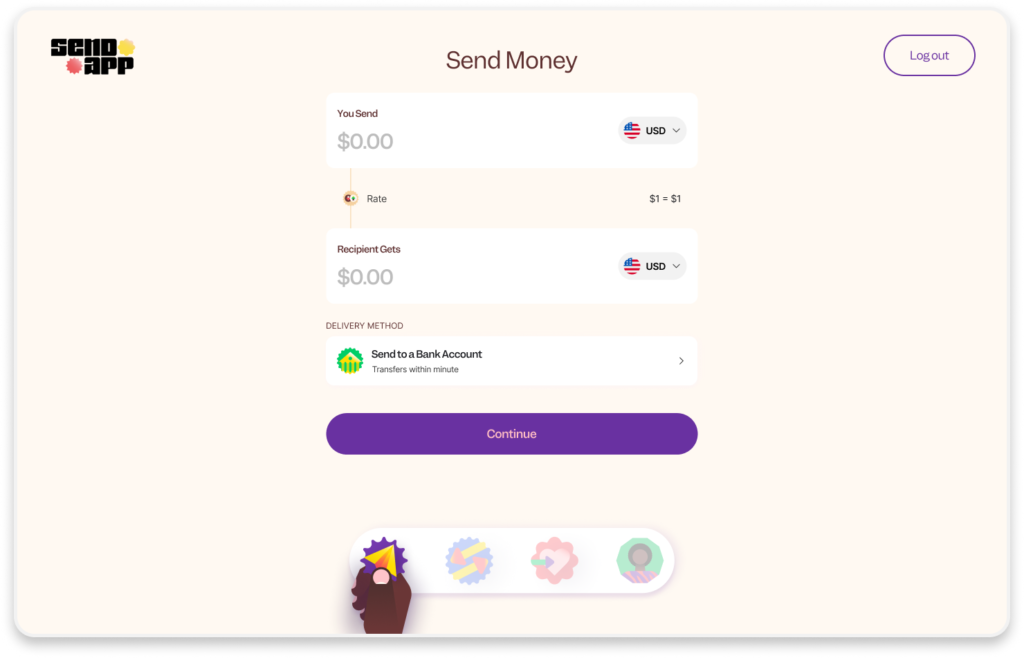
Powered by partnerships with Turnkey (wallet security), Polygon (settlement layer), Circle (USDC issuer), and Nuvion (fiat-to-stablecoin bridging), the Flutterwave Send App and business platform now enable:
Instant stablecoin transfers between Flutterwave users (free for internal P2P)
On-ramp/off-ramp conversions between fiat (NGN, USD) and stablecoins at 1.5% per side
Cross-border settlements on Polygon PoS with sub-$0.01 network fees plus a $1.50 transfer fee
Nkem Abuah, Flutterwave’s Lead for Remittances & Stablecoin Partnerships emphasized:
“By enabling Flutterwave stablecoin balances powered by Turnkey, we are ensuring that multinationals, African enterprises, and individuals using Flutterwave will have access to low-cost, faster, and always-on cross-border payments with stablecoins.”
How Flutterwave is riding Africa’s stablecoin boom
Flutterwave stablecoin infrastructure aligns with explosive regional adoption:
Sub-Saharan Africa received over $205 billion in on-chain value from July 2024 to June 2025, up 52% year-over-year.
Stablecoins accounted for 43% of Sub-Saharan Africa’s crypto transaction volume in 2024.
The IMF found that Africa and the Middle East stablecoin flows reached 6.7% of GDP in 2024, among the highest globally relative to economic size.
Nigeria alone processed nearly $92 billion in annual crypto volume by mid-2025, with USDT and USDC functioning as synthetic dollar accounts amid naira devaluation.
Kenya sees an estimated $500 million monthly in stablecoin transactions, with firms using USDT to pay foreign suppliers during USD shortages.
Flutterwave confirmed they launched with over 1 million stablecoin users on Day One, processing approximately 400 million transactions annually across all payment types.
Marc Boiron, CEO of Polygon Labs, noted:
“Stablecoins on Polygon can advance settlement times from days to seconds and high fees into pennies.”
The non-crypto-native use cases Flutterwave is targeting
Flutterwave explicitly targets stablecoin B2B payments for non-crypto-native enterprises facing structural inefficiencies:
1. B2B Cross-Border Settlement and Supplier Payments
A Lagos importer ordering inventory from Shanghai can pay in USDC. The supplier receives funds in minutes, not the 3–5 business days typical of bank wires. This accelerates inventory turnover and reduces the need to pre-fund large amounts in correspondent accounts.
Africa’s Fintech Trifecta: Circle, Flutterwave & Yellow Card Join Forces
2. Treasury and Liquidity Management
African corporates can hold USDC balances as a hedge against local currency volatility (Nigeria’s naira, for instance, devalued sharply recently). Treasury teams rotate capital faster without waiting for settlement windows, improving cash flow forecasts.
3. Remittances and Cross-Border Family Support
The World Bank benchmarks remittance costs to Sub-Saharan Africa at 7.9% on average. Flutterwave significantly reduces these costs by using USDC for settlements; the company’s Help Center lists a 1.5% on-ramp fee, a 1.5% off-ramp fee, and a $1.50 transfer fee, which is far below the pricing of traditional wire and money transfer operators.
The issue was identified by freelancer Kelvin Etoma:
“PayPal is supported, but you can’t receive payments as a Nigerian.”
Flutterwave’s stablecoin rails solve this problem by bypassing restrictive corridors.
4. Merchant and Platform Payouts
Gig-economy platforms, content creators, and remote workers can receive near-instant settlement. The Flutterwave Send App integrates stablecoin balances, enabling Nigerian software engineers working for global firms to receive salaries in USDC while holding value without forced conversion to depreciating local currency.
CBN Fintech Report Shows Massive 70% Growth In Nigeria Sector
The “Invisible” Settlement Stack
Agboola described the mechanics: users interact with familiar fiat interfaces, while settlement happens on Polygon’s proof-of-stake blockchain. Turnkey provides embedded, non-custodial wallets; users see a USDC balance but don’t manage seed phrases.
Mono’s open banking API verifies identity and bank account ownership for KYC/AML compliance, satisfying FATF Recommendation 16 updates on payment transparency (June 2025).
Nuvion handles fiat-stablecoin bridging. A typical flow:
The business funds the Flutterwave account through a bank transfer, which is powered by Mono.
Funds convert to USDC at 1.5% (on-ramp)
USDC moves cross-border on Polygon (sub-$0.01 chain fee + $1.50 transfer)
The recipient receives USDC or off-ramps to local fiat at 1.5%.
Settlement finalizes in seconds, what Agboola calls “T+Instant”—versus T+2 or T+3 for SWIFT.
The Cost Case: Why Efficiency Matters for Profitability
Agboola stated:
“If you’re doing B2B payments, you can pay as low as 0.5%, for example, compared to before through maybe a different rail, which could be as high as 1.5%.”
While Flutterwave’s public fee tables show 1.5% on/off-ramps, the savings come from eliminating correspondent bank fees ($20–$70 per wire), intermediary hops ($10–$50 each), and hidden FX spreads (3–8%).
Flutterwave explicitly linked this efficiency to its 2026 profitability target, framing stablecoin infrastructure as a margin enhancer, not just a feature.
Bryce Ferguson, CEO of Turnkey, reinforced the value proposition:
“Flutterwave has shown the transformative potential of stablecoins in helping people start and grow businesses globally. We share Flutterwave’s belief that stablecoins offer an incredibly efficient way to accelerate payments and put more money directly into the hands of business owners rather than intermediaries.”
What this means for businesses evaluating Flutterwave’s stablecoin rails
By vertically integrating data (Mono), security (Turnkey), settlement (Polygon), and liquidity (Circle/Nuvion), Flutterwave built a defensible moat. Its 34 African licenses and 34 US MTLs position it as the most compliant bridge between fiat and blockchain rails on the continent. Analysts forecast 20–30% volume growth in stablecoin B2B payments through Flutterwave in the next year.
RELATED: Turning Prepaid Airtime Into USDC: What Fonbnk Built on Avalanche
Agboola’s five-year vision:
“Stablecoins will become so entrenched in the entire global financial infrastructure. We will see stablecoins that are even backed by non-US currencies over time… a lot of companies are issuing their own stablecoins… helping them become more efficient, save more money, and also create more efficient treasury plays.”
The apps won’t change; Send, Barter, and merchant dashboards remain familiar. But the rails underneath will quietly move billions faster, cheaper, and 24/7, powering the next era of African trade and digital commerce.
Discover more from Web3Africa
Subscribe to get the latest posts sent to your email.
You must be logged in to post a comment.