











In Brief
The Ghana VASP Bill has officially legalized Crypto trade, exchange, and holding under Act 1154, though it remains non-legal tender.
The Bank of Ghana (BoG) manages payment-related assets like stablecoins, while the SEC oversees investment-linked exchanges and ETFs.
The VARO licensing portal launches in Q1 2026, with full FATF Travel Rule enforcement scheduled for Q3 2026.
A unified 20% effective tax rate (VAT + NHIL + GETFund) applies to digital service supplies from non-resident platforms.
2025 has become an era where regulation meets crypto adoption at the front view. The year kicked off with Nigeria’s SEC, South Africa’s record registration number, and Kenya’s VASP Bill. Now joining the ranks is the Ghana VASP Bill passed in December 2025, formally known as the Virtual Asset Service Providers Act, 2025 (Act 1154).
On December 30, 2025, President John Dramani Mahama signed it into law, making crypto legal in Ghana and establishing the first comprehensive regulatory framework for digital assets in West Africa.
This guide unpacks what the new law does, who it affects, what traders and service providers must do to comply, and the unresolved questions that will shape the sector through 2026.
Ghana VASP Bill: What Act 1154 Changes in 2026 and the New Rules for Legal Crypto Trading
Before 2025, the Bank of Ghana (BoG) issued periodic warnings, most notably in 2018 and 2022, that virtual assets were not legal tender and fell outside the Payment Systems Act (Act 987). The Securities and Exchange Commission (SEC) echoed similar cautions in 2019.
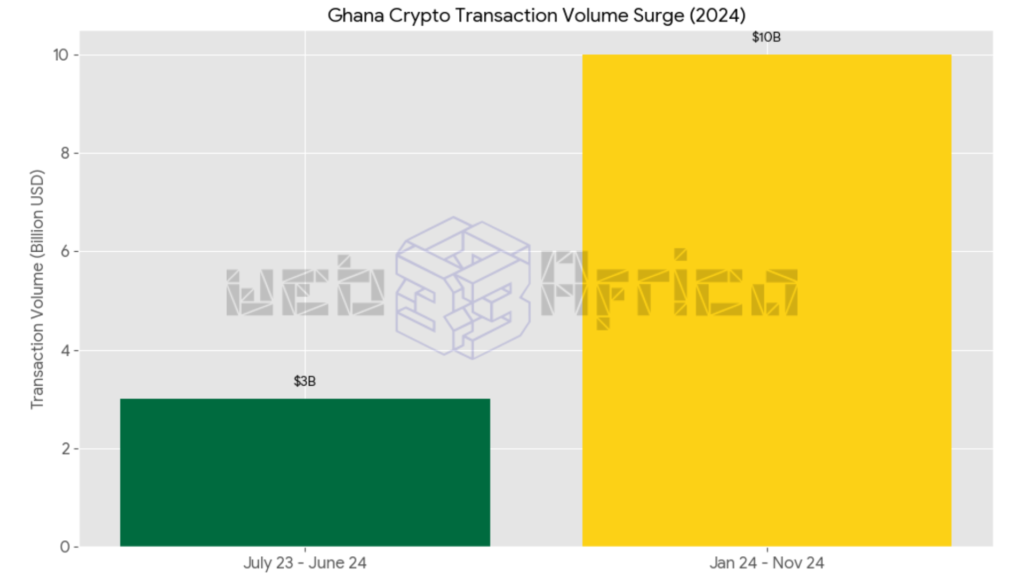
As per the norm, it did little to hinder its adoption rate. By mid-2024, approximately 3 million Ghanaians, roughly 17% of the adult population, had engaged in cryptocurrency transactions. Transaction volumes reached an estimated $3 billion between July 2023 and June 2024 and GHS 113 billion ($10 billion) in the first eleven months of 2024 alone.
The disconnect between official policy and market reality became untenable. Unregulated platforms exposed users to fraud, money laundering risks proliferated, and billions in economic activity remained outside the national tax net.
RELATED: South Africa’s Crypto Payments Surge: From Speculation to Daily Spending.
Cedi volatility, a 25% decline followed by a 48% gain, drove many Ghanaians to use stablecoins for savings and cross-border remittances. Recognizing this, the BoG, SEC, and Financial Intelligence Centre (FIC) collaborated throughout 2024 and 2025 to draft the Ghana VASP Bill.
On December 19, 2025, at the Bank of Ghana’s annual thanksgiving service, Governor Dr. Johnson Pandit Asiama announced Parliament’s passage of the Bill.
His message was clear:
“Effectively, virtual asset trading is now legal, and no one is going to be arrested for doing crypto, but we now have the framework to manage the risks involved.”
What the Ghana VASP Bill Actually Does
Act 1154 provides Ghana’s first statutory definition of virtual assets:
Digital representations of value that can be created, stored, and transferred electronically, typically using distributed ledger technology.
The law covers cryptocurrencies, tokens, stablecoins, and other blockchain-based instruments but does not grant them legal tender status. The Ghana cedi remains the country’s sole official currency.
Noteworthy Takes of Act 1154
Mandatory Licensing: All Virtual Asset Service Providers (VASPs), including exchanges, custodial wallet services, stablecoin issuers, trading platforms, and tokenization services, must obtain a license or registration from either the BoG or SEC, depending on the activity.
Dual-Regulator Model: The Bank of Ghana oversees payment-related activities (stablecoin issuance, wallets, lending), while the SEC regulates securities-linked services (exchanges, trading platforms, investment advisors, tokenization, ETFs). This institutional division mirrors the functional split between monetary policy and capital markets.
Virtual Assets Regulatory Office (VARO): The BoG established VARO as the specialized licensing and supervision unit responsible for ensuring compliance with the Anti-Money Laundering Act, 2020 (Act 1044), data protection standards, and periodic reporting obligations.
Individual Traders Are Not Licensed: Retail trading is fully legal and does not require a license; only service providers must obtain authorization.
What This Means for Ghana’s Crypto Community
The Ghana VASP Bill brings three immediate changes:
Legal Clarity and the “No-Arrest” Policy: You can now trade, hold, and use digital assets without fear of legal repercussions. Governor Asiama’s announcement explicitly protected legitimate trading as a recognized economic activity.
Access to Regulated Platforms: As licensing rolls out in 2026, you’ll be able to distinguish between compliant, supervised platforms and unregulated operators. Licensed VASPs will be required to maintain capital reserves, segregate customer assets, and adhere to cybersecurity standards.
Tax Obligations Are Coming: While the Ghana VASP Bill outlines tax obligations for service providers, tax liabilities for crypto traders in Ghana under the new VASP law remain partially undefined. However, specific guidance on capital gains tax rates and corporate tax treatment had not been published as of the time of writing. Traders should monitor updates from the Ghana Revenue Authority (GRA) and Ministry of Finance.
What This Means for Local and Foreign Exchanges in Ghana
In 2026, local and foreign crypto exchanges, wallet services, stablecoin issuers, and trading platforms in Ghana will need to focus on the Bank of Ghana crypto licensing process.
Kenya VASP Bill 2025 Passes Third Reading: One Signature Away From Becoming Law
According to the BoG, below is the expected timeline of the new process:
Q1 2026: VARO application portal launches; publication of fees and charges (per BoG website).
Q2 2026: Detailed directives on capital requirements, reserve standards for stablecoins, and cybersecurity protocols expected.
Q3 2026: Enforcement of the FATF “Travel Rule” (Recommendation 16) for all cross-border virtual asset transfers. Section 33 of Act 1154 requires VASPs to collect and maintain originator and beneficiary information and provide transaction data to regulators within 48 hours upon request.
Q4 2026: First round of supervisory inspections focusing on AML/CFT compliance and consumer protection.
Bank of Ghana VASP License Requirements (Preliminary):
Licenses are generally valid for 12 months and renewable.
Failure to comply can result in fines and imprisonment of up to 10 years.
Mandatory registration was conducted in July 2025 (over 100 entities registered by the August 15 deadline), but this “does not constitute a license.”
Travel Rule compliance: VASPs must implement systems to transmit required originator and beneficiary information immediately and securely during transfers, aligning with global FATF standards.
The Invisible Taxman: How FIRS’s New System Targets Every Digital Naira (Including Crypto)
AML/CFT and the Travel Rule: What Compliance Will Look Like in Practice
As mentioned, Act 1044 already treats VASPs as “accountable institutions” under Ghana’s AML regime, supervised through the Financial Intelligence Centre (FIC). Act 1154 builds toward FATF-aligned controls, including the “Travel Rule” (FATF Recommendation 16).
According to summaries of Act 1154, Section 33 requires VASPs to collect and maintain originator/beneficiary information and provide transaction information to regulators within 48 hours upon request. In practice, this typically forces exchanges and wallet providers to invest early in:
identity and onboarding controls (KYC/KYB)
sanctions screening tooling
secure data retention and audit trails
cross-platform messaging standards for Travel Rule data
For smaller startups, these costs and privacy considerations are a real trade-off.
Tax Liabilities and the 20% VAT Reality
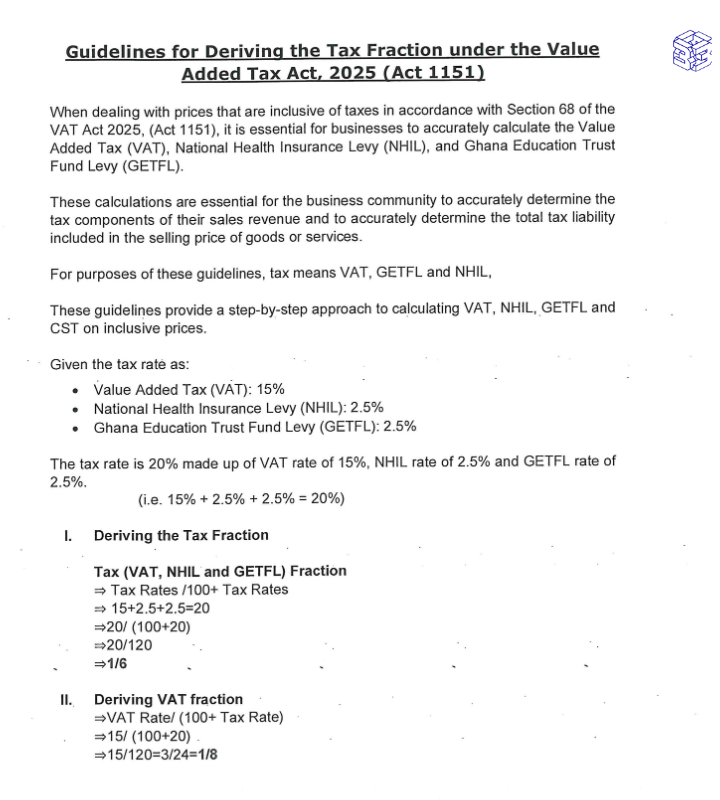
The tax liabilities for crypto traders in Ghana under the new VASP law will shape the sector’s competitiveness. The VAT Act, 2025 (Act 1151), applies explicitly to “the supply of digital service by a non-resident person.”
This means that international exchanges operating in Ghana are required to register for VAT if their annual taxable supplies exceed the threshold of $68,260 (GHS 750,000).
RELATED: Nigeria Crypto Tax 2026 Guide: Calculate and Report Your Gains
Effective Tax Rate Calculation:
Total Tax Payable = (15% VAT + 2.5% NHIL + 2.5% GETFund Levy) × Value of Supply = 20% × Value
This unified structure replaced previous cascading levies and abolished the 1% COVID-19 Health Recovery Levy, simplifying compliance. However, the 20% effective rate is high and could push some activity back to informal peer-to-peer markets if capital gains and corporate tax guidance are not carefully calibrated.
As of February 2026, the BoG’s “Regulations” page showed “Coming soon” for specific tax guidance. Businesses and traders are advised to engage tax advisors and watch for GRA updates.
Risks and Open Questions for 2026
Similar to most crypto laws, the Ghana VASP Bill still has some challenges, and uncertainties remain:
Implementation Delays
The phased rollout risks extending the grey zone for operators if subsidiary rules, particularly on fees, capital standards, and custody requirements, are delayed beyond Q2 2026.
Privacy vs. Compliance Costs
The FATF Travel Rule imposes significant compliance and technical costs, especially for smaller startups and platforms transacting with international counterparties in jurisdictions without consistent Travel Rule adoption. This could create competitive disadvantages relative to informal markets or offshore platforms.
Regional Competition
Ghana’s framework must compete with Nigeria (which received over $92.1 billion in crypto value from July 2024 to June 2025 and ranks 2nd globally in adoption) and South Africa (which had already approved 300 VASP licenses by December 2025). Kenya passed its VASP Bill approximately three months before Ghana. If Ghana’s licensing process proves slower or costlier, capital and talent may flow to neighboring hubs.
Banking Integration Uncertainty
While the law permits banks to serve licensed VASPs, many traditional financial institutions remain cautious. Banks’ willingness to integrate will determine the development of reliable crypto-fiat on-ramps, but this is not a guarantee.
What the Ghana VASP Bill really changes
The Ghana VASP Bill marks the end of prohibition and the beginning of regulated integration. The dual BoG-SEC framework, VARO, and the “no-arrest” policy are defining factors for Ghana. Governor Asiama’s emphasis on “understand before you undertake,” reflected in the launch of the National Virtual Asset Literacy Initiative (NaVALI) on January 23, 2026, signals a focus on sustainable, informed adoption.
The ultimate success of this framework will depend on the regulators’ ability to balance rigorous oversight with the flexibility required for innovation, the timely publication of subsidiary rules, and the sector’s capacity to absorb compliance costs without retreating to informal markets. For traders, VASPs, and policymakers alike, 2026 will be the year Ghana’s digital asset experiment either validates its promise or reveals the limits of sovereign regulation in a borderless economy.
Discover more from Web3Africa
Subscribe to get the latest posts sent to your email.

You must be logged in to post a comment.