







In Brief
Stablecoin payments now serve as the primary backend settlement tool for Onafriq’s network of 1 billion mobile wallets and 500 million bank accounts.
The partnership with Conduit enables “same-day” payouts by replacing slow correspondent banking with near-instant USDC settlement.
Onafriq leverages this infrastructure to bypass the “Dollar Crunch,” allowing for centralized liquidity management across 43 markets.
Compliance remains a priority with USDC’s regulated framework aligning with Onafriq’s 16+ global payment licenses.
Many fintechs rely on stablecoin payments to move money across borders quickly, reliably, and affordably. Onafriq has announced a partnership with Conduit, a global stablecoin infrastructure provider, to integrate USDC cross-border payments into its treasury operations and payout systems spanning over 40 African markets.
Stablecoin payments accounted for 43% of all digital asset transactions in 2024, with Nigeria alone processing over $22 billion in stablecoin value. The partnership is designed to help Nafriq fund accounts, rebalance liquidity, and execute faster cross‑border payouts—often targeting “same‑day” outcomes in corridors where bank wires can take days.
The Core of the Partnership: Treasury Rails, Not Retail Products
The Onafriq-Conduit alliance is not about offering consumers a crypto wallet. Instead, it creates an institutional African fintech treasury management layer where USDC functions as invisible plumbing between financial institutions.
Luke Khohere, Group Chief Product and Innovation Officer at Onafriq, stated:
“Conduit’s infrastructure will help us move toward streamlining our global treasury management through stablecoins and drive faster payouts for our customers. We believe stablecoins represent a massive step change in what is possible.”
The first phase focuses squarely on treasury operations. Conduit will support Onafriq in converting USDC into U.S. dollars through specialized stablecoin off-ramp channels. This allows the payments giant to fund accounts, rebalance liquidity across dozens of markets, and execute same-day payouts where traditional bank transfers typically require two to five days.
RELATED: Africa’s Fintech Trifecta: Circle, Flutterwave & Yellow Card Join Forces
For Onafriq, which connects 1 billion mobile wallets and 500 million bank accounts across the continent, this is a shift from fragmented, pre-funded local currency pools to centralized, on-demand liquidity management.
Why Onafriq and Conduit are complementary (distribution vs. settlement plumbing)
Onafriq: the “network of networks”
Onafriq (formerly MFS Africa) has spent over a decade solving African payment fragmentation. Founded in 2010, it operates as a pan-African payments network and gateway, offering cross-border collections and payouts, card issuing and processing, agent banking, and FX services. In Nigeria alone, it reaches over 400,000 agents through its Baxi network.
The company holds 16 payment licenses across jurisdictions, including the UK and Mauritius, and has forged partnerships with Ripple (2023), Mastercard (2024), and the Pan-African Payment and Settlement System (PAPSS).
Conduit: stablecoin settlement infrastructure for businesses
Conduit, founded in 2021 and launched commercially in 2023, provides B2B cross-border stablecoin settlement infrastructure. The platform processed over $10 billion in annualized payment volume in 2025 and saved clients more than $55 million in transaction fees. Transaction volume on Conduit’s platform grew 16-fold between 2023 and 2024.
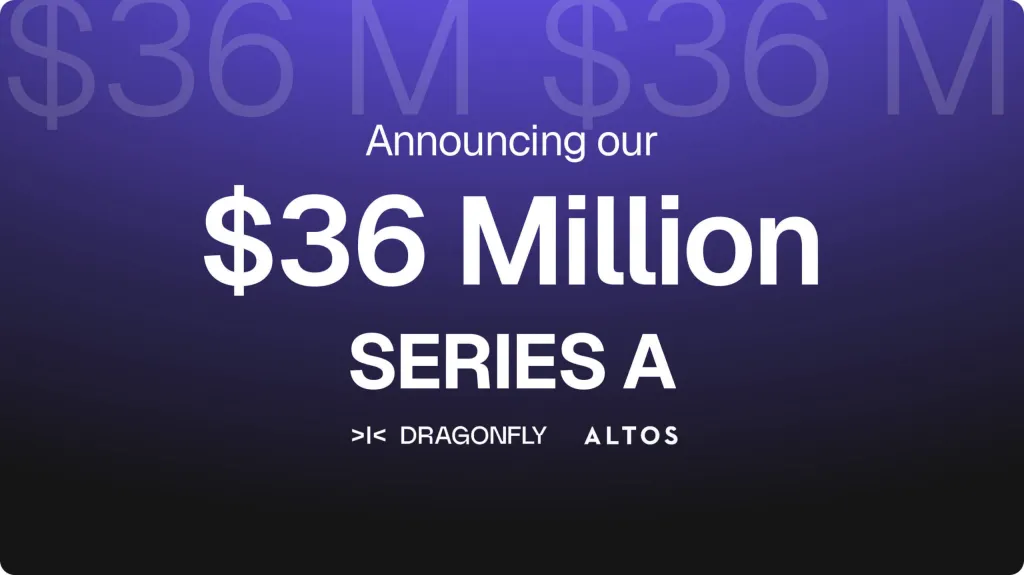
Its May 2025 Series A funding round, $36 million co-led by Dragonfly and Altos Ventures, included participation from Circle Ventures, the issuer of USDC, cementing the alignment between platform and stablecoin.
RELATED: The Massive Surge of Stablecoin Adoption as a Remittance Lifeline for Sub Saharan Africa
Conduit‘s value proposition is its multicurrency virtual accounts (launched in December 2025), which allow businesses to hold USDC in treasury accounts and convert to fiat via direct partnerships with more than 24 local banks across Africa, Asia, Latin America, and Europe. The number of African customers on Conduit’s platform grew 80% between Q3 and Q4 2025, underscoring accelerating institutional demand.
The Structural Problem: Africa’s “Dollar Crunch” and Settlement Delays
To understand why USDC cross-border payments matter, consider the legacy system’s core failures.
Correspondent banking is retreating.
Since 2008, global banks have systematically terminated relationships with African financial institutions, a process called “de-risking.” Over 80% of intra-African payments still route through New York or London, costing the continent approximately $5 billion annually in transaction fees. For a payment from Lagos to Nairobi, funds physically travel to New York and back, incurring multiple FX conversion spreads, SWIFT messaging costs, and intermediary lifting fees.
Liquidity is rationed.
Major economies, including Nigeria, Ethiopia, and Egypt, faced acute dollar shortages in 2024-2025. Central banks ration USD for essential imports, leaving SMEs and fintechs unable to source currency through official windows. Treasury teams at companies like Onafriq must pre-fund “Nostro” accounts in 40 different countries, scattering working capital across idle pools and exposing reserves to rapid local currency devaluation. For instance, Nigeria’s naira has lost over three-quarters of its value in five years.
Settlement creates “dead capital.”
The T+2 to T+5 settlement cycle traps billions in “float.” An importer sending $50,000 on Monday sees funds arrive Thursday, four days of capital earning nothing, buying nothing, and shipping nothing. For payment aggregators moving millions daily, this float requirement ties up massive liquidity that could otherwise generate returns or serve customers. This becomes one of the most tangible ways stablecoins improve treasury management for multi‑market operators.
The Massive Surge of Stablecoin Adoption as a Remittance Lifeline for Sub Saharan Africa
How Stablecoins Solve the Treasury Puzzle
The Onafriq-Conduit workflow transforms this dynamic through how stablecoins improve treasury management:
Step 1 (On-ramp): A business in Uganda initiates a 10 million UGX payment via Onafriq’s mobile money integration. Instead of routing through correspondent banks, Onafriq’s treasury converts UGX to USDC via a local liquidity provider.
Step 2 (The rail): USDC transmits instantly across blockchain networks (Ethereum, Polygon, or Tron) to Onafriq’s treasury account in Ghana. This step takes seconds and costs fractions of a cent in network fees.
Step 3 (Off-ramp): USDC converts to Ghanaian Cedis through Conduit’s local banking partners and pays out to the recipient’s mobile wallet in minutes.
This provides Onafriq stablecoin payments a key advantage: centralized, “just-in-time” liquidity. Rather than pre-funding GHS accounts days in advance, Onafriq holds a central USDC pool and deploys it to Ghana when demand spikes, converting in real-time. This model slashes working capital requirements, reduces FX exposure, and bypasses local dollar shortages entirely by tapping global USDC liquidity pools, available 24/7.
As Kirill Gertman, CEO of Conduit, noted:
“Onafriq is a global poster child for the impact a fintech can have in a developing market, offering fast, reliable, and accessible money movement in Africa, which has not been served well by traditional banking options.”
What This Means for African Businesses
For importers: Execute cross-border supplier payments the same day, locking in exchange rates instantly rather than absorbing devaluation risk during multi-day settlement windows.
For remittance fintechs: Replace fragmented Nostro accounts across dozens of countries with a single USDC treasury pool, multiplying capital efficiency and enabling instant payouts without pre-funding.
For pan-African enterprises: Centralize treasury visibility across markets—collect revenue in multiple currencies, hold value in USDC, and disburse payroll or supplier payments in local currency via programmable triggers.
According to Yellow Card’s 2025 report, 30% of African stablecoin users now employ them for business operations, treasury management, cross-border settlement, and liquidity hedging, not just personal remittances.
Risks and Trade-offs
Stablecoin off-ramp channels rely on local liquidity providers (LPs) who maintain fiat currency reserves. If an LP fails or loses banking access, the rail breaks. Off-ramp spreads vary dramatically. For instance, South Africa offers 1.5% median spreads with deep competition, while markets like Botswana face 19% spreads due to illiquid, monopolistic LP environments.
Regulatory fragmentation remains a constraint. While South Africa’s Financial Sector Conduct Authority licenses crypto-asset service providers (CASPs) and Nigeria removed its 2021 banking ban on crypto firms, countries like Egypt maintain outright prohibitions. Onafriq and Conduit must navigate jurisdiction-specific compliance engines, including Travel Rule requirements for sharing transaction originator data, reducing the “borderless” promise of blockchain.
De-pegging risk haunts corporate treasurers. USDC briefly lost its dollar peg in March 2023 when reserves were trapped in Silicon Valley Bank’s collapse. A 10% de-peg on a $10 million treasury position means a $1 million instant loss, a dealbreaker for conservative CFOs.
Finally, stablecoins require local banking partners for fiat on- and off-ramping. The infrastructure is only as resilient as the weakest link in the chain: the regional bank providing the final cash-out.
From Experiment to Infrastructure
The Onafriq-Conduit partnership can be viewed as a response to the documented failure of correspondent banking in Africa. With stablecoin payments now representing $27.6 trillion in annual global transfer value (surpassing Visa and Mastercard combined) and Africa showing 52% year-over-year growth in on-chain value received, the question is no longer whether stablecoins will power African fintech treasury management, but how quickly the infrastructure matures.
For the 500 million bank accounts and 1 billion mobile wallets Onafriq touches, this partnership transforms USDC cross-border payments from an alternative into the default backend, invisible to end users and indispensable to the treasury teams keeping African commerce moving.
Related Reading:
Discover more from Web3Africa
Subscribe to get the latest posts sent to your email.
You must be logged in to post a comment.