













Table of Contents
A pan-African regulatory battle is underway, but the strategy has shifted. Crypto is now a nonfactor for many central banks, who presently focus on mandating that stablecoin issuers park their dollar reserves inside local commercial banks as a core part of their stablecoin regulation strategy.
Africa’s three largest fintech hubs are deploying fundamentally different playbooks to capture control over the billions of dollars in stablecoin regulation infrastructure flowing across the continent.
Their ultimate goal is to establish themselves as Africa’s regulatory authority over an estimated $205 billion in on-chain value, while cross-border crypto compliance requirements are fragmenting into three incompatible regimes.
For VASP license holders, cross-border payment operators, and compliance teams navigating the continent, the operational question is no longer “Can I operate legally?” But, “Can I afford to comply in all three markets simultaneously?”
Three Countries Three Playbooks and No Common Rulebook
Africa’s crypto market is fragmented, and almost each law follows suit.
South Africa Has the Strongest Regime and the Most Limits
South Africa operates the continent’s most mature framework for crypto regulations. The Financial Sector Conduct Authority (FSCA) launched its Crypto Asset Service Provider (CASP) licensing regime on June 1, 2023, and has since approved approximately 300 licenses out of more than 500 applications.
RELATED: Governor Kganyago delivers a stark warning on the future of South African money
The Financial Intelligence Centre’s Directive 9, effective April 30, 2025, mandates Travel Rule compliance for transactions above ZAR 25,000 ($1,500). Enforcement is active with the likes of VALR, one of the country’s largest exchanges, publicly sanctioned for non-compliance.
Yet stablecoins exist in a grey area. Stablecoin regulation remains under FSCA review, with no finalized reserve custody rules despite an October 2025 information request to all licensed CASPs.
Kenya Is Pushing the Hardest Onshore Custody Model
Kenya is working from a detailed blueprint driven by urgency. After FATF grey-listed the country in February 2024 for AML/CFT deficiencies, Parliament fast-tracked the Virtual Asset Service Providers Act 2025, which came into force November 4, 2025.
The National Treasury’s Draft VASP Regulations 2026, published March 17 and open for consultation through April 10, a monumental shift in crypto regulations. Currently it’s the continent’s most explicit onshore custody mandate. 30% of all customer funds must go into segregated accounts at Kenyan commercial banks, while the rest must be kept in high-quality liquid assets.
RELATED: How Kenya’s Community‑Driven VASP Bill Became Law
Stablecoin issuers face a KES 500 million ($3.85 million) minimum paid-up capital requirement to secure a VASP license. The framework has not been finalized. No VASP licenses have been issued.
Nigeria Is Turning Stablecoins into Monetary Infrastructure
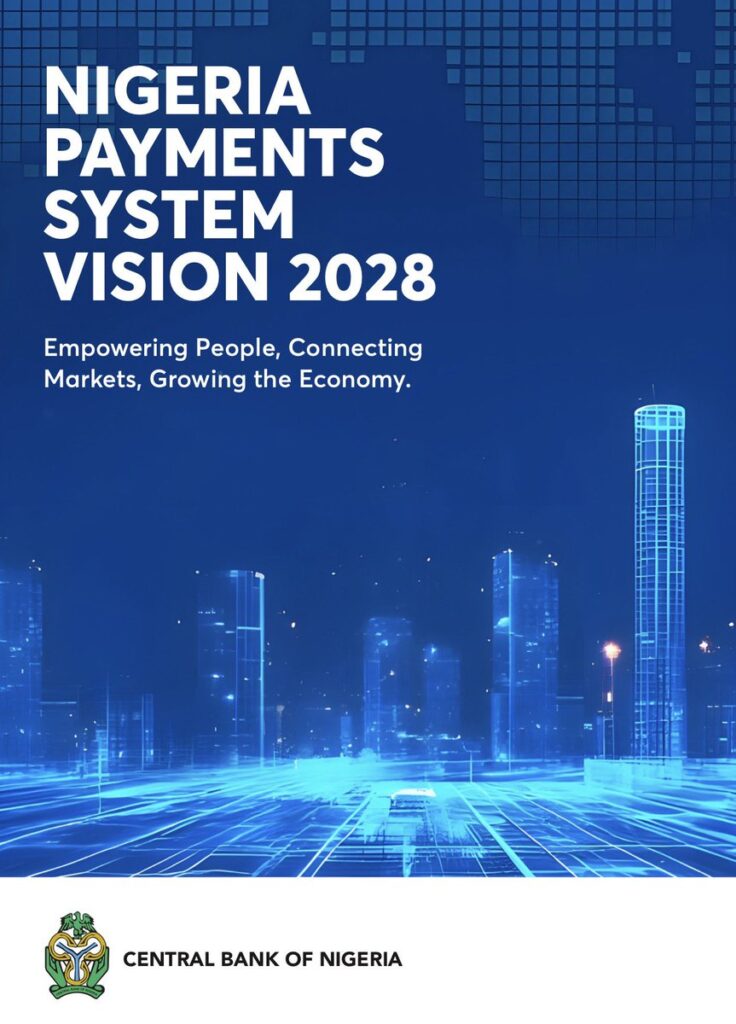
Nigeria is a classic narration of how its underdog market persuaded its government. Five years after the Central Bank of Nigeria (CBN) banned banks from servicing crypto businesses, the newly released Payments System Vision 2028 (PSV 2028), published in June 2026, mentions stablecoins 68 times and proposes a licensing framework recognizing fiat-collateralized stablecoins as “monetary instruments.”
The CBN launched a supervisory pilot with four participants, including Flutterwave, Paystack, and Koin Koin, on March 31, 2025. The bill mandates 100% fiat-collateralization and proposes onshore reserve requirements for foreign-currency stablecoins, but the specific percentage is yet to be determined. Full licensing rules have not been finalized.
What Multi-Jurisdictional Compliance Actually Costs
This scenario is where the “custody war” becomes an economic filter.
A stablecoin issuer seeking to serve businesses across all three markets would face the following:
- Three separate capital requirements (South Africa TBD; Kenya KES 500M confirmed; Nigeria TBD)
- Three reserve custody architectures with conflicting onshore mandates
- Three licensing bodies with different application timelines and approval thresholds
- Two active Travel Rule regimes (South Africa live; Kenya pending finalization; Nigeria proposed under PSV 2028)
- Divergent audit and disclosure cadences, daily attestations in Nigeria’s proposal vs. South Africa’s existing CASP reporting requirements
For smaller African-founded VASPs, the overhead is prohibitive. The likely outcome would be market consolidation favoring large international players like Circle and Tether, who can absorb the regulatory and capital costs of operating across fragmented jurisdictions.
“Maintaining three different reserve setups in three different jurisdictions will likely crush smaller startups,” one compliance executive operating across the region noted in private remarks to industry peers during Kenya’s VASP consultation period.
Where the Three Frameworks Diverge Most
The custody rules on all three further cement how fragmented our market truly is.
Kenya’s 30% rule is explicit and capital-intensive. Nearly a third of all reserves must sit in Kenyan banks, denominated in local currency or approved foreign accounts, subject to Central Bank of Kenya oversight. This creates immediate FX exposure and limits offshore diversification.
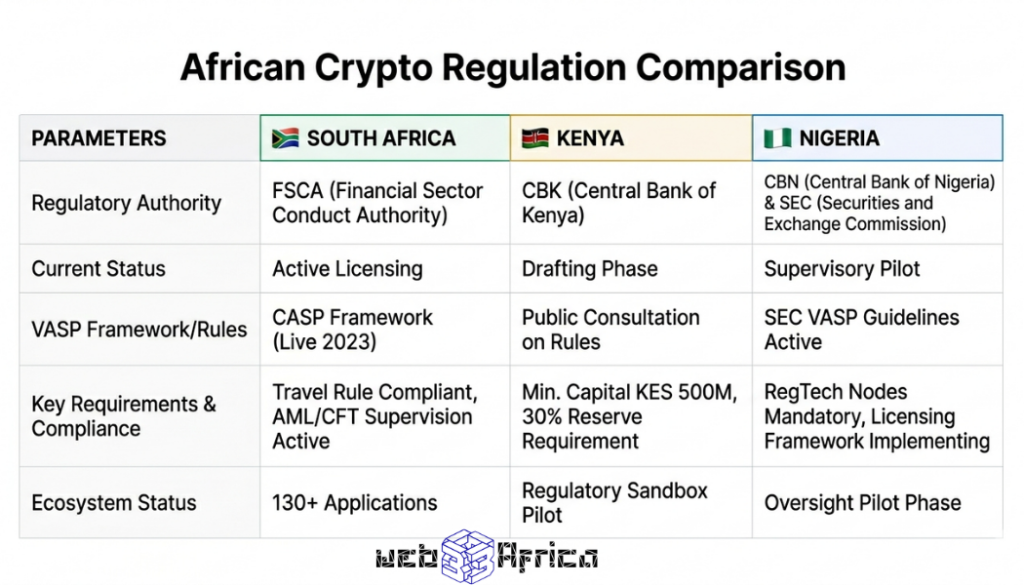
Nigeria’s approach positions stablecoins as extensions of monetary policy. The CBN is “evaluating rules that would require a minimum portion of reserves to be held domestically with approved commercial banks” but has not set a threshold.
RELATED: CBN compliance Department Introduces Proactive Measures Against Financial Crime
The emphasis is on regulatory visibility through RegTech observer nodes. The architecture for smart-contract-level surveillance provides real-time insights into issuance, redemption, and reserve adequacy.
South Africa has issued no stablecoin-specific reserve rule, despite operating the region’s most advanced crypto regulations framework. However, the April 17, 2026, Draft Capital Flow Management Regulations (Government Gazette No. 7375) introduce exchange control obligations for cross-border stablecoin transactions.
Its latest update requires licensed CASPs to declare the purpose of large transfers and comply with South African Reserve Bank (SARB) capital flow reporting.
What Cross-Border Operators Need to Know Now
For businesses assessing market entry or expansion, here are a few facts to consider.
If operating today: Only South Africa offers an active, enforceable licensing pathway. Operators can apply for CASP licenses and, once approved, legally service South African clients under FAIS Act protections. Stablecoin-specific guidance is pending.
If you are planning for Q3–Q4 2026, please monitor Kenya closely. The VASP Regulations consultation closed April 10, 2026; finalization is expected within months. Consider both the 30% onshore reserve rule and the $3.85 million capital threshold when evaluating product economics before committing to entry into the Kenyan market.
If building for 2027–2028: Nigeria’s PSV 2028 is a long-range policy vision with significant upside, $92 billion in annual crypto inflows and 60% of Sub-Saharan Africa’s stablecoin activity. But the framework is not enforceable regulation.
Market Scale vs. Multi-Jurisdictional Compliance Costs
The Market Scale
The Fragmentation Tax
Operational overhead for a VASP operating simultaneously in South Africa, Kenya, and Nigeria.
- 3 Rules
Capital Requirements
South Africa (TBD), Kenya ($3.85M Confirmed), Nigeria (TBD)
- 3 Rules
Reserve Custody Architectures
Conflicting onshore mandates preventing centralized liquidity.
- 2 Regimes
Travel Rule Regimes
South Africa (Live), Kenya (Pending), Nigeria (Proposed)
- Multiple
Audit and Disclosure Cadences
Daily attestations (Nigeria) vs. Periodic CASP reporting (South Africa)
Consolidation favoring large international players (e.g., Circle, Tether) at the expense of smaller African-founded VASPs.
The percentage of onshore custody, the final licensing rules, and how the CBN (Central Bank of Nigeria) and SEC (Securities and Exchange Commission) will work together under the 2025 Investments and Securities Act are still not decided.
Stablecoin Regulation Fragmentation and the Risk of a Race to the Bottom
Fragmentation creates compliance overhead and strategic distortion. Operators will direct capital to the least restrictive jurisdiction, thereby undermining the regulatory objectives these frameworks aim to achieve.
If Nigeria finalizes lighter onshore requirements than Kenya’s 30% rule, issuers may domicile in Nigeria and serve Kenyan users cross-border. If South Africa indefinitely postpones stablecoin reserve regulations, it risks becoming a default regulatory haven. Ultimately, we’ll remain a continent-wide patchwork with capital flowing to gaps rather than regulated hubs.
Africa’s stablecoin regulation landscape is fractured, fluid, and fast-moving. South Africa has enforcement maturity but regulatory ambiguity on stablecoins. Kenya has specificity but no finalized framework. Nigeria has ambition but limited enforceability. For cross-border operators, the custody war is just beginning, and the cost of fighting it across three fronts may determine who survives.
This analysis is for informational purposes and does not constitute legal or financial advice. Regulatory frameworks cited are subject to amendment. Operators should consult qualified legal counsel in each target jurisdiction.
Discover more from Web3Africa
Subscribe to get the latest posts sent to your email.

You must be logged in to post a comment.