











Table of Contents
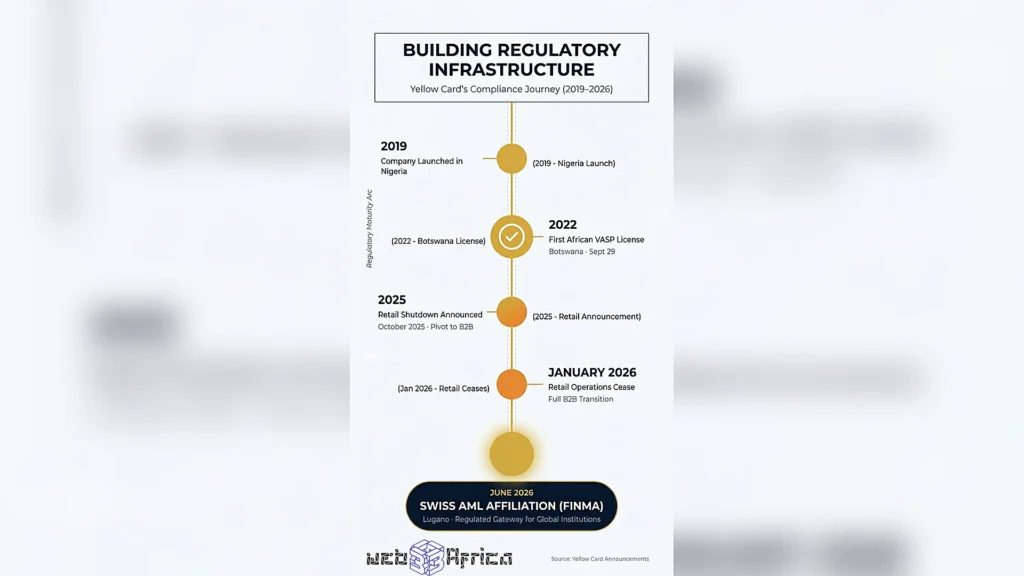
Yellow Card has secured an anti-money laundering (AML) affiliation in Switzerland. The renowned fintech has established a FINMA-supervised subsidiary in Lugano that will serve as a regulated gateway for global institutions accessing its stablecoin infrastructure across Africa and other emerging markets.
The move is not a relocation of Yellow Card’s African operations. Instead, it represents a strategic effort to solve one of the biggest barriers to scaling African stablecoin payments: institutional trust and compliance.
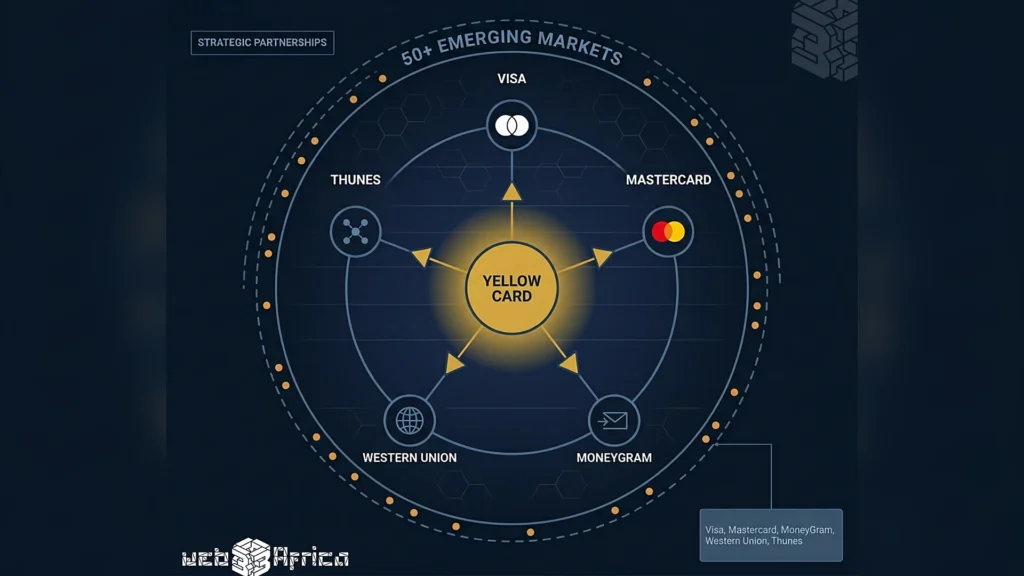
By creating a regulated presence within Switzerland’s financial system, Yellow Card is positioning itself as a single compliant counterparty through which banks, multinational corporations, fintechs, and treasury teams can access stablecoin-based payment rails across more than 20 African countries and over 50 emerging markets.
The future growth of institutional crypto payments may depend as much on regulatory infrastructure as technological innovation.
Why Institutional Stablecoin Growth Demands Established Regulatory Hubs
Understanding why Yellow Card chose Switzerland requires looking beyond the announcement itself and examining how institutional financial firms evaluate risk.
RELATED: Will African Regulators Copy Europe and Purge Eighty Percent of Crypto Firms
For many global banks and corporations, entering African digital asset markets often involves navigating fragmented regulatory environments, multiple licensing regimes, and varying compliance requirements across jurisdictions.
Switzerland offers a different proposition.
The country has spent years building a reputation as one of the world’s most established digital asset hubs, supported by clear regulatory guidance, strong banking relationships, and international credibility among financial institutions.
Through its new Swiss subsidiary, Yellow Card can provide institutional clients with a regulated onboarding environment under the Switzerland AML framework. This reduces the need for counterparties to establish separate compliance relationships across multiple African markets.
This creates a more familiar pathway for banks and multinational firms seeking exposure to stablecoin-based settlement and treasury services.
“Stablecoins have become critical infrastructure for global institutions, and compliant access to the rails and payments is a requirement,” Yellow Card CEO Chris Maurice said in the company’s announcement.
Creating a Regulated Onboarding Environment for Multinational Counterparties
The Swiss entity is designed to complement, not replace, Yellow Card’s African footprint.
The company continues to operate across the continent and retains its existing regulatory approvals, including Botswana’s license for virtual asset service providers issued in 2022.
Rather than moving operations offshore, Yellow Card is creating what can best be described as a compliance bridge.
Under this structure, institutional clients can establish relationships with a Swiss-regulated entity while still accessing local payment infrastructure and settlement networks throughout Africa.
The approach addresses a long-standing challenge facing institutional crypto payments. Many traditional financial institutions remain hesitant to engage directly with companies operating solely within emerging-market regulatory environments, even when those companies are fully licensed locally.
A Swiss-regulated entity offers a level of familiarity that may help reduce those concerns.
As Yellow Card expands partnerships with organizations including Visa, Mastercard, MoneyGram, Western Union, and Thunes, the Lugano operation could become the primary compliance gateway through which global financial institutions access the company’s infrastructure.
How the Switzerland Crypto Compliance Framework Supports the Strategy
The company’s decision also reflects the advantages of the Switzerland crypto compliance framework.
Yellow Card’s Swiss subsidiary operates as a FINMA-supervised financial intermediary and benefits from regulatory clarity that many jurisdictions are still developing.
Recent guidance from FINMA has reinforced protections around the custody and treatment of digital assets while maintaining strict AML and know-your-customer requirements.
For institutional clients, regulatory certainty can be just as important as technology.
The Swiss framework requires robust identity verification standards and compliance controls that align closely with the expectations of global banking partners.
According to Yellow Card General Counsel Craig Stoehr, compliance is central to the company’s institutional strategy.
“For our banking partners and international clients, the compliance framework is not a formality, but rather a foundation,” he said.
This focus demonstrates that reliable regulations are just as crucial as ensuring quick and easy transactions for the widespread use of stablecoin payment systems.
RELATED: Thunes Expands Global Payment Network with Yellow Card to Power Stablecoin Payments
Processing Billions Through Dedicated Enterprise Treasury Rails
The Swiss expansion follows a broader strategic transformation within the company.
In January 2026, Yellow Card officially discontinued its retail trading application and shifted its focus entirely toward business-to-business (B2B) infrastructure. Following an announcement in October 2025, the company ceased all retail operations on January 1, 2026, to dedicate its resources exclusively to its B2B Institutional Suite.
This shows rising demand for stablecoin-powered settlement, treasury management, and cross-border payment solutions among enterprises operating across multiple markets.
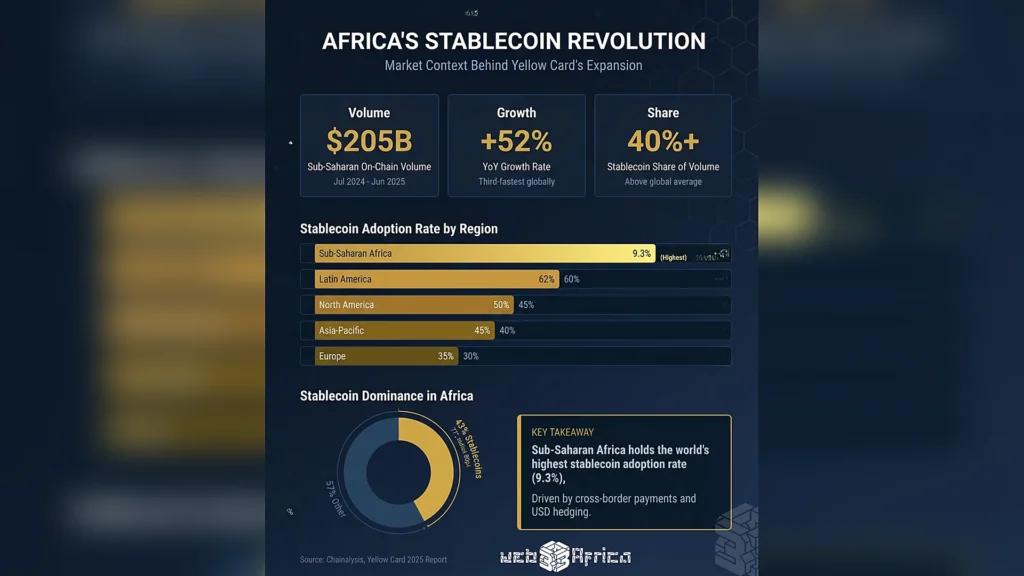
Yellow Card reported processing more than $3 billion in transactions during 2024, with stablecoins representing a significant share of activity.
The company’s growing focus on infrastructure places it at the center of a rapidly expanding market for African stablecoin payments, particularly as businesses seek alternatives to costly and fragmented cross-border payment systems.
Assessing the Long-Term Regulatory Risks and Jurisdictional Divergence
While the Swiss expansion strengthens Yellow Card’s institutional positioning, important questions remain.
The approval is an AML affiliation as a supervised financial intermediary rather than a full banking license. As a result, certain activities remain outside the scope of the authorization.
There is also the possibility of future regulatory divergence between Swiss authorities and regulators across African markets.
As digital asset regulation continues to evolve globally, some jurisdictions may seek additional local oversight of stablecoin-related activities, creating new compliance requirements for international operators.
The widespread adoption of the model by banks and multinational corporations remains uncertain.
Although Switzerland provides regulatory credibility, long-term success will depend on whether institutions view the structure as a practical solution for accessing African markets at scale.
RELATED: Visa and Yellow Card Launch Africa Stablecoin Settlement: Crypto Treasury Boost
Forecasting the Next Phase of Compliant Digital Asset Settlement
The significance of Yellow Card’s Swiss expansion extends beyond a single corporate announcement.
It demonstrates how digital asset companies can bridge the gap between global finance and emerging-market infrastructure.
For years, discussions around stablecoins focused primarily on technology and transaction speed. Today, the conversation is increasingly shifting toward compliance, trust, and institutional accessibility.
By merging its local operations in Africa with a regulated setup under Switzerland’s AML rules, Yellow Card is trying to create a system that meets both needs.
Whether that model becomes a blueprint for future African stablecoin payment infrastructure remains to be seen.
What is clear is that the next phase of growth for institutional crypto payments may depend less on building new rails and more on creating trusted pathways that allow global financial institutions to use the ones that already exist.
FAQ Section
Why did Yellow Card choose Switzerland for its institutional stablecoin business?
Yellow Card established a FINMA-supervised subsidiary in Lugano to provide banks, multinational companies, fintechs, and treasury teams with a regulated entry point into its stablecoin payment infrastructure across Africa and other emerging markets.
Does Yellow Card’s Swiss expansion replace its African operations?
No. The Swiss entity complements Yellow Card’s existing African operations. The company continues operating under its local regulatory approvals while using Switzerland as a compliance gateway for institutional clients.
Why is Switzerland important for institutional crypto payments?
Switzerland offers regulatory clarity, established AML requirements, and a trusted financial ecosystem that many global institutions already recognize. This can simplify onboarding and compliance for cross-border stablecoin payments.
What role does the Swiss subsidiary play in African stablecoin payments?
The subsidiary provides institutional clients with a regulated counterparty through which they can access Yellow Card’s stablecoin-based payment, settlement, and treasury infrastructure across more than 20 African countries.
Discover more from Web3Africa
Subscribe to get the latest posts sent to your email.
You must be logged in to post a comment.