











In Brief
The EACC digital transformation has successfully automated 58% of the commission’s internal processes, marking a major shift from manual casework to digital-first investigations.
New tools like the Integrated Case Management System (iCMS) are eliminating “theft by pen” by creating immutable digital trails for complaints, evidence, and court filings.
The enactment of the VASP Act in late 2025 has empowered investigators to trace illicit funds through crypto rails, supported by FBI-facilitated training in digital forensics.
Early data indicates the strategy is working, with a 175% increase in convictions and over KES 3.4 billion in assets recovered during the 2024/2025 financial year.
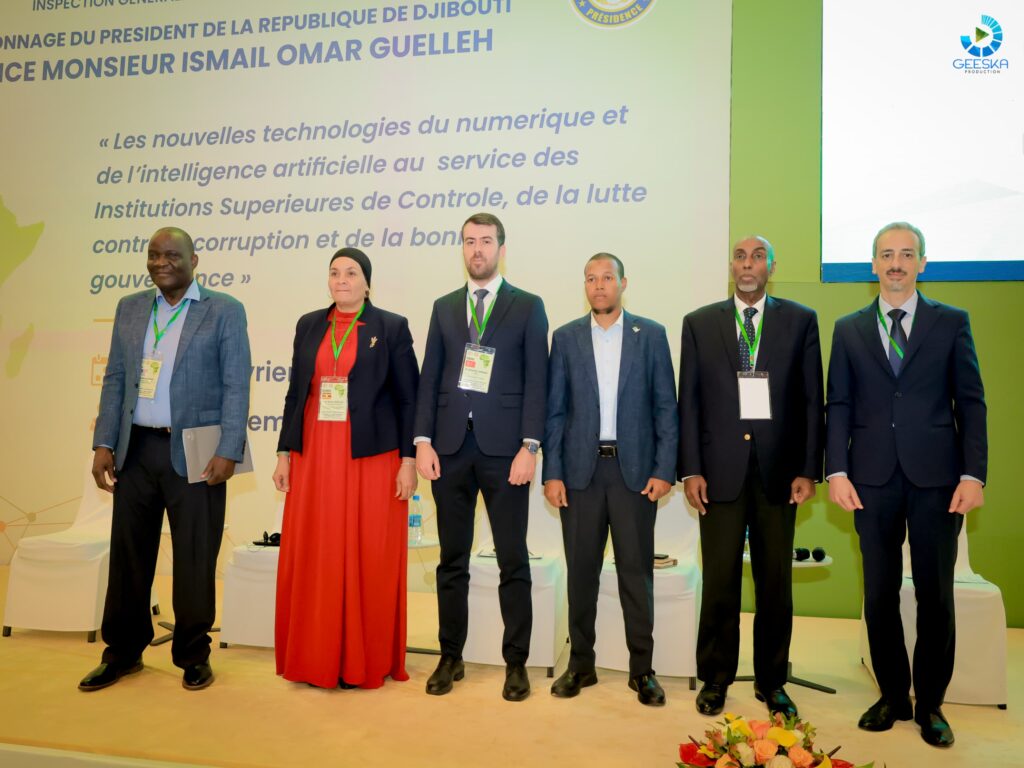
When Kenya’s Ethics and Anti-Corruption Commission (EACC) took the stage at the 13th International Symposium of the Forum of State Inspections of Africa and Assimilated Institutions (FIGE) in Djibouti, its message was unusually specific for a regional governance conference.
The agency says it is actively retooling its investigations around artificial intelligence, blockchain, and analytics, having automated “58 percent” of its internal processes.
EACC CEO Abdi Mohamud framed the shift as a response to corruption that has moved from paper trails and cash to encrypted communications and crypto rails.
“The use of artificial intelligence, blockchain, and data mining tools is essential to stay ahead in the investigation of crimes involving virtual currencies and complex financial transactions.”
What EACC told FIGE in Djibouti (and why it matters now)
FIGE’s 2026 theme—“New Digital Technologies Serving Audits and Control Institutions and Good Governance: What Contribution and What Limits”—matched the moment. The conference was opened by Djibouti President Ismael Omar Guelleh, with Senegal’s President Bassirou Diomaye Faye and Côte d’Ivoire Vice President Tiemoko Koné addressing delegates via video link.

Officials from oversight and anti-corruption bodies in 24 African countries attended, alongside partners including the World Bank Group, UNODC, and the EU Anti-Fraud Office (OLAF). Mohamud stated:
“The EACC has automated 58 percent of its processes and is on track toward full digitization of its operations. We use internally developed digital systems to strengthen resource management controls and deploy digital tools for the extraction, analysis, and management of evidence from electronic devices.”
Inside the machinery: iCMS, forensics, and AI anti-corruption tools
The headline number becomes more meaningful when you look at what is actually being digitized.
The Integrated Case Management System (iCMS): fewer missing files, stronger audit trails
The backbone is the Integrated Case Management System (iCMS), developed with technical support from the UN Office on Drugs and Crime (UNODC) under PLEAD II. The iCMS aims to digitize a corruption case from first complaint to court follow-up, including:
Complaints intake (including whistleblowing channels), generating trackable records that are harder to suppress at entry.
Investigation workflow tracking, helping supervisors see delays and bottlenecks.
Chain-of-custody management, where evidence movement can be logged and controlled rather than informally handled.
Legal brief preparation and handover to prosecutors, reducing opportunities for “file edits” during transfers.
Court process monitoring through integration with e-filing/case-tracking workflows.
Alternative dispute resolution (ADR) documentation, so settlements and restitution are recorded and auditable.
This architecture directly addresses what Mohamud calls “theft by pen,” the manipulation of paper records and manual approval processes that has historically enabled billions in public funds to vanish through procurement fraud and financial mismanagement.
Digital forensics and skills: the EACC’s “hard power”
EACC has also leaned into digital forensics, necessary in cases built on mobile devices, cloud accounts, and encrypted messaging. Documented tooling and training referenced in EACC communications includes widely used forensic suites (such as Cellebrite UFED for mobile extraction and EnCase/FTK-style workflows for forensic imaging).
Blockchain as a Service Explained: When It Makes Sense (And When to Walk Away)
In November 2025, the EACC launched an FBI-facilitated training program in Nairobi for EACC staff alongside the Kenya Revenue Authority (KRA) and the Office of the Director of Public Prosecutions (ODPP), covering cellular analysis, expert witness testimony, and transnational investigations.
Mohamud warned then that criminals now use “encrypted communication channels, cryptocurrency wallets, blockchain obfuscation tools, and complex cross-border money-laundering schemes.”
How is Kenya using AI to stop corruption?
EACC’s public positioning suggests AI is being treated less as a “robot investigator” and more as a triage and pattern-detection layer across large datasets—what Mohamud grouped as AI anti-corruption tools.
Use cases typically include:
Anomaly detection in procurement/finance data to flag collusion patterns and suspicious payment flows.
Natural language processing (NLP) to sift unstructured evidence (emails, chats, contracts) and map relationships faster.
This aligns with approaches promoted in World Bank guidance on advanced analytics for detecting fraud and collusion in public spending.
How the VASP Act reshapes blockchain financial crime investigation
A major driver of Kenya’s enforcement pivot is that financial crime has already moved into crypto. Parliamentary figures cited in reporting indicate Kenyans processed close to USD 2 billion through decentralized protocols in the past year, with about 6.1 million users, creating both innovation upside and enforcement complexity.
Kenya’s inclusion on the FATF grey list in February 2024 raised the pressure to tighten anti-money laundering controls, including around virtual assets. That urgency culminated in the Virtual Asset Service Providers Act, 2025 (this is law, not a bill):
Passed by Parliament: October 7, 2025
Assented to: October 15, 2025
Commenced: November 4, 2025
The Act uses a “twin-peak” regulatory model (CBK oversight for wallet/payment/stablecoin activity and CMA oversight for exchanges/brokers/investment and tokenization-related activity). It imposes licensing, KYC, and suspicious transaction reporting obligations via Kenya’s Financial Reporting Centre (FRC)—which can then disseminate intelligence to agencies including EACC.
RELATED: Kenya’s 2025 Crypto Bill Officially Becomes Law: A Trader’s Guide to VASP Licensing and Compliance
For blockchain financial crime investigation, the practical impact is straightforward. More on-ramps/off-ramps become legally observable, and transaction reporting can be paired with blockchain tracing to follow funds across addresses. Reporting also points to enforcement activity under this broader intelligence architecture, including an FRC action freezing the assets of 13 individuals linked to terrorism financing in a case involving cryptocurrency wallet transfers.
Global Crypto Giants Eye Kenya: 5 Virtual Asset Firms Ready to List
How blockchain can reduce procurement corruption (and Kenya’s other blockchain-facing moves)
While AI anti-corruption tools analyze patterns and flag anomalies, blockchain technology offers a different value proposition: immutability and distributed verification.
According to the World Economic Forum’s comprehensive study “Exploring Blockchain Technology for Government Transparency,” blockchain-based systems create permanent and tamper-evident record keeping that makes it significantly harder to alter bids, delete procurement records, or retroactively modify payment vouchers—common tactics in corrupt schemes.
Key anti-corruption capabilities of blockchain:
Multi-party verification consensus: Instead of a single official approving a transaction (easily compromised by bribery), blockchain requires confirmation from multiple independent sources before recording.
Real-time transparency: Third parties, including journalists and civil society, can monitor procurement activity as it happens.
Decentralized record-keeping: Power shifts away from centralized authorities prone to manipulation
Automated smart contracts: Payments trigger automatically only when predefined conditions are verifiably met.
The WEF partnered with Colombia’s Inspector General’s Office to create an Ethereum-based blockchain procurement system for the country’s school meals program—which had been plagued by inflated prices and non-delivery scandals. This proof-of-concept, highlighted at FIGE, demonstrates that blockchain financial crime investigation tools are moving from theory to operational reality.
Mohamud emphasized this point:
“The use of artificial intelligence, blockchain, and data mining tools is essential to stay ahead in the investigation of crimes involving virtual currencies and complex financial transactions.”
The “oracle problem” (Garbage In, Garbage Out)
Blockchain can lock records after entry—but it cannot guarantee that the entry reflects reality. If corrupt actors falsely confirm delivery or quality, the system can preserve an immutable lie. That is why Kenya’s blockchain-in-procurement conversations increasingly point to IoT verification (GPS, RFID, automated weighing, sensor logs) to reduce dependence on human attestations.
RELATED: VAAK: Kenya’s Answer to Building Africa’s Most Mature Crypto Ecosystem
What the early performance data shows
The EACC digital transformation is generating measurable outcomes. In financial year 2024/2025:
Asset recovery suits filed: 79 (27% increase from previous year)
Value of assets recovered: KES 3.4 billion (17% increase)
Public funds loss averted: KES 16.5 billion through proactive digital surveillance
Convictions secured: 33 (175% increase from 12 the previous year)
Assets traced (pipeline): KES 22.9 billion
These are meaningful improvements; however, correlation isn’t causation. Without a published evaluation isolating what drove the change (funding, leadership, case selection, court dynamics, digitization), the most responsible conclusion is that EACC digital transformation appears to be contributing to better throughput and evidence handling, while the exact contribution remains unproven.
What this means for policymakers, investigators, and citizens
According to AI analyst William Carey of AInvest,
“The real proof will be in the flow data… a sustained decline in the movement of corrupt funds.”
The EACC’s 58 percent automation milestone, backed by the VASP Act and reinforced by international partnerships with the FBI and UNODC, represents a credible framework. As the World Economic Forum’s Børge Brende observed;
“Technology has emerged as one of the greatest allies of transparency and a critical tool against corruption.”
EACC digital transformation is more about fundamentally changing the cost-benefit calculus for would-be thieves by making corruption harder to hide, easier to trace, and more certain to face consequences.
As Kenya prepares to host CEREAC in June 2026, the question shifts from whether technology can fight corruption to whether African institutions will invest in the human capacity, legal frameworks, and political will required to make these tools work at scale.
Discover more from Web3Africa
Subscribe to get the latest posts sent to your email.

You must be logged in to post a comment.