













TL;DR,
- Binance Pay partnered with Zapper to enable QR code crypto payments at 31,000+ South African merchants, including KFC and Sasol, effectively doubling Binance’s global merchant network.
- The system is seamless and risk-free for merchants, who require no new hardware and receive instant settlement in local currency (ZAR), completely avoiding crypto’s price volatility.
- This partnership is part of a larger trend making South Africa a global leader in crypto payment adoption, with a “Scan to Pay” network already reaching over 650,000 merchants
Crypto payments are steadily replacing mobile payments. Is it practical? Is it just an ideal? Will it broaden the market?
These questions are sound; however, Binance sought to provide first by partnering with Zapper, one of South Africa’s popular QR payments platforms, to enable QR code cryptopayments to over 31,000 merchants nationwide.
It’s the next barrier to show that crypto has value, enabling South Africans the means to pay for everything from fried chicken at KFC to fuel at Sasol. South Africa, being among the continent’s top four ecosystems, is now both an invest vehicle and a practical spending tool.
Binance Pay Goes Live on Zapper in South Africa; QR code crypto payments reach 31,000+ merchants.
Binance Pay, an invention of Africa’s favourite exchange, just broke the next barrier, introducing an easy way of paying with digital assets. The beauty, and quite frankly its main selling point, is its simplicity. The platform already operates as a contactless, borderless crypto payment system built directly into the Binance app. Here end, receive, and spend cryptocurrency instantly with zero gas fees; this also includes making peer-to-peer transfers or buying groceries.
Zapper, South Africa’s most widely used QR platform, supports millions of customers across restaurants, retailers, fuel stations, and online merchants. Combine these two services that support 400+ digital assets for peer-to-peer transfers and 100+ cryptocurrencies for merchant payments, with a user base topping 45 million globally.
While Nigeria takes the crown for the largest trading volume, South Africa takes the crown when it comes to adoption. Since the start, the region has always had a pro-adoption take to become the second state to develop a framework and the first to recognise digital assets as financial products. South Africa also houses most licensed exchanges on the continent (248+) and the largest Bitcoin ATM provider.
HAVE A LOOK: South African Crypto Regulation Advances While Tax Mechanics Remain Abstract
With Zapper crypto payments, crypto is now a real payment option for meals, retail purchases, fuel, and flights, using no extra hardware or new checkout flows required for merchants. Merchants receive ZAR settlements through Zapper’s existing rails, typically by the next business day, while customers get a seamless experience.
According to Yande Nomvete, Country Lead for Binance South Africa:
“Binance Pay is about more than crypto; it’s about giving South Africans freedom and flexibility in how they spend their money.”
Where can you use it now?
Look for Zapper at familiar names across the country, including:
- KFC, Wimpy, and Mugg & Bean (dining)
- Dis-Chem and Baby City (health and baby)
- Coricraft and Yuppiechef (home and kitchen)
- FlySafair (air travel)
- Total and Sasol (fuel)
How do QR code crypto payments work on Zapper?
Here’s how to pay with crypto at merchants using the new QR code crypto payments
- Open the Binance app and access the payment feature.
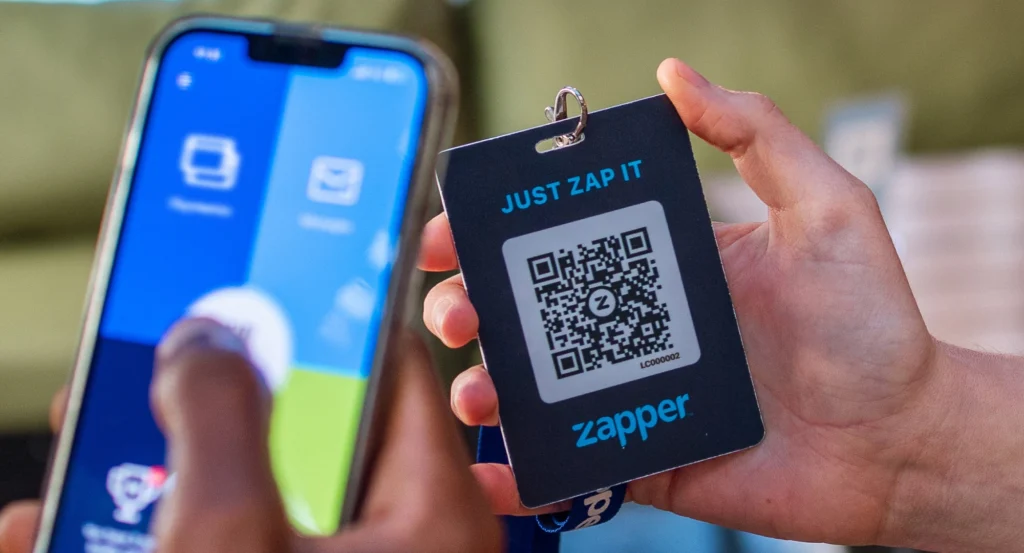
- Scan the merchant’s Zapper QR code.
- Confirm the amount shown in rands and choose your crypto.
- Approve the transaction to complete the purchase.
The entire process takes seconds, no extra steps and behind the scenes, real-time conversions enable instant crypto to fiat payments, while ZAR settlement follows standard Zapper timelines. Roughly 10% of South Africans handling crypto have a new way of paying and spending their hard-earned money without fear of high conversion rates. That’s literally how to pay with crypto at merchants using Zapper’s QR checkout.
[inline_related_posts title=”Based on your history, here’s something for you.” title_align=”left” style=”grid” number=”6″ align=”none” ids=”” by=”tags” orderby=”rand” order=”DESC” hide_thumb=”no” thumb_right=”no” views=”no” date=”no” grid_columns=”2″ post_type=”” tax=””]
The instant crypto-to-fiat payments mechanism eliminates volatility risk. A restaurant doesn’t need to worry whether Bitcoin will drop 10% overnight; they’re guaranteed the rand amount at the moment of transaction confirmation. For merchants, this crypto payment integration requires zero infrastructure changes. No new hardware. No staff retraining. No system modifications. Payments simply appear as ZAR deposits, indistinguishable from traditional digital transactions in their backend systems.
How to Pay with Crypto at Merchants Becomes Mainstream
By seamlessly incorporating digital currency into its mainstream financial system, South Africa has firmly established itself as a global leader in crypto payment rails. This is shown by the huge scale and real-world use of these systems.
CHECK OUT: MicroStrategy Lawsuit and Bitcoin Strategy: Navigating Corporate Risks
The Scan to Pay network is the foundation. It has over 650,000 merchant locations and is powered by Ukheshe. Fourteen banks and 94 payment service providers use it. Luno Pay used this to reach an incredible 700,000 merchants within a year of its November 2024 launch. It partnered with big retailers like Pick n Pay, Shoprite, and Vodacom and gave customers instant cashback of up to 10% (and 20% during promotions) in USDT.
At the same time, MoneyBadger led the way in the use of the Bitcoin Lightning Network, which allowed transactions with fees of less than $0.10 and processed a verified R1.4 million ($83,000) in monthly volume by July 2025. It also worked with payment processor Ecentric, which already handles 880 million transactions a year for two-thirds of the country’s listed retailers.

The partnership between Binance Pay and Zapper in September 2025 opened up even more access, bringing in more than 31,000 merchants, including KFC, Wimpy, and Total gas stations. This effectively doubled Binance’s global merchant network from 32,000 to over 63,000. This whole system works for a rapidly growing group of over 10% of South Africans (7 million by 2026) who own cryptocurrency. This shows that crypto payments are no longer a niche experiment but a scalable, institutional-grade reality.
What this means for shoppers and merchants
The evolution of QR code crypto payments has become evident, the Zapper crypto payments among many. MoneyBadger, Luno Pay, and now Binance are steadily showing how crypto is a rising preference for many.
The ecosystem still represents a small fraction, but its utility is valuable. It’s designing a system which will eventually dominate most payment platforms. For shoppers, Zapper crypto payments keep the checkout flow familiar while enabling everyday crypto spend. For merchants, as more customers use instant crypto for fiat payments at the till, adoption can compound through word of mouth and well-timed incentives.
In Africa, the main focus is not crypto itself, but the utility it’s offering.
Discover more from Web3Africa
Subscribe to get the latest posts sent to your email.
You must be logged in to post a comment.