







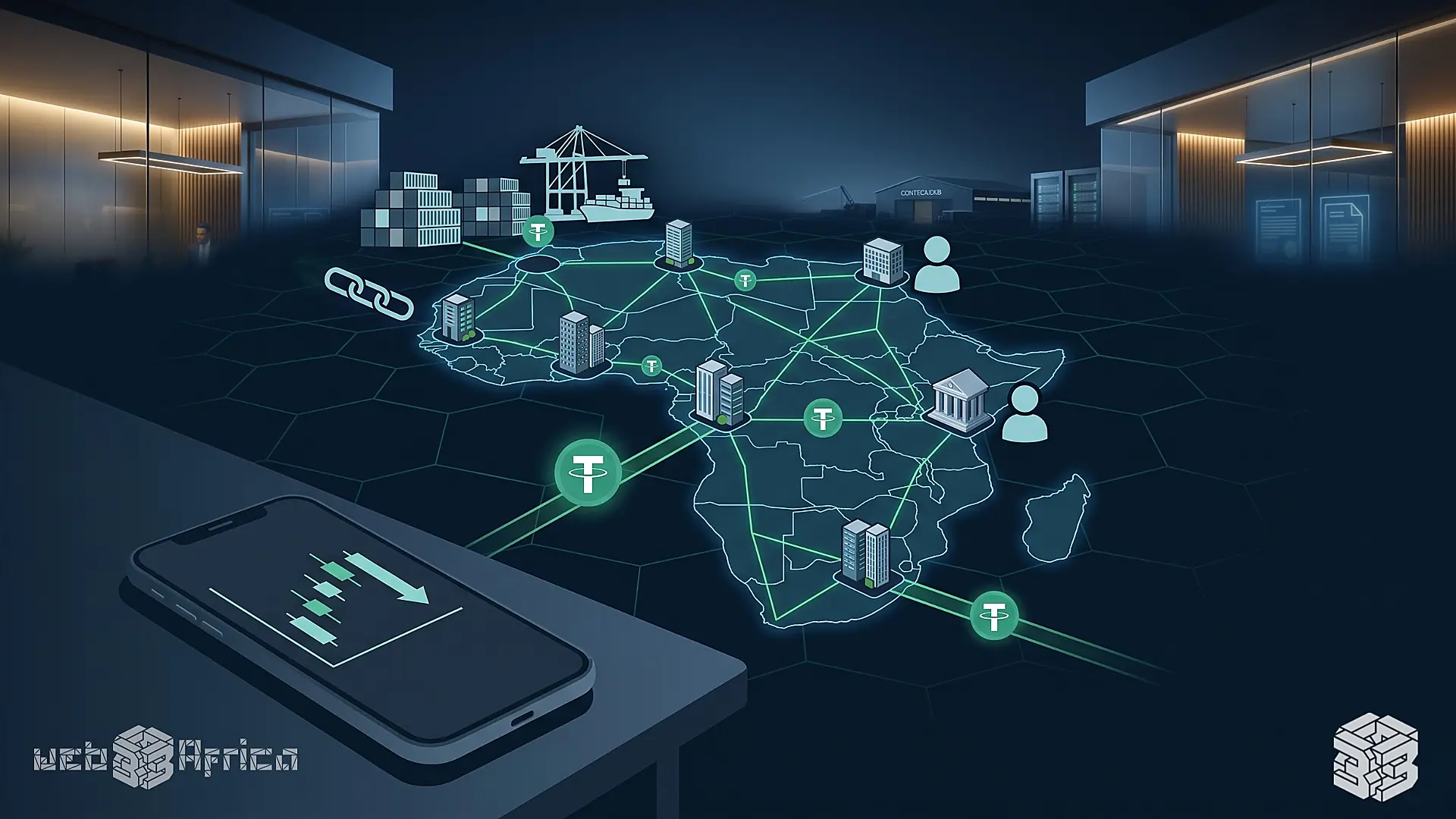




TL;DR,
- A $5.5B uganda cbdc pilot targets 40M users, 1M jobs, and up to $10B in exports via a USSD-enabled digital shilling.
- Unlike struggling CBDCs like Nigeria’s eNaira, Uganda’s model is “production-first,” giving citizens and industries an immediate reason to use it by integrating it into supply chains and job creation from day one.
- The project will leverage existing USSD mobile technology (like MTN MoMo), making the digital shilling instantly accessible to over 40 million people on standard smartphones and ensuring mass adoption within the informal economy.
A future where the Uganda CBDC, a digital shilling backed by treasury bonds, is now in reach. Uganda’s Diacente Group has announced a partnership with US‑based Global Settlement Network (GSN) for a $5.5 billion plan to build a national digital infrastructure.
The plan is simple: introduce a new, modernized form of finance where Uganda’s farmers, miners, power projects, factories and citizens are interlinked with one monetary system.
Pillar 1: Anchoring the Uganda CBDC, or Digital Shilling in Real Economic Output
The project takes a unique tangent from theoretical digital currency projects, anchoring its value in Uganda’s economic activity. The initiative focused on piloting the Uganda CBDC, or the digital shilling, a bond-backed instrument designed to let locals send, receive and save on their phones. Like many of its counterparts, it’ll interline financial activity to real-world productions.
The pilot currency will be deployed on a permissioned blockchain and integrated with the same USSD rails powering MTN, MoMO and Aitel money. A permissioned blockchain is a go-to option for CBDC projects given its centralized control. Still, the USSD rails, according to GSN, will provide easy access via smartphones, enabling over 40 million people to transact securely, with full KYC/AML compliance.
ALSO READ: The African Crypto Code: Regulating Digital Currency Across Borders
For Uganda, it’s the birth of a tokenized economy leveraging blockchain and smartphone penetration.
Ryan Kirkley, GSN co‑founder and CEO of GSN, said:
We are building infrastructure that goes beyond theory, a programmable economy grounded in real assets, regulatory collaboration and mass accessibility.
The Uganda CBDC will leverage the GSN blockchain platforms, protecting each user and maintaining the government’s control of its digital infrastructure. The project will also feature advanced privacy tools securing every transaction, mimicking the basic feature of e-money service popular in East Africa. Operations will be licensed and managed locally(governments and local institutions), ensuring Uganda retains full control over the distributions and maintains local access.
The $5.5 billion investment will be financed through tokenized loans and investors from Korea and the Middle East.
Pillar 2: The Karamoja Testbed: Tokenizing a $500 Billion Supply Chain
As per the announcements, the program intends to link Uganda’s production industry into a digitally coordinated supply chain using tokenized financing to accelerate build-out. Diacente and GSN will start in the Karamoja Green Industrial and Special Economic Zone (GISEZ). The government-backed development area provides an ample testing ground given its ties to Uganda’s Vision 2024 agenda.
The GISEZ is at the centre of an economic overhaul with the government eyeing a tenfold production to $500 billion. The zone will serve as the testbed for the CBDC and its connected services. Currently, the government revealed that the projects are expected to create over one million jobs and up $10 billion in annual exports as the ecosystem scales. What better way to test out a new monetary system than in a new city?
This goes beyond infrastructure. It is about unlocking long-term value for our people and our region. By integrating tokenisation and digital currency into Uganda’s development roadmap, we are creating transparent, technology-driven ecosystems that empower local industries and attract sustainable capital. Edgar Agaba, chairman of Diacente Group
Typically, the new system will enable farmers can easily supply agri-processing hubs and receive direct payments with verified records, removing expensive intermediaries. Traders can look forward to moving and tracking goods across regions using only their phones as a monitoring tool. Small businesses operating inside the zone can build digital credit histories and borrow against verified records.

The tokenized economy is anchored in production, providing an ample ground for value. It’s an applicable use case for digital assets in agriculture, mining, and trade, where transactions often rely on foreign settlement systems that add cost and delay.
What will drive CBDC adoption in Uganda? USSD, Jobs, and a Reason to Use It
Uganda’s workforce comprises mainly its informal economy, accounting for 80%. THE Uganda CBDC is staged to mimic e-money platforms via its USSD, but with greater tracking capabilities and oversight. While many might speculate over its stringent control, it does open opportunities for regional and global markets.
However, the main question remains: will it succeed?
Let’s look at Nigeria’s eNaira, launched in 2021 but still struggling. Currently, only 0.5% of Nigerians actively use the CBCS, with 98.5% of wallets inactive and weekly transactions averaging around 14,000. In February, only ₦18.31 billion ($11.4 million) was in circulation, representing 0.37% of total currency.
[inline_related_posts title=”Check Out” title_align=”left” style=”grid” number=”4″ align=”none” ids=”” by=”tags” orderby=”comment_count” order=”DESC” hide_thumb=”no” thumb_right=”no” views=”no” date=”no” grid_columns=”2″ post_type=”” tax=””]
What generally makes the digital shilling any different? As Kirklye put it:
Previous systems failed because they were not linked to real use. We are starting with industries, with jobs and production, so people have a reason to use it.
It uses a practical orientation; the USSD reach integrates with existing payment habits. The clear on-ramp services or workers and SMEs target the 80%, where speed, cost, and trust are decisive.
Peter Turyasingura, chief investment officer at Diacente, elaborated:
The jobs are projected to be created through the entire ecosystem around the three sectors of agro processing, mineral value addition, and knowledge-based industries. This is right from the value chains of agriculture and mining, to the industries and factories in the zones, to the logistics and all supportive infrastructure around the entire ecosystem.
The GSN blockchain platforms assist in the CBDC adoption, providing easier mechanisms for governmental access and local institution management. Karamoja’s resource wealth and underdevelopment make it a natural launchpad.
FOLLOW UP: cNGN Investments: Xend Finance’s Gateway to African Markets
How Uganda’s Model Diverges from the Continent
As of the time of writing, 11 countries are exploring or piloting CBDCs. Ghana’s e‑Cedi pilots prioritized offline functionality; South Africa’s Project Khokha advanced wholesale settlement; and Tunisia, Rwanda, Kenya, Morocco, Mauritius, and Egypt sit at varying research and development stages.
What makes the Uganda CBDC different is its production-first model, providing the use case first before launching the assets. Tokenized financing attracts sustainable capital, and locally governed digital rules match money flows to production. Its infrastructure neatly ties the value onshore while keeping its doors open to regional trade.
It’s an entirely new approach when compared with other alternatives, and it might just cut. In this scenario, a CBDC might just outpace the demand for local stablecoins.
Discover more from Web3Africa
Subscribe to get the latest posts sent to your email.
You must be logged in to post a comment.